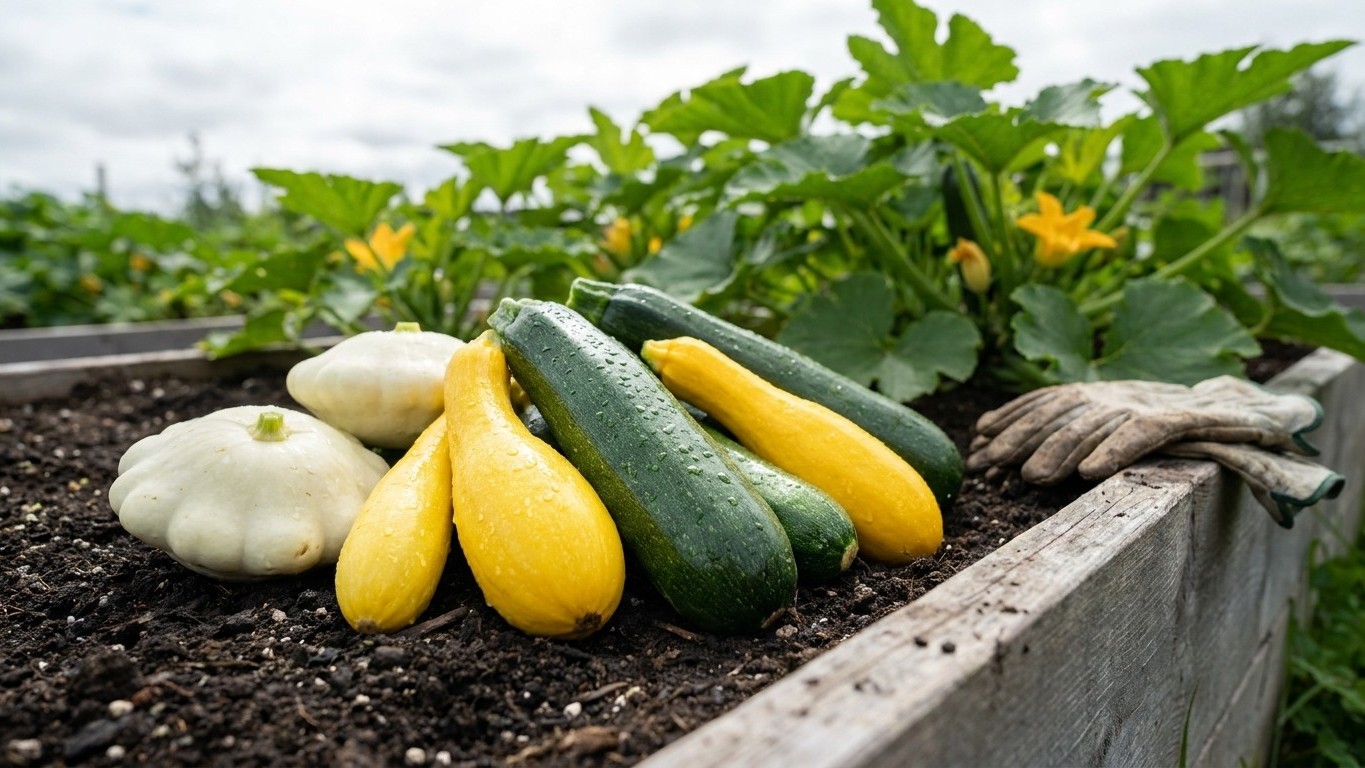

Oklahoma gardeners get the best results from fast-maturing zucchini and yellow crookneck or straightneck hybrids bred for heat tolerance and disease resistance. Skip the slow heirloom scallop and pattypan types. They mature too late to beat the state’s brutal midsummer stretch, and they buckle under the humidity that builds through June and July.
The short answer for Oklahoma
Start with the calendar math. The reference station near Oklahoma City sees its last spring frost between March 28 and April 10, and its first fall frost between October 29 and November 8. That’s a growing window stretching anywhere from roughly 200 to 225 days, depending on where in that range your particular spring and fall land. That’s a long season by national standards, long enough for two full rounds of summer squash if you plant it right.
But length isn’t the only variable that matters. Oklahoma City averages 70.7 days a year at or above 90F. That’s not an average summer temperature, it’s a heat load figure, and it changes which squash types make sense. A 45- to 50-day hybrid zucchini or yellow crookneck can slip into the ground after the frost risk passes, set fruit before the worst of the heat arrives in July, and still leave time for a second sowing in late June or early July that matures before the fall frost window opens.
Slower varieties don’t get that luxury. A scallop or pattypan type running 55 to 65 days to maturity is still flowering when daytime highs are pushing past 95F for weeks at a stretch. Squash blossoms drop in that kind of heat, and fruit that does set often turns bitter or corky before it’s worth picking. The math simply doesn’t work in their favor here.
The decision by type comes down to this: pick a fast hybrid zucchini or crookneck with some disease resistance bred in, plant it as soon as the frost risk clears in your area, and plan a second planting rather than relying on one crop to carry the whole season. Straightneck and crookneck varieties bred for southern heat tend to outproduce scallop types here by a wide margin, and gardeners who split their planting into two waves usually get a longer harvest window than those who put everything in the ground on the same weekend in April.
What will not work here
The single biggest failure point in an Oklahoma squash bed is treating the growing season as one long stretch instead of two heat-separated windows. With 70.7 days a year above 90F concentrated mostly in July and August, any variety that’s still setting fruit heading into that stretch is going to struggle. Blossom drop, misshapen fruit, and a sharp drop in production are the usual signs, and by the time a gardener notices, the plant is often too heat-stressed to recover.
Watering on a fixed schedule
Summer rainfall across June, July, and August averages about 11.7 inches total, but it’s not spread evenly. June brings roughly 4.49 inches, July drops to the driest month at 3.59 inches, and August ticks back up to 3.6 inches. A gardener watering on a fixed weekly schedule through that stretch is going to underwater in July almost every year, right as evaporation from 90-plus-degree days is at its peak. Squash roots sit shallow, and a week without adequate moisture during fruit set shows up fast as stunted or bitter fruit.
Tight spacing in a humid stretch
June’s rainfall, arriving as thunderstorms rather than gentle soaking rain, tends to leave foliage wet and humidity high in the hours after a storm. Squash planted at tight spacing in that kind of pattern loses airflow between plants, and powdery mildew moves in on the lower leaves within weeks. It’s a slower killer than heat stress, but it cuts a plant’s productive life short just the same, usually right when a second planting needs the space and the sunlight most.
Squash vine borer is the other quiet failure. With a growing season long enough to support two moth generations, a spring-only planting with no borer resistance or protection often collapses by midsummer just as a second wave of larvae bores into the stems. Gardeners who plant once and assume the job is done tend to lose that crop right when they’d expect peak production.
What changes across Oklahoma
Oklahoma isn’t one growing region, it’s several stacked on top of each other. The USDA Plant Hardiness Zone Map places the state across a range from 6a to 8a, and that spread alone tells you there’s no single planting date or variety choice that fits every county. A gap of two full zones means real differences in average extreme minimum winter temperature, and by extension, in how early spring genuinely arrives and how long summer heat lingers into fall.
A gardener in the cooler end of that range, generally toward the north and the panhandle, should expect a later effective start to the growing season than the reference-city frost dates suggest, and a shorter run before fall cold sets back in. That argues for leaning even harder on fast-maturing hybrids and possibly skipping a second planting altogether if the fall frost risk arrives before a late-June sowing could mature.
At the warmer end, toward the southeast, the season runs longer and the humidity tends to run higher too, which shifts the priority toward disease resistance over raw speed. A gardener there might get away with a slightly slower-maturing variety, but only if it’s bred to shrug off the powdery mildew and bacterial wilt pressure that comes with more humid, longer summers.
None of this tells you which zone your own garden sits in, and this page won’t guess. The USDA’s interactive hardiness zone map is the tool for that, and it’s worth five minutes before you settle on a variety or a planting date based on a statewide average that may not describe your particular county at all.
Where to check this for your own county
Everything above is a state-level picture, built from one reference station’s climate normals. That’s useful for understanding the general shape of an Oklahoma growing season, but it’s not a substitute for what your county’s extension office actually knows about your soil, your local frost patterns, and which varieties have performed well in trials near you.
Oklahoma State University’s Cooperative Extension Service is the place to go next. Look specifically for two things once you’re there: a local planting calendar for your county or region, which will reflect frost timing closer to your actual garden than an airport-station average ever can, and any variety trial results or recommendations specific to vegetable production in your part of the state.
County agents track things this page simply can’t, like how a particular hybrid held up against squash bugs in a wet year, or whether a certain zucchini line consistently outproduced others in local trial plots. That kind of ground-level detail beats a state average every time, because it’s built from what actually happened in soil and weather conditions close to yours rather than from a single station’s 30-year normals.
Treat this page as the broad map and the extension office as the local guide. The frost dates and heat figures here explain why certain squash types make sense across Oklahoma in general. Your county extension office can tell you whether that general pattern holds where you actually garden, and can usually point you toward specific variety names that have proven themselves nearby.
Checking this against your own garden
Dates and averages get you close, but your own garden has the final word. Three simple observations will tell you more about your microclimate than any calendar figure on this page.
Start with soil warmth, checked by feel rather than instrument. Summer squash seed sits and sulks in cold soil no matter what the calendar says. If a handful of soil at planting depth still feels cool and damp rather than warm through, waiting another week usually pays off in faster, more even germination.
Watch for the first flush of male flowers. Squash plants typically send out male blossoms before female ones appear, and that first flush is a sign the plant has settled in and is responding to the combination of warmth and daylight it’s getting in your specific spot. A long delay compared to what neighbors or online growing guides report often points to a slightly cooler or shadier microclimate than the regional average assumes.
Finally, track how fast true leaves follow the seedling’s first round of leaves. Quick, vigorous true-leaf growth signals soil and air temperatures that suit the plant well. Slow, stalled growth at that stage is usually the plant telling you the season hasn’t quite caught up to the calendar yet, no matter what the frost-date range says it should have by now.