
Yes, sweet corn ripens in Oklahoma, provided you time the soil warm-up correctly rather than the last frost date, a question worth answering fully in Will Sweet Corn Ripen in Oklahoma?. The frost-free stretch at the reference weather station runs long enough, seven months or more, to fit even a slow variety with plenty of room to spare. The real risk here isn’t cold, it’s heat and careless pairing of corn types. Get the soil temperature and the tasseling timing right, and a full, sweet ear is within reach almost everywhere in the state.
The short answer
Start with the date most gardeners fixate on, and then set it aside. NOAA’s climate normals for the reference station put the last spring frost somewhere between March 28 and April 10. That date matters for tomatoes and peppers. It matters much less for sweet corn, because sweet corn doesn’t care about air frost risk so much as it cares about soil temperature, and soil warms on its own schedule, well after the air stops freezing.
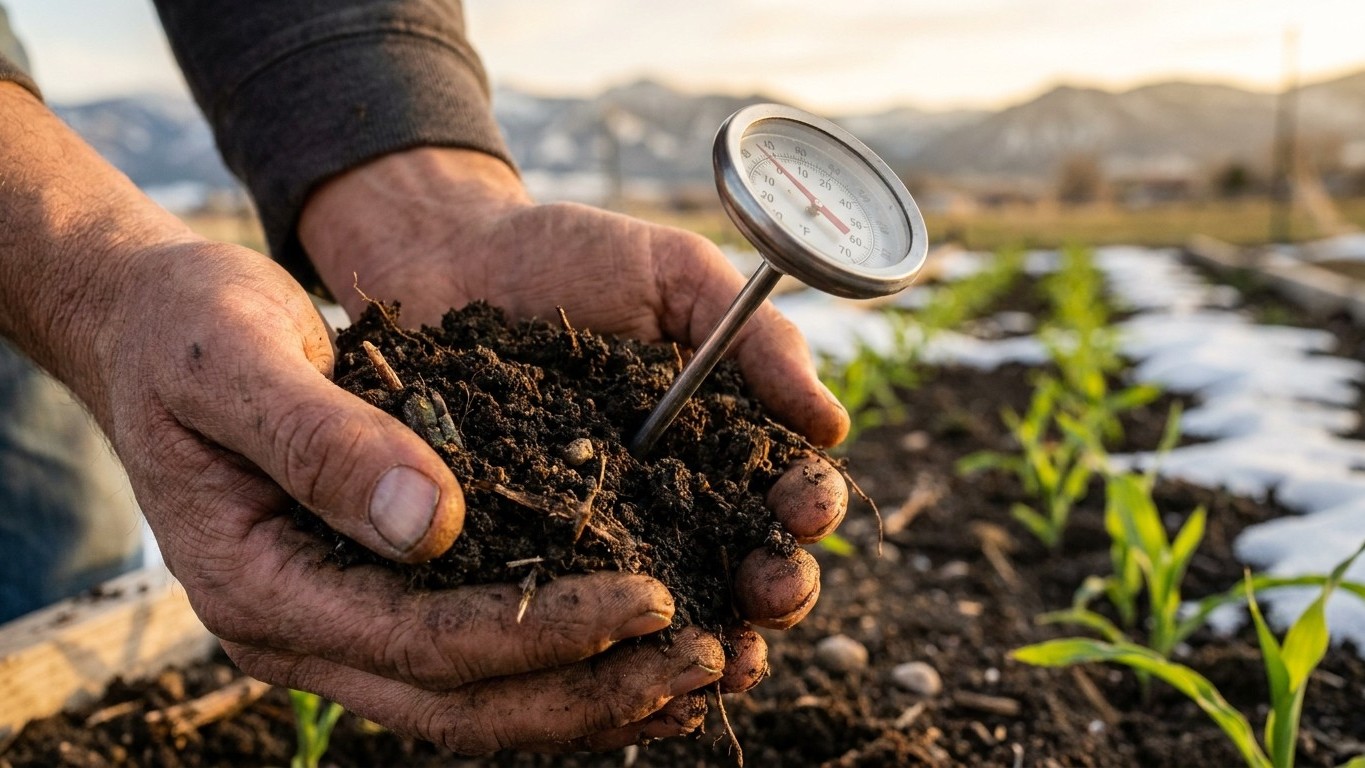
Sweet corn needs soil above 60 F before the seed will germinate reliably rather than rot in the ground. That threshold typically arrives weeks after the last frost date has already passed, not on the same week. A gardener who plants the day after the last frost, using that date as a green light, is very likely planting into soil that’s still too cold, even though the air overhead feels safe. When to Sow Sweet Corn in Oklahoma really comes down to the 60 F soil mark, not the frost date, as the real starting gun.
Once the soil clock starts, the question becomes whether 60 to 90 days of growing time fit before the first fall frost. At the reference station, that first fall frost lands between October 29 and November 8. Counting back from early November, and forward from whenever the soil crosses 60 F in spring, there’s an enormous cushion, typically six months or more between the two frost windows. Even accounting for the lag between air-frost-safe and soil-warm-enough, sweet corn planted in Oklahoma has far more runway than the 60 to 90 days it actually needs.
The complication worth flagging is heat, not cold. The reference station averages 70.7 days a year at 90 F or hotter, nearly ten weeks of serious heat load sitting inside that same growing season. Heat like that doesn’t shorten the calendar, but it stresses pollination and pushes water demand up sharply during tasseling. So the season-length math works comfortably in Oklahoma’s favor; the discipline that matters is planting once soil is genuinely warm, and watching the crop through the hottest stretch of summer rather than worrying about an early fall freeze cutting things short.
Does a late variety fit here?
Given how much slack sits between a warm soil start and the first fall frost, the maturity length of the variety matters less in Oklahoma than it does in shorter-season states. Still, it’s worth working through both ends of the range.
A 60-day variety
Planted once soil has genuinely crossed 60 F, a 60-day variety would be ready roughly two months later. Given a fall frost window that doesn’t arrive until October 29 at the earliest, that leaves an enormous buffer, often three months or more of unused season after harvest. That buffer is exactly what makes succession planting practical: a second sowing a few weeks after the first, timed so the two blocks tassel well apart, stretches fresh-picked corn across most of the summer instead of concentrating it into one narrow harvest window.
A 90-day variety
Add a full extra month and the math still holds. A 90-day variety planted at the same starting point matures roughly three months later, which lands the harvest in high summer, comfortably ahead of the late-October to early-November frost window. Unlike states where a slow variety runs the clock right up against an early fall freeze, Oklahoma’s growing season absorbs a 90-day corn with margin left over. The late-maturing type isn’t a gamble here; it’s a realistic choice, and the limiting factor is more likely to be July and August heat during pollination than any risk of an early frost cutting the season short.
What goes wrong here
- Soil sown too cold. Planting right after the last spring frost, rather than waiting for the soil itself to cross 60 F, is the single most common failure. Seed sits in cold, often wet ground, rots before it germinates, or comes up so unevenly that the whole stand struggles. The remedy is patience: check the soil, not the calendar, and wait for a sustained warm spell rather than a single mild day.
- A variety mismatched to the season. This is rarely the problem in Oklahoma given how long the frost-free stretch runs, but a planting delayed well into summer, combined with a slow 90-day variety, can still push harvest uncomfortably close to the first fall frost in a cooler-than-normal year. The fix is simple: the later the planting date slips, the more it favors switching to a quicker-maturing type.
- Sweetness lost to cross-pollination. This failure has nothing to do with climate. Sweet corn comes in different types, standard su, sugary-enhanced se, and supersweet sh2, and their sweetness collapses when two different types tassel at the same time nearby. Pollen drifts, kernels cross, and the sh2 or se ear a gardener expected turns starchy and disappointing. There’s no published safe distance to lean on here; the fix is timing and layout, not feet or rows of separation. Stagger plantings so different types don’t tassel in the same week, and grow each type in its own block of three or more rows rather than a single thin line, since blocks pollinate themselves far more reliably than a lone row ever will.
Checking this against your own county
The frost dates and soil-warming pattern above come from a single reference weather station, and real gardens rarely match an airport’s readings exactly. Suburban yards, rural low spots, and anywhere with elevation gain tend to run cooler at both ends of the season, often by a week or two compared to the reference figures. That gap can matter more than it sounds, especially in spring, when it decides how early soil actually crosses that 60 F line.
Rather than guess, check locally. Oklahoma State University Extension maintains county offices that track local soil temperature trends, recommend planting windows suited to specific regions of the state, and can confirm whether a given spring is running ahead of or behind normal. That local check is worth five minutes before committing seed to the ground, particularly for anyone gardening outside the immediate area the reference station represents.
Common questions
How do I know when my soil has actually reached 60 F?
A soil thermometer pushed a few inches into the planting bed, checked in the morning over several consecutive days, gives a far more reliable answer than counting days since the last frost. One warm afternoon doesn’t mean the soil has caught up.
Can I plant later in summer to dodge the worst of the heat?
Given how much season sits unused after a typical harvest, a later planting is workable in Oklahoma, but pushing too far into summer risks tasseling landing right in the hottest stretch of the year, which stresses pollination regardless of the calendar math working out on paper.
What’s the real difference between su, se, and sh2 corn?
They’re different sweetness genetics, standard, sugary-enhanced, and supersweet. The genetics aren’t the issue; the issue is that planting different types close together, timed so they tassel simultaneously, lets pollen cross and drags the sweeter type’s flavor down toward the starchier one.
How do I tell when an ear is actually ripe?
Look for three signs together, not one alone: silks that have dried and turned brown, husks that are still moist and green, and milky (not clear, not thick) juice from a punctured kernel. As a separate rule of thumb for timing the check, ears are typically ready somewhere between 17 and 24 days after the silks first emerge, though that’s a picking-week guide, not the same clock as the 60 to 90 days counted from planting.