
Yes, most of North Carolina gives sweet corn plenty of runway to ripen before the first fall frost. The Piedmont, using Charlotte as the reference point, holds close to seven months between the typical last spring frost and the first hard freeze of autumn. That’s the encouraging part when it comes to Will Sweet Corn Ripen in North Carolina? The real question isn’t whether the season is long enough on paper. It’s whether the soil warms up fast enough for the seed to actually germinate, and whether the variety chosen still has enough calendar left once that soil finally cooperates.
The short answer
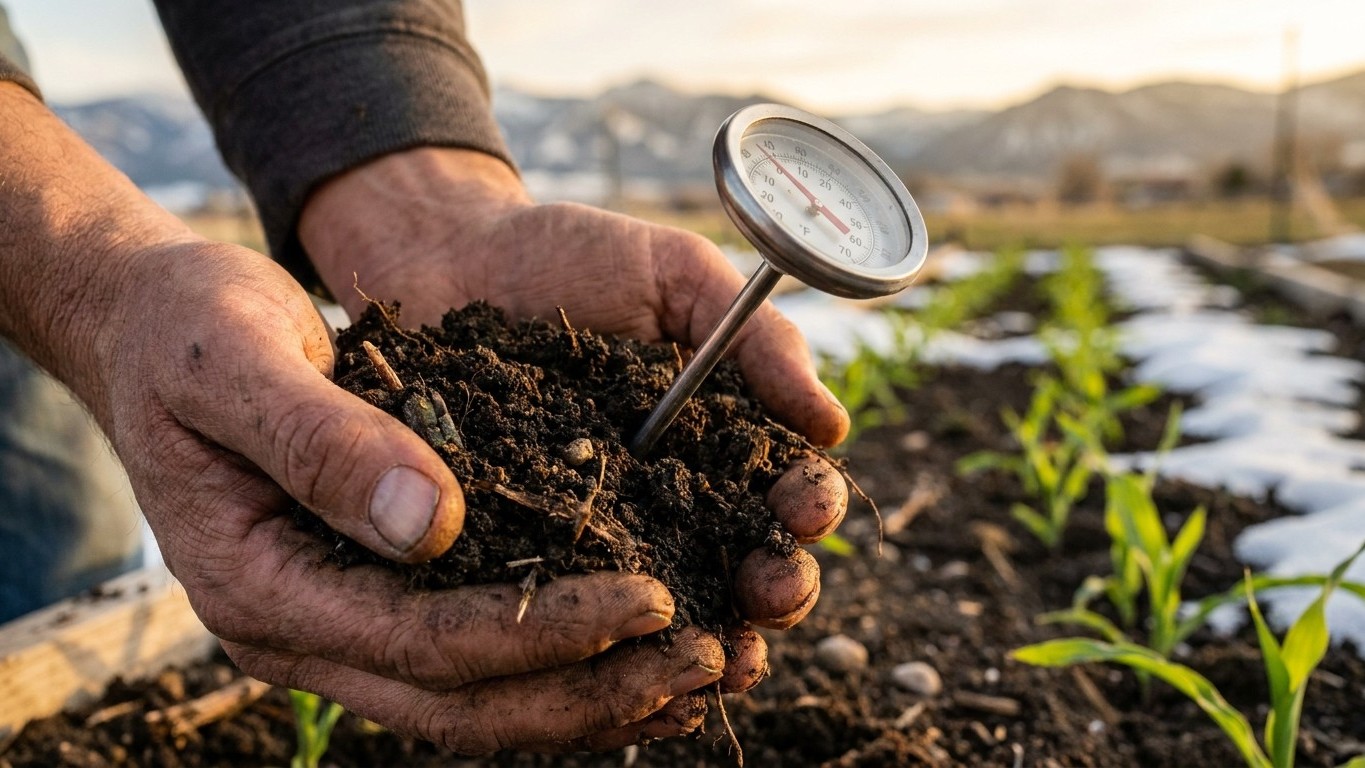
Start with the date most gardeners fixate on: the last spring frost. For the Piedmont reference station, that falls somewhere between March 23 and April 5, based on NOAA NCEI’s 1991-2020 climate normals. Plenty of seed packets and planting charts treat that date as the green light for direct-sown crops. Sweet corn doesn’t play by that rule. The seed needs soil above 60 F to germinate reliably, and soil temperature lags well behind the air temperature that determines a frost date. A morning with no frost risk can still have cold, damp soil sitting in the upper 40s or low 50s, especially in shaded or clay-heavy beds. Planting into that cold ground doesn’t kill the seed outright, it just sits there, rots, or produces a weak, uneven stand.
So When to Sow Sweet Corn in North Carolina opens later than the frost-free date suggests, and the only honest way to know it’s arrived is to check the soil itself with a thermometer rather than trust the calendar.
Once that soil finally clears 60 F, the countdown that matters is the 60 to 90 days most sweet corn varieties need to mature. On the other end of the season sits the first fall frost, which for this same Piedmont reference point lands between October 30 and November 8. Even counting from the later end of the spring frost window and stopping at the earlier end of the fall frost window, the frost-free frame runs roughly seven months, somewhere around 208 days. Subtract however many weeks the soil takes to catch up in a given spring, and there’s still a wide cushion left for a crop that only needs 60 to 90 days once it’s actually in the ground.
One more figure worth keeping in mind: the Charlotte reference station averages 35 days a year at 90 F or hotter. That’s not a maturity number, it’s a heat-load number, and it matters because it drives how fast a stand dries out between waterings and how much stress a young planting can take if it goes in during a heat spike rather than once soil conditions are steady. It’s a reason to watch the soil and the weather together, not a separate clock to track.
Bottom line for most of the state: the season is long enough. The soil temperature, not the frost date, is what decides when to actually plant.
Does a late variety fit here?
A 60-day variety
A fast-maturing type built around 60 days from planting to harvest has an easy time in this climate. Even in a cool, slow spring where the soil doesn’t hold steady at 60 F until well after the frost-free date arrives, there’s still a wide margin before the first fall frost in late October or early November. This is the variety that leaves room for error: a late start, a stretch of cool nights that slows early growth, none of it threatens the harvest. It’s also the type that makes succession planting realistic here, since a second or even third sowing can still mature before the season closes out.
A 90-day variety
A longer-season type needing closer to 90 days from planting is the one worth actually working out on paper, not assuming. Take the frost-free frame of roughly seven months, subtract whatever delay the soil needs to reach planting temperature, and there’s still comfortably more than 90 days left before the first fall frost shows up. In the Piedmont, a 90-day variety fits. It fits with less slack than the 60-day type, which matters if planting gets pushed later by a wet, slow spring, but it isn’t running against the calendar the way it would in a shorter-season climate. The caution runs the other direction geographically: the Blue Ridge counties to the west see both a later last frost and, generally, a shorter frost-free window than the Piedmont reference point, and that’s where a 90-day variety deserves a second look before committing a full bed to it. The coastal plain, by contrast, tends to warm earlier and holds off its first fall frost longer, which only widens the margin further.
What goes wrong here
- Soil sown too cold. Corn seed planted into ground still below 60 F sits and rots instead of sprouting, or comes up thin and uneven. The remedy is simple and unglamorous: push a soil thermometer into the bed a few days running before planting, and wait for a steady reading at or above 60 F rather than trusting the frost-free date alone.
- A variety too late for what’s left of the season. This mostly bites gardeners trying a second or third planting in midsummer, or anyone in the mountain counties reaching for a 90-day type without checking the local window first. Count backward from the first fall frost date before choosing a variety for a late sowing, and switch to a faster-maturing type once the calendar gets tight.
- Sweetness lost to cross-tasseling, and it has nothing to do with weather. Sweet corn comes in different genetic types, commonly labeled su, se and sh2, and their sweetness collapses if two different types tassel at the same time nearby. Utah State University Extension is clear that this is a timing problem, not a distance problem with a fixed number attached; the published guidance names no isolation distance, only the condition that the types must not tassel together. The fix is to plant one type per season, or stagger plantings so the tasseling windows don’t overlap, and to grow each type in a block of three or more rows rather than a single skinny row, since that shape is what makes pollination reliable in the first place.
Checking this against your own county
Charlotte’s numbers are a useful reference point for the Piedmont, but North Carolina spans three very different growing climates in a single state: a mountain west that runs cooler and later, a coastal plain that warms earlier and holds its fall frost off longer, and the Piedmont sitting between the two. Soil type, drainage, and even which side of a slope a garden sits on can shift a local soil-warming date by more than a week from the regional average.
The reliable way to confirm any of this for a specific address is to contact North Carolina State University Extension, which maintains county-level offices across the state. Local extension agents track soil temperature trends, frost records, and variety performance specific to that county, and can confirm whether a particular sweet corn variety realistically fits the growing window on a given piece of ground.
Common questions
When should I plant Sweet Corn in North Carolina?
Once soil temperature holds steady at or above 60 F, which typically comes some weeks after the last spring frost rather than on the same date. Checking the soil directly with a thermometer beats relying on the frost-free date alone.
Can I grow sweet corn in the North Carolina mountains?
Generally yes, but the window runs later and tighter than in the Piedmont or coastal plain. A faster-maturing variety is the safer bet there, and confirming timing with the local county extension office is worth the phone call before committing to a longer-season type.
Why is my sweet corn not sweet?
The most common cause has nothing to do with soil or weather. It happens when two different sweet corn types, such as su and se, or se and sh2, tassel at the same time near each other. Planting one type per season, or timing plantings so the tasseling windows don’t overlap, is the fix.
How much space does sweet corn need in a home garden?
It needs to be planted in blocks of three or more rows rather than one long single row, since that arrangement is what makes wind pollination reliable. A single skinny row tends to produce poorly filled ears regardless of variety or climate.