
West of the Cascades, collards go in twice a year. Start seed indoors in late winter for a spring crop, then sow again in early summer for fall and winter picking. Central and eastern Oregon runs on a much shorter calendar. The dates below are anchored on Portland, the reference station, and they shift as you move across the state.
The short answer for Oregon
At the Portland reference station, the last spring freeze falls between March 6 and March 21, and the first fall freeze between November 11 and November 27. Both ranges come from NOAA’s 1991-2020 U.S. Climate Normals. They are the 30 to 70 percent band for a 32°F freeze: the stretch of dates where a freeze goes from likely to unlikely in spring, and from unlikely to likely in fall. No single year follows the average. The mean daily minimum of the coldest month is 36.2°F, so winter nights in the valley usually stay above freezing.
When should you sow collards for a spring crop?
Start seed indoors from late January through February. That gives you sturdy transplants by March. Collards take light frost without harm, so transplants can go out right around the March 6 to 21 window, ideally under row cover for the first couple of weeks. Direct seeding works from mid-March into April once the soil can be worked, though transplants save several weeks. Many varieties are listed by days from transplanting, which puts the first picking in late spring.
When should you sow collards for fall and winter?
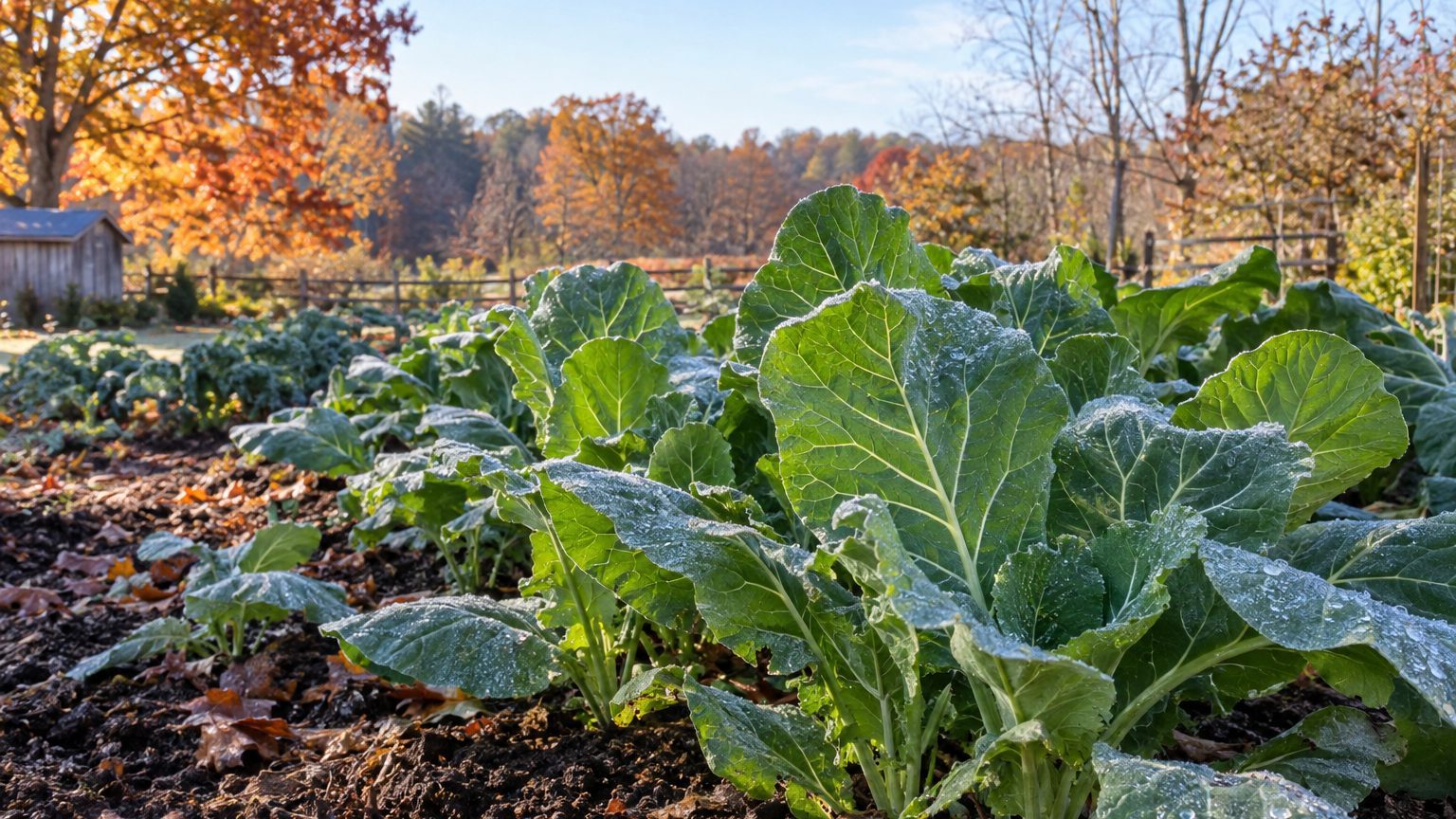
Count back from November 11. Collards need a long stretch of growth to reach a good harvest size before the first freeze, so sow seed in a nursery bed or flats in late summer. Move transplants to the garden in late July or August. Cool fall weather sweetens the leaves, and the mild winter lets plants stand in the garden and keep producing. Picking continues until they bolt in spring. The full season-by-season routine is in Growing Collards in Oregon.
What will not work here
Why can’t the Portland dates be used statewide?
Portland sits west of the Cascades. Central and eastern Oregon is high desert with a far shorter season. A July sowing that finishes comfortably in the Willamette Valley runs out of time there, and a March seeding goes into cold, sometimes frozen ground. The slowest collards suffer most. A slow variety leaves little margin where fall freezes arrive weeks earlier. Gardeners in those areas should choose faster types, and The Best Collards and Greens for Oregon sorts them by speed.
What goes wrong with summer watering and winter spacing?
Summers west of the Cascades are dry, and that is exactly when the fall crop is a seedling. Tiny plants with shallow roots cannot live on one deep weekly soaking. They need steady moisture until they have a few inches of growth, with shade cloth over the nursery bed on the hottest afternoons. Seedlings left to dry out stall, and the lost weeks cannot be recovered before November.
The opposite problem shows up in winter. The wet, mild season rewards airflow. Plants crowded together stay damp, and that invites slugs and fungal leaf spot. Give each plant room to spread.
The 36.2°F figure also needs careful reading. It is an average of nightly lows, not a floor. A cold snap in January can drop well below it, and an unprotected young planting can take damage. Keep a sheet of row cover handy for those nights.
One more mistake is sowing late. Seed started after mid-July produces plants that are still small when day length shrinks and growth slows to a crawl. They survive, but they give you little to pick until spring.
What changes across Oregon
How much does the growing season vary inside Oregon?
A lot. The USDA Plant Hardiness Zone Map (2023, based on 1991-2020 normals) places the state in zones 4a through 9b, a spread of six full zones. There is no single answer for Oregon. The mild coast and the Willamette Valley sit at the warm end. The Cascades, the high desert and the northeast sit toward the cold end, where winter lows are far more severe. Hardiness zones are built on one number, the average annual extreme minimum temperature. They tell you whether a plant survives winter, but not how many growing days you get between freezes.
What should gardeners at altitude or in the east shift?
Treat the Portland dates as a starting point, then move spring later and fall earlier. Start collards indoors and set transplants out after the soil has warmed, instead of seeding in March. Plan the fall planting for early summer, so plants are well sized before the first hard freeze. In the coldest zones, collards will not overwinter reliably, so the goal is a big, sweet fall harvest after the first frosts, with the crop finished by the time real winter arrives. Low tunnels and row cover can add weeks on both ends.
To find your own zone, look up your location on the USDA Plant Hardiness Zone Map. Then compare it with the spread above to see how far your garden sits from the Portland reference.
Where to check this for your own county
Start with Oregon State University Extension, the state’s land-grant extension service. Find your county office and look for two things. The first is a local vegetable planting calendar, which will give sowing and transplanting dates for your elevation and valley. The second is the list of varieties that have been trialled in your county, since a collard that does well on the coast may bolt or stall in a drier, colder place.
County Master Gardener programs are a good next step. Volunteers can tell you when frost typically arrives in your neighborhood, which varieties local gardeners rely on, and what pests are showing up that season.
A county recommendation always beats a state one. Oregon covers coastal rain forest, valley farmland, mountains and desert, and any statewide timing is an average that fits some gardens well and others poorly. The Portland dates here are a sound anchor for the western valleys. They are a rough guide anywhere else, and your county office can replace them with something better.
Checking this against your own garden
Your own observations outrank every date above. Three are worth watching, and none needs equipment.
- Soil warmth by feel. Push your hand into the bed a couple of inches. If the soil feels cold and clammy, direct seed will sit and rot. If it feels cool but not cold, you can sow. A bed that warms earlier than a neighbor’s is a sign of a sheltered, sunny spot.
- Male flowers on early bloomers. When hazelnut or alder catkins loosen and shed yellow pollen, your area has begun to wake up. Compare the date with last year’s. If it comes earlier or later than expected, shift your transplant dates by the same amount.
- First true leaves. The first pair a seedling shows are seed leaves. The true leaves come next, and they show that the plant is ready to be hardened off. If true leaves are slow to appear, your indoor spot is too cool or too dim, and transplanting has to wait.
Write down what you see each year. After two or three seasons your notes will tell you more about your garden than any regional table.
If you follow the almanac, here is when to plant collard greens by the moon. It is a tradition, not a proven method.
Common questions
Can collards stay in the garden through an Oregon winter?
West of the Cascades, yes. The mean daily minimum of the coldest month at the Portland reference station is 36.2°F, and established collards handle light frost. Protect plants with row cover during hard cold snaps. In the colder zones of the high desert and mountains, plan to harvest before deep winter arrives.
Is it better to direct seed or use transplants?
Transplants save several weeks, which matters most for the fall crop and for gardens with a short season. Direct seeding works in spring once the soil is workable and the bed stays evenly moist. In summer, a shaded nursery bed or flats are easier to water than a bed in full sun.
What if I miss the July sowing window?
Buy started plants from a nursery and set them out in August. They will give smaller leaves in fall and slow down in winter, but they will still produce a spring crop. A faster variety helps. If you miss the window by a month or more, plan for the next spring planting.
Do the frost dates hold every year?
No. They mark the stretch where a 32°F freeze is neither likely nor unlikely, based on 1991-2020 normals. Some years the last freeze arrives in early March and some years well after the 21st. Protect young transplants with row cover and watch the forecast.