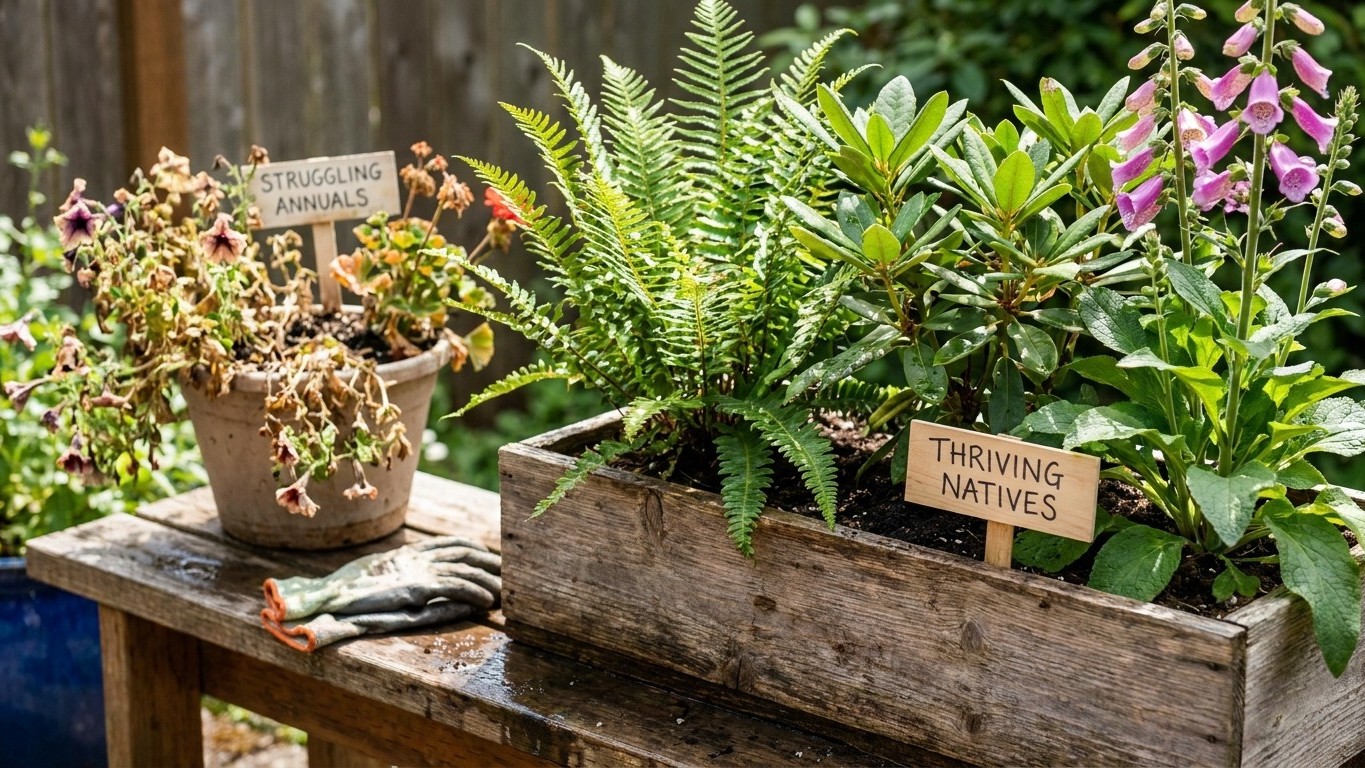

Flowers that thrive in Oregon are the ones built for cool, wet winters and mild, dry summers: drought-tolerant perennials, cold-hardy natives, and bloomers that don’t need heat to set flower. Oregon spans USDA zones 4a to 9b according to the USDA Plant Hardiness Zone Map’s 2023 update, so a plant that sails through winter in Portland can die outright in Bend. At the Portland reference station, NOAA’s 1991-2020 climate normals put the coldest month’s average low at 36.2F, mild enough that many marginal perennials survive there without protection. Check your ZIP code against the USDA zone map before buying a perennial, then read the plant tag’s hardiness range against that number, not against what the display table at the garden center promises.
What thrives in Oregon

Some flowers settle into an Oregon yard like they were born there, and some just sulk all summer and rot all winter. The ones that thrive are built for cool, wet winters and dry, mild summers — lavender, Russian sage, coreopsis, rudbeckia, hardy geraniums, and native picks like camas and checker mallow — while heat-lovers such as zinnias and tropical hibiscus stall out in the cool air and never really take off. Walk your beds after the next rain and see where water pools before you plant anything new; drainage decides more of this story than the tag stapled to the pot.
Summer heat is the other half of the equation, and here Oregon runs cooler than most of the country. Portland averages just 11.9 days a year at 90F or above, according to NOAA’s 1991-2020 normals, which means plants bred for long, humid, blistering summers often sulk or rot here instead of thriving. Zinnias and tropical hibiscus, workhorses in the Gulf states, tend to grow leggy and slow through a cool Willamette Valley summer. Gardeners in Oklahoma face almost the opposite problem, fighting heat and humidity that Oregon rarely delivers. The guide to flowers that actually thrive in Oklahoma lays out a very different set of struggles built around that heat load.
Cool-season bloomers take advantage of Oregon’s mild spring window instead of fighting it. Sweet peas and Iceland poppies flower hard in the weeks after the last frost risk passes, then fade once the dry stretch of summer sets in, and gardeners who plan around that window get a stronger show than those who try to push heat-loving annuals into an early start. The flowers that do best here overall share a few traits: tolerance for wet, cool roots in winter, the ability to shrug off a dry summer once established, and a bloom habit that doesn’t depend on heat to trigger flowering. That points toward Mediterranean-climate plants such as lavender and Russian sage, drought-tolerant daisy relatives in the Asteraceae family like coreopsis, rudbeckia, and echinacea, and hardy geraniums that flower steadily through mild, overcast weeks.
Good drainage matters as much as cold hardiness. A plant rated for zone 6 can still die over an Oregon winter if it’s sitting in soggy clay rather than freezing air. West of the Cascades, raised beds or amended, well-draining soil often save more plants than an extra layer of mulch does. Gardeners just across the Columbia River deal with a nearly identical split between wet lowlands and dry interior, and the plant choices overlap heavily. The companion guide to flowers that actually thrive in Washington covers the same maritime-versus-high-desert divide from the other side of the river.
Native plants worth the space
Native plants have already solved the local puzzle. They’ve adapted over thousands of years to Oregon’s wet winters, dry summers, and the swing between mild coastal air and sharp inland cold. Once established, most need far less supplemental water than exotic ornamentals, and many need none at all after their first two summers in the ground. That establishment period matters: a native planted this spring still needs regular water through its first dry season, even though the same plant will coast through drought once its roots are down.
Pacific Northwest natives also carry a pollinator advantage that imported ornamentals rarely match. Camas (Camassia quamash), with its blue-purple spring flower spikes, feeds early native bees before most garden perennials have even leafed out. Red-flowering currant (Ribes sanguineum) blooms in dangling pink-red clusters just as migrating rufous hummingbirds arrive, a timing match built over a long shared history rather than a coincidence. Oregon grape (Mahonia aquifolium), an evergreen shrub with holly-like leaves and yellow spring flowers, feeds bees early in the season and then feeds birds later when its dusty blue berries ripen.
Border-friendly native picks
For border plants rather than shrubs, western columbine (Aquilegia formosa) brings red-and-yellow nodding flowers that hummingbirds work hard for, and it self-sows lightly without becoming a nuisance. Checker mallow (Sidalcea spp.) sends up pink hollyhock-like spikes through summer and tolerates the damp winter soil that kills off less tolerant perennials. Douglas aster (Symphyotrichum subspicatum) closes out the season with purple daisy-form flowers right when many late-summer bees and butterflies are running low on nectar. Yarrow (Achillea millefolium), with flat-topped clusters of white or pale pink flowers on ferny foliage, tolerates both the wet west-side winter and the dry east-side summer, which is part of why it turns up in native seed mixes across the whole state.
None of these need fertilizer once established, and most resent rich, amended soil more than they resent poor soil. Skip the compost at planting time for true natives. They’re adapted to lean ground, and pampering them with rich soil tends to produce soft, floppy growth that flops over in the first hard rain.
Perennials that come back

A perennial that returns reliably in one Oregon garden can die outright forty miles away, because the state’s 4a-9b hardiness range covers everything from high desert winters to mild coastal ones. Reading a plant tag against your own zone, not against a generic “hardy perennial” label, is the single habit that saves the most money in an Oregon border. Catalogs and tags list the coldest zone a plant survives in average conditions, so a tag reading “zone 5-9” means the plant should return in a milder Oregon pocket but is a gamble on the cold end of the state’s range without winter protection.
What actually comes back
Some perennials shrug off Oregon’s wet winters and modest summer heat without complaint. Coreopsis ‘Moonbeam’, with small pale yellow daisies on threadleaf foliage, and purple coneflower (Echinacea purpurea) both hold up across most of the state’s milder zones and don’t mind a dry summer once rooted in. Black-eyed Susan (Rudbeckia fulgida ‘Goldsturm’) and hardy geranium ‘Rozanne’, with blue-violet flowers from late spring into fall, both tolerate the state’s wet shoulder seasons better than many catalog perennials do. Sedum, now often sold as Hylotelephium ‘Autumn Joy’, stores water in thick leaves and barely needs irrigation once mature, which suits the dry-summer side of Oregon’s climate well.
Others are perennial by nature but get grown as annuals here because the state’s colder pockets, or even a hard winter in the milder valleys, will kill them back. The table below shows how a few common garden perennials compare on paper against what actually happens in a typical Oregon winter.
| Perennial | Catalog hardiness (zone) | Bloom season | Behavior in colder Oregon zones |
|---|---|---|---|
| Coreopsis ‘Moonbeam’ | 3-9 | Summer into fall | Reliable perennial statewide in average winters |
| Echinacea purpurea | 3-9 | Summer | Reliable perennial statewide |
| Salvia nemorosa ‘May Night’ | 4-8 | Late spring, reblooms if cut back | Reliable in most of the state, marginal at the coldest edge of zone 4a |
| Lavandula angustifolia ‘Hidcote’ | 5-9 | Early to midsummer | Needs sharp drainage; struggles in wet, heavy winter soil regardless of zone |
| Gaillardia ‘Arizona Sun’ | 3-10 | Summer | Often short-lived, treated as an annual or biennial in damp winters |
| Dahlia (dinnerplate types) | 8-11 | Midsummer to first frost | Tubers usually need lifting and storing over winter outside the mildest zones |
The table above makes one thing clear: the gap between “hardy on paper” and “hardy in your soil” matters more than the zone number by itself. Lavender fails in Oregon more often from wet feet than from cold, which is why raised beds and gravel mulch save more lavender plants here than extra winter cover does. When a tag’s zone range includes your number but the plant still dies, suspect drainage before you suspect cold.
Putting a border together
A border that looks good all season is built in layers, not planted as one uniform block. Put the tallest plants, delphinium, foxglove, or tall garden phlox, at the back or center of an island bed, then step down through mid-height perennials like echinacea and rudbeckia, and finish with low edging plants such as coreopsis or dianthus at the front. Height alone isn’t enough. Stagger bloom time too, or the whole border peaks for three weeks in July and looks tired the rest of the year.
Succession means having something opening as something else fades. A rough sequence for the milder side of the state, working from Portland’s frost dates, starts with early bulbs and native camas blooming well before the last frost risk has fully passed, since NOAA’s 1991-2020 normals put that window at March 6 to March 21 for the Portland area, later east of the Cascades. It moves through peak perennial bloom in June and July, then finishes with asters, sedum, and rudbeckia carrying color toward the first fall frost, which the same NOAA data places between November 11 and November 27 near Portland. Gardeners farther east or at higher elevation should expect both ends of that window to arrive earlier and close sooner.
A few habits that make the difference
- Repeat one or two flower colors at intervals through the border instead of scattering every color evenly; it reads as designed rather than random.
- Leave real gaps at planting time. A one-gallon perennial looks lonely in May and crowded by August.
- Group in odd numbers, three or five of a kind, rather than planting singles.
- Put drought-tolerant plants together and thirstier ones together, so you’re not overwatering the tough ones to keep the thirsty ones alive.
Leaving room at planting is the mistake most first-time border gardeners make, buying nursery perennials at their spring size and setting them exactly that far apart. Check the plant’s mature spread, not its pot size, and plant to that number even though the bed looks sparse for the first year. Filling the gaps with annuals for that first season costs less than ripping out and dividing overcrowded perennials two years later.
Local help
Oregon State University’s Extension Service runs the Master Gardener program in most counties, training volunteers who answer plant questions at local offices and plant clinics for free. Its plant lists are built around the actual soil and zone conditions of each county rather than a statewide average, which matters given how much the 4a-9b range varies from the coast to the high desert. Start at the OSU Extension Service site for a county office locator, and browse the broader Oregon guides here for planting calendars and other state-specific advice.
Common questions
What zone is Portland, Oregon for gardening?
Portland falls within the broader USDA 4a-9b range that covers the whole state, and the USDA Plant Hardiness Zone Map’s 2023 update is the source to check against your specific ZIP code rather than relying on a single number for “Oregon.” Coastal and Willamette Valley locations tend to sit toward the milder end of that range, while mountain and high desert areas sit toward the colder end.
Can I grow flowers that need full sun and heat, like zinnias, in Oregon?
You can, but expect slower growth and fewer of the biggest blooms than gardeners in hotter states get, since Portland averages only 11.9 days a year above 90F according to NOAA’s 1991-2020 normals. Pick a south-facing spot against a wall or fence that holds heat, and don’t expect the same performance you’d see from the same seed packet in a hotter climate.
Why do my perennials rot over winter instead of just going dormant?
Wet, heavy soil sitting around dormant roots through Oregon’s rainy winter is usually the cause, not the cold itself. Raised beds, added grit or coarse compost, and avoiding low spots where water pools all solve this more reliably than mulching for warmth.
Do I need to deadhead everything to keep flowers blooming?
Not everything. Some perennials, like rudbeckia and coreopsis, rebloom faster if you cut spent flowers, but others, including native plants such as camas and checker mallow, are better left to set seed for birds and to self-sow. Check whether a plant is grown for repeat bloom or for a single flush before deciding whether deadheading is worth the time.
Related guides
- Flowers That Actually Thrive in Washington, and the Ones That Struggle
- Flowers That Actually Thrive in Idaho, and the Ones That Struggle
- Flowers That Actually Thrive in Alberta, and the Ones That Struggle