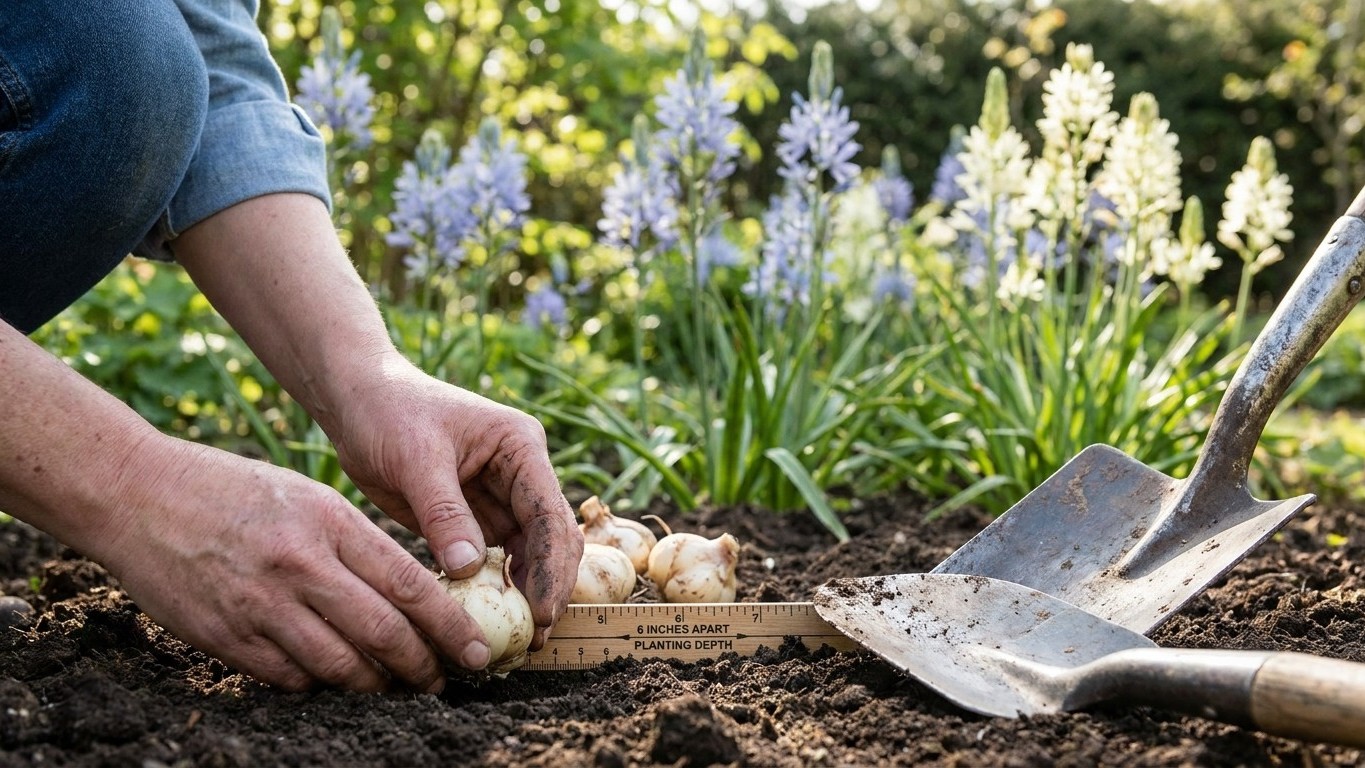

Camassia asks for one thing most spring bulbs don’t demand as strictly: a long, cold winter. Get that right, plant it 4 to 5 inches deep and 6 inches apart, and this native bulb will handle soil conditions that rot almost everything else in the spring bulb aisle.
What Camassia actually is

Two numbers matter before you buy a single bulb. Camassia is hardy in USDA zones 4-8, and it needs 12 to 14 weeks below 45°F to flower properly, a figure documented by Cornell University’s Department of Horticulture, Flower Bulb Research Program. Skip that chilling window, or fall short of it, and the bulb doesn’t necessarily die. It just doesn’t perform. A plant a week or two shy of its cold quota often pushes up leaves and a stem too short to notice, or skips flowering altogether. Gardeners near the edge of zone 8, where winters run mild, sit in that uncertain band and should expect an inconsistent show rather than a guaranteed failure.
Camassia blooms in late spring, which puts it well after the crocus-and-daffodil rush and past the point where most tulips have already dropped their petals. That timing matters for planning a border: it fills the gap between the early bulbs and the perennials taking over for summer. Flower color runs to blue and white, in tall spikes rather than the low clumps typical of earlier bulbs.
What sets this bulb apart botanically is its origin. Camassia is a North American native, and that heritage shows up in a habit almost no imported bulb shares: it tolerates heavy, wet spring soil, the exact condition that rots tulips, hyacinths, and most other imported stock. If your yard has a low spot that stays soggy after snowmelt, that’s precisely where camassia has an advantage over the rest of the bulb bed.
How deep and how far apart
The planting figures are specific, and they’re worth checking against a ruler rather than guessing by eye:
- Depth: 4 to 5 inches below the soil surface
- Spacing: 6 inches apart, bulb to bulb
Depth isn’t a cosmetic detail. Planted too shallow, a bulb sits closer to the freeze-thaw cycle that grips the top few inches of soil all winter, and repeated freezing and thawing can physically heave a shallow bulb up and out of the ground by spring. At 4 to 5 inches, camassia sits below that zone of movement, anchored where the temperature swings less violently and the roots can hold it in place.
Spacing decides how the planting reads once it’s blooming. Set bulbs a uniform 6 inches apart in a straight line and you get exactly that: a row of dots, evenly spaced and visually mechanical. Cluster them in loose, irregular groups (still respecting the 6-inch spacing between individual bulbs, but letting the group’s outline wander) and the same bulb produces what looks like a natural drift, the kind that reads as if it seeded itself.
Which end goes up
Bulbs go in pointed-end up, roots down, whenever the shape makes that obvious. When a bulb is round enough or worn enough that the top and bottom aren’t clear, plant it on its side rather than guessing wrong. Roots are pulled downward by gravity and by soil moisture regardless of orientation, and a sideways bulb corrects itself within the first growing season. Guessing upside-down on purpose is the one planting mistake with no real recovery.
Will it come back next year
Some spring bulbs are sold as perennials but behave like one-season plants, fading after two or three years because they’re bred for a single spectacular bloom rather than long-term survival. Camassia isn’t in that category. As a North American native adapted to the wet, heavy soils that kill off imported bulbs within a couple of seasons, it’s built for the long haul in the growing conditions it actually prefers, which is precisely the low, damp ground most gardeners struggle to plant anything else in.
Whether it comes back at all, though, depends less on the bulb’s genetics than on what happens after the flowers fade. Once camassia finishes blooming in late spring, the foliage keeps working. That green leaf tissue is photosynthesizing sugars back down into the bulb, and that stored energy is what builds next year’s flower bud inside the bulb before the plant ever goes dormant. Cut the leaves back while they’re still green, mow over them, or braid and tuck them out of sight for tidiness, and you cut off that supply line. The bulb survives, usually, but it flowers poorly or not at all the following spring.
The fix is simply patience. Let the foliage yellow and go limp on its own, however untidy that looks in a border for a few weeks, before removing it. That single habit, more than soil type or fertilizer, is what separates a camassia planting that returns for years from one that quietly stops flowering after its first spring.
What eats it, and what leaves it alone
Rodents leave camassia alone. That’s a meaningful piece of information for anyone who’s lost a tulip or crocus planting to squirrels digging up bulbs the week after planting, or to voles tunneling through a bed over winter. Camassia doesn’t attract that kind of attention.
That single fact changes the fall planting routine. Gardeners who plant tulips or crocuses typically lay down wire mesh over the bed right after planting, left in place until the ground freezes solid enough that digging becomes impractical for a squirrel. With camassia, that step isn’t necessary. The bulb can go into the ground and be left uncovered without the usual fall ritual of protecting it from digging.
That doesn’t mean the planting is maintenance-free in every other sense. It’s simply that the maintenance camassia demands is patience with the foliage in late spring, not defense against rodents in the fall. Two different problems, and this bulb only asks a gardener to manage one of them.