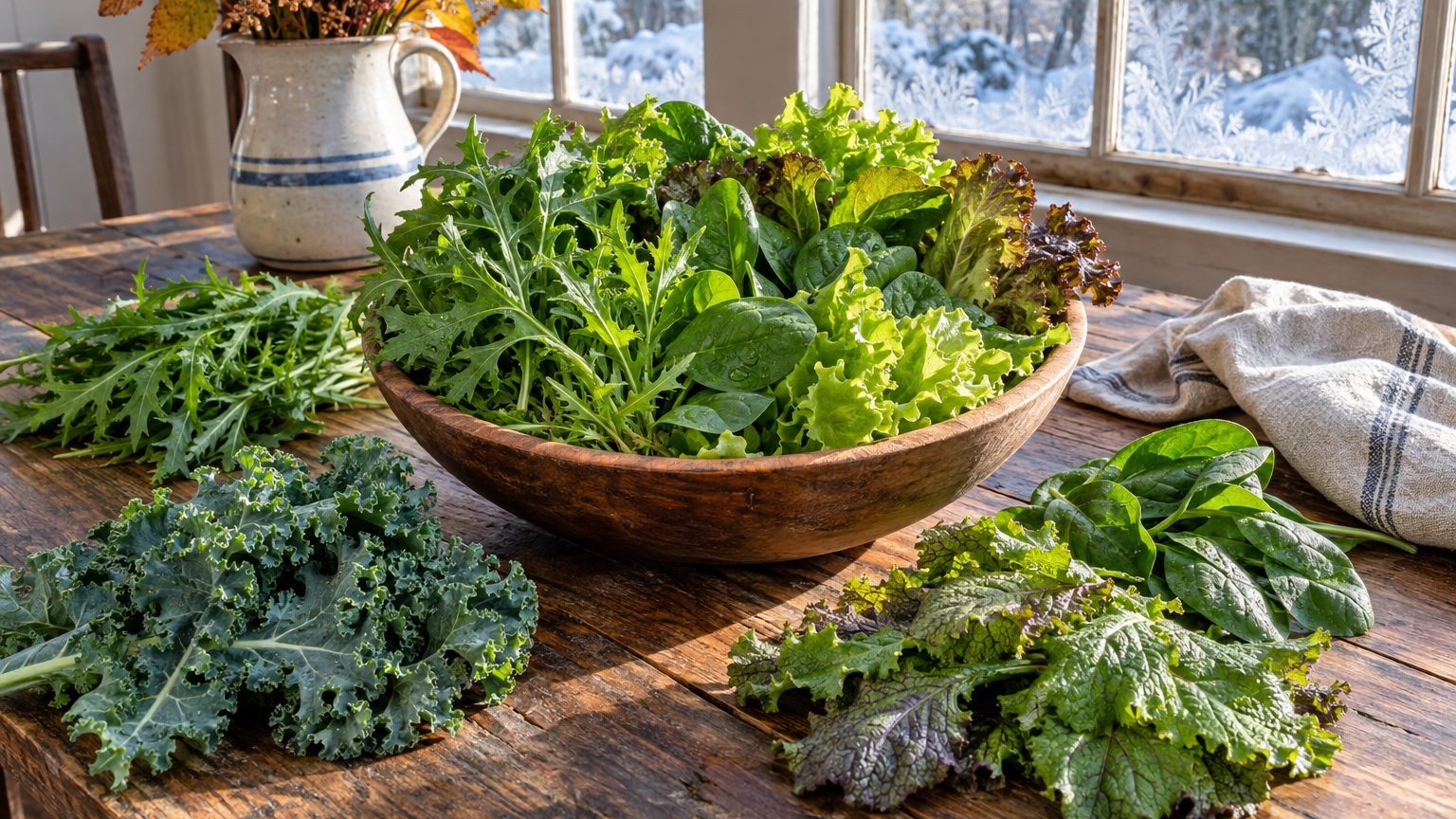

The best winter salads for Oregon are the cold-tolerant, low-light greens: mâche, claytonia, spinach, hardy brassicas such as mizuna and kale, and winter-type lettuces and chicories. West of the Cascades they grow outdoors through most winters with little protection. East of the mountains, in the high desert, the same list works only under cover, so the first decision is which side of the range you garden on.
The short answer for Oregon
Pick by type, not by catalog photo. Four types carry a winter salad bed in western Oregon: small tender-leaf greens (mâche, claytonia), spinach, hardy brassicas (arugula, mizuna, tatsoi, baby kale), and chicories (endive, escarole, radicchio). Add a winter lettuce or two for the familiar leaf. Portland is the reference station here, and the numbers favor all of them.
The mean daily minimum of the coldest month at Portland is 36.2°F, above freezing on average. Cold snaps still go lower, but most of these greens take frost without damage. What limits them is short, gray days and wet soil, which slow growth from about November into February. The 32°F freeze dates at that station run from March 6 to March 21 in spring and from November 11 to November 27 in fall. Those are the dates when the chance of a freeze at or below 32°F sits between 30 and 70 percent, so a freeze before or after them is still possible.
Fall sowing windows hang on those dates, and the When to Sow Winter Salads in Oregon guide lays them out week by week.
| Type | Examples | Best role | Main risk |
|---|---|---|---|
| Tender-leaf greens | Mâche, claytonia | Reliable midwinter cutting | Slow to germinate in warm soil |
| Spinach | Smooth-leaf and savoyed types | Sweetest in cold weather | Downy mildew in long wet spells |
| Hardy brassicas | Arugula, mizuna, tatsoi, baby kale | Fast fall crop, regrowth in late winter | Slugs, flea beetles in early fall |
| Chicories | Endive, escarole, radicchio | Bitter, crisp, holds in the cold | Rot in tightly headed types |
| Winter lettuce | Varieties sold as winter or cold-hardy types, such as Winter Density or Arctic King | Familiar leaf for the table | Gray mold in wet, crowded beds |
Which winter salad greens are the hardiest?
Mâche and claytonia lead. Both are small, low-growing plants that handle hard frost and low light better than any lettuce. Spinach and the chicories come next. Lettuce is the most easily damaged of the group, so choose varieties bred for winter rather than summer salad types.
What should east-side gardeners plant?
The same four types, but sown earlier and kept under a cold frame or low tunnel. Where winters are far colder than Portland’s, mâche and claytonia are the ones most likely to carry on, and everything else wants a cover from late fall.
What will not work here

Late sowing fails first. West of the Cascades, daylight drops short at midwinter, and in low light most salad plants barely add leaves. A bed sown in late October produces seedlings that sit and wait. The plants that give a midwinter harvest are the ones that were close to full size before the cold set in, which is why sowing early enough matters more than any variety choice. Slow chicories and heading radicchio are the worst fit for a late start.
Summer heat at sowing time is the next trap. Lettuce seed often refuses to germinate when soil runs warm, and western Oregon summers are dry well into September. A bed watered once a week will not get seedlings through August. Fall salads need light, even moisture every day or two until the seedlings are up, ideally with shade cloth or a board over the row for the first few days. The sowing-date guide in When to Sow Winter Salads in Oregon shows where heat stops being the problem.
Wet beats cold in the Willamette Valley and along the coast. Rain falls for weeks at a stretch, soil stays saturated, and tight plantings stay damp. Lettuce and tight-headed chicories planted close together develop gray mold and rot at the crown. Space them wider than a spring planting and raise the bed a few inches where the soil drains slowly. Heavy clay is the usual problem in valley gardens. Slugs, which stay active all winter in mild, wet weather, will take out a seedling row in a night.
East of the Cascades, the problem flips. The high desert has a far shorter season, so the Portland dates do not apply. Frost arrives early in fall, winter lows are hard, and wind dries open beds. Spinach and arugula sown in late summer may do fine for a few weeks, but outdoor lettuce or radicchio without cover will not survive. A bed with no cold frame, tunnel, or row cover is the wrong plan there.
Finally, expecting steady growth all winter fails everywhere. Cold-season salads grow in fall, hold through the dark months, and push again as days lengthen in February and March. Plan for a stored harvest, cut sparingly, and let the plants stay put.
What changes across Oregon
Oregon spans USDA hardiness zones 4a through 9b, which makes it one of the widest ranges of any state. The USDA system is built on one variable, the average annual extreme minimum temperature, so it tells you about the coldest night of the year rather than about rain, wind, or day length. No single recommendation covers the state, and the varieties that thrive in Portland differ from those that make sense in Bend or Burns.
The Portland figures above apply to the Willamette Valley and nearby lowlands. Coastal gardens are milder still, with fog and constant moisture, so chicories and lettuces need extra space and good drainage. Southern Oregon valleys run warmer and drier in summer, so fall sowing starts in heat, and shade and daily watering matter even more.
Move toward the Cascade foothills, higher elevations, or the east side, and the pattern shifts. The growing season shortens and the date of the first hard freeze moves earlier. The practical adjustment is to sow earlier by several weeks, choose the hardiest types (mâche, claytonia, spinach), and add a cold frame or low tunnel as the main structure of the bed, not an extra. At high elevations, snow cover can protect plants but also buries them for weeks, so a framed bed you can open on a warm day is worth building.
To see where you fall, check the USDA Plant Hardiness Zone Map and enter your ZIP code. Treat the zone as a rough guide to cold only. Your own site may run warmer or colder than the map shows, depending on slope, wind, and nearby buildings. For the broader picture of what grows where, the overview of Winter Salads for Oregon Gardens is the place to start.
Where to check this for your own county
Your state’s land-grant extension service is the best next stop. Oregon State University Extension runs county offices across the state, and the staff there know your local frost dates, soil types, and pest pressures in a way a statewide guide cannot.
When you visit, look for two things. The first is the local planting calendar for your county, with sowing windows for fall and winter greens. The second is the list of varieties that have been grown and compared in your county or a similar climate. Extension publications often say which lettuces held up under local mildew, which spinach bolted, and which brassicas the slugs left alone. That is information you cannot get from a seed catalog.
If your county office has a Master Gardener program, call or visit. Volunteers there often keep local records of last and first frost, can name the nearest trial garden, and can tell you whether your neighborhood has a cold pocket or a persistent fog. They can also point you to local seed swaps and nurseries that carry hardy varieties suited to your elevation.
A county recommendation beats a state one, and what you are reading here is the state one. It covers a region stretching from rainforest coast to sagebrush desert, so it can only point you in the right direction. A county planting calendar gives dates and varieties that fit your own valley.
Checking this against your own garden
Your own observations outrank every date in this article. Three are worth watching, and none needs equipment.
Soil warmth by feel. Push your bare hand into the bed in the morning. Soil that feels cool but not cold means seeds will germinate and seedlings will grow. Soil that still feels warm in late summer means lettuce seed will sulk, so wait or shade the bed. A bed that feels cold much earlier than a neighbor’s tells you your site is a frost pocket or stays wet.
The first true leaves. The first two leaves a seedling shows are seed leaves. The next pair are the true leaves, and how quickly they appear tells you how much growth you can expect. If true leaves appear promptly after sowing in September, the bed has enough warmth and light to build size before winter. If they take much longer, you have a slower, shadier microclimate and should sow earlier next year.
Where frost and standing water linger. Walk the yard on a cold morning. The spots where frost stays on the grass longest are your coldest beds, and the spots where puddles stay after rain are the ones where lettuce and chicories will rot. Put mâche and claytonia there and keep the more tender types on the warmer, better-drained ground.
Common questions
Can I grow winter salads outdoors in Portland without a cover?
Mostly yes. The mean daily minimum of the coldest month is 36.2°F, and mâche, claytonia, spinach, and hardy brassicas handle frost well. Lettuce and radicchio fare better with a light row cover during hard freezes and long, heavy rains.
What is the single easiest winter salad green for Oregon?
Mâche and claytonia are the easiest for most gardens. They tolerate cold, low light, and neglect, and they keep producing small leaves through the darkest weeks. Spinach is a close second where drainage is good.
Do the Portland frost dates apply across Oregon?
No. March 6 to March 21 for the last spring freeze and November 11 to November 27 for the first fall freeze describe Portland’s 30 to 70 percent freeze-probability band. Central and eastern Oregon have a far shorter season, so use your county’s dates.
Why do my winter lettuces rot instead of growing?
Wet, crowded beds are the usual cause. Long periods of rain keep the crown damp, and gray mold follows. Space plants wider, use a raised bed or amended soil for drainage, and pick off any yellowing outer leaves promptly.