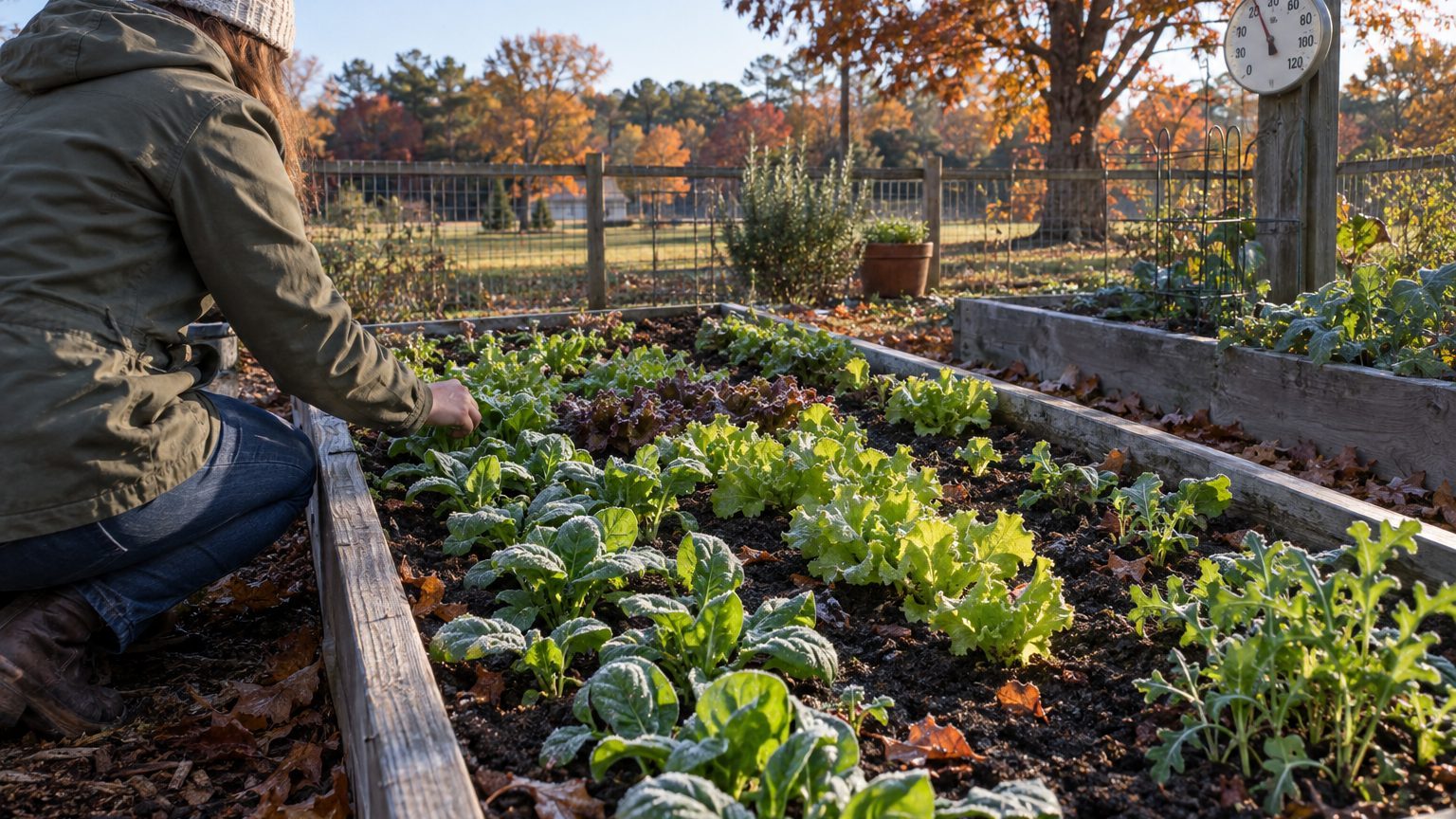

Sow winter salads west of the Cascades from mid-August into late September, so the plants are close to full size when the first freezes arrive. Slow crops go in first and quick baby greens last. A cloche or low tunnel stretches the window by a few weeks. East of the mountains the calendar shifts earlier, and the dates below do not carry over.
The short answer for Oregon
At the Portland reference station, the last spring freeze falls between March 6 and March 21, and the first fall freeze between November 11 and November 27. Those ranges come from the NOAA 1991-2020 Climate Normals. They mark the stretch of the calendar when the chance of a 32°F freeze sits between 30 and 70 percent. A freeze can still arrive before November 11 in any given year, so treat the window as odds built from thirty years of records.
When do you sow each type of winter salad in Oregon?
Count backward from November 11, the early end of the fall window. Leaf crops that grow fast get sown last, and heading types that need weeks more get sown first. These are typical ranges for gardens near the reference station, and they work best as a starting point for your own notes.
| Type of winter salad | Typical sowing window | What to expect |
|---|---|---|
| Heading endive, escarole, radicchio | July to early August | Needs the longest runway; harvest as heads firm up in fall |
| Spinach, baby lettuce | Mid-August to mid-September | Reaches cutting size before growth slows in late fall |
| Arugula, mizuna, tatsoi | Late August to late September | Quick to size up; picks over a long stretch |
| Mâche, claytonia (miner’s lettuce) | September to early October | Handles cold well and keeps producing small leaves through winter |
Why do winter salads get sown in late summer?
Shortening days slow growth in late fall no matter how mild the weather is. The coldest month at the reference station has a mean daily minimum of 36.2°F, so nights average above freezing and hardy greens survive outdoors. They just add very little new leaf. Whatever is not near harvest size when growth slows mostly sits and waits, and you pick from it slowly over the winter.
A second, smaller sowing window opens in late winter. Sowing under cover in late February or early March, ahead of the March 6 to March 21 last-freeze window, gives a spring harvest before heat sends the plants to seed. The Winter Salads for Oregon Gardens guide covers the full growing season around these dates.
What will not work here

Sowing in the second half of October without cover is the most common miss. By then the days are short and the soil is cooling. Seedlings reach the two-leaf stage and then hold there for months, giving a thin picking in March at best. A low tunnel over the bed changes the odds a lot, but it still cannot make up for daylight.
Can you sow winter lettuce in July in Oregon?
You can try, but lettuce seed is the weak link. Soil in a sunny bed during July and early August runs warm enough that lettuce seed germinates poorly or not at all. Summers west of the Cascades are also dry, so a gardener who waters once a week will watch a seedbed bake between visits. Fall seedlings need light watering every day until they sprout, and a strip of shade cloth over the bed helps. Heading endive and radicchio tolerate this better than lettuce, which is why they appear in the July slot in the table.
Why do winter salads rot in wet Oregon winters?
Mild nights mean the cold never dries things out. With a coldest-month minimum of 36.2°F, winter is damp and slow rather than frozen, and that favors slugs and gray mold. Plants set at tight spacing stay wet at the base after every rain. Heading types need room for air to move between them. Baby leaf can be sown thickly, but cut it often enough that the canopy never gets dense and sodden.
Tender varieties are another weak spot. Soft butterhead lettuces and big romaines tolerate a light frost, but a hard freeze in an open bed can ruin them in one night. Mâche, claytonia, spinach and the frilly or loose-leaf types hold up better. The best winter salads for Oregon are sorted by that kind of hardiness.
The biggest mistake is applying the Portland window to the whole state. Central and eastern Oregon are high desert, with a far shorter growing season. A September sowing that works in the Willamette Valley can meet a hard freeze there before the plants have size, and the slowest crops, such as heading radicchio, will not finish.
What changes across Oregon
The USDA Plant Hardiness Zone Map (2023 edition, built on 1991-2020 normals) puts Oregon anywhere from zone 4a to zone 9b. That is six full zones inside one state, so no single sowing date fits everyone. The zone system rests on one variable, the average annual extreme minimum temperature. It tells you what survives the coldest night but says nothing about when the first freeze arrives, so use it together with local frost dates.
Near Portland and through the Willamette Valley, the dates above are a fair guide. The coast is milder and windier, with fog and salt spray, and slugs are a bigger concern than cold. Southern Oregon valleys run hotter in summer, which pushes lettuce sowings later into September. Gardens in the mountains and on the eastern side face freezes much earlier and colder winters.
If you garden in the north or at altitude, shift everything earlier. Work back from your own first fall freeze instead of November 11, and start the slow crops weeks sooner. Plan on low tunnels or a cold frame as standard equipment. In the coldest parts of the state, winter salads are a protected crop, not an open-bed one.
To find your own zone, use the USDA map and look up your ZIP code. Zones can differ even between neighboring valleys, so the map is a better guide than a guess based on the nearest city.
Where to check this for your own county
Your county office of Oregon State University Extension is the best next stop. It covers every part of the state, from the coast to the high desert, and local staff and Master Gardener volunteers know the ground in their area.
Look for two things. The first is a local planting calendar for fall and winter vegetables, which will name sowing months for your county. The second is any list of varieties that have been trialed nearby, especially for greens that held up in winter. Ask about your average first fall freeze date too, and about slug pressure, since local advice on both can change what you sow and when.
A county recommendation will beat a statewide one. A window built around a Portland reference station averages over a lot of different ground, and a garden in Bend or Ashland lives under different conditions.
Checking this against your own garden
Your own observations outrank any date in a calendar. Three are worth watching.
- Soil warmth by feel. Press your hand flat on the bed at midday in late summer. If it feels hot, lettuce seed will struggle, so wait or shade the bed. In October, soil that stays cold and wet to the touch tells you growth will be slow, and that sowings should go under cover.
- First true leaves. Seedlings show a pair of rounded seed leaves first, then the first true leaves with the shape of the adult plant. If true leaves have appeared by early October, the planting is on track for winter. If they are still missing by mid-October, the bed needs protection.
- Frost-tender plants. Basil or squash leaves going black marks your first real freeze. If it happens near a wall but not in the open bed, you have a warmer spot for tender crops.
Write down the date of your first freeze each year. After three seasons, you will have a sowing window built from your own bed, and it will be more reliable than any regional average.
Common questions
Can you sow winter salads in October in Oregon?
West of the Cascades, early October works for the hardiest types such as mâche and claytonia, especially under a tunnel or cold frame. Lettuce and spinach sown that late mostly stall at seedling size until spring.
What is the latest you can sow spinach for winter harvest?
Mid-September is the practical limit in the open near the reference station. In October, spinach needs cover to make a usable crop. In colder parts of the state, sow weeks earlier.
When do you sow winter salads for an early spring harvest?
Late February through early March, under cover, ahead of the March 6 to March 21 last-freeze window at the Portland reference station. Cold-hardy greens will germinate in cool soil and grow as days lengthen. East of the Cascades, wait longer.
Do winter salads need protection in Oregon?
Near Portland, where the coldest month has a mean daily minimum of 36.2°F, many hardy greens stand outdoors all winter. A cover still helps in hard freezes and heavy rain. In colder high-desert and mountain gardens, plan on a tunnel or cold frame from the start.