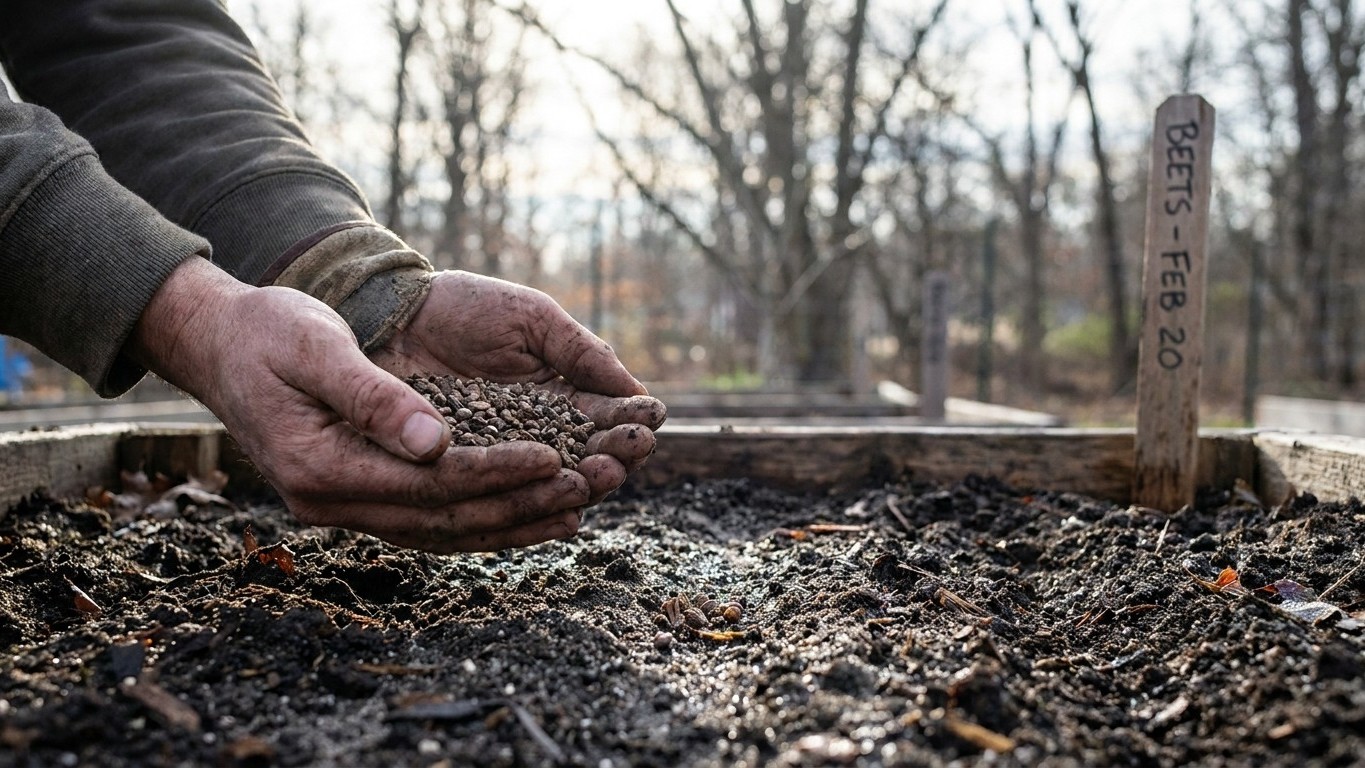

In Pennsylvania, sow beets outdoors two to three weeks before the last spring frost, which the reference station’s normals put between March 29 and April 6. That timing lands the crop in mid-to-late March for the mildest ground, later inland. Beets grown from seed take 60 to 80 days to mature, counted from sowing, so an early start matters more here than almost anywhere else in the calendar.
The short answer
Pennsylvania’s representative soil, mapped by USDA NRCS as the Hazleton series, is young ground technically classed as an Inceptisol, meaning it hasn’t built up the strong horizon layering older soils show. The surface tests strongly acid, near pH 4.6, and runs 46 percent sand, 12 percent clay, and 42 percent silt, a loam-to-silt-loam texture that drains well. For a beet, that combination sends two separate signals. The acidity sits well below where beets perform best, so ground built like this generally needs lime worked toward neutral before the crop can size properly. The texture drains fast, which keeps roots from sitting in standing water, but it also means the topsoil dries out between rains quicker than a heavier clay would, and that matters the moment beet seed goes in.
None of this describes any single garden. Pennsylvania spans hundreds of mapped soil series, from river-bottom silt along the Susquehanna and Delaware to shale-derived clay loams through the ridge-and-valley country to sandy outwash near the Poconos, and the Hazleton series is simply the one USDA lists as representative statewide. A soil test remains the only way to know whether a particular bed actually runs acid or sandy; the Hazleton figures are a starting point for that conversation, not a stand-in for a reader’s own dirt.
On heat, the sourcing behind this page doesn’t include a day-count of how often the state’s reference city crosses 90 F, so that number isn’t offered here. What is documented is the threshold that actually governs beet quality: Utah State University Extension notes that once temperatures climb past 85 F while the plant is also short on water, the root turns woody. Pennsylvania summers reliably deliver stretches above that mark, typically from July into August, which is one more reason sowing early, so the root fills out before that heat lands, carries more weight in this state than almost any other single decision a grower makes.
The six weeks that decide it here
Sow two to three weeks ahead of the last frost date, March 29 to April 6 at the reference station, and the first six weeks of a beet’s life land somewhere between mid-March and mid-May depending on exactly how early the sowing happens. That window is the one Utah State University Extension flags as the period when water stress does its damage: short the plant on moisture during those six weeks and it responds by bolting, sending up a flower stalk instead of building a root worth harvesting.
Pennsylvania spring in that stretch tends to swing rather than settle into one pattern. A wet, cold front moving through can be followed within days by a dry, sunny run, and the Hazleton soil’s fast drainage means that dry run empties the topsoil quickly. For a bed sitting on ground like that, the practical risk isn’t drought in the sense a grower out West would use the word. It’s the shorter dry spells between rain events that let the surface inch of soil, exactly where beet seed and young roots sit, go from damp to dust within days. That’s a different failure than the woodiness heat causes later in the season; this one shows up as a plant that flowers early and stops making a usable root, regardless of how hot the air eventually gets.
The frost date itself isn’t uniform across the state either. The March 29 to April 6 window belongs to the mildest corner of Pennsylvania. The northern tier and the Alleghenies run two to four weeks later in spring, which pushes the entire six-week window later for a grower near Erie or in Potter County than for one working ground just outside Philadelphia. Anyone gardening away from the southeast corner should treat the reference date as a floor, not a fixed calendar entry, and expect to sow later rather than earlier than a Philadelphia timetable would suggest.
The upshot for this state: the first six weeks after sowing are less about frost risk, once the sowing date itself is set correctly, and more about keeping that fast-draining surface layer from drying out between weather systems. That’s the specific stress tied to bolting, and it’s a different problem than the cold the plant is likely to meet after a properly timed sowing.
What goes wrong here
- Sowing on the frost date instead of ahead of it. Waiting until March 29 to April 6 to put seed in, rather than starting two to three weeks earlier, pushes the crop’s first six weeks into a warmer, drier stretch and shortens the cool window beets need before summer heat arrives. Mark the sowing date two to three weeks ahead of the local last-frost window, not on top of it.
- Treating the whole state like Philadelphia. The reference frost date belongs to the state’s mildest station. The northern tier and the Alleghenies run two to four weeks behind it in spring, so sowing on a Philadelphia calendar in Erie or the high country risks seed sitting in ground that’s still too cold to germinate well. Push the sowing date back for northern and mountain counties instead of using one date statewide.
- Skipping a soil test on ground that runs strongly acid. The state’s representative soil surface sits near pH 4.6, well below where beets grow best, and a bed that hasn’t been limed will hold the crop back no matter how well the sowing timing is handled. Test the bed and lime toward neutral before sowing rather than after growth stalls.
- Letting a fast-draining bed dry out between rains. Ground built like the Hazleton series sheds water well, which also means the surface inch dries out quickly during a dry spell in that first six weeks, the exact condition tied to premature bolting. Water on a fixed schedule through that early stretch instead of waiting for the plant to show stress.
- Leaving the crop in the ground once August heat sets in. Once air temperatures push past 85 F while the soil is also short on water, the root turns woody, a separate failure from bolting that shows up later in the season. Harvest ahead of the hottest stretch instead of waiting for a larger root, and keep the bed watered if any beets are still sizing when the heat arrives.
Common questions
How many days do beets take to mature in Pennsylvania?
Beets run 60 to 80 days from sowing to harvest. That count starts at seeding, since beets are grown directly in place rather than transplanted, so there’s no seedling stage to subtract from the total.
Does Pennsylvania soil need lime before sowing beets?
The state’s representative soil surface, the Hazleton series, tests strongly acid at a pH near 4.6, well below where beets grow best. That figure describes the mapped surface horizon statewide, not any one garden bed, so a soil test is the way to confirm whether a specific plot needs lime and how much.
What last-frost date should I use for sowing beets in Pennsylvania?
The reference station’s 1991-2020 normals put the last spring frost between March 29 and April 6, and beets go in two to three weeks ahead of that. That date applies to Philadelphia, the mildest part of the state; the northern tier and the Alleghenies run two to four weeks later, so growers there should push the sowing date back accordingly.
Is bolting or woody roots the bigger risk for beets in Pennsylvania?
They’re two separate problems tied to two different stretches of the season. Bolting comes from water stress during the first six weeks after sowing, which in this state’s fast-draining, well-drained soil means short dry spells between rain events. Woodiness comes later, once temperatures pass 85 F while the plant is also short on water, typically in the July-to-August stretch. Managing one doesn’t automatically prevent the other.