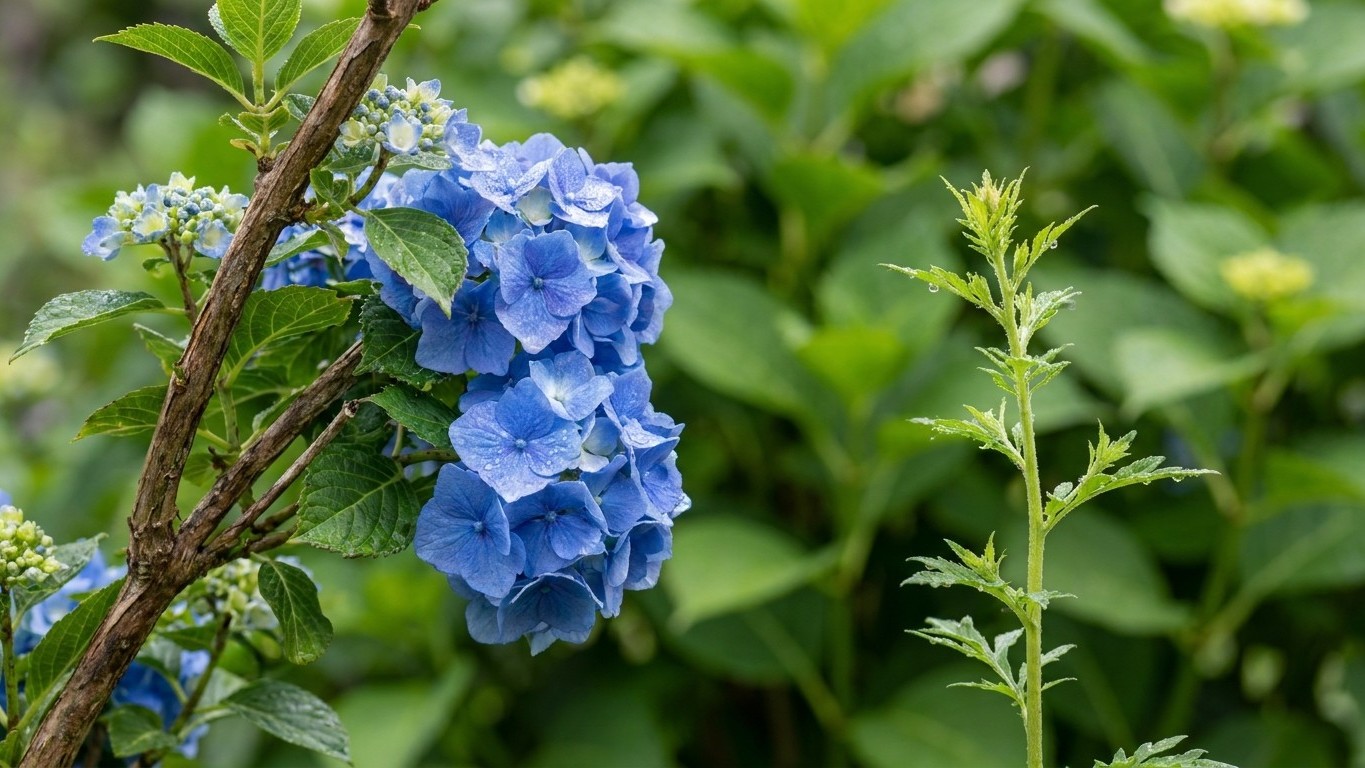

Prune hydrangeas that flower on old wood (bigleaf, mountain, and oakleaf) in the weeks right after the blooms fade. Prune those that flower on new wood (smooth and panicle) in late winter. Mixing the two up is a common way to lose a season of flowers, because cutting an old-wood shrub in winter or fall removes buds that are already formed. Which group your shrub belongs to matters more than the calendar, and the frost dates then set the limits.
What this comes down to in Pennsylvania

In Philadelphia, where the average last spring frost falls between March 29 and April 6 (NOAA NCEI U.S. Climate Normals), smooth and panicle hydrangeas should be pruned before that window opens, while the shrubs are still dormant. Bigleaf, mountain, and oakleaf types run on a different clock. They get their trim in summer, soon after flowering, well ahead of the first fall frost, which arrives between November 5 and November 16.
The split comes from when each plant builds its flower buds. Old-wood types set next year’s buds on this year’s stems from late summer into fall, and those buds sit on the bare stems all winter. A pair of shears in March takes them off. New-wood types start over every spring, growing fresh stems that flower the same season. Cutting them back in late winter costs nothing and often produces sturdier stems.
The state’s climate adds a complication. The USDA Plant Hardiness Zone Map, which is built on a single variable (the average annual extreme minimum temperature), puts Pennsylvania anywhere from zone 5a to 7b, and Philadelphia sits at the mild end. Where winters are colder, bigleaf stem tips often die back and take their buds with them. Pruning there has to start from what the winter already removed.
Which hydrangeas bloom on old wood?
Bigleaf hydrangeas (the blue and pink mopheads and lacecaps), mountain hydrangeas, and oakleaf hydrangeas all flower on last year’s stems. Prune them right after the bloom period. Take off the faded flowers, cut a few of the oldest stems near the ground, and trim any stem that crowds the center of the plant. Oakleaf wants the lightest touch of all. Reblooming bigleaf cultivars such as Endless Summer flower on both old and new wood, so they forgive mistakes more easily, but spring pruning should still stay limited to dead stems.
Which hydrangeas bloom on new wood?
Smooth hydrangeas such as Annabelle and panicle hydrangeas such as Limelight flower on stems that grow in the current season. Prune them from late winter until the buds begin to swell. Smooth types can be cut back hard. Panicle types do better with a light trim and some thinning of crossed stems, since they build a woody framework that you want to keep.
Working it out for your own garden
Start by identifying the shrub, because the label is usually long gone. Four traits sort most yards:
- Round or flat clusters in blue, pink, or purple on broad, glossy-leaved shrubs: bigleaf or mountain (old wood).
- Cone-shaped white clusters that age to pink: panicle (new wood).
- Large round white clusters on leafy, loosely arching stems: smooth (new wood).
- Leaves lobed like an oak leaf, turning burgundy in fall, with long white flower spikes: oakleaf (old wood).
If none of these fits, leave the shrub alone for one full season and note when it flowers and on which stems. A plant that blooms in June or early July on stems that overwintered is an old-wood type. One that flowers in midsummer or later on shoots that grew that spring is a new-wood type.
Next, turn the frost window into a pruning window. For a new-wood shrub in Philadelphia, watch the buds and cut while the wood is still dormant. Time the cutting so the shears meet dormant wood before the buds swell. Cold winters and a late spring push the range later. Swelling buds are the final signal, whatever the calendar says.
Now an old-wood example worked end to end. A bigleaf in Philadelphia flowers in early to midsummer. Prune it within a few weeks of the last faded flower, which lands somewhere in July or early August. That leaves the rest of August, September, and October for the plant to grow new stems and form next year’s buds before the first fall frost window of November 5 to November 16. Cut that same shrub in late March, or in late October after the buds have set, and the flowers go with the stems. The plant still grows and looks healthy, but it does not bloom until the following year.
Last, judge winter damage by the plant. Scratch a stem with a thumbnail. Green underneath means it is alive. Brown and dry means dead. Wait until leaves open on the lower stems, which comes after the frost window, before removing anything from a bigleaf. Stems that look dead in early spring often leaf out from lower buds.
What changes across the state
Pennsylvania is not one climate. Philadelphia and the southeast corner hold the mildest conditions, helped by the heat of the urban area and the lower elevation. Moving north and west, the land rises into the Alleghenies and the northern tier, and spring arrives weeks later while fall frost comes earlier. Every date in the previous section slides with it. A new-wood shrub in those areas is pruned later in the spring, and an old-wood shrub blooms later in summer.
The later bloom matters because it squeezes the after-flowering window. Where the first fall frost comes sooner, the stretch between pruning a bigleaf and the end of the growing season is shorter, so the trim should happen as soon as the flowers fade. Waiting until August in a cold valley leaves the plant little time to rebuild buds.
Lake Erie shapes the northwest corner. The big lake cools spring and holds warmth into fall, which delays bud break in spring, and it dumps lake-effect snow that insulates low branches. Gardeners along the shore find that stems near the ground survive winters that kill exposed upper stems. Local ground also counts. Low spots collect cold air and frost late into spring, while a south-facing wall near the house can run warmer than the surrounding yard.
The practical result is simple. In the colder parts of the state, bigleaf flower buds are the first casualty, and plenty of gardeners there lean on smooth and panicle types, which flower on new wood and are not set back by a hard winter. The pruning rule for each type stays the same everywhere. Only the dates move.
The mistakes this state punishes

A major one is cutting a bigleaf in March after a warm spell. Weather here swings between mild stretches and hard freezes, and a bigleaf can look dead in early spring when it is only slow. Cut it back then and you remove living buds from stems that were about to leaf out. Wait for leaves to show on the lower stems, then remove only what is clearly dead.
The second is the fall cleanup. Tidying the garden before the first frost, which in Philadelphia arrives between November 5 and November 16, feels productive. For old-wood shrubs it takes off the buds that are set to bloom the next summer. Leave the stems and faded flower heads in place, which also gives the buds a little protection through winter.
A third mistake is pruning old-wood shrubs too late in summer. In the colder parts of the state, where fall frost comes sooner, the cutoff is earlier still.
Treating all hydrangeas alike is the fourth. A neighbor’s panicle that was cut hard in March and bloomed beautifully is not a pattern for the bigleaf next to it. Oakleaf hydrangeas are another trap. They flower on old wood and rarely need more than light shaping, and shearing one into a ball removes most of the next summer’s flower spikes.
The fix is the same each time: identify the type first, then pick the window that matches it.
Checking this against your county
A state-wide timeline is a starting point. Philadelphia’s frost window will not match a farm in the northern tier or a ridge in the Alleghenies, and your own yard may differ from both. Your county’s Penn State Extension office can tell you how local frost dates and winter damage usually run, and its staff can help identify a shrub you cannot name. For soil, light, and planting, see our guide to growing hydrangeas in Pennsylvania.
Common questions
Can I prune hydrangeas in the fall?
Only lightly. Remove broken or clearly dead stems at any time, but leave the rest. Old-wood types already hold next year’s buds by fall, and new-wood types gain nothing from an early cut. Intact stems and dried flower heads also give some winter protection, so most gardeners wait for late winter or spring.
How late is too late to prune hydrangeas in spring?
For smooth and panicle types, pruning after the buds swell or the leaves open will not kill the plant, but bloom can be later and smaller. For bigleaf, mountain, and oakleaf types, spring is the wrong season for anything beyond dead wood, since the buds are already formed.
Why did my bigleaf hydrangea not bloom after I pruned it?
Either the shears removed the buds, or winter killed them first. Either way, the shrub itself is usually still healthy and can flower the following summer if winter spares the buds and you prune only right after bloom. If bigleaf buds die back every winter where you live, a reblooming cultivar or a smooth or panicle type is a more reliable choice.
Can I cut a hydrangea all the way to the ground?
Smooth hydrangeas take it well and flower on the new stems. Panicles prefer a lighter cut. For an overgrown old-wood shrub, remove the oldest stems each year, right after flowering, until the plant is renewed.