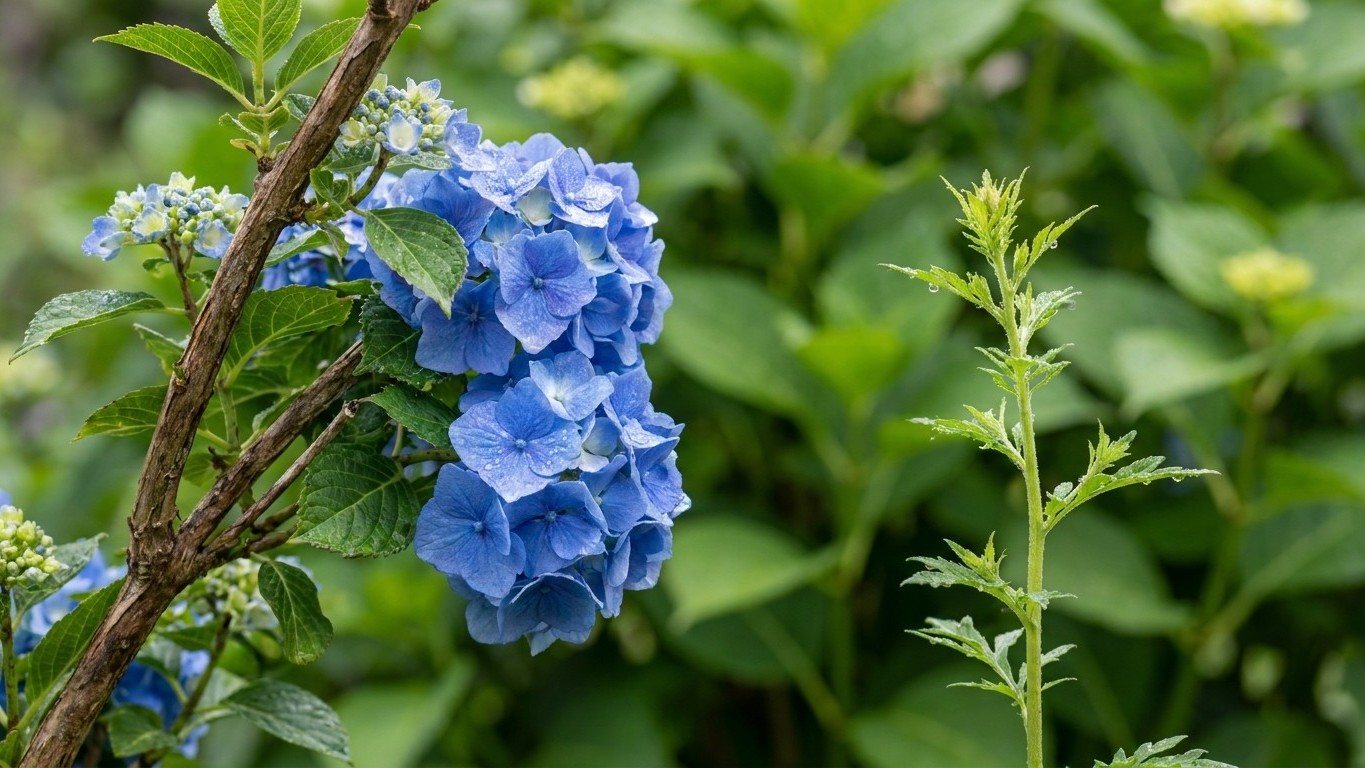

Smooth hydrangeas and panicle hydrangeas come through Pennsylvania winters and bloom reliably, because they flower on growth they make in the current season. Oakleaf hydrangeas are solid across most of the state. Bigleaf types live through the cold almost everywhere but often skip flowering in the colder counties, since their buds are set the summer before and can freeze over winter.
What this comes down to in Pennsylvania

In Philadelphia, according to NOAA’s 1991-2020 U.S. Climate Normals, the last spring freeze falls between March 29 and April 6 and the first fall freeze between November 5 and November 16. Philadelphia is among the mildest parts of the state, so the northern tier and the Alleghenies run two to four weeks later in spring. The USDA Plant Hardiness Zone Map puts Pennsylvania anywhere from zone 5a to 7b, a wide spread that decides which hydrangeas can be trusted.
Two things matter in that spread. One is how cold the winter minimum gets, which determines whether a stem or bud survives. The other is how long the frost-free stretch lasts, which determines whether a plant that flowers on new growth has time to do it. The cultivars below run from the most forgiving to the most demanding.
Annabelle
A smooth hydrangea (Hydrangea arborescens) for the state’s hardiness zones. It carries big white round heads on new wood, starting in early summer. Even if a hard winter kills the stems to the ground, it regrows and flowers the same year, which makes it a dependable pick for any county. The stems flop after heavy rain.
Incrediball
Another smooth hydrangea, with white flowers on new wood. It was bred from Annabelle for thicker stems that hold the heads upright. It has the same reliable winter hardiness and the same early-summer bloom, so it suits the cold ridges as well as the southeast.
Bobo
A compact panicle hydrangea (Hydrangea paniculata) that stays small in the garden. White flowers open in midsummer on new wood and age to pink. It fits small yards and containers, and it rarely needs winter protection in Pennsylvania.
Limelight
A large panicle hydrangea. The blooms start lime green in midsummer, turn white, then fade to pink and rose as fall arrives. It flowers on new wood, so spring frost damage to the buds is much less of a worry. Its long bloom season extends well into autumn.
Snow Queen
An oakleaf hydrangea (Hydrangea quercifolia) for the state’s hardiness zones. It carries white cone-shaped flowers in early summer on old wood, plus lobed leaves that turn burgundy in fall. Established plants usually come through winter well in most of the state. In the coldest valleys and on exposed ridges, flower buds can be lost in a hard winter, so give it a sheltered spot there.
Endless Summer The Original
A bigleaf hydrangea (Hydrangea macrophylla) for the state’s hardiness zones. It blooms blue in acidic soil and pink in alkaline soil, on both old and new wood. The new-wood flowers are the insurance: if winter kills the old buds, it can still bloom later in the season. Southeastern Pennsylvania gets the earliest and heaviest show, and colder counties get a thinner, later one.
Nikko Blue
A classic bigleaf hydrangea with blue flowers in acidic soil. It blooms only on old wood, so the buds formed last summer must survive winter and late spring freezes. Around Philadelphia and the warmer southeast, it can perform well. In the northern tier and on the Allegheny plateau, it often lives and leafs out beautifully but produces no flowers, which is why it sits last on this list.
Working it out for your own garden
A frost window gives you two edges, and the cultivar’s bloom habit tells you how much room you need between them. Start with the last-frost range for your area and add a couple of weeks before setting out a container plant, so the soil has warmed and a late freeze will not catch new growth. At Philadelphia, that pushes planting from the March 29 to April 6 freeze window to roughly mid-April. Then add the number of weeks the cultivar needs from leaf-out to flower, and compare that date with the first fall freeze.
Does Annabelle bloom before the first fall frost?
Yes, with months to spare. Annabelle set out in mid-April starts new growth right away and opens flowers later in the season. The first fall freeze at Philadelphia does not arrive until November 5 to 16, so the heads have the whole summer to open, age and be enjoyed before frost ends the season. Move the same plant to a county where spring runs four weeks late and the bloom slides from June into July. That still leaves a long margin, which is why smooth and panicle types are safe almost anywhere.
Where does a long-season bigleaf fall short?
Take Nikko Blue. Its timeline starts the previous summer, when it forms the flower buds that must carry through winter, and it ends with the buds opening the following early summer. In Philadelphia’s milder winters, those buds usually make it. In a colder zone, a hard winter or a freeze after the leaves emerge in spring can kill them. The plant looks healthy, but there is nothing to open. The calendar is not the problem here, since a spring planting has plenty of time before fall frost. The risk comes from the winter between bud set and bloom, which is why wood habit matters as much as zone.
The method carries over to any cultivar you find at a garden center. Check the label for old wood or new wood. If it blooms on new wood, the bloom date is simply your planting date plus its growing time. If it blooms on old wood, ask whether your coldest nights and your latest spring freezes leave those buds alive. A reliable rule of thumb: if the plant is rated for a zone colder than the one you garden in, and it blooms on new wood, it should flower reliably.
What changes across the state
Pennsylvania spans roughly the distance from a coastal-plain city to the edge of the Great Lakes snowbelt, and the hydrangea map follows. Philadelphia and the southeast sit near the Delaware River and benefit from urban warmth, which pulls the freeze window toward the early end of the range and softens winter lows. The same latitude farther inland, such as the Piedmont valleys, runs a little cooler.
Elevation does most of the work further north and west. The Allegheny plateau and the northern tier sit higher, collect cold air in the valleys and get lake-influenced snow, so spring comes later by the two to four weeks noted above and winter lows drop into the colder end of the 5a to 7b zone range. Near Lake Erie, the lake slows spring warm-up and can protect buds from the worst fall cold, and the heavy snow it brings can insulate the base of shrubs.
Even inside one county, ridgetops and valley floors differ. Cold air drains downhill and settles in low spots, so a hydrangea at the bottom of a slope can be hit by a late freeze that spares the one halfway up. In the cooler parts of the state, new-wood types such as Annabelle, Incrediball, Bobo and Limelight are the dependable choice. In the southeast and the warmer valleys, you can also try oakleaf and reblooming bigleaf types.
The mistakes this state punishes

A warm spell in March fools many gardeners. When soil warms for a week and the shrubs start leafing out, it is tempting to plant or to pull back winter mulch. Freezes still arrive into early April at Philadelphia and later farther north, and tender new leaves and old-wood buds are what they damage. Wait until the freeze window has passed, and keep a sheet or row cover handy in case a cold night is forecast after growth has started.
The second mistake is planting an old-wood bigleaf in a cold county because the flower in the photograph was stunning. The shrub survives, leafs out and looks fine, and for years it never blooms. If you want that blue or pink look in the northern tier, choose a rebloomer that also flowers on new wood, or switch to a panicle or smooth type.
The third is pruning at the wrong time. Cutting an old-wood hydrangea back in fall or early spring removes the buds it has already made. New-wood types are the opposite: they can be cut back in late winter without losing flowers. Know which kind you have before you reach for the shears.
Last, many gardeners cover plants too early or too heavily. Mulch around the base after the ground has started to freeze, and wait until growth is clearly active in spring before pulling it back.
Checking this against your county
A state-wide figure is a starting point. The frost window above comes from Philadelphia, and your garden may sit weeks away from it. Your county office at Penn State Extension can tell you the typical freeze dates and winter lows for your area, and which cultivars do well locally. For the broader basics of site, soil and care, see the guide on growing hydrangeas in Pennsylvania.
Common questions
Which hydrangea is the hardiest for Pennsylvania?
Smooth hydrangeas such as Annabelle and Incrediball are rated for cold winters. Panicle types such as Limelight and Bobo are close behind. Both flower on new wood, so a hard winter does not cost you the bloom.
Will bigleaf hydrangeas bloom in northern Pennsylvania?
Often not, if they bloom only on old wood. The buds form the previous summer and are easily killed by winter cold or late spring freezes. A rebloomer like Endless Summer The Original gives a better chance, because it can also flower on new growth.
Do hydrangeas that die back to the ground still bloom?
New-wood types do. Smooth and panicle hydrangeas send up fresh stems each spring and flower on them. Old-wood types lose their buds when stems die, so they usually skip flowering that year.
Is the hardiness zone enough to choose a hydrangea?
It is the place to start. The USDA zone reflects the average annual extreme minimum temperature, so it says nothing about late spring freezes or the length of the growing season. Pair it with the plant’s bloom habit and your local freeze dates.