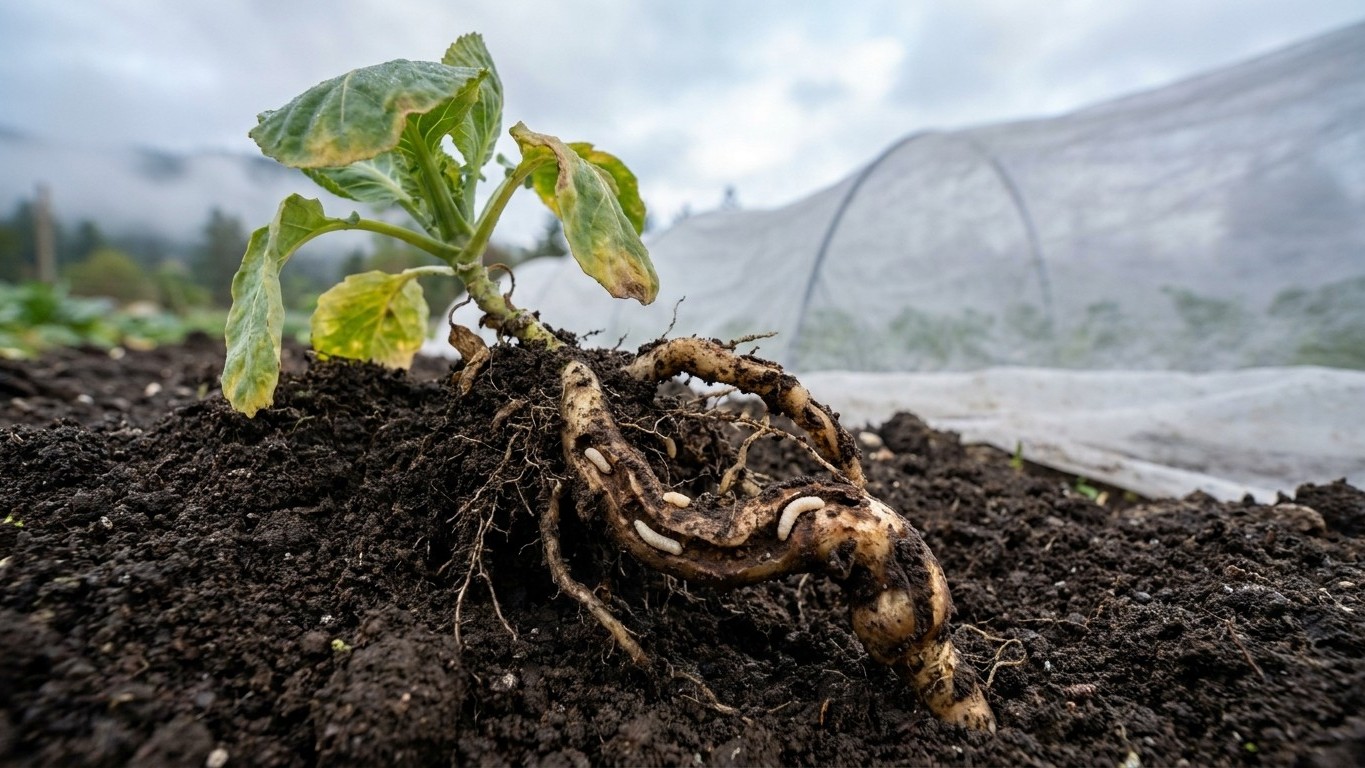

Pick early-to-medium maturing, orange-fleshed sweet potatoes, and favor compact or semi-bush vines if your soil runs heavy. Pennsylvania has the heat for them (24 days a year at 90°F or more at the Philadelphia reference station), but its season is shorter than the Carolinas’. Slow, late-maturing types are the gamble. Here is the decision by type, then by region.
The short answer for Pennsylvania
The reference station for these numbers is Philadelphia, the mildest corner of the state. NOAA’s 1991-2020 normals put the last spring frost between March 29 and April 6, and the first fall frost between November 5 and November 16. Those are not guarantees. They mark the span in which the odds of a 32°F freeze sit between 30 and 70 percent, so a frost on either side of the window is normal in any given year.
Sweet potatoes do not care about the March frost, though. They sulk in cold soil and die at the first freeze, so what matters is how much warm weather sits between planting and the November risk. That is why the decision comes down to maturity type rather than flavor or color.
| Type | Fit for Pennsylvania | Reason |
|---|---|---|
| Early-to-medium maturing, orange-fleshed | Best overall choice | Sizes up before fall cold, even in a cooler summer |
| Compact or bush-habit vines | Good for small plots and heavy soil | Less sprawl means better airflow in a humid summer |
| Long-season, late-maturing types | Southeast only, and still a risk | Need warm weather that the northern tier does not reliably deliver |
| Dry-fleshed, pale types | Fine if the maturity is early to medium | Same timing logic applies; texture is a taste choice |
Catalog names change from year to year, and this page does not have a list of cultivars trialled in Pennsylvania. Read the days-to-maturity line in the description and choose the shorter ones. If you are still deciding when slips go in, When to Plant Sweet Potatoes in Pennsylvania covers the timing, and Growing Sweet Potatoes in Pennsylvania covers the whole crop from slip to storage.
Heat is the quiet advantage here. Twenty-four days at 90°F or more is a moderate load, enough to keep sweet potato vines growing hard through July and August without the stress that wrecks cool-weather crops. You are working with the summer, not against it.
What will not work here
Late-maturing, long-season types are the first casualty. A grower in Philadelphia has a frost-free stretch that can hold them, but the northern tier and the Alleghenies run two to four weeks later in spring. That is two to four weeks of lost growing time before a plant can safely go out, and it comes straight off the back end of a crop that needs every warm day. The first fall freeze does not wait for slow roots to finish. A late variety planted in the north will give you vines and pencil-thin roots.
Planting on the frost date fails too. The frost window above is a probability, not a green light. A slip set out the week the last freeze becomes unlikely will meet cold, wet soil, stall, and often rot. Warm soil, not an absent frost, is the real trigger (more on that in the last section).
Then comes water, which cuts the opposite way from what many gardeners expect. Pennsylvania gets about 12.7 inches of rain across June, July and August, out of 44.1 inches for the year, and the driest summer month is June at 4.04 inches. That is not a drought climate. Weekly watering is not the failure here. Too much water is. On heavy clay, which holds an inch of rain for about a week, roots sit wet, crack, or rot. On sandy ground the same rain drains in a day, so a sandy bed may still want a drink between storms. These are normals for one station over 1991-2020, not a forecast, and a rain gauge on your own plot settles it better than any table.
Close spacing is the third failure. A humid summer with that much rain leaves foliage damp for long stretches, and vines packed tightly stay wet longer. Crowded plants also spend energy on leaves rather than roots. Spacing that works in a dry state is too tight here, which is one more reason compact vines suit small Pennsylvania beds.
Last, a late harvest. The first fall frost is expected between November 5 and November 16 at the reference station and earlier in the colder parts of the state. Frost that blackens the vines is a signal to dig promptly, since roots left in cold ground deteriorate. Plan the harvest ahead of that window, not after it.
What changes across Pennsylvania
Pennsylvania has no single answer. By the USDA Plant Hardiness Zone Map (2023 edition, built on 1991-2020 normals), the state runs from zone 5a to zone 7b. That is six half-zone steps between the coldest highlands and the warmest lowlands. The zone is built on one variable only, the average annual extreme minimum temperature, and sweet potatoes are grown as a tender annual, so winter cold is not what limits them. Still, a zone number is a decent stand-in for latitude and altitude, and both govern how long the warm season lasts.
In the southeast, including the Philadelphia area where the frost facts above come from, the full range of types is workable, though early-to-medium maturing ones remain the safe pick. Raised beds or ridges with loose soil help wherever clay is common.
In the northern tier and at altitude in the Alleghenies, shift the whole plan. Choose the earliest-maturing types you can find, and expect to set slips out two to four weeks later than a Philadelphia calendar suggests. Black plastic mulch to warm the soil, or a low tunnel in the first weeks, buys back some of that lost time. Treat a long-season variety there as an experiment on a few plants, not as the main crop.
The spread within the state also means one neighbor’s success can mislead. A garden an hour’s drive away may have a different frost window, a different slope and a different soil. To see where your own area falls, check the USDA Plant Hardiness Zone Map rather than guessing from a county name. This page will not tell you which zone you are in.
Where to check this for your own county
Everything above is the state view, built on one reference station. A county recommendation beats it every time. Penn State Extension is Pennsylvania’s land-grant extension service, and its local offices know which varieties have been grown in your area’s soils and weather.
When you get there, look for two things. The first is a local planting calendar for warm-season vegetables, ideally one that gives dates for your part of the state rather than a statewide span. The second is variety information, meaning which sweet potato types have been trialled or recommended near you, with notes on maturity and disease. If a county office publishes either, it will carry more weight than anything on this page.
This page does not have county-level trial results, and it does not have Pennsylvania-specific cultivar rankings. It has the state’s frost probabilities, summer heat and rainfall for Philadelphia, and the hardiness zone spread. That is enough to choose a sensible type, and not enough to name a winner for your garden.
Extension staff can also tell you about local soil testing, which matters more for sweet potatoes than many people expect, since heavy or compacted soil shapes the roots as much as the variety does.
Checking this against your own garden
Your own observations outrank every date on this page. Three are worth watching, and none needs an instrument.
- Soil warmth by feel. Push your hand a few inches into the bed on a mild afternoon and again in the morning. If it still feels cool and clammy, the soil is not ready. A bed that holds warmth overnight is a warm microclimate, and a south-facing slope or raised bed may be ready a week or two ahead of a shaded low spot.
- The first true leaves on your slips. Once a slip puts out new leaves after planting, it has taken. Slow leaf growth means cool nights or wet ground. Quick growth means your site is warmer than the state average.
- The first flush of growth in your weeds and tomato transplants. Warm-season weeds taking off and tomatoes beginning to grow rather than sit tell you the ground is waking up for real.
Over a few seasons, a note on when each of these happened gives you a calendar tuned to your own plot, which no state page can match.
Common questions
What is the best sweet potato type for a short Pennsylvania season?
Early-to-medium maturing, orange-fleshed types, ideally with compact vines. They size up sooner, which matters most in the northern tier and the Alleghenies where spring arrives two to four weeks later than in Philadelphia.
Is Pennsylvania too cool for sweet potatoes?
No. The Philadelphia reference station sees 24 days a year at 90°F or more, enough summer heat for a good crop. The limit is the length of the warm season, so the cooler parts of the state need earlier types and warmer soil.
Will Pennsylvania’s rain hurt the crop?
It can on heavy clay. The state normals show about 12.7 inches across June, July and August, and the driest summer month still gets 4.04 inches. Loose soil, ridges and open spacing protect the roots from sitting wet.
Which hardiness zone should I use to choose a variety?
Pennsylvania runs from 5a to 7b on the USDA map, and the zone reflects winter cold, which sweet potatoes avoid as annuals. Use it as a rough guide to how short your season is, and let your county extension office confirm the details.