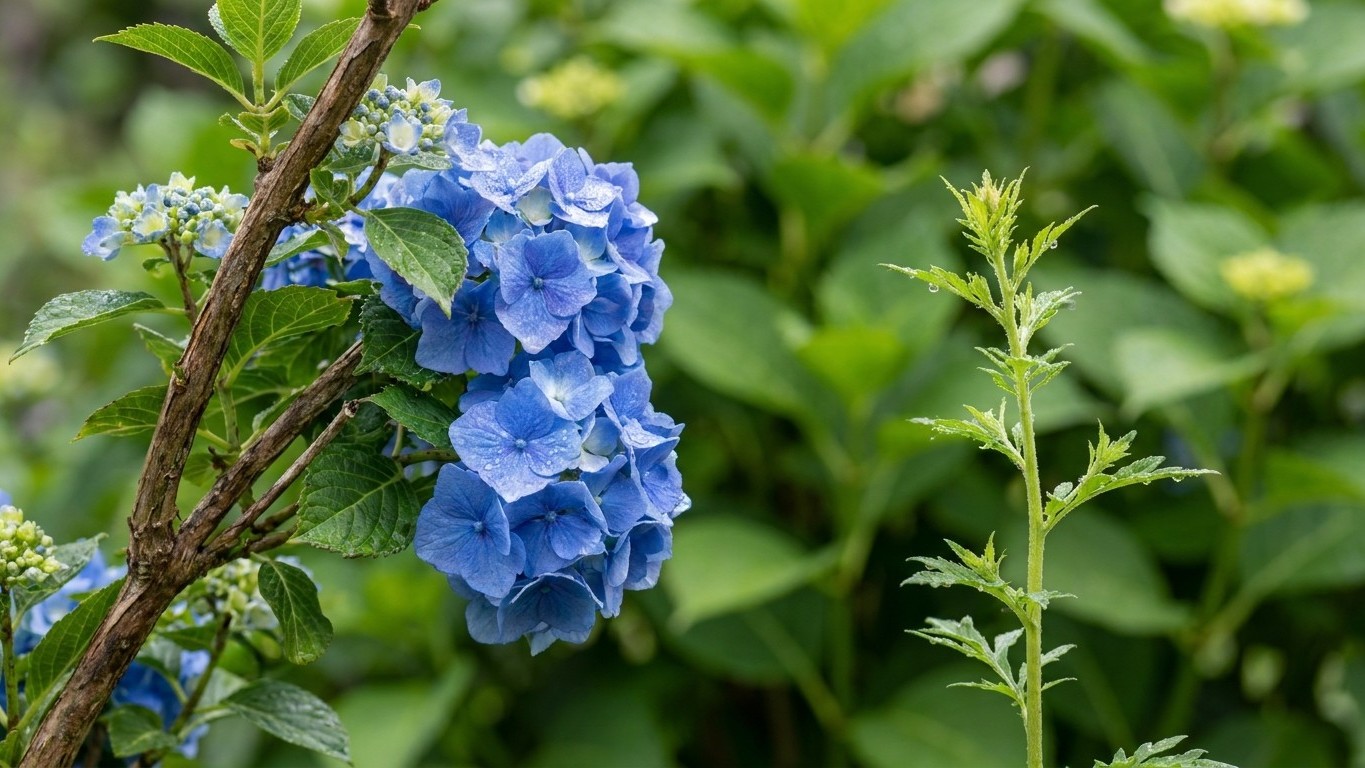

Prune hydrangeas that bloom on new wood (panicle and smooth types) in late winter to early spring, before the buds break, which on the Island usually means April. Prune the ones that bloom on old wood (most bigleaf and oakleaf types) right after the flowers fade, and no later than early August. Wait until leaves open in late May before judging any bigleaf stem dead. Which group your shrub belongs to decides when you prune it.
What this comes down to in Prince Edward Island

The pruning calendar here sits inside a frost window measured at Charlottetown, where the average last spring frost falls on May 16 and the average first fall frost on October 17. Those are midpoints. In one year out of two the last spring frost comes later than May 16, and in one year out of two the first fall frost arrives earlier than October 17. Charlottetown is also rated at roughly zone 5b to 6a on the Canadian hardiness scale (sources differ), which is its own system and does not convert to a USDA zone.
The reference station has about 154 frost-free days between those two dates. That is a short stretch for a shrub that has to grow, bloom, and set next year’s buds. It is why timing matters more here than in places with a long, forgiving fall.
Which hydrangeas bloom on old wood and which on new wood?
Old-wood bloomers form their flower buds on last year’s stems, in late summer and early fall. Cut those stems in winter or spring and you cut off the flowers. Bigleaf hydrangeas (the mopheads and lacecaps) and oakleaf hydrangeas work this way. Some newer reblooming bigleafs also flower on fresh growth, but they still carry buds on old stems, so they get the same careful treatment.
New-wood bloomers push out fresh stems each spring and form flowers on the tips. Panicle hydrangeas, with their cone-shaped blooms, and smooth hydrangeas, with their big round white heads, belong to this group. You can cut them back hard and they will still flower that summer.
If you are not sure which type you have, check the bloom shape and leaf. Panicle flowers are cone-shaped and the leaves are oval with fine teeth. Oakleaf leaves look like oak leaves. Bigleaf leaves are broad, glossy, and thick. Smooth hydrangea leaves are large and bright green with a heart-shaped base. The plant tag, if you kept it, settles the question fastest.
Why does the October frost date matter for pruning?
A cut stimulates new growth. New growth that has not hardened off by mid-October is the first thing a hard frost kills. A fall haircut can therefore push tender shoots right as the average first frost approaches. For the same reason, old-wood types need their pruning finished weeks before that date, so the buds they form for next summer are not disturbed.
For the general growing basics, see the guide to growing hydrangeas in Prince Edward Island. This article covers only the cutting calendar.
Working it out for your own garden
A calendar date breaks the first time spring runs two weeks late. A method built on wood type and plant signals holds up through a move, a cold year, or a shrub with no tag.
How do you work out your pruning dates?
Start with the wood type, then match it to a window. The table below lays out the four common groups.
| Type | Blooms on | When to prune | How much |
|---|---|---|---|
| Bigleaf (mophead, lacecap) | Mostly old wood | Just after flowering, by early August | Remove spent blooms and a few of the oldest stems |
| Oakleaf | Old wood | Just after flowering | Light shaping only |
| Panicle | New wood | Late winter to early spring, before buds break | Cut back by up to about one-third, or harder to restrict size |
| Smooth | New wood | Late winter to early spring, before buds break | Cut to low framework or lighter |
For a new-wood shrub, the window opens once the hardest cold is behind you and closes when buds break and leaves start to open. In practice that is a few weeks in April. A mild March thaw is not the signal. Wait for buds to show visible swelling. If that happens before the May 16 average last frost, that is fine, because the shrub is not yet leafed out.
For an old-wood shrub, the arithmetic runs from the fall side. Most bigleafs bloom in midsummer, so the practical rule is to tidy right after the last flowers fade and be done by early August.
How do you tell live wood from dead after a hard winter?
Bigleaf stems often die back partway over a winter, especially where snow cover is thin. Do not cut in April on appearance alone. Wait until other shrubs have leafed out, usually the second half of May. Then scratch a small patch of bark with a thumbnail. Green underneath means live wood. Brown and dry means dead. Cut dead stems back to the first pair of healthy buds, or to the ground if every stem is dead. A live stem will also bend, while a dead one snaps.
What changes across the Island
Prince Edward Island is small, but it is not uniform. Charlottetown sits on the south side, sheltered by the Northumberland Strait. The north shore faces the open Gulf of St. Lawrence, and the water there keeps spring cold longer and fall mild longer. A gardener on an exposed north shore lot may see buds swell later than one in Charlottetown. Upland and inland districts can run weeks behind the reference city, especially in low spots where cold air pools on clear nights.
Wind matters as much as latitude. A hydrangea against a south-facing house wall, out of the wind, can leaf out well ahead of the same shrub in an open field. Salt spray near the coast burns tender growth, so coastal gardeners often prune a bit lighter and later in spring to avoid exposing fresh shoots.
Snow is the other variable. Deep, steady snow cover insulates the lower stems of bigleafs and keeps old-wood buds alive. Sites where wind scours the snow off the ground lose more wood, and the dieback check in late May matters more there. Skip any rule that says to prune on a fixed date. Use the swelling of your own buds as the starting gun, because your garden’s microclimate is already built into that signal.
The mistakes the Island punishes
The first is cutting a bigleaf back hard in spring because it looks messy. If the stems carry the buds, the shrub flowers poorly or not at all that summer. Remove only wood that is clearly dead, once leaves open.
The second is pruning after a warm spell. A few mild days in March make it feel like spring, but frost and cold snaps return well into May. Cutting a panicle or smooth hydrangea in a thaw and then watching temperatures drop again usually does little harm, since these types flower on new wood. The bigger risk is to bigleafs, whose buds a thaw can start early and a cold snap can then damage. Wait for buds to show actual swelling.
The third is fall pruning. With the average first frost on October 17, a cut in September or October may spur shoots that never harden. On old-wood types it also removes next year’s flower buds. Leave dried flower heads on through winter. They add some protection and look good under snow.
The fourth is trusting a calendar date over the shrub. Because the May 16 and October 17 dates are midpoints, a cold spring or early fall can shift things by weeks in either direction. Watch the buds in spring and the bloom in summer instead.
The fifth is hard pruning every year without a reason. A panicle hydrangea cut to stubs each spring may produce weak growth. Taking off about one-third keeps the framework strong.
Checking this against your county
A frost window measured at one station is a starting point. Your own site may run earlier or later, and the best local correction comes from people who garden nearby. The provincial government’s agriculture pages are a starting point for finding local horticultural resources for your part of Prince, Queens, or Kings County. The growing hydrangeas in Prince Edward Island guide covers the rest of the care routine.
Common questions
Can you prune hydrangeas in fall in Prince Edward Island?
It is best avoided. Fall cuts can encourage tender growth before the average first frost on October 17, and on bigleaf and oakleaf types they remove buds for next summer. Snipping off a broken stem is the one exception.
Why did my bigleaf hydrangea not bloom after I pruned it?
Most likely the flower buds were on the old stems you cut. Bigleafs form buds the previous late summer. Winter dieback can have the same effect, so check for live wood in late May and prune only dead stems from now on.
How far back should I cut a panicle hydrangea?
Cutting off about one-third of last year’s growth in late winter or early spring keeps the shrub full and the stems sturdy. For a smaller plant, cut harder, always leaving at least a couple of buds on each stem.
Should I cut off stems that look dead in April?
Wait. Bigleaf stems often look lifeless until late May. Scratch the bark: green means alive. Cut only what is brown and dry, back to the first healthy pair of buds.