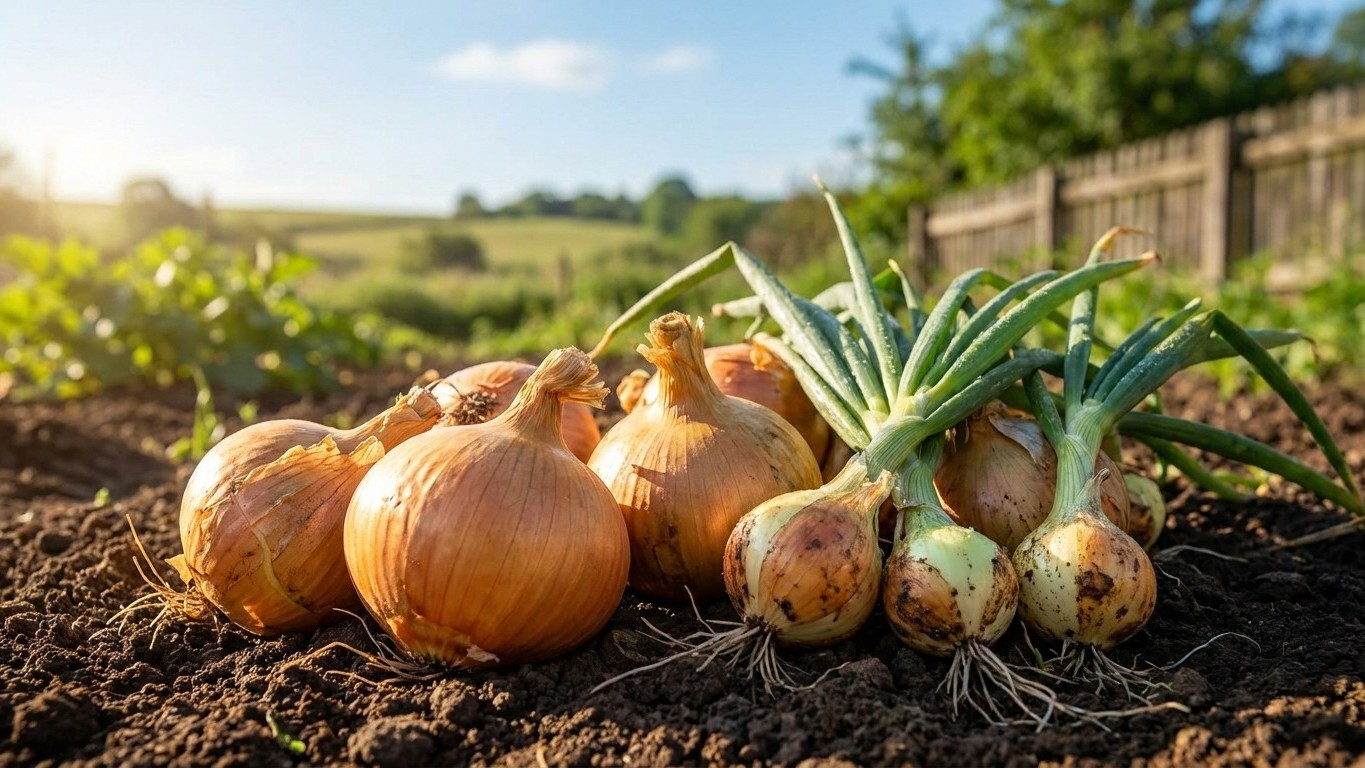

Lift onions once most of the tops have flopped over and started to yellow. On the Island that usually means late summer into early fall. Pull them on a dry day, then cure them in a dry, airy, sheltered spot until the necks are tight and the skins feel papery. Only then do they go into storage. Onions carried straight from the garden to a shelf tend to rot from the neck down, and the loss shows up before winter is over.
Keeping them, and for how long
Curing is what makes storage possible. As the bulbs dry, the neck seals shut, the outer scales turn into a thin papery skin, and the bulb goes dormant. A sealed, dormant bulb loses water slowly and keeps rot organisms out. Once that is done, the job is to hold the bulbs in air that neither warms them into sprouting nor dampens the skins.
What temperature and humidity do cured onions need?
Clemson Cooperative Extension’s Home & Garden Information Center puts it plainly: “Ideal conditions are between 45 °F and 55 °F, and 50 to 60 percent humidity.” You can read the full factsheet on onions, leeks, shallots and garlic. Those two numbers work together. Cool air slows sprouting. Dry air keeps the skins crisp and the necks from softening.
That humidity range is the opposite of what carrots, beets and potatoes want. Root crops store best in cold, damp air, and they shrivel in the dry air onions like. A single root cellar cannot hold both well. If you have one space only, decide which crop matters more, or put the onions on the driest, warmest shelf near the door and the roots at the damp, cold end.
Air movement matters as well. Onions kept in a sealed tub or plastic bag trap their own moisture and the skins go clammy. Mesh bags, slatted crates, open baskets and old nylon stockings with a knot between each bulb all let air move through. Spread them in a single layer or a shallow pile rather than heaping them deep.
How long will stored onions keep?
Any storage time you read, in a seed catalog or a garden book, is a maximum under ideal conditions. It is never a promise. A bulb that has been bruised, pulled in wet weather, or left with a thick, green neck will give up long before a clean, well-cured one. Fall on the Island can be damp, and bulbs lifted just before a rainy week often go into storage with moisture still in the neck.
Variety sets the ceiling. Pungent, thick-skinned storage types keep the longest, and mild sweet onions keep the shortest. If you want bulbs on the shelf well into winter, the best onion varieties for Prince Edward Island are worth sorting by keeping quality as well as by flavor. Bulbs nicked by onion maggot or other pests also rot early, so set any damaged ones aside for the kitchen. What eats onion in Prince Edward Island, and when explains which damage to look for.
Instead of trusting a date, look at the onions every couple of weeks. Pull anything soft, sprouting or wet at the neck. Use the thick-necked and sweeter ones first. A bulb with a green shoot poking out is still edible, but it is telling you the storage spot is running too warm or the bulb is nearing the end of its rest. For a wider look at the crop from planting onward, start with onions in Prince Edward Island.
Where in the house that actually is
A range of 45 °F to 55 °F with dry air sounds simple on paper. In a real house, most spaces miss it in one direction or the other, and a few miss it in both depending on the month.
Which room comes closest?
The kitchen fridge is out. A domestic refrigerator runs colder than that range, and the cold plus the moisture inside it dulls onions and softens them. Any heated living space is too warm, and warm bulbs break dormancy and sprout. The garage looks tempting, but it follows the weather. It can sit warm and damp in September and drop below freezing in winter, and a frozen onion turns to mush when it thaws.
The best candidates are the in-between spaces. An unheated spare room on the cool side of the house, a closet against an exterior wall, or a basement corner away from the furnace and the water heater can all land in the target. A finished basement room with its own supply vent may stay too warm. An unfinished basement with concrete walls often runs cool enough but damp, especially in the Island’s humid fall and spring, so the humidity is where it usually fails. An enclosed porch can work in early fall, but it needs watching once hard cold arrives.
What should you check with a thermometer?
Do not guess at a spot. Set a thermometer with a humidity readout where the onions will sit, and read it for several days before you move them in. A cheap digital model does the job. Check it in the morning and in the evening, and again after a cold night, because a spot that looks right at noon can drift well off the range overnight. Skipping this step is how a whole winter’s supply ends up rotting in a damp corner you thought was fine.
If the reading is too humid, move the onions up off the floor, add air movement with a small fan on low, or shift them to a drier shelf. If it runs too warm, look for a spot farther from ducts, pipes and sun-facing walls. Keep the onions away from potatoes, which want damper air and give off moisture that dampens the skins nearby. Dark is better than bright, since light can trigger greening and sprouting in some bulbs.
Common questions
How do I know onions are ready to lift on the Island?
Watch the tops. When most of the green leaves have fallen over and begun to yellow, the bulbs have stopped growing. Leave them a few more days for the necks to soften and dry, then lift on a dry day. Pulling while the tops are still upright and green leaves a thick, wet neck that is hard to cure. Gardeners usually find the window opens in late summer and runs into early fall, but the plants set the schedule, not the calendar. Your county extension office can tell you what is typical in your part of the Island.
Can I cure onions outdoors in Island weather?
Yes, if the weather cooperates. Spread the bulbs on a screen, rack or slatted bench in a spot with shade and good airflow, and cover them or move them under a roof when rain or heavy dew is likely. A covered porch, a shed with the door open or a barn aisle works well. Direct hot sun can scald the bulbs, and rain on skins that are still wet invites rot. The bulbs are cured when the necks are tight and dry, the outer skins rustle, and the roots are wiry. Once that is done, trim the tops and brush off loose soil without washing them.
What should I do with thick-necked or damaged onions?
Eat them first. A neck that stays thick and green after curing is the usual entry point for rot. Bulbs with soft spots, cuts, pest tunnels or sunscald will not keep either. Check them often. A bulb that goes bad can spread moisture and mold to those next to it, so one soft onion pulled early saves the rest.
Why do some onions never form a proper bulb?
Day length, not warmth, tells an onion to stop making leaves and start making a bulb. Charlottetown sits at 46.29 degrees north and gets 15 h 36 of daylight on the longest day. That is enough for long-day varieties, which wait for 14 to 16 hours before bulbing. Short-day varieties start bulbing at about 12 hours, according to Clemson Cooperative Extension, so they bulb early and stay small this far north. A long-day onion planted where the day never gets that long never forms a bulb, and that is a different problem from late lifting or poor curing. Charlottetown is the reference point, so if you garden at the far east or west end of the Island, check your own latitude and daylight hours before choosing a variety.