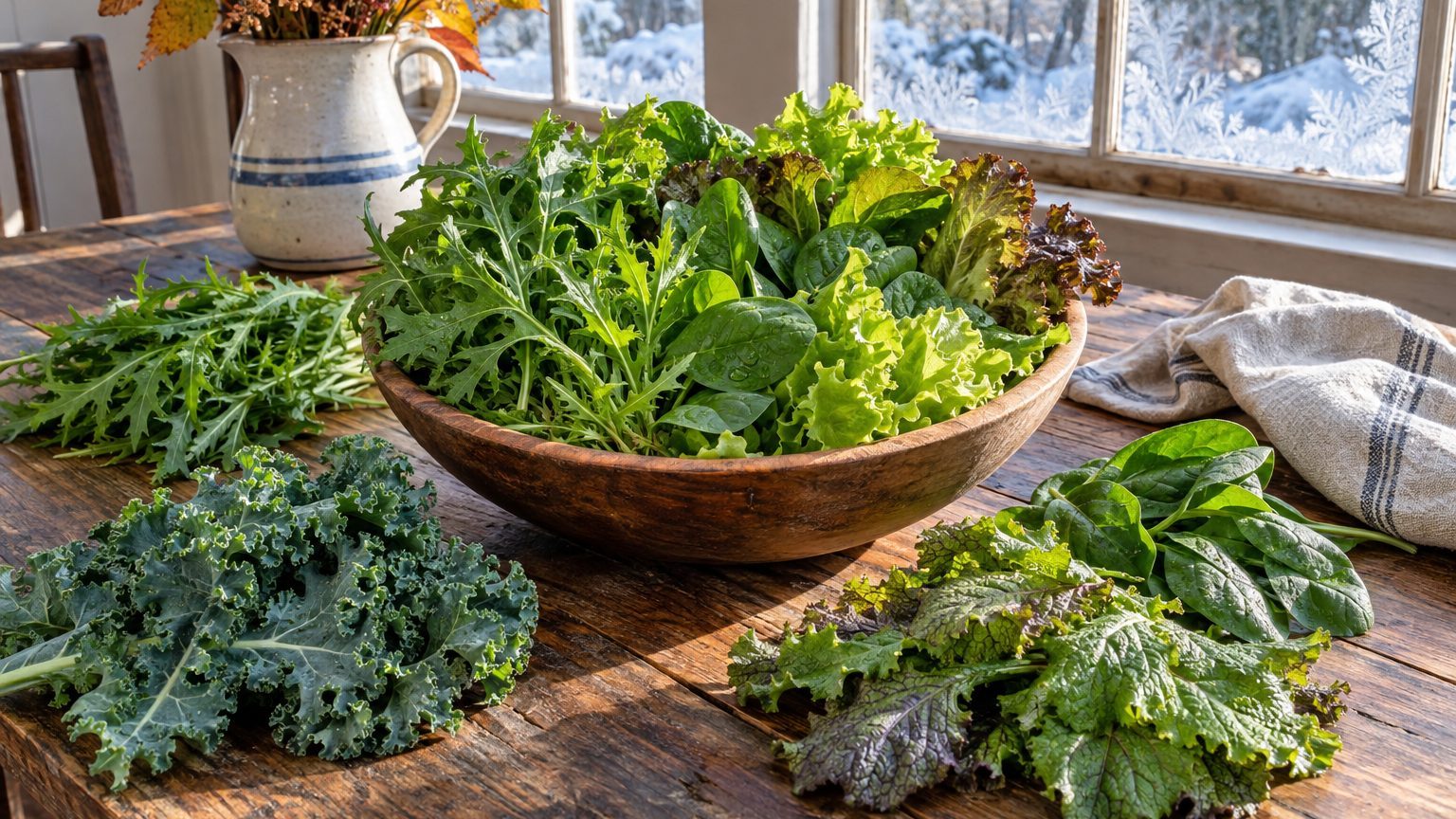

The best winter salads for Prince Edward Island are the hardiest leaves: mâche, spinach, claytonia and kale. Mizuna, tatsoi and arugula work as fall crops under cover. Heading lettuces and endive do well only when sown early and sheltered. The island’s problem is a short, cold season rather than heat, so the choice comes down to cold tolerance and speed. The hub on Winter Salads for Prince Edward Island Gardens covers the wider picture.
The short answer for Prince Edward Island
Choose by type, and favor the types that keep growing in cold, damp, low-light weather. Mâche, claytonia and spinach are the backbone of a winter bed here. Kale, mizuna and tatsoi come next. Arugula and leaf lettuce are fall crops that need cover to go further, and heading types like radicchio, escarole and big romaine need more runway than the island gives a late sowing.
The numbers come from the Charlottetown airport station. Its mean last spring frost is May 16 and its mean first fall frost is October 17, which leaves about 154 frost-free days. Both dates are midpoints. In one year out of two, the last spring frost falls after May 16, and in one year out of two the first fall frost arrives before October 17. They are the middle of a window, so nobody should treat them as safe dates.
Winter cold sets the rest. The mean daily minimum of the coldest month is -12.1 °C (10.3 °F), which means plenty of individual nights run well below that. Plants that shrug off a frost in October may not survive January in open ground.
Which types suit Prince Edward Island best?
| Type | Examples | Role on the island |
|---|---|---|
| Very hardy leaves | Mâche, claytonia, spinach | Sow late summer to early fall. Harvest through the cold months under a cover, and again in early spring. |
| Hardy greens | Kale, mizuna, tatsoi | Dependable into December. Kale is the toughest of the three. |
| Fast and tender | Arugula, leaf lettuce | Fall harvest. Protect them or finish them before hard frosts. |
| Heading types | Radicchio, escarole, endive, romaine | Need a long run of mild weather to size up. Poor choices for late sowing. |
Sowing dates depend on working back from that October 17 midpoint, and When to Sow Winter Salads in Prince Edward Island lays out the window.
What will not work here

Slow heading crops fail first. A radicchio or escarole sown in August needs weeks of mild, bright weather to form a head. Light fades fast by November, and growth slows to a crawl. What you pick in winter is what reached near full size before the days got short. A seedling that is still small in mid-November will mostly sit there until spring.
Tender lettuce and arugula fail next. With a coldest-month minimum averaging -12.1 °C, an unprotected row will not carry them through. A single hard freeze can finish a bed that looked fine the week before. Even spinach and kale, which are tough, usually need a cold frame or low tunnel to give usable leaves in January and February rather than just surviving.
Covers bring their own problems. Island autumns are damp, and a sealed tunnel with tightly spaced plants holds moisture around the leaves. That invites gray mold and slugs. Vent the cover on any mild day, and give transplants and thinned seedlings room for air to move. Heavy snow is the other risk, since a wet load can flatten low hoops. Steeper hoops, or simply brushing the snow off, solve it.
Timing mistakes cost more than variety mistakes. Sowing in early September on the assumption that frost will hold off until late fall is a gamble, because half of years bring the first frost before October 17. Waiting until October to sow, on the other hand, gives seedlings too little light. Sow early enough for plants to get established, and leave the final sowing of the hardiest types for the last weeks of the window.
What changes across Prince Edward Island
The island does not have one climate. Canada’s plant hardiness map puts the reference city in zone 5b, and that is the Canadian system, which is built on seven climate variables. It does not convert to a USDA zone. Natural Resources Canada says there are no simple conversions between the two, and notes that Canadian zone 4a overlaps nine different USDA zones. That 5b describes one city. It does not describe the whole province.
The frost dates carry the same limit. Northern and upland districts run weeks behind the Charlottetown airport station. A grower there should expect frost to arrive earlier in fall and leave later in spring. In practice that means sowing the last batch of salads earlier, leaning harder on mâche, spinach and kale, and putting covers on sooner. Gardeners near the Charlottetown station can work from the dates above, while those farther out should shift them toward the colder side.
To see your own spot, use the Natural Resources Canada plant hardiness zone map and look up your municipality. The map gives the zone for your location, and the zone should shape how much cover you plan for.
Where to check this for your own county
The Government of Prince Edward Island’s agriculture pages are the place to start. Look for the local planting calendar, any guidance on fall and winter vegetable production, and the varieties that have been trialled in your part of the island. The three counties, Prince, Queens and Kings, can differ in frost timing and exposure to wind.
A county recommendation beats a provincial one. Where the two disagree, trust the local advice.
When you check, look for three things. The first is the sowing window for each crop type, not one date for all salads. The second is the list of varieties that actually produced in nearby trials, since a cultivar bred for mild coasts may sulk in an upland bed. The third is the advice on season extension, such as what kind of cover is recommended and when to ventilate it.
Checking this against your own garden
Your own observations outrank every date. Three are worth watching.
- Soil warmth by feel. Push your hand into the bed in the morning. Soil that feels cool rather than warm is ready for spinach and mâche. Soil that is still bathwater-warm in late August is why lettuce seed sometimes fails to germinate, so wait or shade the bed. How quickly your soil cools tells you whether the bed is sheltered or exposed.
- The first true leaves. Note the date your seedlings show their first true leaves, which come after the rounded seed leaves. If that happens by early October, you have time to grow a harvestable plant. If it takes until late October, count that bed as a spring crop. The spread between beds shows which corners hold warmth.
- Where frost shows first. Look at the grass on the first white mornings. The patch that frosts first is your cold pocket, and it needs a cover earlier. A strip that stays green longest is your best spot for tender greens.
Write the dates down for a season or two. A small garden notebook beats any average.
Common questions
What is the hardiest winter salad green for Prince Edward Island?
Mâche and claytonia are among the hardiest, with spinach and kale close behind. All of them do best with a low cover once temperatures drop to the island’s winter minimums.
Can lettuce grow outdoors all winter here?
Rarely. The coldest-month minimum averages -12.1 °C, which is too harsh for most lettuce in open ground. Lettuce is better as a fall crop or grown under a protected cover.
When is the last safe date to sow?
No date is safe. The October 17 mean first fall frost is a midpoint, and in half of years frost comes sooner. Sow the hardiest types as early as the calendar window allows, and treat the last sowings as a bonus.
Do I need a cold frame or tunnel?
For harvests through December and beyond, yes. A cover keeps off the worst of the wind and freeze-thaw swings. Vent it on mild days so damp air doesn’t build up around the leaves.