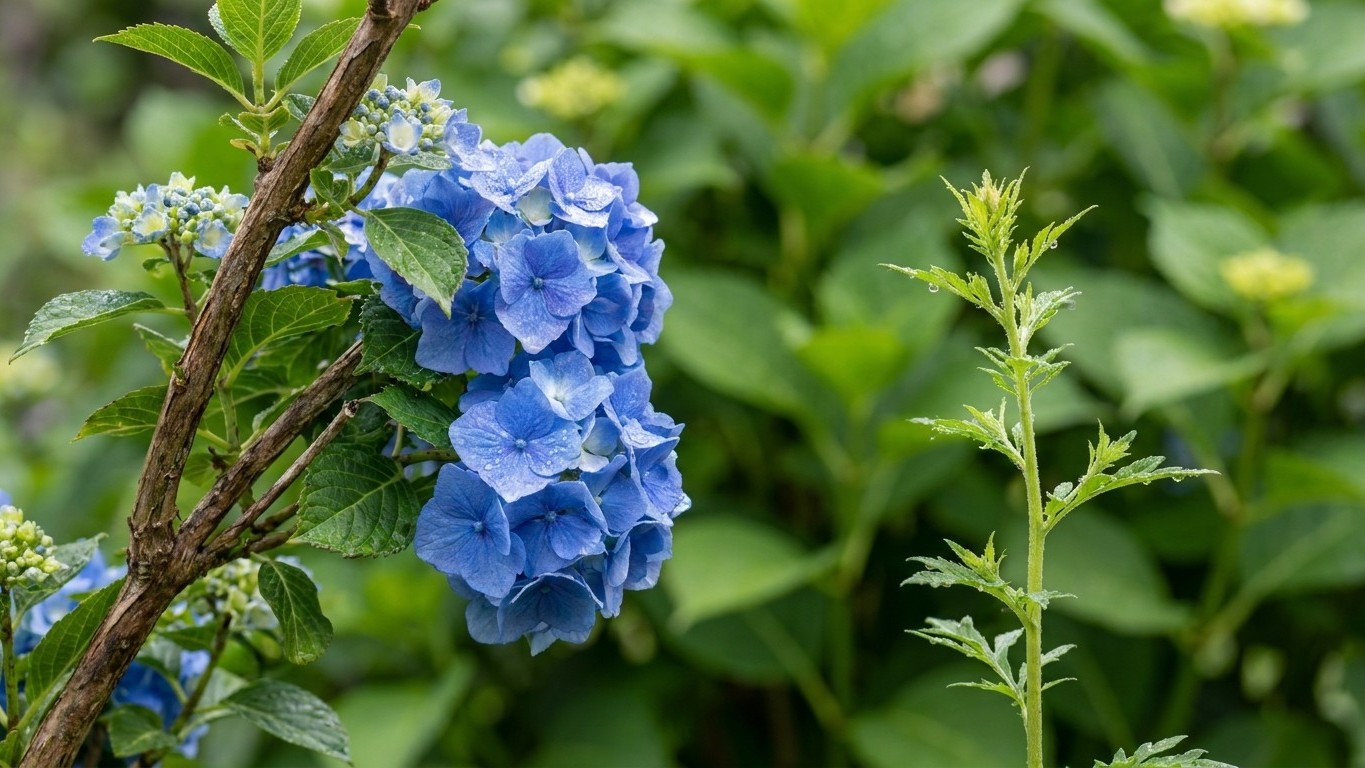

Plant hydrangeas in Rhode Island in spring after the last frost window closes, or in early fall while the soil is still warm. Smooth and panicle types bloom dependably after hard winters. Bigleaf types flower best when their buds get some protection. Soil acidity decides whether bigleaf blooms come out blue or pink. For the plant basics, see How to Grow Hydrangeas: The Complete Guide. The sections below add local dates, varieties and pests.
When to plant Hydrangeas in Rhode Island

The reference city for the frost dates is the Providence-area airport weather station (T.F. Green). The NOAA NCEI U.S. Climate Normals 1991-2020 put the last spring freeze at 32°F between April 7 and April 17, using the 30 to 70 percent probability band. The first fall freeze lands between October 24 and November 3. Those are airport numbers. Suburban and rural yards usually freeze later in spring and earlier in fall, often by one to two weeks. Northern and higher-elevation parts of the state run later still, so check your own county before you pick a planting day.
When should you plant hydrangeas in spring?
A container-grown shrub tolerates cool soil, so it can go in as soon as the ground is workable. The risk is the new growth. Bigleaf hydrangeas leaf out early, and a freeze after the buds swell can kill the flower buds inside. Waiting for the frost window to close avoids that. At the reference station, that means planting from late April on. At an inland yard, early to mid May is the safer target. Keep an old bedsheet handy for any night when the forecast dips to freezing after planting.
Can you start hydrangeas indoors from seed or cuttings?
Most gardeners buy a nursery shrub, and that is the easy route. Seed from named cultivars does not come true, and a seedling takes several years to flower. Cuttings are more reliable. Softwood cuttings taken in early summer root in a few weeks, and the young plants can overwinter in a bright, cool spot indoors or in a cold frame.
Anything raised indoors needs 7 to 10 days of hardening off before it goes in the ground. Start with two hours in open shade, add an hour or two each day, then move into morning sun. Bring the pots in on cold nights. Count back from your planting day. If the frost window closes and you want shrubs in the ground just after, begin hardening off when the risk of frost has passed. Add one to two weeks for an inland yard, which puts the start in mid April and the transplanting in early May.
Can you plant hydrangeas in fall in Rhode Island?
Yes, and fall planting often beats spring because roots keep growing in warm soil after the top stops. The deadline is about six weeks before the first fall freeze. Counting back from the earliest date in the reference window, the fall planting deadline falls in early autumn. Inland and northern yards, where fall frost comes sooner, should plant a week or two earlier. Water weekly until the ground freezes, then mulch after the first hard frost.
Soil and site preparation
A good hydrangea bed gets decided weeks before the plant arrives. The shrub wants afternoon shade and soil that stays damp without turning soggy, and both are easier to arrange in advance.
How much sun do hydrangeas need?
Bigleaf, oakleaf and smooth hydrangeas do best with morning sun and afternoon shade, roughly four to six hours of direct light. Panicle types take more sun, even a full-sun spot, as long as the soil stays moist. Hot afternoon sun scorches bigleaf leaf edges and leaves plants drooping by midday. Near the shore, bigleaf types handle moderate salt spray, but they still benefit from a fence or evergreen backdrop that blocks drying winter wind.
How do you prepare soil for hydrangeas?
Test the soil a few weeks ahead. The result shows pH and tells you what the bed needs. Then work 2 to 3 inches of compost into the top 8 to 12 inches across the whole bed rather than just the planting hole, so roots do not stall at the edge of one pocket of good soil. Clay drains slowly, so raise the bed 6 to 8 inches if water lingers. Sandy soil near the shore drains fast, and the extra compost helps it hold moisture. If you plan to shift bloom color, elemental sulfur lowers pH and ground limestone raises it. Both work over months, so apply them the season before planting where you can.
How far apart should hydrangeas be planted?
Compact smooth and bigleaf types need 3 to 4 feet between plants, and large panicles need 6 to 8 feet. Dig the hole twice as wide as the root ball and exactly as deep. Set the crown level with the surrounding soil, backfill with the native soil you removed, and water deeply.
Varieties that suit Rhode Island
Two traits matter most here: whether a hydrangea blooms on old wood or new wood, and how well it copes with a freeze after buds swell. Old-wood bloomers set next year’s flower buds in late summer, so a hard winter or a late freeze can wipe out the show. New-wood bloomers build their flower buds each spring and bloom regardless. Neighboring New England gardeners face the same swings, and Growing Hydrangeas in Connecticut: Types, Colour and Winter covers them from the next state over.
| Type | Blooms on | Winter reliability | Widely available examples | Good for |
|---|---|---|---|---|
| Smooth | New wood | Very reliable | Annabelle, Incrediball | Cold or shady yards; Incrediball has stiffer stems |
| Panicle | New wood | Very reliable | Limelight, Bobo, Quick Fire | Sunnier beds and hedges; Bobo stays compact, Quick Fire opens early |
| Bigleaf | Old wood (reblooming types also on new wood) | Buds can be lost | Endless Summer line, classic mopheads and lacecaps | Shore gardens and blue or pink color |
| Oakleaf | Old wood | Good with protection | Snow Queen | Dry shade and fall leaf color |
Which hydrangeas bloom most reliably in Rhode Island?
Smooth and panicle types win on reliability. If you plant only one kind, choose one of those. Bigleaf hydrangeas are still worth growing for their color and the way they suit shore gardens. Choose reblooming cultivars, because a winter that kills the old-wood buds still leaves new growth that can flower later in summer.
How do you change hydrangea flower color?
Only bigleaf and mountain hydrangeas respond. Blue flowers need acidic soil, where aluminum is available to the roots. Pink flowers need less acidic soil. Between the two you get purple blends. Much of New England leans acidic, but a soil test shows what your yard actually has. Garden-center aluminum sulfate works over a season or two. Coffee grounds do nothing dependable. White smooth, panicle and oakleaf types ignore pH completely, and the pink blush on aging panicle blooms comes from the flowers maturing.
What to plant alongside
Good neighbors share the hydrangea’s appetite for steady moisture and part shade, and they cover soil that would otherwise dry out.
What grows well with hydrangeas?
Hostas, ferns, astilbe and heuchera make a living mulch. Their leaves shade the soil, slow evaporation and crowd out weeds, and all four like damp, part-shade conditions. Rhododendrons, azaleas and hollies share the taste for acidic soil, so one amendment plan covers the whole bed. Daffodils planted near the drip line bloom and fade before hydrangea leaves open, and deer and rodents tend to leave them alone. Panicle and smooth hydrangeas also draw bees to their small fertile flowers, while mopheads, whose showy florets are mostly sterile, offer little for pollinators.
What should you keep away from hydrangeas?
Shallow-rooted trees such as Norway maples and birches drain the top foot of soil, which is exactly where hydrangea roots live. Avoid planting under them. Lawn grass right up to the stems competes for water and fertilizer and brings white grubs into the root zone, so keep a mulched ring around each shrub. Plants that want dry, lean soil, such as lavender, rosemary and sedum, need the opposite watering and do poorly in the same bed. Popular advice says marigolds, garlic or chives planted around shrubs repel pests. There is little evidence that works on hydrangeas, so grow them for their looks.
Watering, feeding and support
Hydrangea leaves are large and lose a lot of water on warm days, so steady moisture is the main care job all season. Hot, windy climates raise that demand even more, as Growing Hydrangeas in Kansas: Types, Colour and Winter shows.
How often should you water hydrangeas?
New shrubs need a deep soak through the first season, enough to wet the soil well down. Established plants usually want a steady supply of water from rain or the hose, and more in a hot spell. Water at the base in the morning so leaves dry quickly. Midday drooping on a hot afternoon is normal if the plant perks up by evening. Leaves still limp the next morning mean it needs a drink. Spread 2 to 3 inches of shredded bark or leaf mulch over the root zone and keep it a few inches from the stems. Mulch cuts evaporation and keeps roots cool.
When and how should you feed hydrangeas?
One feeding in early spring, as growth starts, is enough for most plants. Use a slow-release fertilizer labeled for shrubs or roses and follow the label rate. Reblooming types can take a second light feeding after the first flush. Stop by midsummer so new growth hardens before winter. Heavy nitrogen produces big leaves and few flowers. A compost topdressing in spring feeds gently and also improves the soil.
Do hydrangeas need staking, and how do you prune them?
Smooth hydrangeas with heavy heads flop after rain. Set a peony ring or a few stakes with soft twine in spring, before stems stretch, or choose stiffer-stemmed cultivars. Pruning follows bloom wood. Smooth and panicle types can be cut back in late winter or early spring because they flower on new growth. Bigleaf and oakleaf types get pruned right after flowering. In spring, remove only the stems that stay brown and brittle once leaves show which ones are alive. Suckers (new shoots from the base) can be dug and moved to expand the planting, or cut at ground level to keep the clump tidy.
Common problems

Most hydrangea trouble shows up in the flowers and leaves, and the symptom usually points to water, light or a late freeze.
Why won’t my hydrangea bloom?
Bigleaf and oakleaf shrubs that leaf out but never flower have usually lost their buds to winter cold or a freeze after bud swell. The other common cause is pruning in fall or early spring, which removes the buds along with the stems. Deep shade and heavy nitrogen also cut flowering. Panicle and smooth types that skip a year are normally short on sun. In late winter, plump buds along the stems mean the wood is alive and will bloom.
Why are hydrangea leaves wilting or browning?
Wilting that lasts into the morning points to dry roots or, in heavy soil, roots rotting in standing water. Push a finger 4 inches into the soil to check. Brown, crisp leaf edges on exposed or coastal shrubs come from wind, salt spray or hot afternoon sun. Yellow leaves with green veins signal iron chlorosis, common where soil pH has crept up. A soil test confirms it, and sulfur or chelated iron corrects it.
What are the spots and white powder on hydrangea leaves?
Small tan-centered spots with purple-brown margins are a leaf spot. It appears in humid summer weather and is mostly cosmetic. A white dusty coating is a mildew, common in crowded or shaded plantings late in the season. Both ease with wider spacing, morning watering at the base and raking fallen leaves away in autumn. Fungicide is rarely needed on established shrubs. Chewed holes and ragged buds are insect damage, covered next.
Pests that actually show up in Rhode Island
University of Rhode Island Cooperative Extension and the URI Biocontrol Lab highlight a short list of insects for home gardens. Not all of them feed on hydrangeas, so the useful move is to sort them by what you will actually see.
How do you stop white grubs and Japanese beetles?
Grubs feed on roots in April and May. The first sign is a shrub that wilts although the soil is damp, or nearby lawn that feels spongy and peels back like carpet. Adult Japanese beetles arrive in summer, metallic green with copper wings, and chew leaves into lace. The control with the best payoff is a labeled grub treatment on the surrounding lawn in late May, when grubs are best treated. On the shrub itself, knock beetles into soapy water in the cool of the morning.
What does winter moth damage look like?
Look for small holes in swelling buds and leaves that open ragged or bound with silk. Tiny green caterpillars feed inside buds at bud-break. Adults fly from late November to early December, pale gray-brown moths drawn to porch lights. Winter moth favors early-leafing trees and shrubs, so hydrangeas often get light damage, but the caterpillars eat a wide range of woody plants and an infestation nearby can reach them. If you find them, spray a labeled caterpillar product such as Bt as the buds open and follow the label.
Which other pests turn up near hydrangeas?
Viburnum leaf beetle eggs hatch in early May, and adults feed from July to first frost. They lace the leaves of viburnums, common shrub-border neighbors. Hydrangeas are not a host, but damaged viburnums nearby tell you to scout the whole bed. Lily leaf beetles (bright red) and rose sawfly larvae (slug-like, skeletonizing leaves) live on lilies and roses planted close by. Cicada killer wasps are large wasps that dig burrows in dry, sandy soil and hunt cicadas, so they leave shrubs alone. Crypt gall wasps make galls on oak twigs overhead and do not touch hydrangeas. Your county extension office can identify anything unfamiliar.
Harvest and end of season
Hydrangeas pay off twice: fresh cut flowers in summer and dried ones in fall.
When and how do you harvest hydrangea flowers?
For fresh bouquets, cut in the cool morning once most florets on the head are fully open and feel firm. Put stems into water right away and re-cut them at an angle. For drying, leave the heads on the shrub until late summer, when they shift to muted green, burgundy or tan and feel papery. Strip the leaves, hang the stems upside down in a dry, dark spot for two to three weeks, or stand them in an inch of water and let it evaporate. Store dried stems in a dry room out of direct sun, where they last a year or more.
When does the first frost threaten hydrangeas?
At the reference station, the first fall freeze arrives between October 24 and November 3, and rural yards often see it one to two weeks sooner. As that window nears, stop fertilizing and pruning. Water deeply until the ground freezes. Leave faded flower heads on old-wood types, since they shelter the buds below.
How do you protect hydrangeas in a Rhode Island winter?
After a few hard frosts, mound 6 to 8 inches of shredded leaves or bark around the base of each shrub. Bigleaf and oakleaf hydrangeas gain the most from a ring of chicken wire, 2 to 3 feet tall, filled with dry leaves. In exposed spots, wrap burlap around the ring to break the wind. Smooth and panicle types need little. Colder inland winters, like those described in Growing Hydrangeas in Iowa: Types, Colour and Winter, make this routine standard rather than optional.
Local help
County-level frost dates, soil testing and help identifying an insect or leaf problem all come from University of Rhode Island Cooperative Extension. Ask your local office about a soil test before you amend a bed. More state-specific advice sits in our Rhode Island guides.
Common questions
What is the easiest hydrangea to grow in Rhode Island?
Smooth hydrangeas such as Annabelle and panicle types such as Limelight. Both bloom on new wood, so winter cold rarely costs you the flowers. Panicles handle more sun, and smooth types tolerate shade.
Can hydrangeas grow near the Rhode Island shore?
Yes. Bigleaf hydrangeas are a classic of New England shore gardens and handle moderate salt spray. Give them shelter from drying winter wind, keep the soil mulched and water through dry spells, because sandy shore soil drains fast.
Should you cut back hydrangeas in fall?
Leave bigleaf and oakleaf types alone, because cutting removes next year’s flower buds. Smooth and panicle types can wait until late winter or early spring. In all cases, leaving faded flower heads over winter gives the buds some protection.
Do deer eat hydrangeas?
Deer browse hydrangeas, especially tender new growth, wherever they are common. Fencing or a repellent applied before leaf-out gives the best protection. Daffodils planted around the base of the shrubs add a little extra deterrent.
When should you uncover hydrangeas in spring?
Remove winter protection gradually as the frost window ends in April at the reference station, and a week or two later inland. Pull back the mulch first, then open the wire cage. Keep the burlap handy for a late freeze once leaves emerge.