
Rhode Island gardeners can sow sweet corn once soil hits 60°F, typically several weeks after the last spring frost, and a 60- to 90-day variety will mature well before the first fall frost arrives in late October or early November. That gives most of the state a workable window, though the exact planting date depends on how quickly your particular patch of ground warms up.
The short answer
Here’s the part that trips up a lot of first-time corn growers: the last spring frost and the soil reaching planting temperature are not the same event. At the reference weather station used for Rhode Island climate data, the last spring frost falls somewhere between April 7 and April 17. That’s the date the air stops freezing. Soil is a different story. Ground takes weeks to catch up to air temperature, especially heavier or shaded soils that hold onto winter cold. Sweet corn needs the soil itself sitting above 60°F before the seed will germinate reliably, and in Rhode Island that threshold usually isn’t reached until well into May, sometimes later in a cool, wet spring or in a low-lying garden that stays damp.
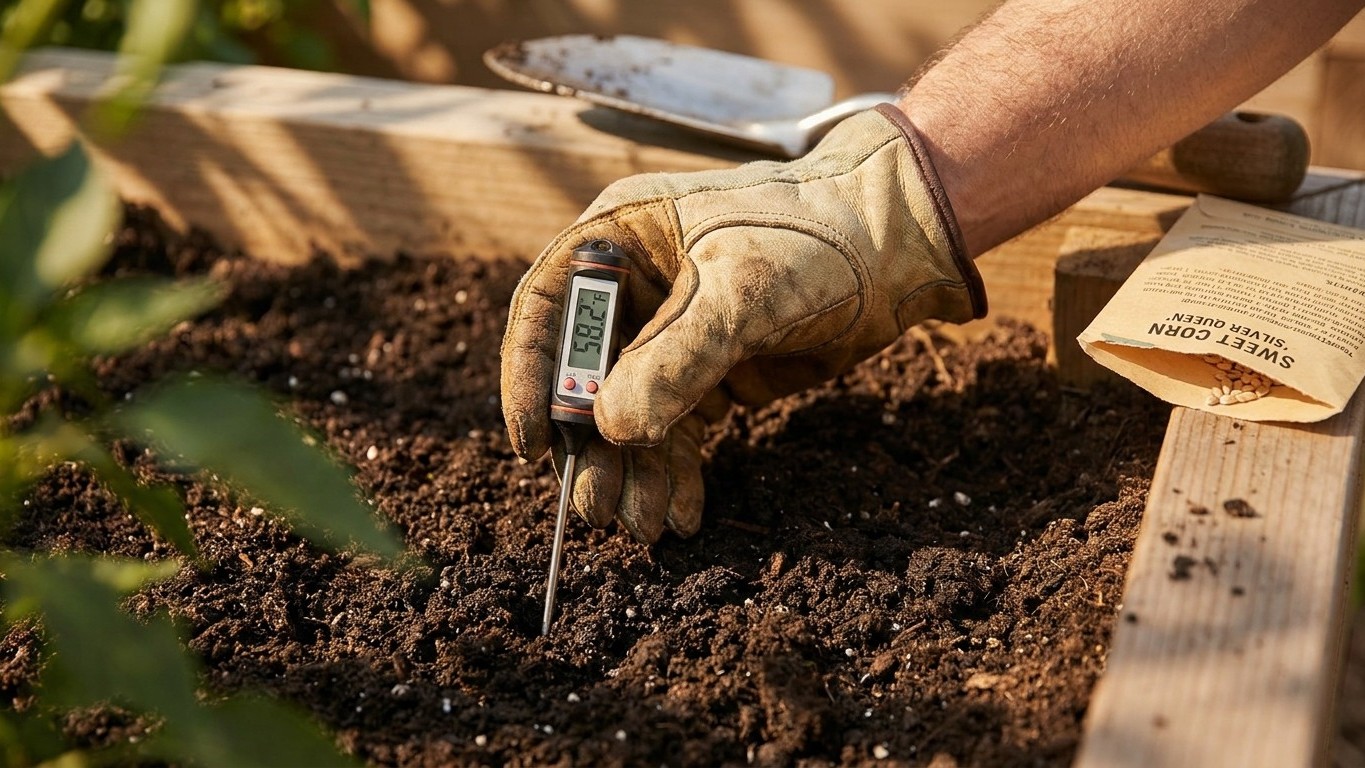
That gap matters because planting into cold soil is one of the most common ways gardeners waste seed. Corn dropped into 50°F dirt just sits there, rots, or germinates so unevenly that the stand never fills in right. The fix is simple but requires patience: use an actual soil thermometer, pushed a couple of inches into the row, rather than guessing from the calendar or from how warm the air feels on a sunny afternoon.
Once the soil clears that 60°F mark, the next question is whether there’s enough season left. Sweet corn needs 60 to 90 days from planting to harvest, depending on the variety. The first fall frost at the reference station lands between October 24 and November 3. Counting forward from a typical mid-to-late May soil-warming date, even a 90-day variety has months of runway before that first fall frost shows up. That’s a comfortable margin by regional standards, and it’s part of why sweet corn has long been a dependable garden crop across southern New England.
The caveat is that these frost dates come from one airport-based weather station, and gardens away from that specific location often run cooler. Suburban yards and rural properties tend to see the last spring frost arrive later and the first fall frost arrive earlier than the reference dates, sometimes by one to two weeks, and more if you’re gardening at higher elevation or in a valley that collects cold air overnight. If your property tends to frost early or late compared to nearby towns, treat these dates as a starting point and adjust based on what you’ve actually observed in your own yard over the past few seasons.
Also worth keeping in mind: Rhode Island’s summers bring an average of 9.4 days a year at 90°F or hotter. That heat load helps push corn through its growth stages quickly, but it also raises water demand. A corn stand that’s short on moisture during the heat of midsummer, right around tasseling and silking, will show it in the ears. Consistent watering during that stretch matters more than the exact planting date.
Does a late variety fit here?
Whether a longer-season type works comes down to doing the math on your own property rather than trusting a one-size answer for the whole state. Here’s how the two ends of the sweet corn timeline stack up against Rhode Island’s climate numbers.
A 60-day variety
A quick-maturing, roughly 60-day variety is the low-risk choice almost everywhere in Rhode Island. Planted once soil reaches 60°F, likely sometime in May for most gardens, it will be ready for harvest by mid-summer, long before the first fall frost window of October 24 to November 3 comes anywhere close. That kind of buffer means a 60-day type also leaves room for a second, staggered planting a few weeks later if you want fresh ears over a longer stretch of summer rather than one big harvest all at once. For anyone gardening in a spot that tends to warm up late in spring, whether that’s a shaded yard, a low pocket that holds cold air, or a property at higher elevation, the 60-day type is the safer bet because it doesn’t demand an early start to still finish on time.
A 90-day variety
A 90-day variety asks more of the season, but the numbers still work at the reference station. Planted once soil clears 60°F, a 90-day type maturing three months later still lands well ahead of the late-October to early-November frost window. On paper, that’s a fit. Where it gets tighter is in the gardens the reference station doesn’t represent well. If your property runs a week or two behind the reference dates in spring, and a week or two ahead of them come fall, per the pattern of local gardens running cooler and frosting sooner than the airport-based data, that squeezes both ends of the calendar at once. A 90-day variety planted late because the soil was slow to warm, in a spot that also tends to frost early, is the scenario where the math stops working. It’s not that the long variety fails in Rhode Island generally. It’s that it has far less margin for error than the 60-day type, and that margin shrinks fastest for gardeners in cooler microclimates rather than those closer to the coast.
What goes wrong here
Most sweet corn disappointments in Rhode Island trace back to one of three predictable problems, and each has a straightforward fix once you know to watch for it.
- Sowing into soil that’s still cold. Seed dropped before the ground holds a steady 60°F germinates slowly, unevenly, or not at all, and what does come up is often stunted from the start. The remedy is checking soil temperature directly with a thermometer rather than going by the last frost date or by how the air feels, since soil consistently lags behind both.
- Choosing a variety that’s too late for the available season. A 90-day type can work at the reference station’s dates, but it leaves little room if your property runs cooler in spring, warmer soil comes late, and frost arrives early in fall. The fix is matching the maturity length to your own observed frost history, not the state average, and leaning toward a 60-day type if your garden has ever surprised you with an early frost.
- Losing sweetness because different corn types tasseled together. Standard (su), sugary-enhanced (se), and supersweet (sh2) sweet corn types cross-pollinate if their pollen sheds at the same time, and the result is starchy, disappointing ears even though everything else about the growing season went fine. This has nothing to do with soil temperature or frost dates. The remedy is timing plantings so the different types don’t tassel simultaneously, or growing only one type in a given season, rather than relying on distance alone to keep them apart.
Common questions
How do I know when to actually pick the ears? Maturity length from planting tells you whether the season fits, but it’s a separate clock from harvest timing. Once silks emerge, ears are typically ready in roughly 17 to 24 days. Check for three signs together before picking: the silks should be dry and browned, the husks should still be moist and green, and juice from a punctured kernel should run milky rather than clear or thick. One sign alone isn’t a reliable test; look for all three at once.
Why does sweet corn need to be planted in blocks instead of a single long row? Corn is wind-pollinated, and pollen needs to drift from tassels down onto silks on neighboring plants. A single skinny row often fails to pollinate evenly, leaving ears with gaps or missing kernels. Planting in blocks of three or more rows side by side gives pollen a much better chance of reaching silks throughout the planting, according to Utah State University Extension guidance on garden sweet corn.
Can I just go by the calendar instead of checking soil temperature? Not reliably. Frost dates track air temperature, and soil warms on its own schedule that depends on your specific ground, drainage, and sun exposure. A calendar date that works for one yard can still be too early for a shaded or low-lying garden a few miles away. A simple soil thermometer removes the guesswork.
Does the local frost date apply to my exact property? Not necessarily. The frost dates cited here come from one airport-based weather station, and gardens elsewhere in Rhode Island often see later spring frosts and earlier fall frosts than that station records, sometimes by one to two weeks. If you’ve noticed your own yard running cooler or warmer than the regional forecast in past seasons, plan around that pattern rather than the reference dates alone.