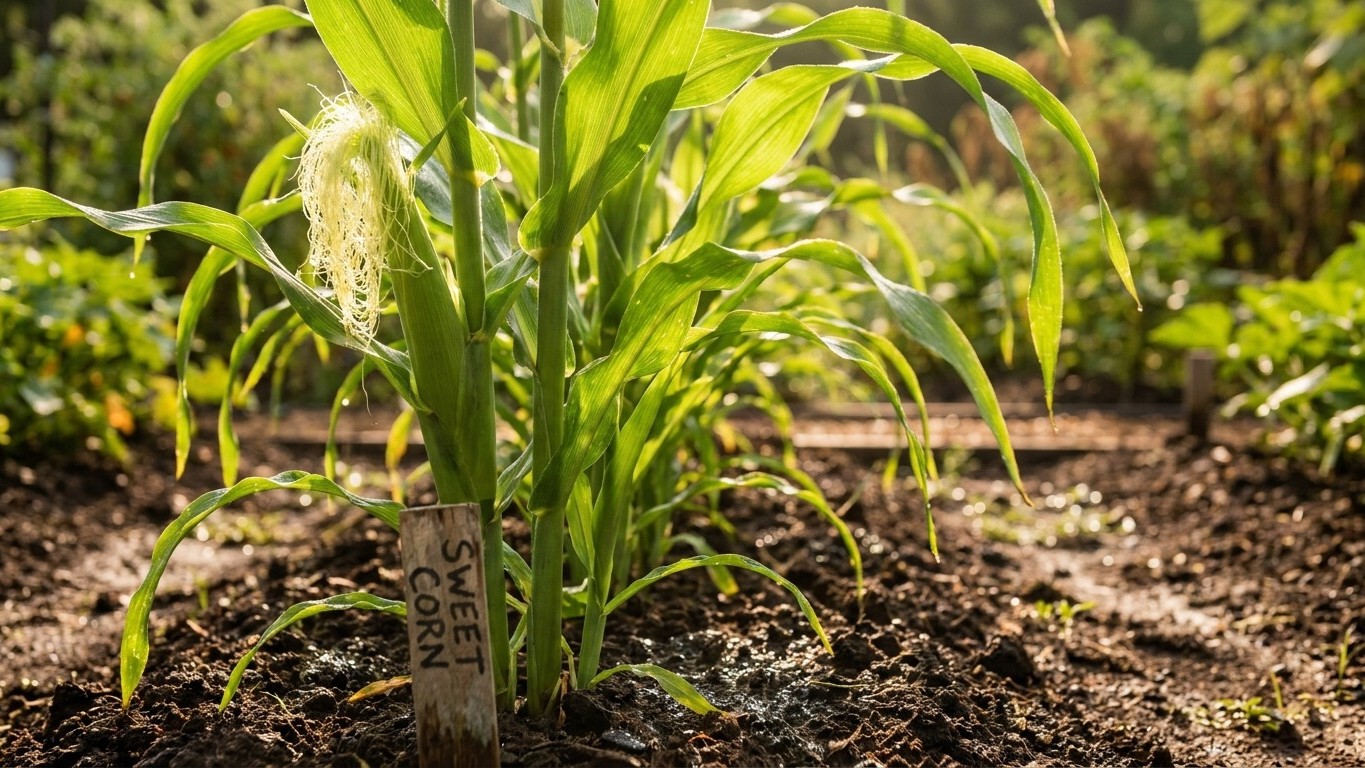

Yes, sweet corn can ripen in Rhode Island, but the timing is tighter than the calendar suggests. The crop doesn’t start its clock at the last spring frost. It starts when the soil itself warms past 60°F, which happens well after that frost has passed. From there, a 60 to 90 day corn has to fit before the first fall frost shuts the season down. Do the math on those two dates, and Rhode Island gardeners have more room than they’d guess.
The short answer
Start with the frost dates people usually fixate on. At the reference weather station used by NOAA’s 1991-2020 Climate Normals, the last spring frost typically falls somewhere between April 7 and April 17. That’s a useful marker for tomatoes and peppers, but sweet corn doesn’t care about frost the way those crops do. What corn cares about is soil temperature, and soil above 60°F is the real starting gun.
Soil doesn’t warm at the same pace as air. Even after that mid-April frost window closes, the ground underneath a garden bed is still cold, still holding winter’s chill a few inches down. It typically takes several more weeks of longer days and milder nights before that soil crosses 60°F, usually pushing planting into May for most of the state rather than late April. Sow into ground colder than that and the seed just sits there, more likely to rot than sprout. That’s the first crossing point people miss: the last frost date and the soil-ready date are two different calendar entries, not one.
Once the soil clears 60°F, the second clock starts: 60 to 90 days from planting to harvest, depending on the variety. The question becomes whether that window closes before the first fall frost. At the same reference station, the first fall frost normally lands between October 24 and November 3. Count forward from a typical planting sometime in May, and you land somewhere in the July-to-August range for harvest, with weeks of cushion left before autumn’s frost arrives. That’s a wide enough margin for both a quick 60-day type and a longer 90-day type to mature with time to spare.
One more number matters here, and it’s not about frost at all. The reference station averages 9.4 days a year at 90°F or hotter. That’s not brutal desert heat, but it’s enough heat load to stress corn during tasseling and silking, the exact window when pollination decides whether ears fill out properly. A short heat spike during that stretch can matter more to your harvest than a week’s difference in planting date. Rhode Island’s season length isn’t the limiting factor for sweet corn. The soil-warming lag and the occasional hot stretch during pollination are the details that actually decide the outcome.
Also worth remembering: these dates come from one airport-based weather station. Gardens away from that station, especially inland, at higher elevation, or in low-lying frost pockets, often see the last frost arrive later and the first fall frost arrive earlier, sometimes by a week or two. Treat the dates above as a reference point, and check what your own county’s extension office or local records say before locking in a planting date.
Does a late variety fit here?
“Late” for sweet corn generally means the 90-day end of the 60-to-90-day range referenced by Utah State University Extension. The question isn’t whether corn can grow here at all. It’s whether a specific maturity length leaves enough runway once you account for the soil-warming lag on one end and the first fall frost on the other.
A 60-day variety
A fast-maturing 60-day corn is the low-risk choice for Rhode Island. Planted once soil has cleared 60°F, typically in May for most of the state, it matures in roughly two months, landing harvest in early-to-mid July. That leaves a comfortable stretch, well over three months, before the first fall frost arrives in late October or early November. There’s enough slack here that a second planting a few weeks after the first is realistic, stretching the harvest window rather than ending it in one push. The risk with a 60-day type isn’t season length. It’s the same heat-stress window every sweet corn faces during tasseling, since a hot stretch can still affect pollination regardless of how quickly the plant otherwise matures.
A 90-day variety
A 90-day corn is the longer bet, but the numbers here still work. Planted in May once soil has warmed, a 90-day maturity length puts harvest somewhere in early-to-mid August. Counting forward from there to the first fall frost in late October or early November still leaves a solid two-and-a-half months of buffer. In territories with a shorter frost-free stretch, a 90-day variety would be the one to flag as risky or simply not viable. That’s not the case in Rhode Island. The gap between soil-ready planting and first fall frost is wide enough that even the slower end of the maturity range fits with room left over, not a tight squeeze against the calendar.
The practical takeaway: neither maturity length is the constraint here. What actually shifts risk is planting too early into cold soil, or letting a hot stretch coincide with tasseling. Maturity length itself has margin to spare in this climate.
What goes wrong here
- Soil sown too cold. The most common mistake is treating the last spring frost date as the planting date. Corn seed dropped into soil still under 60°F tends to rot rather than sprout, or germinates so slowly that early weeds get the head start instead. The remedy is simple: check soil temperature directly with a probe thermometer rather than going by the calendar, and wait until it holds above 60°F for a few consecutive days before planting.
- A variety too late for the season. Even though the 60-to-90-day range fits comfortably in Rhode Island’s window between soil-ready planting and first fall frost, choosing something well beyond that range, or delaying planting deep into summer, still risks pushing harvest past the first fall frost in late October or early November. The fix is to plant promptly once soil clears 60°F and to keep maturity length within the range this climate can actually support before frost.
- Sweetness lost because two types tasselled together. This one has nothing to do with weather. Su, se, and sh2 sweet corn types cross-pollinate if they release pollen and show silk at the same time, and the result is starchy, disappointing ears regardless of how well the season otherwise went. There’s no published distance figure to rely on here. The fix is timing and planting shape: stagger plantings so different types don’t tassel in the same week, and grow corn in blocks of three or more rows rather than single rows, since block planting improves pollination within a single variety and makes it easier to keep types from overlapping.
Common questions
Can I plant sweet corn right after the last spring frost in Rhode Island?
Not reliably. The last frost typically falls between April 7 and April 17 at the reference station, but soil usually needs several more weeks to climb past 60°F. Planting on frost-date alone, before the soil has actually warmed, is one of the most common reasons seed fails to come up.
How do I know when soil has actually reached 60°F?
Use a soil thermometer pushed a few inches into the bed, checked in the morning over a few consecutive days, rather than relying on air temperature or the calendar. Air can feel warm on a sunny afternoon while the ground underneath is still cold.
How do I know when the ears are actually ripe?
Check three signs together, not just one: the silks should be dry and browned, the husks should still feel moist and green, and a punctured kernel should release milky juice rather than a clear or thick, pasty liquid. Relying on silk color alone is a common way to pick too early or too late.
Can I grow two different sweet corn types in the same garden?
Yes, as long as they don’t tassel and silk during the same stretch of the season. Stagger planting dates by variety so the pollen release times don’t overlap, and lean on block planting, three or more rows together, to help each type pollinate cleanly within itself.