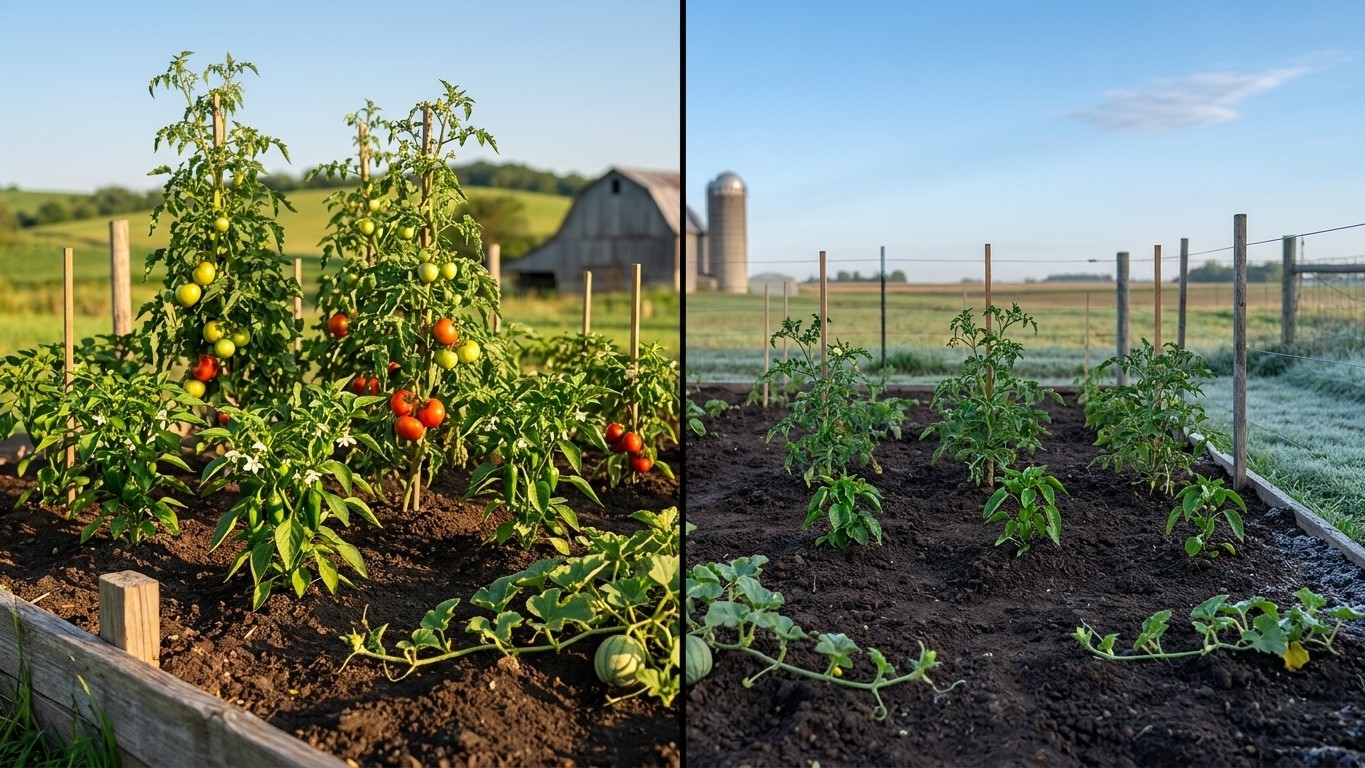

South Carolina tomato harvest runs on two clocks at once: the calendar and the thermometer. Most vines keep producing ripe fruit from early summer into fall, but the real deadline is the first freeze, which pulls the plug on ripening no matter how many green tomatoes are still hanging. Knowing that date for your part of the state changes everything about when you pick.
When to pick tomatoes in South Carolina
Ripeness on the vine is a visual and tactile call, not a date on a calendar. A tomato ready to pick has reached full color for its variety (deep red, orange, or yellow depending on what’s planted), gives slightly under gentle thumb pressure, and often smells sweet at the stem end. Waiting past that point doesn’t add flavor. It mostly invites cracking, splitting after rain, and a faster path to the compost pile once fruit flies and yellow jackets find it.
The bigger question for South Carolina growers isn’t when tomatoes are ripe day to day, it’s when the season forces a final harvest. That’s set by the first fall freeze, and NOAA’s climate normals for the reference station near Columbia (station USW00013880) put the 32°F freeze window between November 20 and December 5. That’s a two-week band, not a single date, because freeze timing varies year to year even at one station.
Two things push that window around depending on where you garden. Peninsular Charleston, buffered by the harbor and the ocean, tends to stay frost-free later than the airport data suggests. Upstate South Carolina, especially the higher elevations around Greenville and Spartanburg, runs on a tighter schedule at both ends of the season, with frost arriving sooner in fall and lingering later in spring. USDA places the whole state across hardiness zones 7a to 9a, a range built on a single measure, the average annual extreme minimum temperature, and that spread alone tells you a Lowcountry garden and an Upstate garden aren’t operating on the same freeze calendar.
What that means for picking decisions
In practice, growers watch the extended forecast starting in early November rather than trusting a fixed date. Once nighttime lows are forecast to dip toward freezing, it’s time to walk the rows and take stock of what’s on the vine, ripe or not. This is also where the season’s back half differs from the planting-date decisions made in spring: back then, the last spring frost for the same Columbia-area station falls between February 28 and March 17, and that window shapes when transplants go in the ground, a separate topic covered elsewhere. In fall, the frost window shapes when the harvest ends, full stop.
What to do with the green ones
A frost warning doesn’t mean the season’s fruit is a loss. It means switching from picking ripe tomatoes to a one-time strip of the whole plant, and treating the green fruit by how far along it already is. Not every green tomato behaves the same way once picked, and sorting them saves a lot of disappointment later.
The dividing line is what growers call “mature green” versus fruit that never got that far. A mature green tomato has reached full size for its variety and has begun to turn pale or whitish at the blossom end, even if there’s no color yet. Cut one open and the seeds are developed, surrounded by gel rather than solid white flesh. That tomato has enough stored sugar and hormone activity to finish ripening off the vine. A small, hard, dark-green tomato with no blossom-end lightening usually won’t ripen properly; it stays firm and starchy, better suited to frying or pickling green than waiting for red.
Sorting by stage
| Stage | Appearance | Best use |
|---|---|---|
| Mature green | Full size, pale blossom end, developed seeds inside | Ripen indoors for fresh eating |
| Immature green | Small, hard, uniformly dark green | Fried green tomatoes, relish, pickling |
| Breaker stage | First blush of color at blossom end | Ripen indoors, fastest of the green fruit |
Before the freeze hits, it’s worth pulling the entire plant rather than picking fruit one at a time, if there’s a hard freeze in the forecast rather than a light frost. Hang the whole vine upside down in a garage or shed and the remaining fruit will often continue ripening slowly, drawing on what’s left in the stem. This works better for plants with a heavy late load than for a few stray fruits, which are easier to just pick and sort by hand.
Immature green tomatoes that clearly won’t ripen aren’t wasted, they’re just destined for a different dish. Southern kitchens have built an entire tradition around unripe tomatoes for exactly this reason: frost doesn’t discriminate, and a green tomato pie or a jar of chow-chow uses fruit that would otherwise go straight to the compost bin.
Ripening indoors, and how long they keep
Ripening a picked tomato is a waiting game, not a technique that speeds things up dramatically. Room temperature and time do the work; the main variables a grower controls are airflow, light exposure, and how the fruit is arranged.
The classic method is a single layer of tomatoes in a cardboard box or paper bag, out of direct sunlight, in a spot that stays at normal indoor room temperature. Direct sun on a windowsill feels intuitive but tends to soften and cook one side of the fruit before the rest ripens evenly, so a countertop or a shelf away from the window works better. Some growers add a ripe banana or apple to the box; both release ethylene gas, the same hormone the tomato itself produces as it ripens, and a concentrated dose in a closed container can nudge slower fruit along faster than an open counter would.
Checking on them
Green tomatoes brought in before a freeze won’t all ripen on the same schedule. Breaker-stage fruit with color already showing turns fastest. Fully mature green fruit with no color yet takes longer and more unevenly, sometimes finishing over an extended stretch depending on the batch. Fruit picked too early, before reaching the mature green stage, may simply shrivel or rot rather than color up, since it never had the internal changes needed to finish the job. Checking the box every few days and pulling ripe fruit out as it colors keeps one soft tomato from starting to spoil next to fruit that’s still working through the process.
Refrigeration slows this process down rather than helping it. Cold temperatures below roughly 55°F interrupt the enzyme activity that builds flavor and softens the fruit, which is why a tomato ripened in the fridge often tastes flat and mealy compared to one finished at room temperature. Once a tomato is fully ripe, a short stay in the refrigerator can extend how long it holds before using it, but ripening itself is a room-temperature process from start to finish.
How long green tomatoes hold in storage before they either ripen or spoil isn’t a fixed number, it depends on the fruit’s maturity when picked, the temperature of the room, and how much airflow the container gets. There’s no single published duration that applies to every batch, so the more useful habit is regular checking rather than counting down to a specific day.
What goes wrong here
The most common misstep is simply waiting too long on the vine, betting on a few more warm days that don’t materialize. A freeze watch can shift or intensify with little warning, and tomatoes left out overnight in a hard freeze turn to mush by morning, ending any chance of ripening them indoors. Checking the forecast in the days leading up to the state’s typical fall frost window, rather than reacting the night of, gives enough lead time to strip the plant properly.
Overcrowding the ripening box is another frequent problem. Stacking tomatoes several layers deep traps moisture and blocks airflow around the fruit at the bottom, and one tomato starting to rot can spread mold to everything touching it. A single layer, with fruit not quite touching, takes up more counter space but avoids that domino effect.
Sunlight is a subtler mistake. It seems logical that a sunny windowsill would help a green tomato ripen, since sun is what colors fruit on the vine. Indoors, though, that same sun heats one side of the fruit unevenly through glass, softening it faster than it colors and sometimes causing rot before the tomato ever turns fully red. A shaded countertop does the job more evenly.
Picking fruit that never reached mature green is a mistake that only shows up days later, when the tomato shrivels instead of coloring. There’s no fixing that after the fact, which is why sorting fruit at harvest, before it goes into the ripening box, saves time down the line. And for growers second-guessing frost timing or variety choice for next season, the Clemson Cooperative Extension Service publishes region-specific guidance for South Carolina gardens at clemson.edu/extension, useful for questions that fall outside picking and ripening specifically.
Common questions
Can a green tomato with no color at all still ripen?
Only if it has reached full size and developed seeds inside, the mature green stage described above. Small, hard, immature fruit generally won’t ripen properly and is better used green.
Does putting tomatoes in a paper bag speed up ripening?
It concentrates the ethylene gas the fruit naturally releases, which can help ripening along compared to an open counter, but it doesn’t change the overall timeline dramatically. Airflow and temperature still matter more than the container.
Should ripe tomatoes go in the refrigerator?
Once fully ripe, refrigeration can extend how long a tomato holds before use, but chilling a tomato before it’s ripe interrupts the ripening process and tends to leave it mealy.
Is the first fall frost date the same across South Carolina?
No. The November 20 to December 5 window applies to the NOAA reference station near Columbia. Coastal areas like peninsular Charleston typically stay frost-free longer, while Upstate South Carolina tends to see frost earlier than that window.