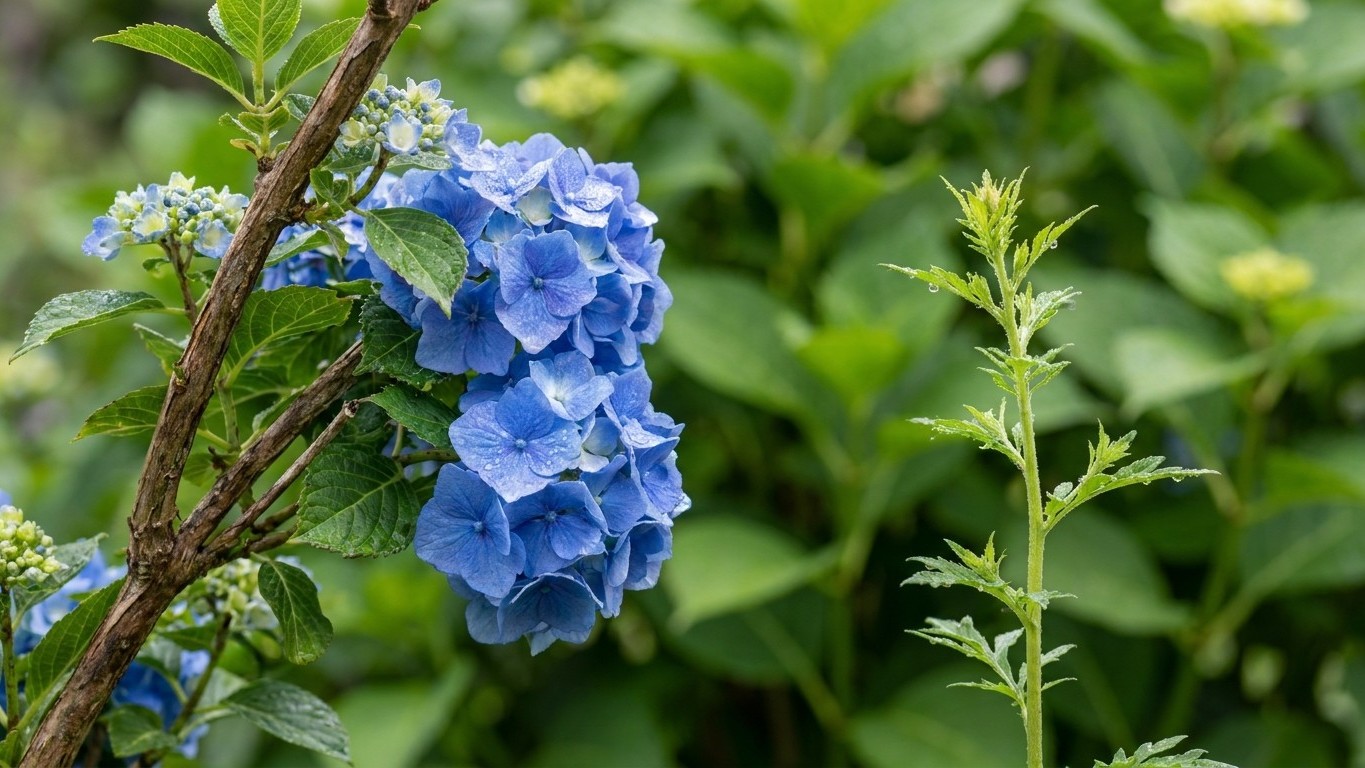

Most hydrangeas in South Carolina get through winter with little help. The USDA Plant Hardiness Zone Map puts the state at 7a to 9b, which is mild enough that the shrubs rarely die from cold alone. The damage comes from timing. A warm spell wakes the buds in late winter, then a freeze catches them. Mulch in the fall, pruning held until spring, and a frost cloth on a few forecast nights cover most cases.
What this comes down to in South Carolina

Hydrangeas here need protection on a handful of nights, not all winter, and those nights cluster in two windows. At the Charleston airport reference station, the first fall freeze (32°F) typically arrives between November 20 and December 5, and the last spring freeze falls between February 28 and March 17, according to the NOAA NCEI 1991-2020 Climate Normals.
The USDA zone number tells you something different from those dates. It is built on one variable, the average annual extreme minimum temperature, so it says whether a plant survives the coldest night of a typical year. It says nothing about how early a freeze arrives in November or how late one lingers in March. A shrub can be perfectly zone-appropriate and still lose its flower buds to a freeze that comes ten days after a warm week in February.
When does the cold window open and close?
Between the two frost windows, the weather is not steadily cold. Winter days along the coast and across the Midlands often reach into the 60s, and hydrangea buds respond to that warmth. Swelling buds are far more vulnerable than tight, dormant ones. The risky stretch therefore starts well before the last-freeze window ends, in the weeks when buds are fattening and the forecast still carries an occasional night at or below freezing.
Peninsular Charleston is milder than the airport station, so a garden downtown sits at the gentle end of these dates. Upstate South Carolina runs several weeks tighter at both ends: the first freeze comes sooner and the last one comes later. The Charleston numbers are a reference point, and your own yard may sit on either side of them.
Which hydrangeas lose the most in a late freeze?
It depends on where the flower buds sit. Bigleaf and oakleaf hydrangeas set next year’s buds on old wood, the stems that grew the previous season. Those buds ride exposed on the stems all winter, and a hard freeze after they wake can erase the whole year’s bloom. Smooth and panicle hydrangeas flower on new wood, so a freeze that kills their stem tops costs some height but not the flowers, because the shrub builds new stems and buds in spring.
That split decides how much effort each plant deserves. Old-wood types are the ones to cover on cold nights. New-wood types mostly need a layer of mulch and a little patience.
Working it out for your own garden
A fixed calendar date for wrapping a shrub breaks down in a warm year or after a move to a different part of the state. A better habit is to work from the frost window and from what the plant is doing. The method has three parts: schedule the fall work by counting back from the first freeze, schedule the spring watch from the last freeze, and read the plant itself to see how it fared.
How do you count back from the frost window to schedule winter protection?
Start with the fall window of November 20 to December 5. Mulch needs to be down before the first freeze, and two to three weeks of lead time gives you room for a busy weekend or a cold snap that comes early. Subtract two to three weeks from the window and you get roughly October 30 to November 21. That is the stretch for spreading mulch, watering a dry bed, and gathering frost cloth and stakes. In the Upstate, shift the whole range earlier by several weeks. In a mild coastal yard, the later half of the range is fine.
The spring side works the other way. The last freeze falls between February 28 and March 17, and freezes after that range are still possible. Freezes after it are possible, so keep covers within reach until the nights have been reliably mild and the buds have opened into leaves.
Now run a real example. A bigleaf hydrangea such as Nikko Blue flowers only on old wood. Say a warm stretch in late February makes its buds swell and its first leaves begin to open. The last-freeze window runs through March 17, so the plant has roughly two to three weeks of exposure left. Cover it on any night when the forecast reaches freezing, and it will most likely keep its bloom. Leave it bare through one hard night and the flowers may be gone for the year, though the shrub itself will recover.
A new-wood plant such as Annabelle (smooth hydrangea) shows the other end of the line. If the same freeze burns its young leaves, watch for new stems pushing out. It needs no covering, only a cleanup of damaged growth once the weather settles.
How do you tell whether a freeze killed the buds?
Wait. Dead-looking stems in early spring are often alive lower down. Scratch a small patch of bark with a fingernail: green tissue underneath means the stem is alive, while brown and dry means it is dead. Prune only after the shrub has leafed out and you can see exactly where growth stops. On an old-wood hydrangea, cutting early to tidy up can remove buds that would have bloomed.
What changes across the state
South Carolina runs from the Atlantic coast to the foothills of the Blue Ridge, and winter protection changes along that line. The coast stays warmest because the ocean moderates the coldest nights. Charleston’s reference dates sit toward the mild end of the state, and that is why Upstate gardens run several weeks tighter at both ends of the freeze window. The same shrub that sails through a coastal winter can face a longer, colder stretch in Greenville or Spartanburg, where first freezes come sooner and late freezes linger.
The zone range of 7a to 9b follows the same pattern. The cooler end belongs to the northwestern part of the state, and the warm end to the coastal strip. The Midlands and the Sandhills fall in between, with a longer run of mild days that can tempt buds open early.
Elevation matters even inside a single county. Cold air drains downhill and pools in low pockets, so the bottom of a slope can see a freeze that the top misses. Soil plays a part too. Sandy soil in the Sandhills and coastal plain drains quickly and can dry out in a winter dry spell, while heavy clay in the Piedmont holds moisture and cold longer. A south-facing wall, a masonry foundation, or a spot under a mature tree canopy can each warm the plant. Walk your yard on a clear, cold morning and note where frost lingers, because that map is more useful than any regional average.
The mistakes this state punishes

Pruning a bigleaf or oakleaf hydrangea in fall or winter is a costly error. Those shrubs carry next year’s flowers on the stems you are tempted to tidy, so a haircut in November removes the bloom. Wait until the plant has leafed out in spring, then take out only wood that is clearly dead.
Feeding late is another common mistake. A fall dose of nitrogen pushes soft new growth just as the first freeze approaches, and that growth burns at the first hard night. Stop fertilizing well before the fall window opens and let the plant slow down on its own.
Mild spells cause a different kind of trouble. A run of warm days in February makes spring feel close, and gardeners pull mulch away or plant new shrubs into soil that looks workable. The ground can still be cold, the last freeze window runs to March 17, and fresh growth pays for the early start. Leave mulch in place until the freeze window is behind you, and treat any planting made during an early warm spell as one that may need a frost cloth.
Covers can cause damage as well. Plastic that rests directly on leaves transfers cold to them and traps moisture, and a cloth left on through a sunny day can overheat the plant. Prop the cover on stakes, put it on in the evening, and take it off the next morning. Piling mulch against the stems keeps them damp, so pull it back an inch or two from the base.
Planting an old-wood bigleaf in a known frost pocket is the last of the common errors. Put a new-wood type there instead, or move the bigleaf to a spot that gets the benefit of a wall.
Checking this against your county
The Charleston dates are a starting point. Your county can run earlier or later, depending on elevation, soil, and how close you are to the coast or the foothills. Clemson Extension has county offices with local agents who know the freeze history where you live, and they can tell you how your area compares with the coast. For the broader picture on siting, soil, and care, see the state guide to growing hydrangeas in South Carolina.
Common questions
Do hydrangeas need to be covered every winter in South Carolina?
No. Most winters need only mulch. Covering matters on the few nights when a freeze is forecast after buds have started to swell, and it matters most for bigleaf and oakleaf types that bloom on old wood. New-wood hydrangeas usually do not need a cover at all.
Should I cut back hydrangeas before winter?
Leave bigleaf and oakleaf hydrangeas alone until spring, because their flower buds are already on the stems. Smooth and panicle hydrangeas tolerate pruning better since they bloom on new wood, but waiting until late winter or early spring is still the safer habit for every type. Stems also give the crown some protection through the cold months.
When can I take the mulch and covers off?
Remove covers each morning after a freeze night, and keep them handy until the last-freeze window, February 28 to March 17 at the Charleston reference station, is behind you and the forecast stays above freezing. Thin the mulch gradually rather than stripping it all at once, and pull it back from the stems as growth starts.
What about hydrangeas in pots?
Container roots sit above ground and freeze faster than roots in a bed. Move pots against a house wall, onto a sheltered porch, or into an unheated garage during hard freezes, and water lightly if the mix dries out. A pot left in an open yard faces the same air temperature on all sides, which is why container shrubs often fare worse than identical ones planted in the ground.