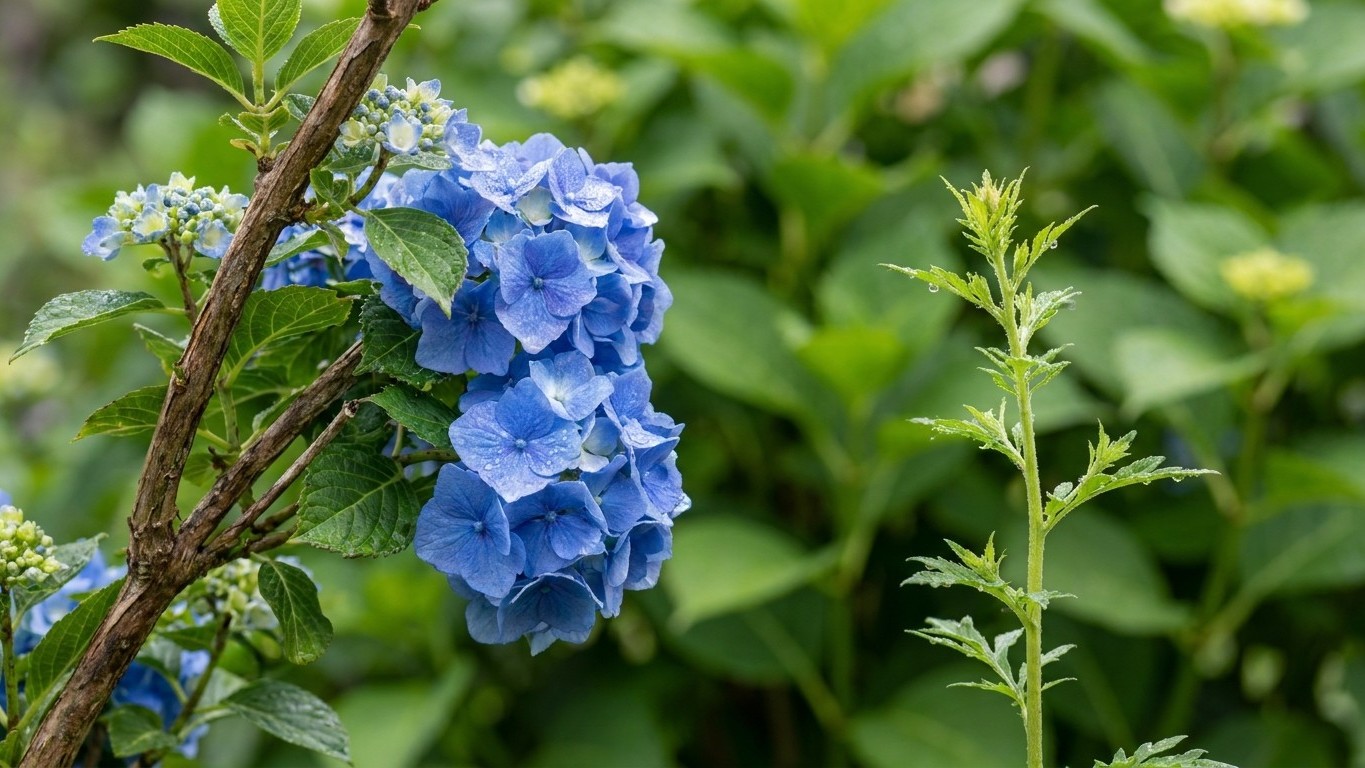

Hydrangeas that fail over a South Dakota winter are often the wrong type for the spot, not simply too tender. Smooth and panicle hydrangeas bloom on new wood and sprout back from the base after a brutal January. Bigleaf and oakleaf types set their flower buds the summer before, and those buds are what the cold kills. Match the type to the site, then add a deep mulch once the ground freezes, and most plants come through fine.
What this comes down to in South Dakota
At Sioux Falls, the reference city for these frost dates, the last spring frost falls between April 29 and May 9, and the first fall frost between September 24 and October 4. The reference station has roughly five months between the two. The rest of the year the plant lives on whatever it built during that stretch, so winter survival depends on how well the shrub hardens off in fall and how much of its wood is still alive in spring.
The USDA Plant Hardiness Zone Map, which rates each spot by its average annual extreme minimum temperature, puts South Dakota in zones 4a to 5b. That is a wide spread. A hydrangea rated for zone 3 is generally fine in all of it, while one rated for zone 5 sits at the edge in the southeast and well outside its range in the north.
Which hydrangeas need winter protection in South Dakota?
It depends on where the flower buds form. Plants that flower on new growth can lose every stem above ground and still bloom that summer. Plants that flower on old wood need those buds to survive, and that is where protection pays off. The color story of bigleaf types is covered in Why Hydrangeas Are Pink in South Dakota, and How to Turn Them Blue, and they, along with oakleaf, are the ones that ask the most of you in November.
| Type and example cultivar | Flowers on | Winter need |
|---|---|---|
| Smooth (Annabelle, Incrediball) | New wood | Little. Mulch the crown and cut back in late winter. |
| Panicle (Limelight, Bobo) | New wood | Little. Cold-hardy to zone 3, so tolerates most of the state. |
| Reblooming bigleaf (Endless Summer) | Old and new wood | Moderate. Protect the stems for early flowers, though new growth will still bloom if they die. |
| Classic bigleaf (Nikko Blue) | Old wood | High. Dead buds mean no flowers that year. |
| Oakleaf | Old wood | High in the northern and central parts of the state. |
What actually kills hydrangeas over winter?
Cold alone seldom does it. Dry, windy air pulls moisture from buds and stems while the frozen soil can’t refill them. Warm spells followed by hard freezes wake buds early and then kill them. Voles and rabbits gnaw bark under snow and mulch. A frost in late September or early October that hits before the plant has hardened off can damage soft tip growth.
Working it out for your own garden
The method is simple. Start with your type (new wood or old wood), then work out when your fall frost range arrives and when your ground freezes, and put protection in the gap between those two events.
When should you put winter protection on?
Work forward from the first fall frost. At the reference city that range is September 24 to October 4, and gardens outside town or at elevation often see it a week or two sooner. The first frost only ends the growing season for tender growth. The ground usually takes several more weeks to freeze, and that is the signal that matters. Wait until the leaves have dropped and the soil surface has stayed frozen for a few days, then mound shredded leaves or straw over the crown. For old-wood bigleafs, set a wire cage around the plant, fill it loosely with leaves or straw, and wrap burlap around the outside to break the wind. Skip plastic. It traps moisture and heat on sunny days and invites gray mold.
Water deeply through fall until the ground freezes, because a dry shrub loses far more to winter wind. Stop fertilizing by midsummer, since late nitrogen pushes soft growth that won’t harden in time.
Will your cultivar bloom after a hard winter?
Take Annabelle, a smooth hydrangea that blooms on new wood. Say every stem freezes back to the ground. New shoots emerge after the last spring frost range (April 29 to May 9 at Sioux Falls, later in many country gardens) and flower in summer, well before the first fall frost range begins. The plant is simply a shorter shrub that year.
Now take Nikko Blue, an old-wood bigleaf. Its flowers are already sitting in the buds on last year’s stems. If those buds die, new shoots will grow leaves but not flowers, and the season’s bloom is gone. A reblooming bigleaf such as Endless Summer sits between the two: it will flower on new growth, but later and more lightly. That is the line. Where winters kill stems to the ground most years, new-wood plants are the safe choice.
How do you tell winter damage from something else?
Wait for late spring. Hydrangeas leaf out late, and stems that look dead in April often wake up in May. Scratch a stem with a thumbnail: green underneath is alive, brown and dry is dead. Cut back only to the first live bud pair. Shoots coming straight from the soil mean the roots survived. Bark stripped near the base, with narrow tooth marks, points to rodents. Brown, crispy leaf edges on new foliage suggest wind burn, while gray fuzzy growth on stems under a cover means it was too wet and too tightly wrapped.
What changes across the state
South Dakota is not one climate. The state’s zone range of 4a to 5b already tells you how much it varies, and much of that variation comes from three things: latitude, elevation, and exposure.
The northeast, around Aberdeen and Watertown, runs colder than the southeast near Yankton and Vermillion, so the same cultivar that is borderline in the south may be a gamble in the north. In the north, stick with smooth and panicle types and treat old-wood bigleafs as an experiment worth mulching heavily. The Missouri River valley and the southeast corner stay milder, and you have the best chance there with reblooming bigleafs and even oakleaf.
Moving west, the land rises and the air gets drier. West River gardens deal with stronger wind, lower humidity, and bigger temperature swings in a single week. In the Black Hills, higher elevation shortens the growing season, and gardens there typically see the last spring frost later and the first fall frost earlier than the Sioux Falls range. Warm chinook winds can melt snow and wake plants up in midwinter, then a hard freeze follows. A cold winter with steady snow cover is easier on hydrangeas than a mild one that keeps thawing.
Closer to home, a shrub on the south side of a house next to a foundation can be noticeably warmer than one in an open yard. A windbreak of evergreens, a fence, or a snowdrift line can change a site more than latitude alone can.
The mistakes this state punishes
Pulling mulch off too early is a costly one. A warm March tempts people to uncover, and the buds swell right on schedule, but freezes can return well into May. Pull winter protection away in stages, and keep the burlap and a few frost blankets nearby until the last spring frost range has passed in your county. If a freeze is forecast after buds break, cover the plant overnight and uncover it the next morning.
Mulching too early causes trouble in the other direction. Heaping leaves or straw around the crown in early October, while soil is still warm, gives voles a cozy place to nest and eat bark through the winter. Wait for the ground to freeze.
Planting the wrong type for the spot comes next. A classic old-wood bigleaf in an open, windy yard in the north will often lose its buds, even when wrapped. Either choose a new-wood type or plant the bigleaf on the sheltered south or east side of a building.
Cutting too soon is another. Pruning dead-looking stems in April removes wood that would have leafed out in May. Likewise, pruning a bigleaf in fall removes next summer’s flowers. New-wood types can be cut back in late winter, but bigleaf and oakleaf should be trimmed only to remove dead stems once growth shows.
Finally, going into winter dry. Fall in South Dakota is often dry, and shrubs that enter freeze-up thirsty suffer most in windy winters. Water them deeply until the soil freezes.
Checking this against your county
The dates and zones here are starting points. A garden outside a town, on a hill, or on open prairie will behave differently from the reference airport station. Your county office of South Dakota State University Extension can tell you when frost typically arrives where you live and which cultivars have held up locally. For care basics before and after winter, see growing hydrangeas in South Dakota.
Common questions
Do hydrangeas need to be covered every winter in South Dakota?
Smooth and panicle types generally don’t. A layer of mulch over the crown is enough. Bigleaf and oakleaf types that you want to flower reliably benefit from cages and burlap, particularly in the northern and central parts of the state and on windy sites.
When should I take winter protection off?
Remove it gradually once the last spring frost range has passed in your area. At Sioux Falls that range is April 29 to May 9, and gardens outside town often run a week or two later. Keep covers within reach in case a freeze comes after the buds open.
My hydrangea looks dead in spring. Should I dig it out?
No, wait until at least late May or early June. Scratch a stem to check for green, and look for new shoots at the base. If the stems are dead but the roots are alive, a classic old-wood bigleaf will regrow without flowers that year (a reblooming type may flower later), and a smooth or panicle type will bloom normally.
Can I use plastic or a foam cone to protect hydrangeas?
It’s risky. Plastic and rigid foam heat up on sunny winter days and hold moisture against the stems, which encourages mold and then a hard freeze on already-softened buds. Breathable burlap around a leaf-filled cage works better. Some gardeners also stake the cage a few inches from the stems so wind can’t push the cover against the buds.