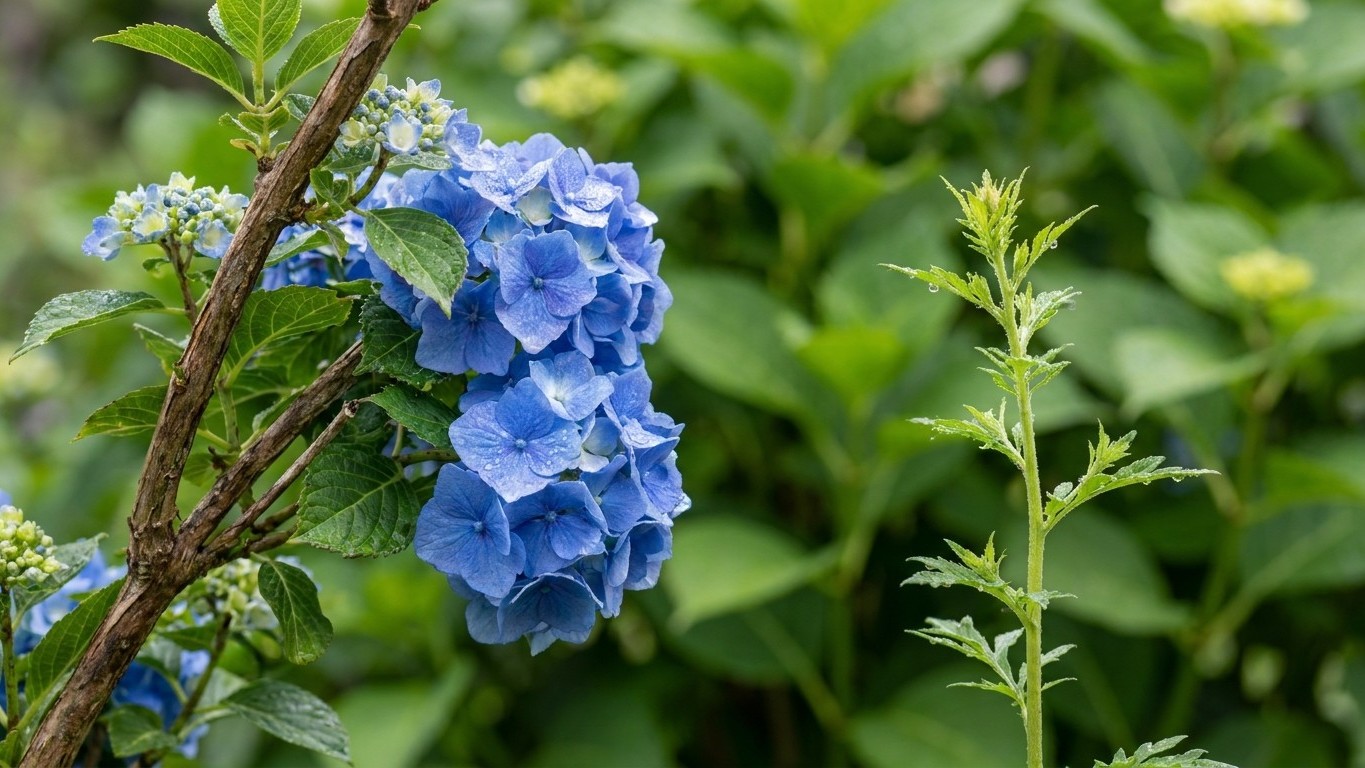

Prune panicle and smooth hydrangeas in late winter or early spring, before the buds swell. Prune bigleaf and oakleaf hydrangeas right after they finish flowering, and stop by early August. Many pruning mistakes trace back to mixing up those two groups, and South Dakota winters make the mix-up expensive.
What this comes down to in South Dakota

At the Sioux Falls reference station, the average last spring freeze falls between April 29 and May 9, and the first fall freeze between September 24 and October 4 (NOAA NCEI 1991-2020 Climate Normals). Pruning has to fit inside that frame, and the plant’s flower buds decide where.
Hydrangeas set blooms in one of two ways. Smooth hydrangeas such as Annabelle and Incrediball, and panicle hydrangeas such as Limelight, Bobo and Quick Fire, flower on new wood. They grow fresh stems in spring and form buds on them that same season. Cutting them back before growth starts removes nothing they need. Bigleaf hydrangeas, including most mophead and lacecap types, and oakleaf hydrangeas flower mainly on old wood. Their buds form on last year’s stems, in late summer and fall, and sit through winter. Cut those stems in March and you cut the flowers.
That gives South Dakota gardeners a simple calendar. New-wood types get pruned from about March into early April, while the stems are still dormant and before the buds fatten. In a warm spell the shrub can wake early, so do it on the first mild day rather than waiting for May. Old-wood types get pruned in the weeks after bloom, usually late June through July. Before they bloom, limit work on them to removing stems that are clearly dead, once leaves show what survived.
The fall frost window sets the other boundary. Pruning prompts new shoots, and shoots started in late summer have little time to harden before the first freeze. Early August is a sensible cutoff for any shrub. A trim in September or October invites soft growth that winter kills back, and it can strip off buds that were set for next year.
The frost dates above describe the airport station. Suburban and rural gardens can see the last spring frost one to two weeks later and the first fall frost one to two weeks earlier, and more so at elevation. The USDA Plant Hardiness Zone Map (roughly zones 4 to 5 across the state, based on the average annual extreme minimum temperature) explains why old-wood bloomers struggle here: stems that bear next year’s buds are the ones most often killed by cold.
Working it out for your own garden
How do you know whether your hydrangea blooms on old or new wood?
Start with the label or the cultivar name if you have it. If you don’t, think back to last year. Flowers that opened in June on stems that were already there point to old wood. Flowers that opened in July or August on shoots that grew this spring point to new wood. Leaf shape helps too. Oakleaf hydrangeas have lobed leaves like an oak’s, and panicle types bear cone-shaped flower clusters.
Take Limelight, a panicle type. It blooms on new wood, so the pruning window opens when the shrub is dormant, from March to early April in much of the state. The new stems that grow this spring will carry the flowers. If a late frost nips the tips of those shoots in May, trim them off and the shrub keeps going. Cutting it back each year keeps stems stout enough to hold the heavy blooms.
Now a marginal case. Endless Summer, a bigleaf cultivar, is sold as a rebloomer because it can flower on both old and new wood. In the colder parts of zone 4, winter often kills the stems back to the ground or close to it. Pruning in March would only guess at which stems survived. The better move is to wait until the shrub leafs out in late May, then cut off whatever is dead. Expect the blooms to come late and from new growth, usually well into July. Where winters are milder, in the zone 5 pockets, more old stems survive and an early summer bloom becomes realistic.
How can you tell if a stem is dead or just late?
Bigleaf hydrangeas break dormancy late, and a bare shrub on Memorial Day often scares people into cutting too soon. Scratch a small patch of bark with a thumbnail. Green underneath means the stem is alive. Brown and dry means it is dead. Another check is to bend a thin twig, because live wood flexes and dead wood snaps. Cut dead stems back to a pair of healthy buds or to the base. Leave everything with green tissue, even if it looks sparse.
For the summer cutoff, count from the fall frost window. If the first freeze at the reference station arrives September 24 to October 4, a final pruning in early August leaves growing weather before the cold. Gardeners on colder ground should pull that date earlier, since their fall frost comes earlier too.
What changes across the state
South Dakota stretches a long way, and the Missouri River splits it into two different climates. The reference station sits in the southeast, where winters are cold but the growing season is among the longest in the state. Moving north toward the Watertown and Aberdeen areas, spring comes later and fall frost arrives sooner. A gardener there should plan pruning later in the spring window and finish summer pruning of old-wood types a little earlier than a Sioux Falls neighbor would.
Elevation matters just as much. The Black Hills, with their higher ground and cold-air pockets, hold spring frosts well past the dates that apply in the southeast. Valleys within the hills can trap cold on clear nights. Hydrangeas that leaf out early there are the ones most likely to lose tender shoots, which makes it smarter to wait for the weather to settle before trimming off frost damage.
The west-river plains add wind and dry winter air. Exposed stems dry out, so old-wood bloomers often die back farther there even when the zone number looks friendly. A shrub tucked against the south or east side of a house, out of the wind, keeps more of its buds than the same cultivar in an open yard. Snow cover helps too: it insulates the base of the plant, so a bed that holds snow tends to carry more live stems through winter.
All of this shifts timing by a week or two across the state, and the plant’s own condition is the best guide. When buds swell and the first leaves unfold, you know where your garden stands.
The mistakes this state punishes

One of the costliest is cutting a bigleaf hydrangea hard in fall or very early spring because it “needs cleaning up.” In a climate that already kills many of its stems, that removes whatever buds survived. Leave those stems standing through winter and take out only what is clearly dead once leaves appear.
The second is pruning too late in summer. A shrub cut in September pushes new growth just as the first freeze window opens, and that tender wood does not survive. Finish any summer pruning by early August and let the plant harden off.
A third is acting on a warm spell. A string of 60-degree days in March can tempt a gardener to uncover and trim everything, and the plant may start growing as well. A hard freeze can follow in April, and the last spring freeze at the reference station averages between April 29 and May 9, later on rural ground. Prune new-wood shrubs while they are still tight and dormant, and hold off on mulch removal and old-wood trimming until the cold risk has passed.
The fourth is shearing every shrub into a ball each year. Panicle and smooth hydrangeas tolerate it, but oakleaf and bigleaf types lose most of their bloom that way. Prune by type, not by habit.
Last, don’t cut smooth hydrangeas to the ground every year if they flop. Leaving a framework of sturdy stems stiffens the plant, and the sturdier stems hold the heavy flower heads upright.
Checking this against your county
The frost window here belongs to one weather station, so treat it as a starting point. Your own garden may run one to two weeks off, and more at elevation. Your county office at South Dakota State University Extension can tell you what is typical locally, and its horticulture staff can help identify a hydrangea you inherited with the house. For the broader picture of site, soil and care, read the guide to growing hydrangeas in South Dakota.
Common questions
Can I cut all my hydrangeas to the ground in fall?
Smooth hydrangeas can be cut to the ground, but late winter is the better time, since the old stems give some protection over the winter. Panicle types do best with a light trim. Bigleaf and oakleaf types should not be cut to the ground, because it removes next year’s flower buds.
My hydrangea has no leaves in late May. Is it dead?
Probably not. Bigleaf hydrangeas leaf out late and often start from low on the stem after a hard winter. Scratch the bark. Green tissue means the stem is alive, so wait another couple of weeks before cutting anything.
When should I deadhead hydrangeas?
Remove spent blooms on bigleaf types soon after flowering, cutting just above the first pair of healthy buds. On smooth and panicle types, you can leave the dried blooms through winter for looks and snow-catching, and take them off when you prune in late winter.
What if I don’t know which type I have?
Wait and watch for a season. Do only minimal pruning, removing dead wood after leaf-out, and note when it flowers. Blooms in June on last year’s stems mean old wood, so prune right after flowering. Blooms from midsummer on fresh shoots mean new wood, so prune in late winter.