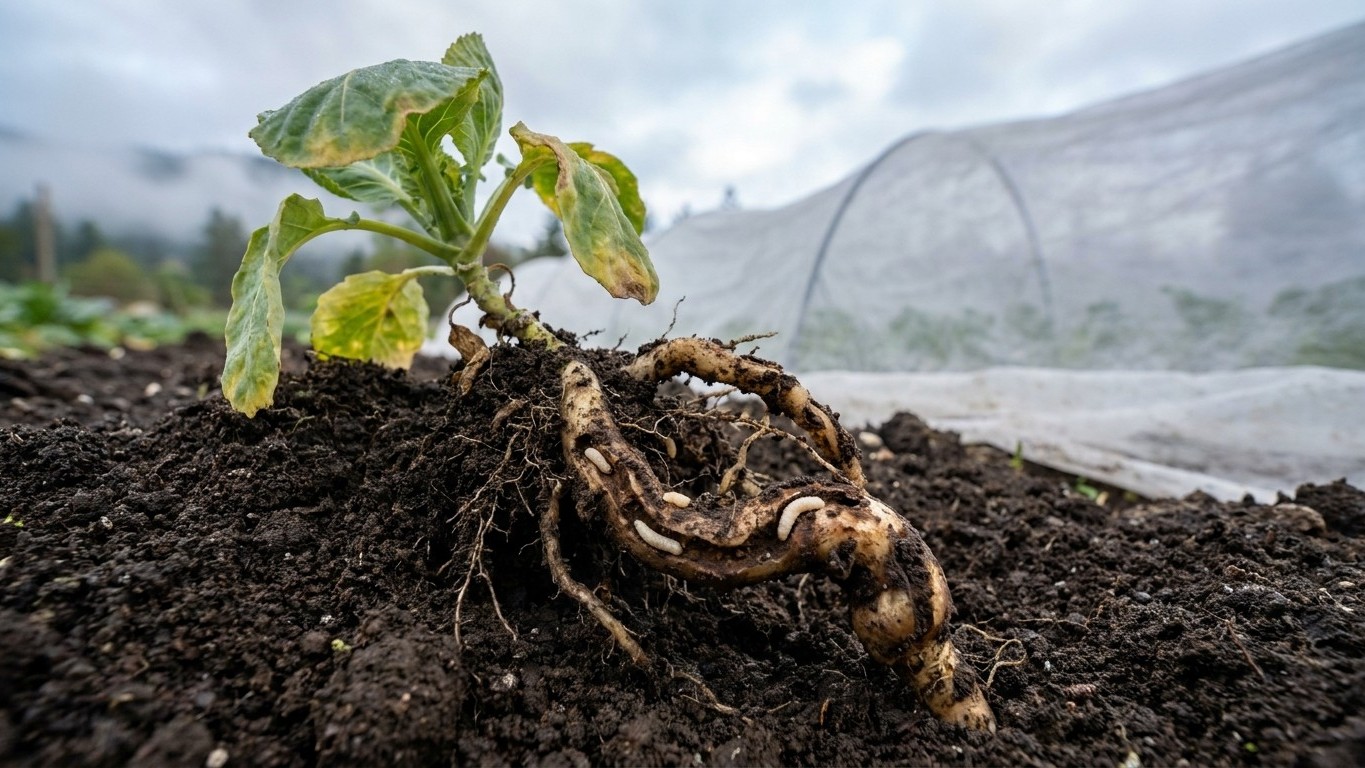

Sweet potato slips go into South Dakota ground after the last spring frost has passed and the soil has warmed, which usually means late May into early June. Planting sooner risks a cold snap that stalls or kills the slips. Planting much later leaves too little summer for the roots to size up before fall frost arrives in late September or early October.
The short answer for South Dakota
Set slips outdoors from late May through mid-June, with the first week or two of June as the best target for most gardens. That window sits a couple of weeks behind the frost dates at the Sioux Falls airport station, where the last spring frost falls between April 29 and May 9. Sweet potatoes are tropical in origin, so they wait for warm soil, and the soil lags the calendar.
Those two dates are a probability, drawn from NOAA’s 1991-2020 climate normals. They mark the band where the chance of a 32°F freeze moves through 30 to 70 percent. A freeze after May 9 becomes less likely but still turns up in some years. The first fall frost at the same station runs from September 24 to October 4, measured the same way.
Both sets of dates describe the airport. Suburban and rural gardens typically see the last spring frost later and the first fall frost earlier than the reference city, often by one to two weeks, and more at elevation. Your own season is shorter than the airport’s, and every date in this section should be read with that in mind.
When do you transplant sweet potato slips in South Dakota?
Wait until the soil has warmed through, and warmer is better. Slips set into cold ground sit still, and a late frost can blacken them in a night. Covering the bed before planting speeds up the warming. Sweet potatoes are counted from transplanting, not from any seed date, and most varieties need a long season in the ground.
That range explains the whole calendar. Slips set out around June 1 finish well ahead of the earliest fall frost at the reference station. A long-season variety planted the same day lands right inside the frost window.
When should you dig sweet potatoes in South Dakota?
Dig before a hard freeze, and watch the forecast from mid-September on. A light frost blackens the vines. When that happens, cut the vines back and dig within a few days so the roots do not sit in cold soil. Keep an old sheet or frost cloth handy for the first cool nights, because a night or two of protection helps the roots keep growing. For types that finish early, see The Best Sweet Potatoes to Grow in South Dakota.
What will not work here
Planting in early May fails most often. The frost window at the reference station is still open until May 9, and the soil in a rural bed is colder than the air feels. A few warm afternoons in the first week of May tempt people, but the roots need weeks of warmth, and one freeze can erase the whole planting.
Which sweet potatoes fail in a short South Dakota season?
The slowest varieties. A type that needs a long season from transplanting, set out on June 10, would finish close to the fall frost window. That is past the end of the first-frost window at the airport station (September 24 to October 4), and past it by more at a rural or northern garden where frost comes earlier. The vines may look huge and the roots still be pencil-thin. Roots keep sizing up late in the season, so cutting the season short costs the most weight at the end.
Heat is less of a worry. The reference station averages 13.8 days a year at 90°F or higher, which is a moderate heat load. Sweet potatoes like warmth, so this summer gives them no excess to fear and not much to spare either. A cool, cloudy June slows the vines, and gardeners who counted on a hot summer to make up the time end up short.
Does South Dakota summer rain cover sweet potatoes?
Mostly, but the soil decides. The reference station gets about 10.8 inches of rain across June, July and August: 4.23 inches in June, 3.25 in July and 3.34 in August. July is the driest month. Over the whole year the station gets 27.9 inches.
A fixed weekly watering schedule works badly against those numbers. On sandy soil, rain drains within the day, so a bed can go thirsty in the first weeks after transplanting even in a wet June. On clay, one good soaking holds for a week, and extra watering on top of it leaves roots sitting wet, which invites cracking and rot. Summer thunderstorms add another wrinkle, because a heavy downpour on baked ground mostly runs off.
Water new slips well at first, then back off and water only when the soil surface is dry. A cheap rain gauge on your own plot tells you more than the station normals can.
What changes across South Dakota
South Dakota does not have one climate for gardeners. The USDA Plant Hardiness Zone Map (2023 edition, built on 1991-2020 normals) places the state anywhere from zone 3b to 5b. That spread is wide, and it means no single planting date fits the whole state.
The zone system rests on one measurement, the average annual extreme minimum temperature. It describes winter cold, and sweet potatoes live here as an annual crop that never has to survive winter. Still, a colder zone usually goes with a shorter, later growing season, so the zone works as a rough guide to how far your garden sits from the Sioux Falls reference. To find your own zone, use the USDA map and look up your ZIP code rather than guessing from a neighbor’s garden.
Should northern South Dakota gardeners plant later?
Yes, and they should also choose faster varieties. Northern counties and higher ground come out of spring frost later and enter fall frost earlier than the airport figures show. A gardener there loses weeks at both ends of the season, so a 100-day sweet potato that works near the southeast corner can be a gamble farther north.
Shifts that help include waiting until closer to mid-June, warming the bed before planting, covering young plants on cool nights, and growing in a raised bed or large container, which warm faster than open ground. The main guide to Growing Sweet Potatoes in South Dakota covers bed preparation and care for the whole season.
Where to check this for your own county
The most useful next step is South Dakota State University Extension, the state’s land-grant extension service. It has county offices staffed by people who know the local soil and weather, and they can answer questions that no state-level calendar can.
Two things are worth looking for. The first is a local planting calendar or frost-date table for the weather station nearest you, since frost dates vary a lot between towns that sit only a short drive apart. The second is a list of sweet potato varieties trialled in your county or a nearby one, because a variety that did well in a research plot under local conditions beats any ranking built on national averages.
A county recommendation outranks a state one every time. The dates and ranges here are statewide guidance anchored to one airport, written to get you into the right half of the calendar. If the county office tells you something different, such as a later safe date for your valley or a variety that has done well locally, follow the county.
Checking this against your own garden
Your own observations beat every date on this list. Three are worth watching.
- Soil warmth by feel. In the morning, push your hand a few inches into the bed. If the soil feels cool and damp, wait. If it feels mild, close to the temperature of your skin, the bed is ready. Compare a sunny spot against a shaded one, or a raised bed against open ground, and you learn which part of your yard warms first.
- Where frost lingers. On the last cold mornings of spring and the first ones of fall, walk the yard early and note where white frost stays longest. Low spots hold it. Those are the places to avoid for sweet potatoes, or to cover first.
- The first new leaves after planting. Fresh leaves opening mean the slips have rooted in. Slips that sit with no new growth, or with leaves that yellow, point to soil that is still too cool or too wet.
Write down the dates you see. After a season or two you will have a record that tells you your own last frost, your own warm-up and your own first frost, and those dates will serve you better than the airport’s.
Some gardeners also time this by the Moon: when to plant sweet potatoes by the moon, as almanac tradition rather than fact.
Common questions
Can you plant sweet potatoes in South Dakota in early May?
It is a gamble. The last spring frost at the Sioux Falls reference station falls between April 29 and May 9, and rural gardens typically see it one to two weeks later. Even without frost, the soil in early May is usually too cool for slips to root. Late May to mid-June is safer.
Is it too late to plant sweet potatoes in late June?
It cuts the season close. Slips set out in late June have little time before the earliest edge of the fall frost window (September 24 at the reference station), and less in colder parts of the state. A fast variety might make it, but yields are likely to be small.
When should you start sweet potato slips?
If you grow your own slips from a sweet potato root indoors, start them well before your planting date. For a late-May or early-June planting, that means starting them indoors in spring. Many gardeners buy ready-made slips instead, timed to arrive around planting time.
How long do sweet potatoes take to mature?
Most varieties need about 90 to 120 days from transplanting, not from the day you start the slips. The shorter the season where you live, the more that number matters, so choose varieties at the fast end of the range.