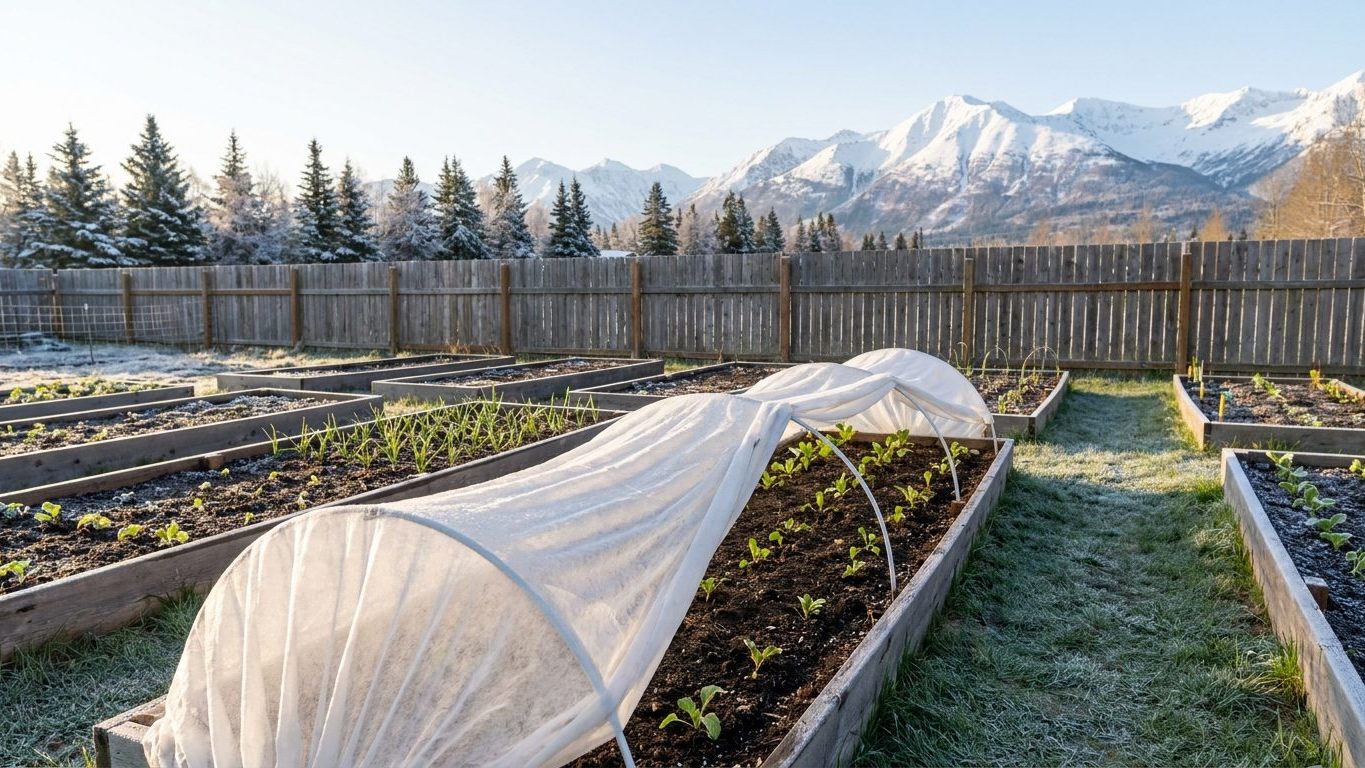

Cover the garden on any night the forecast calls for a freeze, and on clear, calm nights when the low is forecast in the mid-30s. The calendar only tells you when to start paying attention. In Middle Tennessee that means late March through mid-April and again from late October into early November. Between those windows, the weather forecast decides.
The short answer for Tennessee
At the Nashville reference station, the last spring freeze at 32°F falls between March 31 and April 12. The first fall freeze falls between October 28 and November 8. Both ranges describe the odds of a 32°F night. Somewhere inside each window, the chance of a freeze sits between 30 and 70 percent. A freeze before or after the window is less likely but still possible.
So plan to have covers within reach from the last week of March until well past April 12. Bring them back out by late October. Frost on a clear, still night can form on leaves when the air a few feet up reads in the mid-30s, because cold air settles and the ground radiates its heat to the sky. A forecast low of 36°F on a cloudless night deserves the same response as a forecast of 32°F.
The right trigger depends on what is growing. Tender crops need cover first and hardy greens last, as the table shows.
| Crop type | Examples | Cover when |
|---|---|---|
| Tender | Tomatoes, peppers, cucumbers, squash, beans | Any night forecast near freezing, from transplanting until the spring window passes, and again from late October |
| Half-hardy | Lettuce, broccoli, cabbage, beets, carrots | Hard freezes, and frosty nights when plants are young or flowering |
| Hardy | Kale, collards, spinach, turnip greens, garlic | Deep freezes, or to keep leaves clean and growing through winter |
Timing within the day matters as much as the date. Put covers on in the late afternoon, while the soil still holds the day’s warmth, and let the fabric or plastic trap it. Take them off the next morning once temperatures climb above freezing. Our guide to Extending the Growing Season in Tennessee covers the broader picture of how much extra time covers can buy.
What will not work here
Covering on the average frost date and ignoring the forecast is the most common failure. Average dates fall in the middle of a range. A freeze can come on either side of that window, so watch the forecast before setting out tender plants. Gardeners who plant tomatoes on April 1 because the window has “closed” lose them to a freeze in mid-April more often than they expect.
Covers also cannot fix cold soil. Row cover and tunnels hold heat in the air around the plant. A pepper transplant set into cold ground in March still sits there, stalled, under its fabric. Warm-season crops need warm soil as well as frost-free nights, so planting them weeks ahead of schedule under protection mostly wastes seedlings.
Summer heat and humidity defeat covers left on too long. Mid-March sun can heat a closed plastic tunnel or cold frame fast, and seedlings can scorch on a day that began with frost. Vent or open it by mid-morning. Where summers are hot and humid, as they are across the state, a cover left on through damp, mild weather also holds moisture on the leaves and invites fungal disease. Covers are for cold nights. They are not meant to stay on plants for weeks.
Winter is milder than northern gardeners assume, and that changes what works. The mean daily minimum of the coldest month at Nashville is 30.1°F. Most winter nights dip only a little below freezing, so hardy greens usually come through uncovered, and a cold frame or light row cover is plenty for them. Heavy, expensive structures built for far colder places are overkill here. The limit in midwinter is day length. Even with perfect protection, growth nearly stops when days are shortest, so covered crops hold in the ground rather than grow. Sow cold-season crops early enough in fall that they reach harvest size before the days shorten.
For a closer look at which materials suit which job, see Which Season Extenders Work in Tennessee.
What changes across Tennessee
Tennessee has no single answer. The USDA Plant Hardiness Zone Map (2023 edition, built on average annual extreme minimum temperatures) places the state across zones 5b to 8a. That spread covers the high ridges of the east and the Cumberland Plateau at the cool end, and the warmer lowlands of the west and south at the other. Nashville’s frost windows describe one city in the middle of that range.
Readers in East Tennessee and on the Cumberland Plateau should expect a later spring than Nashville. Treat the March 31 to April 12 window as the earliest you would consider, and keep covers at hand later into spring. In fall, begin watching forecasts sooner than late October. Elevation matters even within a single county, so check your own site.
Latitude plays a smaller but real role. The 36.12 degrees north figure belongs to Nashville. Day length, not warmth, is what tells onions to stop making leaves and start making bulbs, and it is also what slows winter growth under covers. A reader far from Nashville, at either the northern edge near Kentucky or the southern edge near Alabama and Mississippi, should check their own latitude before leaning hard on dates written for this city.
Do not guess your zone from a neighbor or a plant tag. Look up your ZIP code on the USDA Plant Hardiness Zone Map, which gives the zone for your exact location, then use it to decide how far to shift the Nashville dates earlier or later.
Where to check this for your own county
Your county office of University of Tennessee Extension is the next stop. Every county has one, and the agents there work with the soils, elevations and frost pockets of your specific area. A county recommendation beats a statewide one every time, and what you are reading here is the statewide version.
Two things are worth asking for. First, the local planting calendar, which gives sowing and transplanting dates for your county instead of for Nashville. Second, the varieties trialled in your county. Cold-hardy lettuces, brassicas and early tomatoes behave differently on the Plateau than in the Memphis area, and a variety that thrives under row cover in one place can bolt or stall in another.
Extension offices also tend to know local patterns that no broad map shows. They can tell you whether late freezes in your area usually follow a warm March, how early the first fall freeze arrives in your valley, and which cover materials gardeners in your county have had success with. A phone call or a visit to the county office often settles questions that a state-level calendar leaves open.
Checking this against your own garden
Your own observations outrank every date above. Three of them are worth watching each season, and none requires equipment.
- Soil warmth by feel. Push your hand into the soil at planting depth on a morning after a cool night. If it feels cold enough to ache, wait. The bed that warms first tells you where your early microclimate is, often along a south-facing wall or in a raised bed. The bed that stays cold is probably in a low spot where cold air pools, and it needs covers longest.
- The first flush of male flowers. Seeing them early on one side of the garden shows you where heat accumulates fastest.
- The first true leaves. When they appear, the plant is established and can handle more. If plants under cover reach that stage days ahead of uncovered ones, you know the cover is paying off.
Keep notes for a season or two. The date of your last hard frost, the beds that warmed first and the first fall freeze at your own address will beat any averages from a weather station miles away.
Common questions
Should I cover plants if the forecast low is 36°F?
For tender crops like tomatoes and peppers, yes, when the night is clear and calm. Frost can form on leaves even though the air reading is above freezing. On cloudy or windy nights the risk is lower.
Is a bedsheet good enough?
For a single cold night, a sheet draped over stakes or a frame works. Keep fabric off the leaves where you can, and remove it in the morning. For repeated use, a purpose-made option is covered in Which Season Extenders Work in Tennessee.
How long can covers stay on?
Light fabric can stay on through a few cold days if it lets in light and air. Plastic should come off or be vented every sunny morning. Anything left on through warm, humid weather risks disease and heat damage.
Do I need covers in midwinter?
Hardy greens and garlic usually come through winter uncovered here. Covers help during the sharpest cold snaps and keep leaves cleaner for harvest, but plants grow slowly in the shortest days either way.