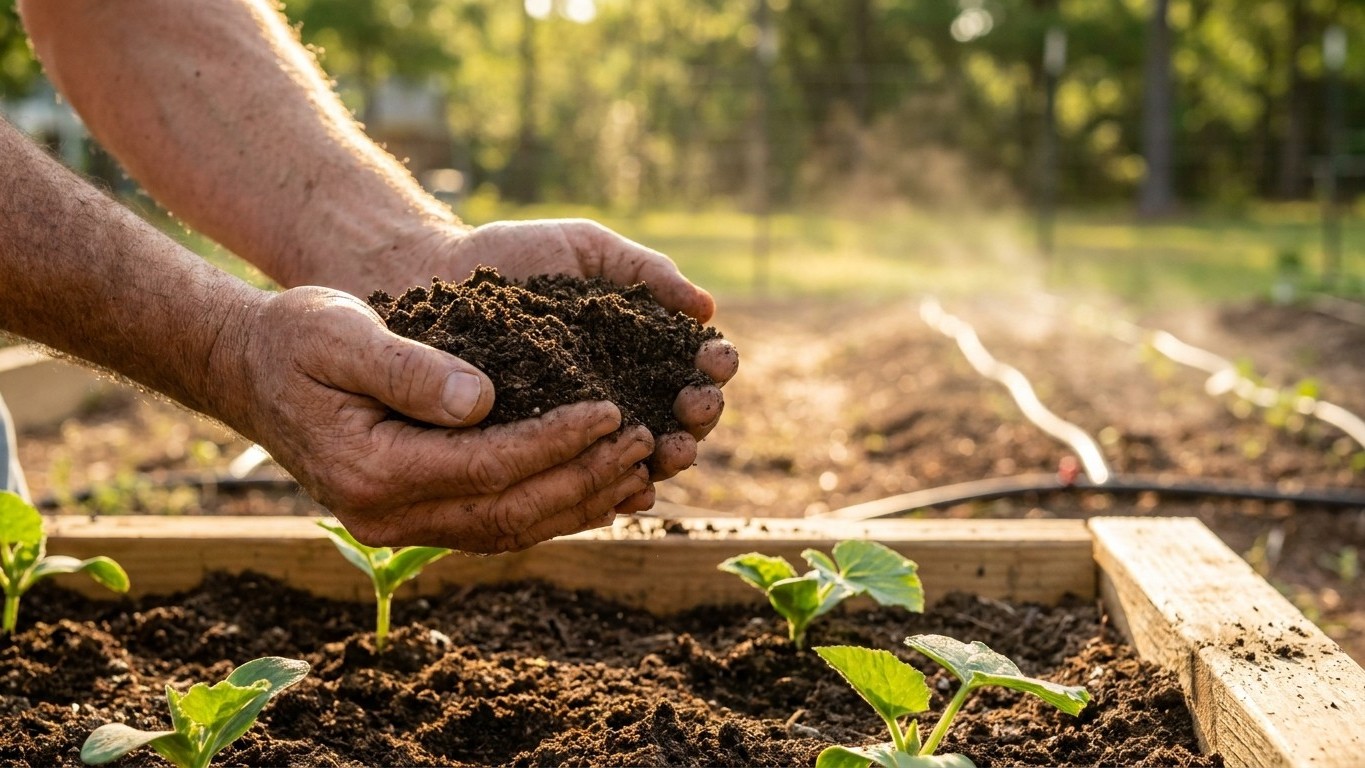

Summer Squash in Tennessee goes in the ground once the soil itself has warmed, typically a week or two after the average last frost passes. The state’s frost-free window runs roughly 200 to 220 days, plenty for two sowings. The real limiting factor isn’t the calendar, it’s the combination of heat spikes and humid summer air that makes pollination and disease resistance the deciding traits for which type to grow.
When the soil is warm enough in Tennessee
At the reference station used by NOAA NCEI (station USW00013897), the average last spring frost falls somewhere between March 31 and April 12, based on 1991-2020 Climate Normals and the 32°F freeze probability band. That’s a wide window on purpose: frost dates are drawn from three decades of data, and any single year can land early, late, or dead center of that range. Treat it as a probability, not a promise.
Here’s the part gardeners miss. Frost date and planting date aren’t the same thing. Summer squash seeds germinate poorly and transplants stall when soil temperature sits below roughly 60°F, and soil lags behind air temperature by a couple of weeks in spring. So the practical rule is: let the last-frost window pass, then give the ground another one to two weeks to actually warm through, especially if the bed is shaded or holds moisture. A soil thermometer pushed a few inches down tells you more than any date on a calendar.
Location inside the state changes this timeline more than most gardeners expect. The frost data cited above centers on Middle Tennessee. East Tennessee and the Cumberland Plateau run cooler and later in spring, sometimes by a couple of weeks, because of elevation and cold-air drainage in the valleys. A gardener in Knoxville or up on the Plateau should lean toward the later end of that frost window, or later still, rather than the early end that might work fine near Nashville.
What this means for direct sowing versus transplants
Summer squash resents root disturbance more than people assume, since its root system is shallow and spreads wide rather than deep. Direct sowing after the soil has genuinely warmed avoids that stress entirely. Transplants earn their keep only when a gardener is racing to fit in a second sowing later in the season, and even then, starting them in biodegradable pots that go straight into the ground keeps the root disturbance to a minimum.
Whichever way you start, the choice of type matters more than the exact planting week, and that’s covered in the last section. For now, the takeaway is simple: use the frost window as your starting point, then wait for the soil to catch up, and check your specific part of the state against the caution above before committing to a date.
How long the season lasts here
The first fall frost at the same reference station arrives between October 28 and November 8. Paired with the spring window of March 31 to April 12, that gives a frost-free season running from about 199 days, in the tightest pairing of a late spring frost and an early fall one, up to about 222 days when the spring frost comes early and the fall frost holds off until November. Call it roughly seven months of growing weather, give or take a few weeks depending on how the year breaks.
That length changes what’s worth doing with a squash bed, and it’s the reason Tennessee gardeners have an option that shorter-season territories don’t: a second sowing. Summer squash plants tend to slow down and get chewed up by pests and disease after six to eight weeks of heavy production. A 200-plus day season leaves enough runway to pull the first planting once it fades and drop in a fresh sowing for a second wave of fruit into early fall, well before that late October to early November frost closes things out.
A shorter window, the kind found farther north or at higher elevation, forces a different decision. When the frost-free season barely stretches past 180 days, the first sowing is often the only one that makes sense, and every week saved at planting time counts, which is exactly when transplants (started indoors a few weeks early) start to pay off despite the root stress they cause. In most of Tennessee, that tradeoff tips the other way: direct sowing twice, spring and midsummer, generally beats babying transplants once.
Timing the second sowing correctly is its own small skill, mostly a matter of counting backward from the fall frost date and giving the plants enough weeks to reach production before cool weather shuts pollination down. The succession sowing guide on this site walks through that math in more detail, since it applies across every territory in this series, not just Tennessee.
Heat and water in Tennessee
Nashville’s reference station logs an average of 40.0 days a year at or above 90°F, per NOAA NCEI 1991-2020 Climate Normals. That’s a meaningful heat load, not a description of every square mile of the state, but a solid signal that Tennessee summers put real stress on a crop that sets fruit through pollen and holds it up through enormous, thirsty leaves.
Squash pollen loses viability fast once temperatures push into the high 90s, which means flowers can open, get visited by bees, and still fail to set fruit during the hottest stretches of July and August. At the same time, those broad leaves are transpiring water all day, and the plant’s root system sits shallow in the soil, not deep enough to chase moisture down during a dry spell. Forty days of 90-plus heat a year is enough to make both problems show up more than once in a typical summer.
Rainfall doesn’t fully offset that. Summer rainfall across June, July and August averages about 12.3 inches at the same reference station, with August running driest.
| Month | Average rainfall |
|---|---|
| June | 4.36 in. |
| July | 4.16 in. |
| August | 3.79 in. |
Twelve inches over three months sounds generous next to drier Western territories, but it rarely arrives on a useful schedule. Much of it lands as thunderstorm bursts that run off a clay-heavy Middle Tennessee soil rather than soaking in, especially once the ground is already baked from a stretch of 90-degree days. A sandy garden bed drains that same rain within hours and needs refilling sooner; a clay bed holds it longer but can also crust and shed the next storm instead of absorbing it. The rain gauge on your own property, watched through a hot week, tells you more than the regional average ever will.
The practical response is straightforward: mulch heavily to slow evaporation, water deeply and less often rather than sprinkling daily, and give plants afternoon shade if the bed sits somewhere with no natural relief during the hottest weeks. None of that requires a product recommendation, just a routine matched to how much heat and how little reliable rain the season actually delivers.
Which summer squash suit Tennessee
Given a long season, a real heat load, and enough summer humidity to keep foliar disease pressure high, three traits matter more than any specific variety name: bush habit for airflow, tolerance of high heat during flowering, and disease resistance, particularly to powdery mildew and bacterial wilt, both common problems in a humid Southern summer.
Bush-type plants, as opposed to sprawling vining habits, keep leaves more open to air movement, which matters when 40 days a year push past 90°F and humidity keeps foliage damp longer after a storm or a morning watering. That airflow is one of the cheapest defenses against mildew a gardener has, and it costs nothing beyond choosing plant habit at seed-buying time.
Because the season here runs long, roughly 200 to 220 frost-free days, there’s little reason to chase the earliest-maturing types the way a gardener in a short-season territory might. That gives Tennessee growers more room to prioritize heat tolerance and disease resistance over speed, and to plan that second sowing mentioned earlier as a hedge against whatever the first planting runs into during the hottest weeks of July.
This page won’t name a specific variety, and that’s a deliberate choice rather than an oversight. Seed performance shifts year to year and county to county based on local disease pressure, soil, and microclimate, and a name that performs well in one trial means little without knowing whether it was tested anywhere near Tennessee’s heat and humidity. The University of Tennessee’s Extension service runs regional variety trials and publishes results suited to actual growing conditions across the state, from Nashville’s climate to the cooler East Tennessee valleys and the Cumberland Plateau. That’s the recommendation that means something, because it’s tested where you’re actually gardening rather than in a national trial hundreds of miles away.
One more territory-wide note worth knowing before checking those trial results: Tennessee spans USDA Hardiness Zones 5b through 8a, under the USDA Plant Hardiness Zone Map’s 1991-2020 normals. That range is built on winter minimum temperatures, not summer heat, so it says nothing directly about squash performance, but it’s a reminder that a recommendation calibrated to Nashville’s zone won’t necessarily hold up in a colder pocket of the Plateau or a warmer stretch near the state’s southern border.