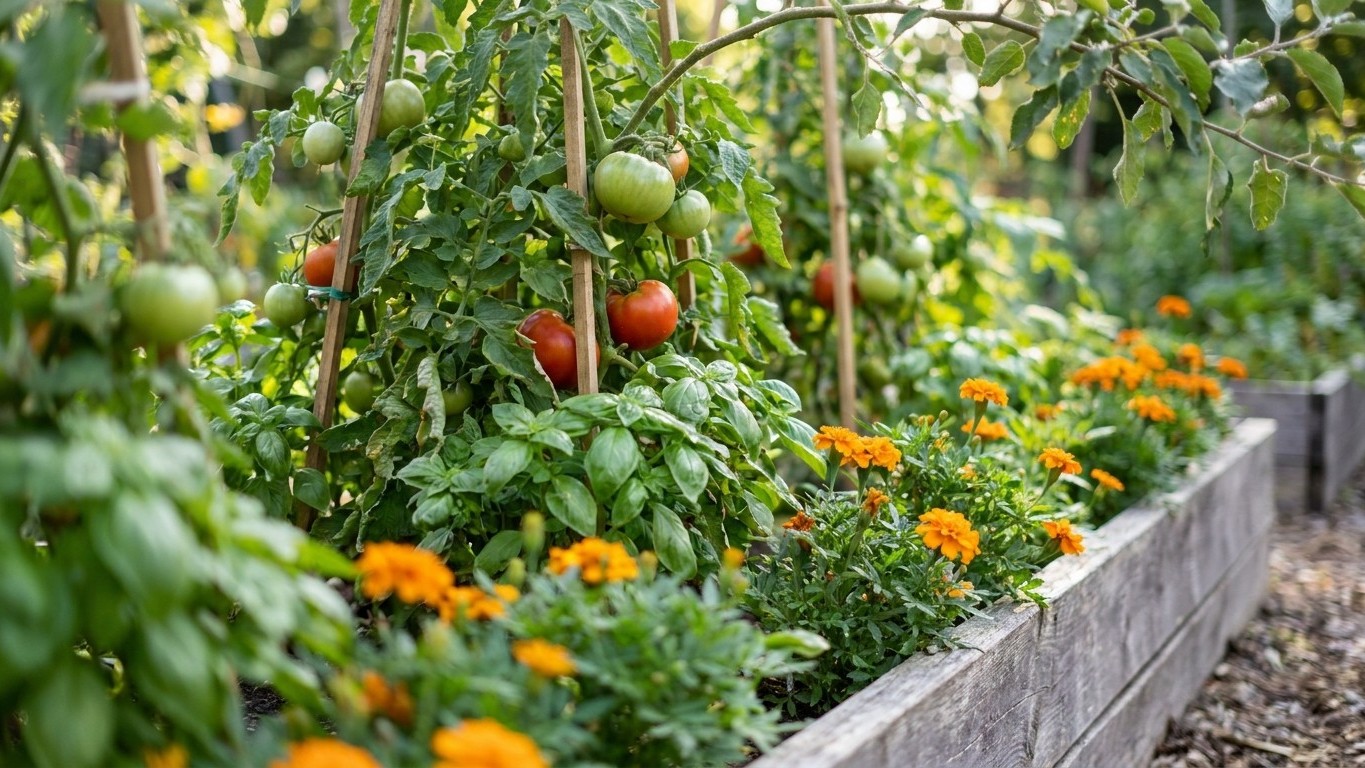

The short answer: pick tomatoes as soon as they show color break, that faint blush of pink or yellow at the blossom end, rather than waiting for full red on the vine. In Tennessee, that timing gets pushed by the calendar too. Once first fall frost arrives (October 28 to November 8, per NOAA NCEI 1991-2020 Climate Normals for the Nashville station), everything still hanging on the plant needs to come off, ripe or not.
When to pick tomatoes in Tennessee
A tomato doesn’t need sunlight to finish ripening. It needs ethylene, a gas the fruit itself produces once it hits “breaker” stage, the point where a patch of color first appears at the blossom end. Once that switch flips, the plant’s job is basically done. Everything after that, the deepening color, the softening flesh, the sugar-to-acid balance shifting toward sweet, happens whether the tomato is still attached to the vine or sitting on a kitchen counter.
That matters for two reasons. First, tomatoes picked at breaker stage and ripened indoors taste nearly identical to vine-ripened fruit, contrary to what a lot of gardeners assume. Second, picking early protects the crop from what’s coming. Nashville’s first fall frost window runs from late October into early November, and once temperatures drop into the low 30s, the cell walls in tomato fruit rupture and the flesh turns to mush within a day or two. There’s no salvaging a frosted tomato.
The catch is that Tennessee isn’t one climate. The Nashville data reflects a fairly typical Middle Tennessee timeline, but East Tennessee and the Cumberland Plateau run cooler and see frost arrive earlier in the fall (and linger later in spring). A gardener in Sevierville or Crossville should treat the late-October date as optimistic, not guaranteed, and start watching forecasts a week or two ahead of that window rather than waiting for a specific calendar date.
Practically, that means walking the tomato patch every few days once nights start dipping into the 40s. Any fruit showing color break should come inside regardless of frost risk, since it’ll ripen fine on its own. As frost gets forecast within 48 to 72 hours, the calculus changes: pick everything with size, including hard green fruit, because a plant left in the ground overnight in a hard freeze loses the whole crop, not just the ripe portion. Tarps and row cover can buy a few extra days if a light frost is forecast but a harder freeze isn’t imminent, but they’re a stall tactic, not a long-term fix once the season’s real cold arrives.
What to do with the green ones
Not all green tomatoes are created equal, and sorting them correctly is the difference between a good harvest rescue and a bucket of fruit that rots before it ripens. The tomatoes worth saving are the ones that have reached mature green stage: full-sized, with a slight waxy sheen and a whitish-green color at the blossom end rather than a hard, dark green. Immature green tomatoes, the small, glossy, rock-hard ones, mostly won’t ripen properly no matter what’s done with them. Those are better used fried, pickled, or made into green tomato relish while they’re still firm.
Sorting before storage
Handle each tomato once, checking for cracks, soft spots, or insect damage, and set aside anything with a blemish for immediate use rather than storage. A single damaged tomato in a batch releases extra ethylene and moisture, which speeds up rot in everything around it. Wipe off garden soil with a dry cloth rather than washing, since added moisture on the skin encourages mold during the weeks a tomato might sit in storage.
Two paths for green tomatoes
Mature green fruit destined to ripen indoors should be sorted by size, since larger tomatoes tend to ripen faster than small ones from the same plant. Fruit that’s clearly not going to mature, whether from late blossoms or frost-forced harvest of very small green tomatoes, gets a different treatment entirely. That’s the fruit for classic fried green tomatoes, chow-chow, or a batch of green tomato salsa, recipes built around the tomato’s firm texture and tartness rather than around any expectation of eventual ripening. Trying to ripen those small, hard tomatoes usually just wastes counter space, since they shrivel before they color up.
Ripening indoors, and how long they keep
Temperature matters more than light when it comes to ripening tomatoes off the vine, which surprises a lot of people who instinctively set green tomatoes on a sunny windowsill. Direct sun actually works against the process, heating the fruit unevenly and sometimes causing soft spots before the inside catches up. A spot out of direct sunlight, somewhere between roughly 55 and 70 degrees, ripens tomatoes more evenly and slowly enough to develop better flavor than fruit rushed along at higher heat.
Spacing matters too. Tomatoes ripening on a counter or in a shallow box should sit in a single layer, not stacked, with a little room between each fruit so air can move and so one soft spot doesn’t spread rot to its neighbors. Checking the batch every couple of days and pulling out anything that’s turned catches problems early.
Speeding it up (or slowing it down)
A paper bag with an apple or banana tucked in traps the ethylene those fruits give off and speeds up ripening in green tomatoes noticeably. It’s a useful trick for a windowsill’s worth of fruit that needs to ripen for a specific meal or before a trip. Going the other direction, wrapping mature green tomatoes individually in newspaper and storing them in a cool, dark spot, well above freezing but cooler than room temperature, slows the ripening clock down and can stretch a harvest of green tomatoes out over weeks rather than days, which is the closest thing to a home method for having fresh tomatoes into the later part of the year.
One habit worth breaking: putting ripe or ripening tomatoes in the refrigerator. Cold temperatures below the mid-50s damage the internal structure of the fruit, turning the flesh mealy and dulling the flavor, an effect that isn’t reversible once it’s happened. Refrigeration only makes sense for fully ripe tomatoes that need to be held a day or two past their prime before use, not for anything still working its way toward ripe.
| Storage method | Best for | Speed | Trade-off |
|---|---|---|---|
| Open counter, single layer | Fruit already showing color break | Moderate | Needs daily checking for overripe spots |
| Paper bag with apple/banana | Mature green fruit needed soon | Fast | Uneven ripening if bag is crowded |
| Wrapped in newspaper, cool dark spot | Bulk harvest before frost | Slow | Requires weekly inspection for rot |
| Refrigerator | Fully ripe fruit, short-term only | Halted | Damages texture and flavor if used too early |
What goes wrong here
The most common misstep isn’t picking too early, it’s picking too late and getting caught. A stretch of warm October weather can lull gardeners into leaving fruit on the vine, and then a frost arrives faster than expected, especially in the cooler pockets of East Tennessee and the Cumberland Plateau where the season turns sooner than it does around Nashville. Checking the forecast regularly through the back half of the growing season, rather than relying on a remembered average date, avoids that scramble.
Humidity causes its own set of problems during indoor ripening. Tennessee summers and early falls run humid, and that moisture in the air speeds up mold growth on any tomato with even a small skin break. Tomatoes stored in an enclosed container without airflow, especially plastic bins with the lid snapped shut, tend to sweat and rot faster than the same fruit left in an open box or paper bag.
Cracking is another frequent complaint, usually the result of uneven watering right before harvest rather than anything about the ripening process itself, and it’s a separate issue from how a tomato is stored afterward. A cracked tomato should be used quickly rather than set aside to ripen further, since the open skin is an entry point for rot regardless of temperature or humidity control.
Gardeners dealing with unusual symptoms, blotchy ripening, unexplained soft rot spreading through stored fruit, or a harvest that seems to be failing for reasons beyond simple timing, are better served contacting the local county office through the University of Tennessee Institute of Agriculture Extension than guessing. Local agents can factor in that county’s specific microclimate and recent weather, something a general guide can’t do.
Common questions
Can a tomato ripen after it’s been frozen on the vine?
No. Once fruit cells rupture from freezing temperatures, the flesh breaks down and turns mushy within a day or two. There’s no ripening process to salvage at that point, only spoilage.
Does a windowsill speed up ripening?
Not reliably. Direct sun heats tomatoes unevenly and can cause soft spots before the inside ripens, while a room-temperature spot out of direct light, roughly 55 to 70 degrees, ripens fruit more evenly.
Is it worth planting a fall-only variety to stretch the season past the first frost date?
Variety choice and planting strategy fall outside picking and ripening timing specifically. What matters for harvest planning is knowing the local frost window (October 28 to November 8 around Nashville, likely earlier in cooler parts of the state) and picking mature fruit ahead of it.
How long do green tomatoes keep before they either ripen or spoil?
It depends heavily on maturity level, temperature, and humidity, and no single figure applies across every batch. Checking stored fruit every few days and removing any tomato that’s turned or shows a soft spot is the more reliable approach than counting on a fixed number of weeks.