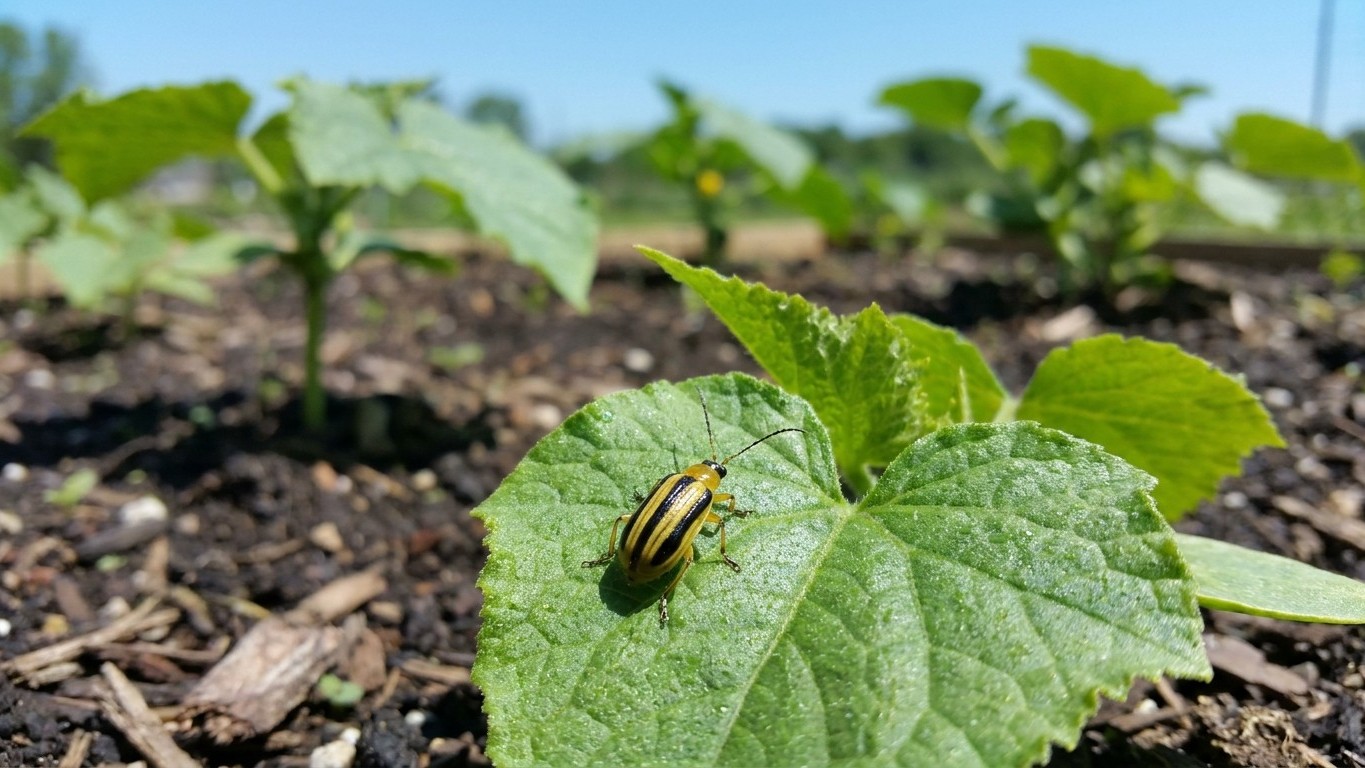

In Tennessee, striped cucumber beetles show up as soon as cucurbit seedlings break ground in spring, typically as the soil warms in April, and they stay active in waves through the growing season into September. Row covers pulled at bloom, delayed planting, and prompt removal of crop debris are what actually keep them off cucumbers, squash, and melons.
The weeks to watch

Striped cucumber beetles overwinter as adults in leaf litter and garden debris, then become active as soon as the soil warms enough for cucurbit seeds to germinate or transplants to go in. The University of Tennessee Extension’s general insect guide (PB 595) doesn’t publish a species-specific calendar for this beetle by name. It groups garden pests into a broader seasonal pattern instead: soil insects show up at planting, early-season pests like flea beetles, cutworms, thrips, and aphids follow close behind, and foliage-and-fruit feeders build through the rest of summer. That framework is the closest local guidance offers, and striped cucumber beetle behavior fits the early-season slot with a second push later on.
First wave, at emergence
The first beetles to appear are the overwintered adults. They find cucurbit seedlings almost as soon as leaves are above ground, feeding on cotyledons and young true leaves while the plant is still fragile enough that a few days of chewing can stunt it.
Second wave, mid to late summer
A new generation of adults emerges from the soil later in the season, after larvae have fed on roots underground for several weeks. This second wave tends to show up on flowers and fruit rind rather than young foliage, which is why growers sometimes assume it’s a different pest entirely.
Reading the calendar from your last frost

The insect itself doesn’t check a calendar. It responds to soil temperature, and that’s tied loosely to when the last spring frost passes in a given year. For Middle Tennessee, NOAA’s 30-year climate normals put the last spring freeze somewhere between March 31 and April 12. That’s a normal range built from three decades of data, not a promise for any single year, and it runs later across East Tennessee and the Cumberland Plateau, where cooler elevations push both frost and beetle activity back by a week or more.
- Start with your own last-frost window. In Middle Tennessee that’s late March into mid-April; adjust later if you garden in the eastern half of the state or up on the Plateau.
- Cucurbit transplants normally go in after that frost risk passes. Watch seedlings closely from the day they’re set out, since overwintered beetles are already active and looking for the first tender cucurbit leaves in the neighborhood.
That means row covers need to be in place before or at transplanting, not after damage appears, and they have to come off once flowers open so pollinators can reach the blossoms. The gap between “cover on” and “cover off” is short, usually just a few weeks, which is exactly why timing matters more than any treatment applied afterward.
What it attacks, and what the damage looks like

Most gardeners notice the plant before they notice the insect. A cucumber or squash seedling that suddenly wilts, even with plenty of soil moisture, is one of the most recognizable signs, because striped cucumber beetle adults carry a bacterium that causes bacterial wilt and inject it while feeding. On older plants, the giveaway is different: leaves riddled with small, ragged holes, chewed flower petals, and scarring on the fruit’s rind where adults have grazed the surface.
Underground, the damage looks nothing like the leaf symptoms. Larvae tunnel into roots and the base of the stem, and a plant that looks fine one week can collapse the next once the root system is compromised. That split matters for treatment: leaf damage points to adult feeding, which can still be managed, while root and stem tunneling means the larval stage has already done its work below ground where nothing applied to foliage will reach it.
The crops most at risk in a home garden are:
- Cucumbers
- Summer and winter squash
- Melons
- Pumpkins
- Gourds
How Tennessee sits in this pest’s range

Striped cucumber beetle is a widespread pest across the eastern and central United States, and Tennessee sits well within that range rather than at some edge of it. That distinction matters because widespread doesn’t mean uniform: the difference between a garden in Memphis and one on the Cumberland Plateau isn’t whether the beetle shows up, it’s when. Warmer, lower-elevation areas in West and Middle Tennessee see beetle activity start earlier in spring, while the cooler eastern part of the state and the Plateau run later, tracking the same later frost pattern noted above.
No Tennessee-specific severity ranking or trend data is published for this insect at the state level, so it isn’t accurate to say the pest is worse in one part of Tennessee than another based on current sources. What can be said plainly is that gardeners statewide are dealing with the same insect on the same general timeline, just shifted by a week or two depending on local climate. Anyone gardening near the Plateau should expect their beetle activity, like their frost date, to lag behind what a gardener in Nashville or Memphis experiences.
What actually works against it

- Delay planting slightly, or start seedlings indoors. Overwintered adults are hungriest right when cucurbits first emerge. A plant that’s already a few inches tall and past the cotyledon stage when beetles arrive can tolerate feeding that would kill a tiny seedling outright.
- Use floating row covers from transplanting until bloom. Covers physically block adults from reaching the plant during the most vulnerable window. They have to come off once flowers open, since cucurbits need pollinators, and that’s also the point where the covers stop doing much good anyway.
- Hand-pick adults in the early morning. Beetles are sluggish in cool morning temperatures, making them easy to knock into a container of soapy water. This works best on small plantings and needs to be repeated daily during peak activity.
- Rotate cucurbit crops to a different bed each year. Adults that overwinter near last year’s cucurbit patch emerge close to where they fed before. Moving the crop even a modest distance reduces how many beetles find it right away.
- Clear cucurbit debris after harvest. Vines and fruit left in the garden give overwintering adults a place to shelter through winter. Removing them promptly cuts down the local population going into next season.
None of these measures reach beetles once larvae are already tunneling inside roots or stems. At that stage the damage is internal and the window for prevention has closed for that plant; the practical response is to focus effort on protecting the next planting rather than trying to rescue one that’s already wilting from root damage.
Copper tape and ultrasonic repellents show up often in home-gardening discussions of beetle and slug control. Some gardeners report using copper barriers around raised beds, but field trials on their effectiveness against cucumber beetles don’t reach a clear conclusion one way or the other, and no established mechanism explains why copper would affect this particular insect. It’s fair to say gardeners use it; it’s not fair to say it’s proven to work.
Common questions
Does row cover placement matter more than timing of planting?
Both work together rather than replacing each other. A cover keeps adults off the plant physically, but it only helps if it’s in place before beetles arrive, which is why matching cover installation to your local frost window matters as much as the cover itself.
Can I still grow cucurbits if I’ve had bacterial wilt before?
Yes, but the bacterium survives inside overwintering beetles rather than in the soil itself, so reducing the adult population through rotation and cover use lowers the risk of reinfection more than treating the soil would.
Are all squash and cucumber varieties equally attractive to this beetle?
No published Tennessee-specific data ranks variety resistance for this pest, so it’s more reliable to focus on the cultural practices above (covers, rotation, timing) than to choose a variety based on beetle resistance claims that aren’t locally verified.