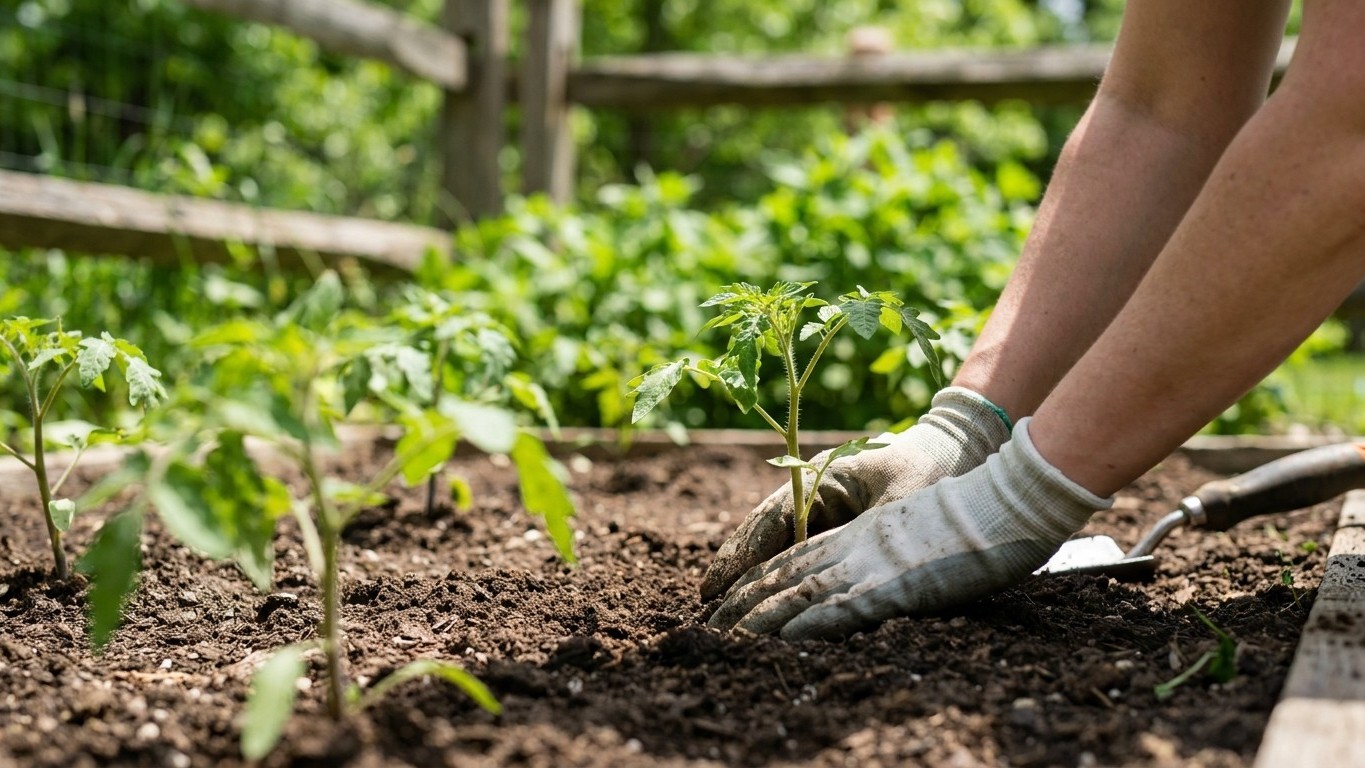

June in Texas is a heat month, not a frost month. The state’s own USDA hardiness range runs from 6a in the Panhandle to 10a along the Gulf, so “what to plant” already depends on where you stand. Broadly: okra, southern peas, sweet potato slips, melons, and heat-tolerant herbs go in now, while cool-season crops are already finished almost everywhere in the state.
What goes in the ground in June

By June, frost has stopped being the limiting factor almost everywhere in Texas. Around Houston, the last spring frost falls between February 4 and March 1, based on NOAA’s 1991-2020 Climate Normals for station IAH. That means the frost-safe window for tender crops opened three or four months before June even starts along the Gulf Coast. The real constraint now is soil temperature running hot enough to stall germination for some seeds and to push blossom drop on others, especially once daytime highs climb into the 90s.
What’s safe to put in the ground this month depends heavily on which of the state’s climate bands you’re gardening in. Along the Gulf Coast and through Central Texas, June is prime time for the crops that shrug off heat: okra, southern peas (cowpeas), sweet potato slips, malabar spinach, roselle, and yard-long beans all handle hot soil without complaint. Melons planted a bit earlier are usually vining hard by now, and a second round can still go in early in the month in most of the state.
Tomatoes and peppers are the gamble crop in June. In the Gulf Coast zones, transplants set out this late often struggle to set fruit once nighttime temperatures stay warm, though the plants themselves will grow. Farther north and at higher elevation, where the growing season starts later, June transplanting of tomatoes and peppers is still routine and often necessary, since the frost-free window there opens weeks or even months after it does around Houston.
Crops to plant by early June
| Crop | Method | Note |
|---|---|---|
| Okra | Direct sow | Germinates poorly in cool soil; loves June heat |
| Southern peas | Direct sow | Reliable in poor, dry soil |
| Sweet potato | Slips, transplant | Needs a long hot stretch to bulk up |
| Melons | Direct sow or transplant | Last realistic sowing window in southern zones |
| Tomatoes/peppers | Transplant | Safe in northern/Panhandle zones; risky along the Gulf |
What to start under cover
June is when the fall garden begins, and the arithmetic runs backward from the first fall frost rather than forward from any spring date. Around Houston, that first fall freeze lands between December 1 and December 19, based on the same NOAA station data. Count back from the earliest date in that range, subtract the number of days a variety needs from transplant to harvest, then subtract another two to three weeks as a buffer for slow fall growth as daylight shortens. That’s the latest safe start date for a fall crop, and for many tomato and pepper varieties, that math lands squarely in June.
Broccoli, cabbage, and other cole crops for the fall garden also get their start indoors or under light shade cloth this month in much of the state, since direct-sowing them into June soil would mean fighting germination in dirt that’s simply too hot. Starting them under cover, then holding them until soil cools slightly in late summer, sidesteps that problem.
The two ways this goes wrong are both timing failures. Start too early and the transplants sit too long in small containers, turning rootbound and leggy before the weather cools enough to plant them out. Start too late, especially working from the Houston frost dates, and the crop runs out of daylight and warmth before it matures, especially for long-season peppers. Neither mistake is fixable once the seedlings are already stressed, so the count-back matters more than the calendar page.
What is ready to pick
June is one of the more generous harvest months across most of Texas. Onions and garlic planted the previous fall or winter are bulbing up now, and the signal to pull them is straightforward: onion tops flop over and start to yellow, and garlic is ready once the lower leaves brown while a few upper leaves stay green. Pulling too late risks the bulbs splitting or rotting in the ground if rain follows a dry stretch.
Squash and cucumbers planted in spring are usually in full production by June, and both punish neglect: a zucchini left two extra days can go from tender to baseball-bat size, and cucumbers left on the vine too long turn bitter and seedy. Early tomatoes, if they set fruit before the heat shut down pollination, are also coming in, along with the first sweet corn in areas that planted early.
Stone fruit is a regional story. Peach and plum harvests are underway in parts of the state where orchards are established, though timing swings by variety and by how much heat accumulated earlier in spring. Blackberries, both wild and cultivated, are typically ripening in June across much of Texas, and they don’t wait: a fully black berry that still resists a gentle tug isn’t ripe yet, but one that pulls free easily is past its peak within a day or two.
The jobs that matter this month

Mulching is the single job that pays back the most in June. A three- to four-inch layer of straw, shredded leaves, or wood mulch keeps soil temperatures down several degrees, which matters directly for germination and root stress once air temperatures push past 95°F. Skipping it now, even for a week, can cost tomato and pepper plants their fruit set for the rest of the season.
Watering rhythm needs to shift with the mulch. Deep, infrequent watering, aimed at soaking the root zone rather than wetting the surface daily, trains roots downward where soil stays cooler and moisture lasts longer. Shallow daily watering does the opposite: it keeps roots near the hot surface and makes plants more heat-stressed, not less.
Staking and support work that got put off in spring becomes urgent in June, before tomato vines and pea rows collapse under their own weight or get flattened by a summer thunderstorm. Pest scouting matters just as much this month, since squash vine borers, spider mites, and aphids all reproduce faster in the heat; catching a borer entry hole in a squash stem early, before the plant wilts overnight, is often the difference between losing one plant and losing the whole row.
Succession sowing keeps the harvest coming rather than crashing all at once. Southern peas, okra, and a second round of melons sown every two to three weeks through June stagger maturity instead of dumping the whole crop in a single week. And stored garlic and onions from the spring harvest need a check now too: any bulb going soft or sprouting should come out of storage before it spreads rot to its neighbors.
What not to do in June
The classic Gulf Coast mistake is transplanting tomatoes or peppers in June expecting a normal fruit set. Heat stalls pollination on many varieties once nights stay warm, so plants set in the ground this late in the southern half of the state often grow lush and green without setting much fruit until temperatures ease later in the year. If a fall tomato crop is the goal, starting under cover and transplanting once the worst heat breaks is the better play, not pushing transplants into June’s hottest soil.
Feeding heavy nitrogen to fruiting crops in June is another common misstep. Nitrogen pushes leafy growth at the expense of flowering and fruit set, which is the opposite of what a stressed, heat-stalled tomato or pepper plant needs. A balanced or lower-nitrogen feed, paired with consistent watering, does more for fruit production than another dose of high-nitrogen fertilizer.
Inconsistent watering causes blossom end rot on tomatoes and peppers, a calcium-uptake problem triggered by uneven soil moisture rather than a soil calcium shortage in most cases. Letting the soil swing from bone dry to soaked and back is the direct cause, and mulch plus a steady deep-watering schedule fixes it far more reliably than a calcium spray.
Pulling mulch back to “let the soil breathe” during a mild stretch is a mistake that costs more than it saves. Texas June heat returns fast, and bare soil heats up again within days, undoing whatever benefit the brief cooling gave.
Checking this against your own county
A statewide June is a starting point, not an instruction. Texas carries USDA hardiness zones from 6a to 10a, a spread wide enough that a crop going into the ground safely in the Panhandle in June could already be past its prime, or never viable at all, along the Gulf Coast, and the reverse holds for the state’s frost timing too. Elevation, distance from the coast, and even which airport’s climate data a county gets compared to (a two-week swing between Houston’s two main airports alone) all shift these windows. For county-level guidance, the Texas A&M AgriLife Extension service is the reliable next stop.
Common questions
Is it too late to plant tomatoes in Texas in June?
Along the Gulf Coast, yes, for a reliable spring harvest, since heat is likely to stall fruit set. In the Panhandle and higher-elevation areas, where the frost-free season starts later, June transplanting is often still normal.
What vegetables handle Texas heat best in June?
Okra, southern peas, sweet potatoes, and malabar spinach are among the most heat-tolerant crops for direct sowing this month across most of the state.
Should I start fall tomatoes in June?
In many parts of Texas, yes. Counting back from the first fall frost (December 1 to December 19 around Houston) and subtracting days to maturity often puts the ideal start date for fall tomatoes in June, under cover.
Why are my June-planted seeds not germinating?
Soil temperature is the usual culprit. Some seeds, especially cool-season types, simply won’t germinate once soil runs too hot; mulching and shading the seed row can help pull the temperature down enough to germinate late plantings.
Gardeners who plant by the Moon can check the June 2027 moon planting calendar, a tradition rather than a proven method.