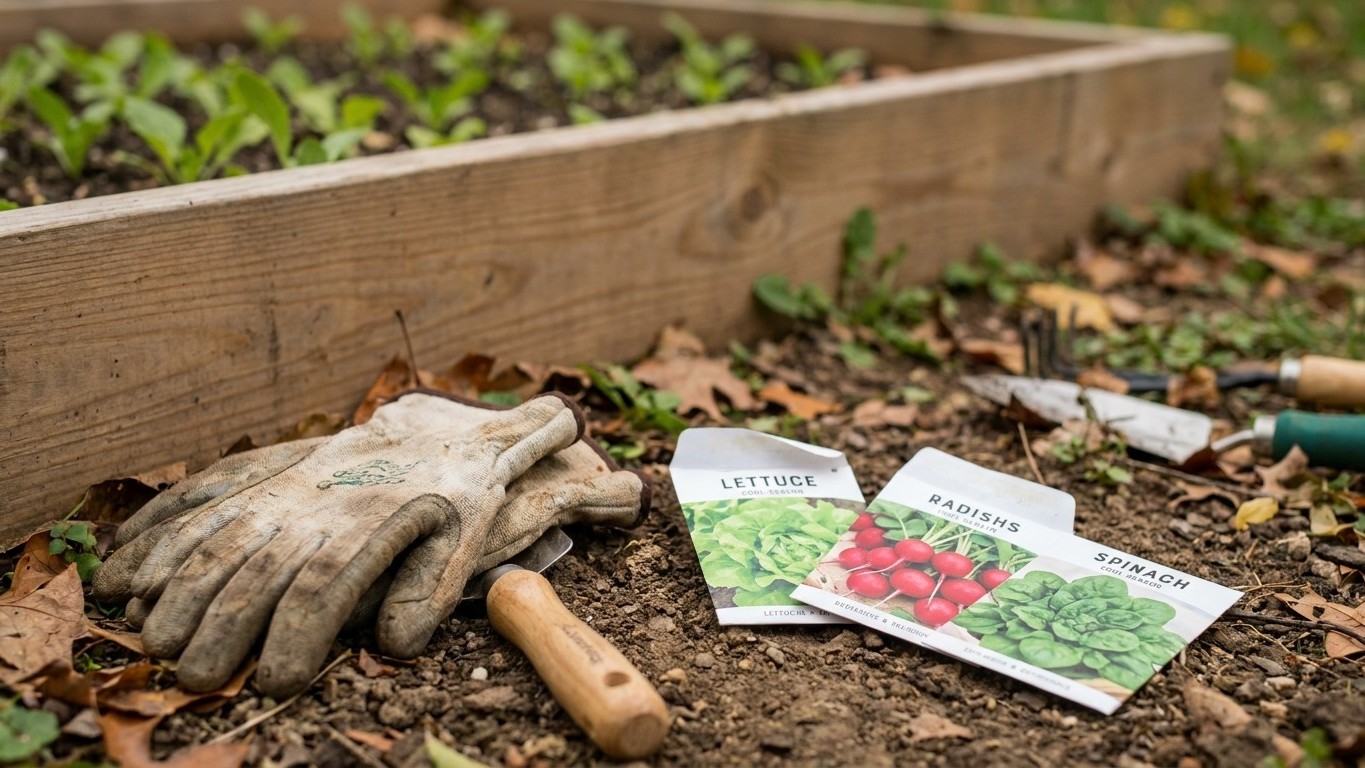

September in Texas is fall-garden season, not a pause. Across most of the state you can direct-sow cool-season greens, root crops, and legumes as soil starts to cool, while the last stretches of summer heat still ripen okra, peppers, and southern peas on the vine. The exact mix depends heavily on where you garden, since Texas runs from USDA zone 6a in the Panhandle to 10a near the Rio Grande.
What goes in the ground in September

The calendar says September, but the soil doesn’t care what month it is. What matters is soil temperature and how far you sit from the first fall freeze. In the Houston area, NOAA’s 1991-2020 climate normals put the first fall frost between December 1 and December 19, based on data from station USW00012960 at Bush Intercontinental Airport. That’s roughly three months out from the start of September, which is a wide enough runway for most fall crops to reach maturity before cold shuts things down.
That runway shrinks fast the farther north and west you go. Texas spans USDA hardiness zones 6a through 10a, and a Panhandle garden can see its first hard freeze weeks or even months before a Gulf Coast garden does. The Houston numbers above are a mild-end reference point, not a statewide rule.
Given that, September direct-sowing splits into two tiers. The safe bets: collards, kale, mustard greens, turnip greens, Swiss chard, carrots, beets, radishes, and bush beans in the earlier part of the month where heat has broken enough for germination. Bulb onions and shallots from sets are usually a later fall job, but garlic cloves can go into worked beds toward the back half of the month in cooler pockets of the state. Peas, both English and southern types depending on your zone, tolerate the transition well.
The gamble tier is anything that needs a full 90-plus days of warm, frost-free growth from a September start: eggplant, peppers, and tomatoes started from seed outdoors now are racing a clock they’ll likely lose north of the I-20 corridor. Transplants of those same crops, already several weeks old, are a different story and belong more in the next section than in a direct-sow list.
What to start under cover
Work backward from your local first frost instead of forward from today’s date. Take a crop’s days-to-maturity from transplant, add two to three weeks for the seedling to size up indoors or under row cover before it goes outside, and subtract that total from your expected first freeze. In the Houston reference window, a first frost landing anywhere from December 1 to December 19 means a broccoli or cabbage transplant needing 60 to 80 days has real room to mature if it’s started under cover in September and set out within a few weeks.
Lettuce, broccoli, cabbage, cauliflower, and kale are the classic September starts under cover in most of the state, because outdoor soil is still too warm for reliable germination of some of these even as air temperatures ease. A cell tray on a porch, a cold frame, or even a shaded seed-starting shelf indoors buys the seedling time without exposing it to soil that’s still baking.
The two ways this goes wrong are predictable. Start too early, running the same math against a warmer microclimate than you actually have, and you end up with rootbound, leggy transplants sitting in trays for weeks past their prime, stretched and stressed before they ever touch soil. Start too late, especially in the northern half of the state where frost arrives sooner than the Houston window, and the plant is still small when cold shuts the season down, leaving you with a head of cabbage that never filled out. Recount the arithmetic against your own county’s typical first frost, not against Houston’s, before you commit a whole tray.
What is ready to pick
September still belongs to summer’s holdouts as much as fall’s beginnings. Okra pods are moving fast this time of year, and the rule holds everywhere: pick at 3 to 4 inches, before the pod stiffens and the seeds inside turn fibrous. Southern peas (blackeyes, purplehulls, crowders) are drying down on the vine or ready for shelling fresh, depending on how you like them, and a full pod that rattles slightly when shaken is your cue.
Peppers, especially the thicker-walled types, are still producing and improve in flavor the longer they hang, provided the plant hasn’t stalled out from heat stress. Late tomatoes planted from spring transplants may still be trickling in, though September heat often stops fruit set even where the vine looks healthy, so don’t expect much new growth on that front.
Sweet potatoes planted in spring are approaching harvest window in many parts of the state; a light test dig near the base of a vine, checking for skin that scrapes rather than tears, tells you if they’re sizing up. Melons and winter squash started earlier in the season should be firming their rinds now. If a squash’s stem has corked over and the rind resists a fingernail press, it’s ready to come off the vine and into storage.
The jobs that matter this month

Soil preparation for the fall garden is the single highest-leverage task this month. Beds that grew a hot, heavy summer crop are usually depleted, and working in compost now, before you sow greens or set transplants, does more for the eventual harvest than almost anything you’ll do later. This is also the moment to test soil pH and nutrient levels if you haven’t in a while, since amendments need weeks to integrate before roots start relying on them.
Mulching matters differently in September than in July. The goal shifts from pure heat protection to moisture retention as watering rhythms change with cooling air; a 2 to 3 inch layer around new fall seedlings keeps germinating seeds from drying out between waterings, which happen less predictably as temperatures swing.
Pest scouting deserves real attention now. Fall armyworms move through Texas lawns and gardens hard in late summer into September, and whiteflies build up on the underside of leaves in the heat that lingers early in the month. Catching either early, before populations explode, is far cheaper than treating an infestation two weeks later.
Succession sowing of quick greens like radishes, spinach, and loose-leaf lettuce every 10 to 14 days keeps the harvest steady rather than dumping everything at once. And staking or caging any lingering tomato or pepper plants before storm season winds hit saves fruit that’s still on the vine from being knocked to the ground.
What not to do in September
The most common mistake is trusting air temperature over soil temperature. A cooler morning in September doesn’t mean the soil six inches down has caught up; lettuce and spinach seed sown into ground that’s still hot from summer will sit, rot, or germinate unevenly, no matter how pleasant the afternoon feels. Wait for a soil thermometer reading in the crop’s actual germination range, not for a forecast that says “cooler.”
A second error is starting warm-season transplants this late as if there’s a full growing season ahead. Setting out a tomato transplant in early September in the northern half of the state is often a race against a frost line that’s closer than the plant’s maturity clock allows, especially outside the Houston reference zone where frost can arrive well before December.
Fertilizing with a high-nitrogen feed late in the month is another trap. Nitrogen pushes soft, leafy growth right when many gardeners should be encouraging root development and hardening in preparation for cooler nights ahead; that tender new growth is exactly what a surprise cold front damages first. A balanced or lower-nitrogen feed suits the transition better.
Uncovering row covers or shade cloth too early after a stretch of mild days is the last common slip. Texas heat has a habit of snapping back for a week even after a cool front passes through, and seedlings that got used to shade or protection can scorch fast once exposed.
Checking this against your own county
A statewide September guide is a starting point, not an instruction sheet. Texas covers USDA zones 6a to 10a, and elevation, distance from the Gulf, and simple latitude move frost timing by weeks in either direction from the Houston reference used here.
| Region | Approximate USDA Zone | How September differs from the Houston reference |
|---|---|---|
| Panhandle / North Texas | 6a-7b | Frost risk arrives noticeably earlier; shorten your fall-crop timeline accordingly |
| Hill Country / Central Texas | 7b-8b | Closer to the Houston window but drier soil, affecting germination timing |
| Gulf Coast / Houston area | 9a | Reference point used throughout this page; first frost December 1-19 |
| Rio Grande Valley / Deep South Texas | 9b-10a | Frost arrives later or not at all most years, extending the fall window |
For a county-level planting calendar and frost data specific to your area, check the Texas A&M AgriLife Extension service.
Common questions
Is September too late to start tomatoes in Texas?
For seed-started plants, generally yes outside the far southern tip of the state, since the Houston-area first frost lands between December 1 and 19 and tomatoes need a long runway. An already-established transplant set out early in the month has a better shot, especially in zones 9a-10a.
Can I still direct-sow carrots and beets in September?
Yes, in most of the state, as long as soil has cooled enough for even germination. Check soil temperature rather than relying on air temperature alone.
What’s the biggest pest threat in a Texas garden this month?
Fall armyworms and whiteflies both build up through late summer into September. Regular scouting under leaves and across turf catches infestations before they spread.
Should I fertilize my fall garden heavily in September?
No. A high-nitrogen feed late in the month pushes soft growth that’s vulnerable to an early cold front. A balanced, lower-nitrogen approach suits the transition into fall better.
Gardeners who plant by the Moon can check the September 2027 moon planting calendar, a tradition rather than a proven method.