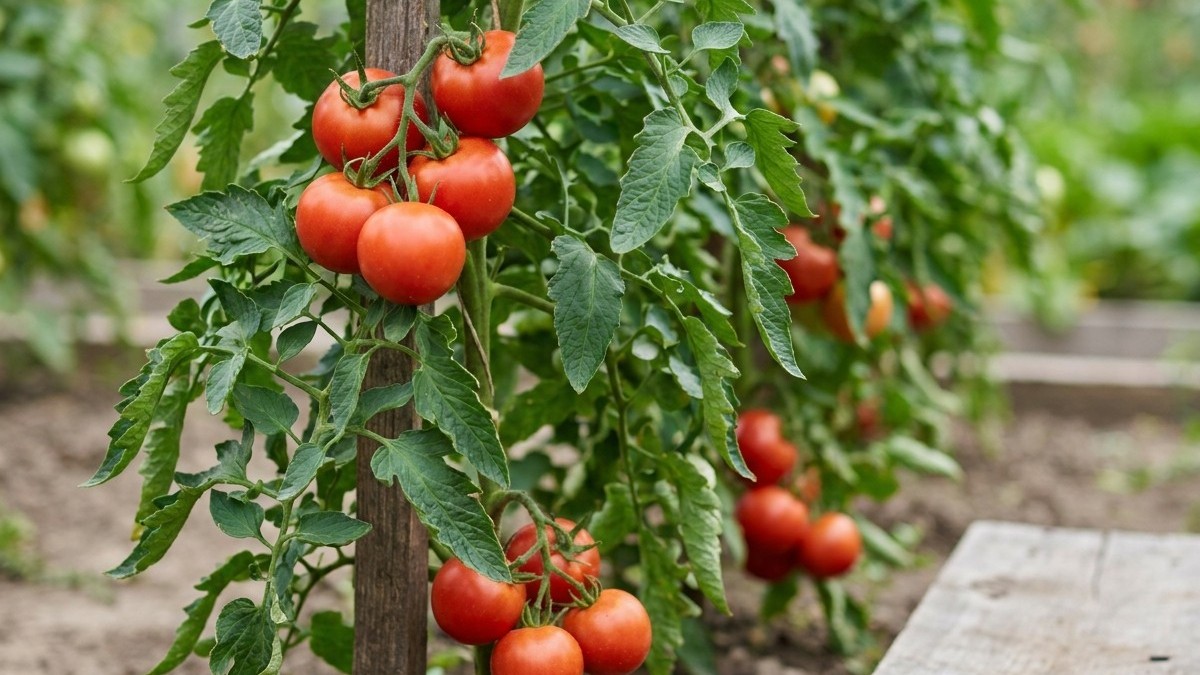

The short answer: pick tomatoes as soon as they show color break, that first blush of pink or yellow on an otherwise green fruit, rather than waiting for full red on the vine. In much of Texas, Gulf Coast humidity and summer heat push growers to pick even earlier, and a hard freeze window closing in from December forces a final harvest of everything left, ripe or not.
When to pick tomatoes in Texas
Vine-ripening sounds ideal until you factor in what heat does to a tomato. Once daytime temperatures climb into the upper 80s and beyond, ordinary in a Texas summer, the fruit slows its production of the pigments that turn it red. A tomato left on the vine during a heat spell can sit at pale orange for days, sometimes cracking or sunscalding before it ever reaches full color. Picking earlier, at the breaker stage, sidesteps that stall entirely because the fruit finishes ripening off the vine at a steadier pace.
The other deadline is frost, and this is where the calendar gets specific to where you garden. At Houston’s Bush Intercontinental Airport station, NOAA’s 30-year climate normals put the first fall freeze in a window running from December 1 to December 19. That’s a range, not a date, reflecting year-to-year variability in when cold air finally settles over the Gulf Coast. Everything still on the vine when that window opens needs to come off, because a 32°F freeze breaks down the cell walls in a tomato and turns it to mush within a day.
Reading the stages
Commercial growers and extension programs describe tomato ripening in stages, and knowing them helps decide what’s worth pulling and what to leave a little longer.
| Stage | Appearance | What to do |
|---|---|---|
| Mature green | Full size, green, but the fruit has stopped growing and the seeds are formed | Will ripen off the vine; pick before a freeze |
| Breaker | First blush of pink or yellow on the blossom end | Best point to pick for reliable indoor ripening |
| Pink to light red | Color has spread across most of the fruit | Handle gently, use within days |
| Full red | Uniform color, fully ripe | Eat or process right away |
Remember that Houston’s frost dates sit at the mild end of the state. Texas spans four USDA hardiness zones, and a Panhandle garden works on an entirely different fall calendar than one along the coast, with cold arriving months sooner. This page isn’t a substitute for the state’s planting-date guide; it’s about what to do with the fruit already on your plants when the season starts winding down.
What to do with the green ones
Not every green tomato is worth saving. There’s a real difference between a mature green fruit, which has already stopped growing and will ripen off the vine, and an immature green one, still small, hard, and without developed seeds inside. Slice one open: mature green tomatoes show a gel-like substance starting to form around the seeds, while immature ones are solid and pale throughout. Only the mature ones are worth the effort of ripening indoors; the rest are better used fried, pickled, or in green tomato relish.
For the mature greens, a light touch matters more than most people expect. Bruised or nicked skin invites rot long before the fruit finishes ripening, so handle them the way you’d handle eggs, not potatoes. Twist or clip them from the vine rather than yanking, and set aside any with soft spots, splits, or insect damage. Those won’t make it through weeks of storage.
Sorting before storage
Once picked, sort by size and stage rather than tossing everything into one bag. Larger fruit and anything already showing a hint of color will ripen faster than small, rock-hard green tomatoes, and mixing them means checking the batch constantly to catch the early finishers before they go soft. A simple system: one container for anything near breaker stage, a second for solid mature green fruit that’s still weeks out.
A few practical notes worth keeping in mind:
- Wipe off garden soil but don’t wash tomatoes you plan to store; excess moisture speeds rot
- Wrap each fruit loosely in newspaper or paper towel if storing more than a few days
- Check the batch every couple of days and pull out any that are ripening or spoiling
- Keep them out of direct sunlight, since heat from a sunny windowsill does more than light to speed ripening, and too much heat can cause uneven color
The goal through this whole process is buying time, not preserving the tomatoes in green form indefinitely. Every one of them is headed toward ripening or the compost pile within a matter of weeks.
Ripening indoors, and how long they keep
Tomatoes ripen indoors through the same chemistry that happens on the vine, triggered by ethylene gas the fruit produces on its own. That’s why an apple or banana placed in the same bag speeds things along; both release extra ethylene that pushes a green tomato toward color faster. A paper bag, loosely closed, traps just enough of that gas to help without suffocating the fruit the way a sealed plastic bag would.
Room temperature works better than a cold spot for this. A refrigerator might seem like the obvious place to slow things down and stretch out the season, but cold temperatures below roughly 55°F interrupt the ripening process and can leave tomatoes mealy or flavorless even after they eventually turn red. A pantry shelf, a kitchen counter out of direct sun, or a cardboard box in a spare room all work better than the crisper drawer.
What to expect, timing-wise
Fruit picked right at breaker stage typically finishes ripening in about a week to ten days indoors, though this varies with variety and how warm the storage spot runs. Fully mature green tomatoes picked with no color at all take longer, sometimes several weeks, and won’t all finish at once. That staggered ripening is actually useful for anyone trying to avoid a giant pile of tomatoes needing to be eaten or canned the same weekend.
Once a tomato reaches full red, it’s best eaten within a few days rather than left to sit. At that point refrigeration can extend things a little longer without much flavor loss, since the ripening process is essentially finished. For the immature greens that never got large enough to ripen properly, there’s no ripening timeline to plan around; they’re a different category, meant for the skillet or the pickling jar rather than the fruit bowl.
Anyone managing a large end-of-season harvest benefits from checking storage boxes every two or three days rather than letting them sit untouched. One soft or moldy tomato in a box can speed spoilage in its neighbors, so pulling ripe and spoiling fruit out regularly keeps the rest of the batch on track.
What goes wrong here
Blossom end rot shows up as a flattened, leathery brown patch on the bottom of the fruit, and it’s a calcium uptake problem tied to inconsistent watering rather than a disease. It’s frustrating because the plant often looks otherwise healthy, and the damage is only visible once you turn the tomato over. Affected fruit won’t recover, but new fruit set after watering evens out usually looks fine.
Cracking is the other common complaint, especially after a heavy rain follows a dry stretch. The fruit swells faster than the skin can stretch, and concentric rings split open around the top of the tomato. Cracked fruit isn’t necessarily wasted; picking it promptly and using it right away, rather than trying to store it, avoids the rot that quickly moves into the opening.
Heat itself causes a less visible problem: poor fruit set. When nighttime temperatures stay warm, tomato blossoms can drop without ever forming fruit, which is one reason production often stalls out during the hottest stretch of a Texas summer even on a healthy-looking plant. This isn’t a pest or disease issue and doesn’t call for any treatment; it’s a temporary pause that usually passes once temperatures moderate.
The last, and least forgiving, mistake is simply running the clock past the fall frost window. Because that first freeze at the Houston station can arrive anywhere from December 1 to December 19, and other parts of the state see it far sooner, waiting for a few more tomatoes to turn red on the vine is a gamble. A single 32°F night undoes weeks of careful ripening plans. For questions specific to a local growing area, the Texas A&M AgriLife Extension network maintains county offices that can speak to conditions well beyond what any statewide guide can cover.
Common questions
Do tomatoes need sunlight to ripen indoors?
No. Ripening is driven by ethylene gas and reasonably warm temperatures, not light. A tomato ripening in a paper bag in a dark pantry will turn just as red as one sitting on a sunny windowsill, and keeping it out of direct sun actually avoids uneven heat spots on the skin.
Should I pull all my tomatoes before the first frost?
Any mature green or further-along fruit is worth picking before a freeze, since those will still ripen indoors. Immature green tomatoes, still hard and small with undeveloped seeds, won’t ripen properly either way, so there’s no loss in leaving those on a plant that’s about to be cleared out.
Why did my tomato turn orange instead of red?
Extended heat during ripening can interrupt normal color development, leaving fruit stalled at orange or yellow-orange rather than progressing to red. This is a heat effect on the ripening process itself rather than a sign of disease.
Can I freeze tomatoes instead of ripening them?
Freezing works for tomatoes that have already ripened, whether whole, chopped, or as sauce, but green tomatoes don’t ripen properly after freezing since the cold halts the process rather than pausing it. Green tomatoes are better handled through ripening indoors or used directly in green tomato recipes.