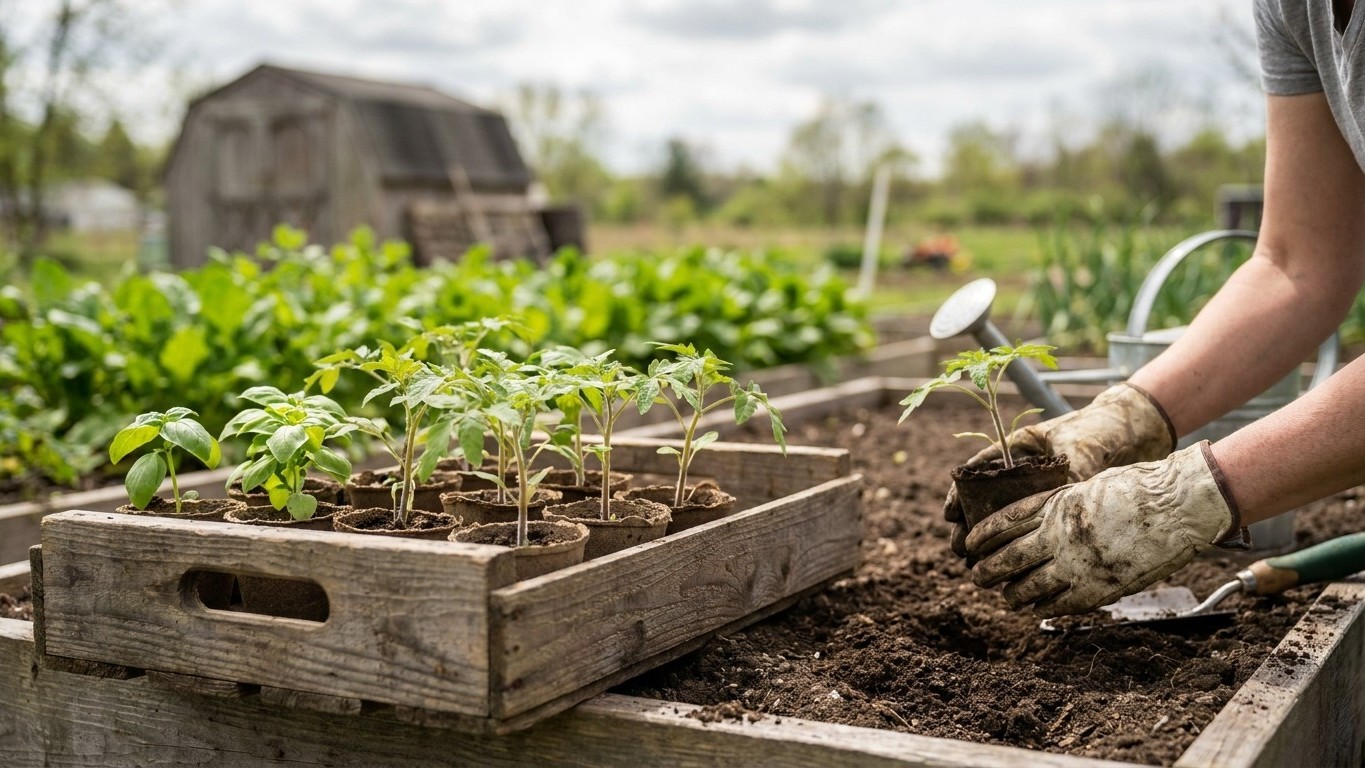

May is the payoff month for Utah gardeners who waited out a cold spring. In the Salt Lake valley, the last spring frost typically falls between April 12 and April 29, so by May most warm-season crops can go in alongside the cool-season plantings already in the ground. Higher elevations and colder pockets of the state run later, so treat this as a valley-based starting point, not a fixed date for every yard.
What goes in the ground in May

The calendar says May, but the soil decides what actually survives. Along the Wasatch Front and other lower valleys, the April 12 to April 29 frost window is usually behind you by the time May opens, which means the ground has had a few weeks to warm and dry out. That matters more than the date on the wall. A thermometer pushed a few inches into the bed tells you more than any planting chart, because a cold, wet soil will rot seed no matter what the air temperature reads at noon.
With the frost risk mostly cleared in the valleys, this is when warm-season crops move from indoor trays to open ground: tomato and pepper transplants, squash and cucumber seed or starts, beans direct-sown, and corn once the soil has had real warmth for a week or more. These are not gambles in a typical Salt Lake valley May, they’re the main event.
Cool-season crops that went in earlier are still fair game too, and some do better started now than in the raw cold of March. Good bets include:
- Lettuce, spinach, and other salad greens, sown in succession every couple of weeks
- Peas, though later plantings will race the summer heat
- Onion sets and seed potatoes, if not already in
- Carrots, beets, and radishes, direct-sown into loosened soil
- Brassica transplants like broccoli, cabbage, and kale
The exception is anywhere above the valley floor. Mountain towns, high plateaus, and much of rural Utah sit at elevations where frost lingers well past the low-valley window. If you garden above roughly 5,500 feet, hold warm-season transplants a few more weeks and lean on the cool-season list until you’ve watched the overnight lows settle.
What to start under cover
By May, most of the classic “start it indoors” work for the main tomato and pepper crop is already behind you if you’re gardening in the valley, since those transplants typically go into open ground once the frost window has closed. What still makes sense under cover this month is a second wave: seed trays for a fall broccoli or cabbage crop, started now so the transplants are ready to go out in mid to late summer, and successive sowings of quick crops like lettuce started in flats to fill gaps as earlier plantings bolt in the heat.
Work the arithmetic backward from your own frost data rather than a generic date. If your area’s first fall frost lands anywhere near the October 18 to October 29 range NOAA NCEI reports for the Salt Lake station, count back from that target harvest date by the number of weeks a crop needs from seed to maturity, then add another two to three weeks for the transplant to establish. A fall cabbage that needs roughly 60 to 70 days to mature has to go into the ground by mid to late summer, which means the seed tray work happens now, not later.
Two mistakes show up every May. Gardeners at colder elevations start heat-loving crops indoors too early, thinking they’re getting ahead, and end up with leggy, rootbound tomato starts sitting in small pots for weeks past their prime because the ground still isn’t warm enough to take them. The opposite mistake happens with fall-crop seed: gardeners forget it entirely in the rush of spring planting, then run out of season when autumn frost arrives before the crop matures. Set a tray of fall brassicas going this month and you sidestep both problems.
What is ready to pick
May harvests reward the patient. Asparagus beds established in prior seasons hit their stride now, and the rule is simple: cut spears once they’re 6 to 8 inches tall and before the tips start to loosen and fern out. Rhubarb stalks are ready when they’ve reached a good length and the leaf has fully unfurled; twist and pull rather than cutting, and always leave a few stalks per plant to keep it vigorous.
Cool-season crops sown in early spring start coming out steadily through the month. Leaf lettuce and spinach can be harvested a few outer leaves at a time, which stretches the picking window well past a single cut. Radishes sown a few weeks earlier are usually ready, and the test is simple: pull one and check the size before the whole row gets woody. Green onions and early scallions planted from sets are usable as soon as they’ve bulked up enough to be worth pulling.
Anyone with a cold frame or overwintered bed may still be pulling kale, chard, or leeks that rode out the winter, their flavor sweetened by the cold months behind them. And it’s worth a walk through the root cellar or pantry this month: stored potatoes, onions, and winter squash from the previous fall are aging fast as the weather warms, so check them now for soft spots or sprouting before a bad one spreads rot to the rest of the bin.
The jobs that matter this month

May is when the season either gets organized or gets away from you. Soil prep tops the list for any bed not yet planted: work in compost, break up compacted patches, and rake beds level before the summer crops go in, because doing this after planting means disturbing roots you’ve just settled. Mulch follows right behind, laid down once the soil has warmed rather than before, since mulch applied too early traps cold and slows germination.
Staking and support structures belong in the ground now, before tomatoes, peas, and vining squash sprawl past the point where a cage or trellis can be wedged in without snapping stems. It’s a five-minute job in May and a frustrating hour of untangling vines in July if it’s skipped.
Watering rhythm needs attention as temperatures climb. Deep, infrequent watering builds stronger root systems than a daily light sprinkle, and new transplants especially need consistent moisture while they establish, since Utah’s dry air pulls water out of both soil and leaves faster than gardeners moving from wetter climates tend to expect.
Succession sowing keeps the harvest coming rather than arriving all at once: a new short row of lettuce, radishes, or beans every couple of weeks through the month avoids the boom-and-bust cycle of one big planting. And this is the month to start scouting for pests in earnest, since aphids, flea beetles, and cutworms are all active on tender new growth. Catching an infestation on a handful of plants in May is manageable; catching it in June after it’s spread through the whole bed is a different job entirely.
What not to do in May
The most common May mistake in Utah is trusting the air temperature over the soil. A run of 75-degree afternoons doesn’t mean the ground six inches down has caught up, especially after a cool, wet April, and squash or bean seed dropped into soil that’s still cold and damp will often rot before it ever germinates. Check the soil itself, not just the forecast.
A close second is assuming the frost threat is over everywhere just because it’s cleared in the valley. Gardeners at elevation, or anywhere with a history of late cold snaps, sometimes uncover cold frames or pull row cover after one warm week, only to get caught by a return frost. Watch the overnight lows in your specific area for another stretch before assuming you’re clear, and keep a lightweight cover on hand for tender transplants just in case.
Nitrogen timing trips people up too. A heavy dose of high-nitrogen fertilizer on tomatoes or peppers early in the month can push lush leafy growth at the expense of flowering and fruit later on. Feed lightly at transplant time and save the heavier feeding for once plants have set their first fruit. And resist the urge to transplant everything from indoor trays on the same warm afternoon; hardening off over several days, with gradually longer stretches outside, still matters even once the frost window has technically closed.
Checking this against your own county
Everything above is built around the Salt Lake valley’s frost data, and Utah’s geography makes that a starting point rather than a rulebook. Elevation alone can shift a frost window by weeks, and the difference between a warm southern Utah garden and a cold northern mountain valley is bigger than any single statewide date can capture. The USDA hardiness zone map puts Utah anywhere from zone 4a to zone 9a depending on location, which is a wide enough spread that a date working for one county can be off by a month for another.
Before committing a full bed to May plantings, check your own area’s frost history and local guidance through Utah State University Extension, which tracks conditions specific to Utah’s counties rather than a single statewide average.
Common questions
Is it safe to plant tomatoes outdoors in Utah in May?
In the Salt Lake valley, yes, since the typical last spring frost falls between April 12 and April 29, putting most of May past that window. At higher elevations, wait until local overnight lows have settled well above freezing before moving tomato transplants outside.
What vegetables can still be direct-sown in May in Utah?
Beans, squash, cucumbers, and corn can go in as direct seed once soil has warmed, alongside continued succession sowings of lettuce, radishes, carrots, and beets.
Why does elevation matter so much for Utah planting dates?
The frost data cited here comes from a Salt Lake valley station, and Utah’s terrain ranges from low, mild valleys to high mountain towns and plateaus. Higher ground stays colder longer into spring, so the same calendar date carries very different frost risk depending on where you garden.
What should I do if a late frost is forecast after I’ve already planted?
Cover tender transplants with row cover, an overturned bucket, or a lightweight sheet overnight, and remove the cover once temperatures rise the next morning. Established cool-season crops like lettuce and peas generally tolerate a light frost without protection.
Gardeners who plant by the Moon can check the May 2027 moon planting calendar, a tradition rather than a proven method.