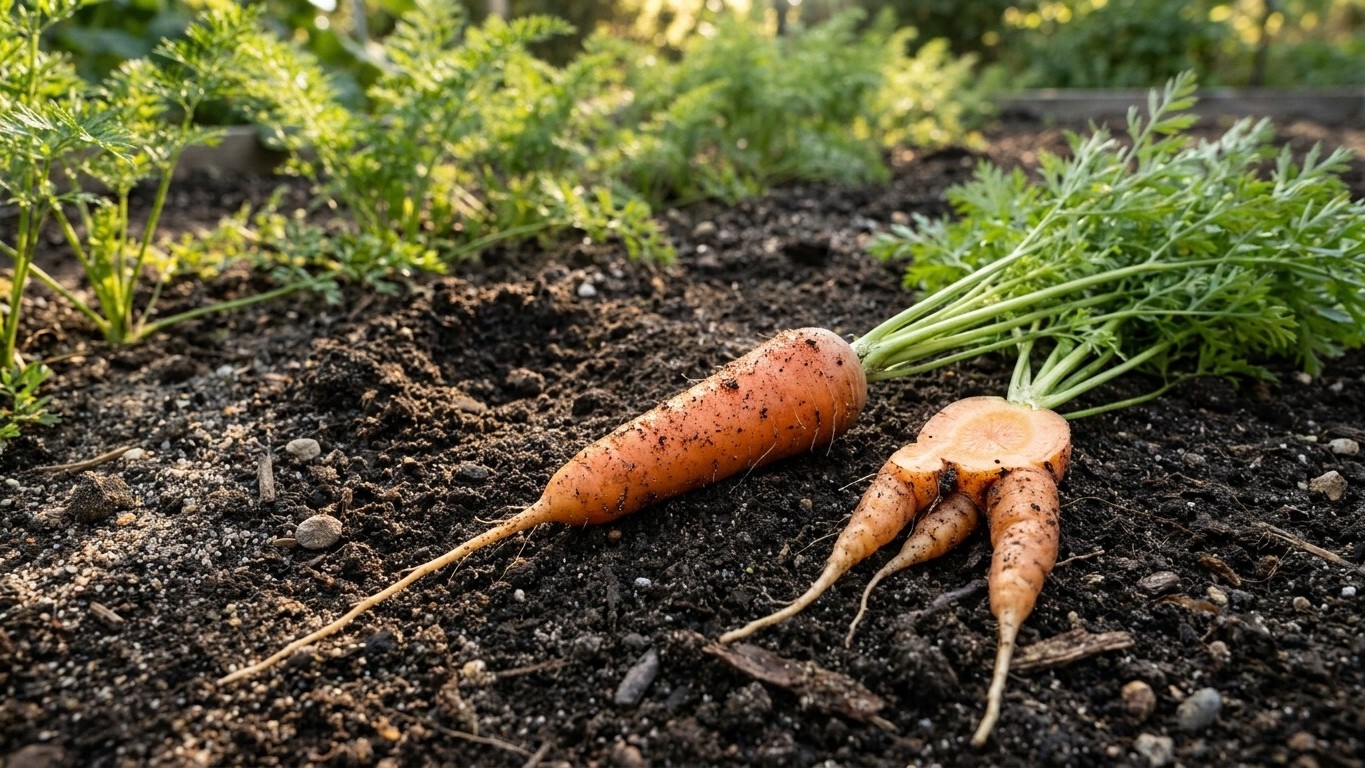

Carrots in Utah get eaten in two places: below ground, where insects feed on seedlings and roots, and above ground, where they chew or suck on the tops. Which one you face depends on how many days have passed since seeding. Utah State University Extension documents carrot pests in the state, and its county offices can name what is active near you.
Which pests attack carrot in Utah
Utah State University Extension documents the insects that feed on carrots in the state. Its carrot guidance, Carrots in the Garden, is the reference to check against. Rather than memorizing a catalog of insect names, sort the culprits by where they feed, because that is how the damage shows up in the row.
The first group lives in the soil and works on the seedling or the root. These insects cut young plants at the soil line, scar the skin, or tunnel into the flesh. The second group chews on the tops, leaving ragged edges and bare stems. The third group sucks sap from foliage and the crown, which shows up as curled, yellowed or stunted leaves rather than holes.
Carrots are easy to misdiagnose, because the root hides everything. The decisive habit is to dig one affected plant and look at the root before you decide anything. The top of a carrot can look sickly for a dozen reasons, and only some of them involve an insect.
This is a map of where to look, not a verdict on your garden. Soil conditions and elevation shape which insects are present, and your county extension office can tell you which documented species are active in your area.
When each one shows up, and what it does first
Carrots are sown in place. There is no transplant date, so the calendar runs from the day the seed goes into the ground. Packet maturity runs 70 to 100 days from seeding, and Clemson Extension puts harvest at about 65 to 75 days after planting for quick types. Tie each stage of pest trouble to that count. For the sowing side of the timeline, see When to Sow Carrots in Utah: Counting Back From the Last Frost.
In the first weeks after seeding
The seedling stage belongs to the soil dwellers. The first thing you see is a thin or gappy row, or seedlings that were standing one day and are lying cut off at the soil line the next. Gaps can also come from a crusted seedbed or seed that dried out, so scratch the soil near a gap and look for the insect or the cut stem before you reseed.
In the middle of the season
Once the tops are filled out, the leaf feeders and sap suckers take over. Ragged edges, missing foliage and bare midribs point to chewing. Curled, pale or stunted tops with no holes point to sap feeding. Neither shows in the root yet, so a carrot with damaged tops can still be sound underneath. Leaf damage matters most when it removes enough foliage to slow root sizing.
In the last stretch before harvest
Root damage tends to surface late, since insects that tunnel in the flesh have had weeks of feeding by then. The first sign is often a harvest surprise: narrow channels, pitted or scarred skin, or chewed patches on the shoulder. Tops can look healthy above a damaged root. Roots left in the ground well past their 70 to 100 days give soil insects more time to work on them, so lift them on schedule.
Telling the damage apart from everything else
Half of the carrot problems that look like insect work come from water, soil or handling. A wrong diagnosis sends you to the wrong fix, and in a short season there is rarely time for a second attempt. The state soil of Utah, the Mivida series, is a sandy, well-drained Aridisol with about 72 percent sand, 9 percent clay and 19 percent silt, a surface pH of about 8.1 and about 1.5 percent organic matter. That tells you what Utah ground tends to do, which is drain fast and run alkaline. Your own bed may differ a great deal, particularly on river-bottom ground, hillside fill, or soil a builder has scraped.
| What you see | Likely cause | What settles it |
|---|---|---|
| Forked, stubby or twisted roots | Heavy or rocky soil, or an obstruction in the row | Dig the bed down a full spade and look for clods and stones. The Will Carrots Fork in Utah Soil? guide covers this |
| Tops that wilt at midday and recover by evening | Water shortage, which a fast-draining sandy bed makes more likely | Push a finger a few inches down. If the soil is dry at root depth, it is a watering issue |
| Roots that split lengthwise | Uneven watering or a sudden heavy soaking after a dry spell | Split roots with clean, healed edges and no tunnels point away from insects |
| Yellow, pale or purple-tinged tops with no holes | Nutrient shortage, cold, or sap feeders | Check the underside of leaves for insects and take a soil test through your county extension office |
| Gaps in the row | Crusted or dried seedbed, or soil insects cutting seedlings | Scratch the soil beside a gap and look for cut stems or insects |
| Tunnels or chewed patches in the root | Insect feeding below ground | Look for channels with frass or an insect inside, then take the root to extension |
A table cannot tell you what is in your garden. It gives you the sign that separates one cause from another, and a county extension agent can match that sign to the insects active in your area.
What actually works here, and what is a waste of time
On a short season, the calendar does more than any product. The most dependable defense is a physical barrier, and it has to go on at seeding, before any insect has reached the bed. A lightweight row cover laid over the row and sealed along every edge keeps flying insects from laying eggs near the seedlings. It does nothing for an insect already in the soil, so a cover placed over a bed that was infested last year can trap the problem inside with the crop.
That is why rotation matters. Carrots planted where carrots grew the season before sit directly above whatever overwintered there. Move the crop to a different bed each year, and clear old tops and leftover roots at the end of the season so they do not shelter anything over winter.
Even moisture in the seedbed helps, because carrot seed is slow to come up and a bed that dries out while it waits gives you gaps that look like insect damage. Thin on schedule, because crowded carrots grow slowly and stay in the ground longer, which gives soil insects more time.
Harvest on time and handle the crop gently. Roots with insect damage keep poorly, so eat those first. For the sound ones, cut the tops off right away, because the leaves keep drawing moisture out of the root. Store the roots at 33 °F with high humidity. Bunched carrots with the tops on keep only about 10 to 14 days, and trimmed ones keep far longer. A 50 °F cellar is too warm for carrots and they sprout and soften quickly.
Several common responses waste time. Spraying leaves when the damage is in the root never reaches the problem. Treating before you know what is feeding means guessing, and a guess can harm beneficial insects without touching the pest. Covering a bed after the damage has started traps the insects against the crop. This site names no products and gives no rates. Utah State University Extension knows what is currently registered for home gardens in the state, and a label must always be read before any product is used.
Where to check this for your own county
The right contact is Utah State University Extension and its county office. Utah covers valley floors, high mountain benches, irrigated farmland and desert, and insect presence differs among them. A pest documented somewhere in the state may be absent in your garden, and the reverse is just as true.
Soil works the same way. Two simple tests settle what your bed is like. A jar test shows texture: fill a straight-sided jar about one third with soil, add water, shake it, and watch the sand, silt and clay settle in layers. A lab soil test, which the county office can explain how to get, gives you a pH and nutrient picture for your own bed.
Bring something the agent can work with. A whole damaged carrot, a few leaves, and any insect sealed in a jar or bag give a much better answer than a description alone. Take the sample while the damage is fresh, since a root that has rotted in the fridge for a week is hard to read.
For the bigger picture of growing the crop, see Growing Carrots in Utah. The next step is to call your county extension office, describe what you see, and ask which insects it has seen in carrots nearby this season.
Common questions
How long do carrots stay in the ground in Utah?
Packet maturity runs 70 to 100 days from seeding, since carrots are sown directly and never transplanted. Clemson Extension gives about 65 to 75 days after planting for quick types. Counting from the day the seed goes in is the only count that holds.
Do I need to cut the tops off before storing carrots?
Yes. The leaves keep pulling moisture out of the root, so bunched carrots with tops on keep only about 10 to 14 days. Trim the tops first and store the roots at 33 °F with high humidity.
Is Utah soil likely to make carrots fork?
The state soil, the Mivida series, is sandy and well drained, which suits carrots. Your own bed could be heavy or rocky, and that is what forks roots. Do a jar test, dig deep, and add compost where the ground is heavy. The soil guide for carrots in Utah goes further.
Who identifies an insect I find in my carrots?
Your county office of Utah State University Extension. Bring the damaged root, a few leaves and the insect itself if you can catch it.