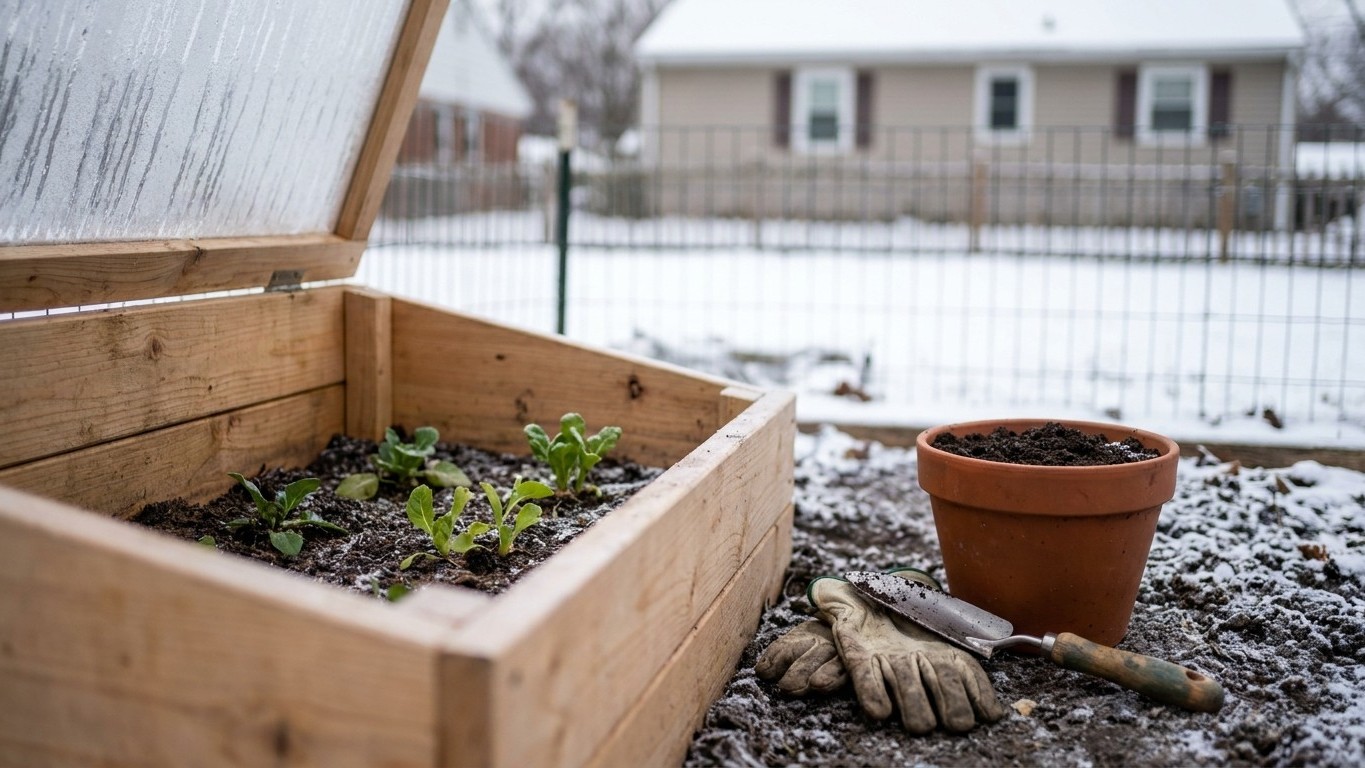

Direct answer: almost nothing goes into open Vermont soil in January. The state’s last spring frost runs April 30 to May 10 in the Champlain Valley, and colder pockets push weeks later, so the real January work is indoors: forcing rhubarb and chicory, starting the slowest alliums under lights, pruning dormant fruit stock, and getting seed orders in before good varieties sell out.
What goes in the ground in January
The decision here is never the calendar. It’s soil temperature and the frost window behind it. Vermont sits in USDA hardiness zones 3b through 5b, a range built on one measurement, the average extreme minimum winter temperature, and in January that soil is frozen to a depth most root systems can’t tolerate. The last spring frost at the Burlington reference station falls April 30 to May 10, and that’s the mild end of the state. Higher ground in the Green Mountains and the Northeast Kingdom runs colder and later still.
So say it plainly: no direct-sown crop and no outdoor transplant belongs in open Vermont ground this month, statewide. Peas, hardy greens, even garlic and shallots, which normally go in the ground in fall for a spring start, all wait for thaw. If you missed the fall garlic window and happen to hit an unfrozen patch of soil during a rare warm stretch, you can tuck cloves in, but that’s an exception, not a plan.
What actually works this month lives under cover or indoors. A few options:
- Cold frames or low tunnels holding greens that were established before the ground froze
- Bare-root fruit trees and canes ordered now, heeled into a protected spot or refrigerated, and held until the ground opens
- Rhubarb crowns lifted and forced in a dark, cool basement for early stalks
- Belgian endive roots forced the same way, wrapped from light to blanch the heads
None of that is a consolation prize. Forced rhubarb and endive are genuine harvests, just not from the garden bed.
What to start under cover
Count backward from the frost window instead of from a date on the wall. Onions and leeks want roughly 10 to 14 weeks under lights before they move outside, and with a last frost landing April 30 to May 10 in the mildest part of the state, that math puts the seed-starting window for long-season onions and leeks squarely in January, especially in colder counties where the outdoor transplant date slides later and the indoor head start needs to grow accordingly.
Peppers and eggplant are a different story. They need only 8 to 10 weeks indoors, so starting them now leaves them leggy and rootbound long before the soil is warm enough to take them. That’s the first failure mode: jumping the gun on short-lead crops because January feels like the season should be starting. The second failure mode runs the other way, waiting too long on onions and leeks and ending up with undersized transplants that never catch up once they’re set out, since alliums don’t recover lost time the way tomatoes do.
A workable January indoor list stays narrow: onions and leeks from seed under strong light, with a heat mat to speed germination in a cool house, plus a first light succession of microgreens or pea shoots on a windowsill for something green to cut within weeks rather than months. Save tomatoes, peppers, and squash for their own later windows.
What is ready to pick
Outdoors, the harvest is thin to nonexistent this month, and there’s no point pretending otherwise. What keeps a Vermont kitchen supplied in January comes from what was put up or tucked in earlier.
Kale and other hardy brassicas left standing under snow cover often still hold usable leaves; brushing snow off a row and cutting what’s underneath is a real, if cold, harvest. Leeks behave the same way, standing through snow and hard freezes if they were hilled well in fall, and a mattock or garden fork is usually needed to pry them out of frozen ground. Cold frames with spinach, mache, or claytonia planted before the freeze can still produce a cutting or two on a sunny week, since those crops photosynthesize even at low temperatures as long as they’re shielded from wind.
Indoors, sprouts and microgreens are the fastest return on effort, ready in one to two weeks from seed on a counter. The other January task is inspection, not harvest: go through stored squash, potatoes, and onions and pull anything showing a soft spot, a sweet smell, or early sprouting, because one turning squash in a bin will take its neighbors down with it faster than most gardeners expect.
The jobs that matter this month
This is the section that carries a January garden, because the dormant season is when the structural work gets done, and skipping it costs real yield later, not just tidiness.
Pruning and ordering
Dormant pruning of apple and pear trees can happen now, while there are no leaves hiding the branch structure and the tree is fully asleep. Hold off on stone fruit like plums and cherries until closer to bud break, since pruning cuts on those species in deep cold invite disease and cold injury at the wound. Bramble canes (raspberries, blackberries) can also be cut back and thinned now. At the same time, seed catalogs are moving fast; the short-season varieties bred for a Vermont-length summer are exactly the ones that sell out first, so ordering in January instead of March is the difference between getting the variety you planned around and settling for whatever’s left.
Soil, tools, and storage
January is also when a soil test pays off, since results and lime recommendations take time to come back and amendments need weeks to work into the ground before spring planting. Turning the compost pile on a mild day keeps it from going anaerobic under snow cover. Tools benefit from the same slow season: cleaning rust off blades, sharpening pruners and hoes, and oiling wooden handles now means no scrambling once the ground opens. Raised beds and fencing that took damage over the fall are far easier to repair while nothing is growing around them. And circle back to the stored crops at least every couple of weeks; a single rotting potato found early saves the whole bin.
What not to do in January
The most common January mistake in Vermont is trusting a warm afternoon. A stretch of 40-degree days can feel like spring, but the soil several inches down is still frozen or waterlogged from thaw, and anything direct-sown into it either rots or simply sits without germinating. The fix is patience: wait for the sustained soil warming that actually follows the frost window, not a single mild week in the middle of winter.
The same false-spring effect tempts gardeners to pull mulch or open cold frames early to “let air in.” Doing that strips the insulation right before the next hard freeze returns, which is often just days later, and exposes crowns and roots that were otherwise protected. Leave winter mulch in place until the thaw is consistent, not just comfortable for one afternoon.
Feeding nitrogen this month is another misstep. Dormant plants, and anything still overwintering under cover, aren’t in an active growth phase, so nitrogen applied now either leaches away before roots can use it or pushes soft, untimely growth on anything semi-active that then gets hit by the next freeze. Save the feeding program for when soil temperature and daylight actually support new growth. And resist starting tomatoes, peppers, or squash indoors this early. Given the season length in Vermont, that just produces oversized, stressed transplants long before it’s safe to set them outside.
Checking this against your own county
A statewide January guide is a starting point, not an instruction for your particular yard. Vermont’s hardiness zones span 3b to 5b, and that range alone signals how much the frost calendar shifts across the state. The Champlain Valley around Burlington, warmed by the lake, sits at the mild end. Elevation in the Green Mountains and the open exposure of the Northeast Kingdom push both the last spring frost and the first fall frost later and earlier respectively, often by weeks rather than days.
| Location type | Last spring frost | First fall frost |
|---|---|---|
| Champlain Valley (Burlington reference station) | April 30 to May 10 | October 3 to October 13 |
| Higher elevation / Northeast Kingdom | Later than Burlington; exact dates not published here | Earlier than Burlington; exact dates not published here |
For a planting window specific to your county, check with UVM Extension, which tracks local frost data and soil conditions across the state.
Common questions
Can I plant garlic in Vermont in January?
Garlic is a fall crop here; by January the planting window has closed for most of the state. If a rare thaw leaves a patch of workable soil, cloves can go in, but it’s not a reliable plan and shouldn’t be counted on.
Is it too early to start onions from seed?
No, for many Vermont counties January is the right window. Onions and leeks need 10 to 14 weeks under lights before transplanting, and with a last frost landing April 30 to May 10 or later, starting in January lines up with that math.
What can I still harvest outdoors in Vermont in January?
Kale and leeks left standing under snow can often still be cut, and cold frames holding spinach, mache, or claytonia may give a light harvest on sunny days. Beyond that, outdoor picking is minimal.
Should I prune fruit trees in January?
Apples and pears can be pruned now while fully dormant. Hold off on stone fruit like plums and cherries until closer to bud break, since cutting them in deep cold raises the risk of disease and cold injury at the wound.