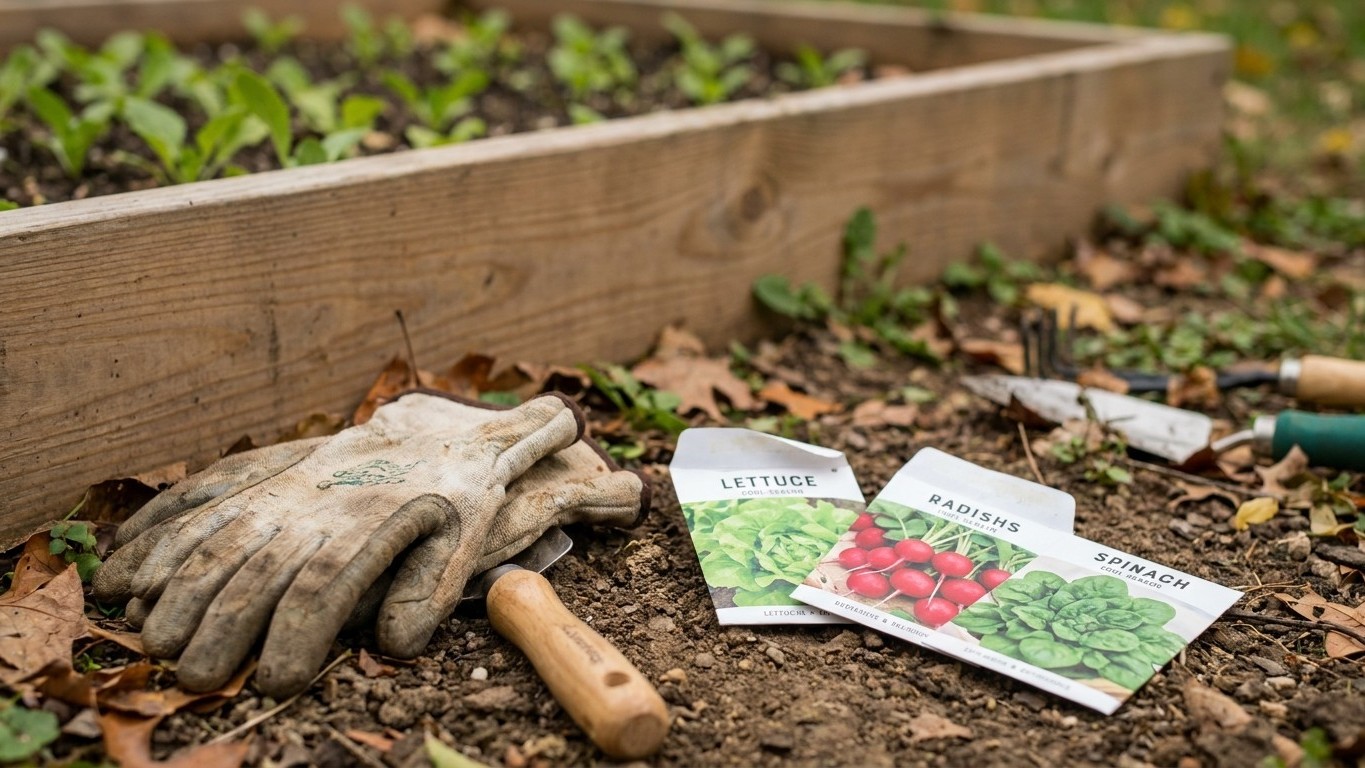

September in Vermont still allows plenty of new growth before the ground shuts down for the season. The state’s first fall frost lands anywhere from October 3 to October 13 on the mild shores of Lake Champlain, leaving three to six weeks for quick, cold-tolerant crops to reach the table. Direct-sow fast greens and roots, get garlic beds ready, and start curing winter squash. Warm-season planting is finished; cold-hardy planting is just getting serious.
What goes in the ground in September
The number that actually matters here isn’t the date on the calendar, it’s the first fall frost window: October 3 to October 13, based on NOAA’s 1991-2020 climate normals for the Burlington station. That’s the mild edge of the state, sitting right on Lake Champlain’s moderating water. Move up into the Green Mountains or out into the Northeast Kingdom and that window closes noticeably earlier. Vermont spans USDA hardiness zones 3b to 5b, and that spread alone tells you a single statewide planting date doesn’t exist. Soil temperature, not air temperature, decides germination, and cooling fall soil still works fine for the crops built for it.
Quick, cold-tolerant crops are the safe bet now: spinach, mache, arugula, mesclun mixes, tatsoi and mizuna, plus radishes and turnips, all of which can finish in 30 to 45 days and shrug off the first light chills. These germinate readily in soil that’s cooling into the 50s and 60s, well before frost becomes a threat to them. Peas are a gamble at this point unless you’re working with a genuinely fast variety and a mild pocket of the state, since most standard varieties won’t mature before the frost window closes.
Garlic and shallots deserve bed attention now even if the cloves themselves usually go in closer to true fall dormancy, once soil has cooled further but before it freezes solid. Working compost into that bed this month means the ground is ready the moment planting time arrives. It’s also a solid window for sowing cover crops like winter rye or crimson clover into any bed that’s finished for the season, since they still have enough warmth left to establish roots before winter. Anything tender, tomatoes, peppers, squash starts, basil, has no business going into open ground this month anywhere in the state.
What to start under cover
Counting backward from that October 3 to October 13 frost window is the useful math here, not counting forward from a fixed date. Hardy greens meant for a cold frame or low tunnel, spinach, mache, hardy lettuce, generally need three to four weeks to reach a transplantable size. Start seed now, in trays or a nursery bed, and you land transplant-ready plants right around the time the first frost normally shows up, exactly when they need to move under protection.
The arithmetic is simple enough to redo for any county: figure roughly a month from seed to transplant size for these crops, then work backward from whenever frost typically arrives in your specific spot, keeping in mind that the Green Mountains and Northeast Kingdom run that date noticeably earlier than the Champlain valley. Start in the first half of the month for most of the state, and the timing lines up.
Two ways this goes wrong. Start too early and seedlings sit around too long waiting for cold frame space, get leggy, or bolt if a late warm spell hits. Start too late and the plants don’t have enough root mass built up before real cold sets in, which means they won’t survive under cover through the harder months ahead. Neither mistake is fatal to fix, but both cost you a chunk of the harvest you were trying to protect.
What is ready to pick
September is the busiest harvest stretch of the Vermont garden year. Winter squash and pumpkins are finishing up, and the test is simple: press a thumbnail into the skin, if it resists and the stem has dried out and gone corky, it’s ready to come in and cure. Vermont’s apple orchards hit their stride this month too, with different varieties ripening in sequence through the weeks ahead.
Potatoes are worth digging once the foliage dies back, and they need a few days in a cool, dark spot to cure their skins before storage. Onions and any remaining garlic from earlier in the season should already be curing in a dry, airy spot, and it’s worth checking that pile now for any bulb going soft before it spreads to the rest. Dry beans, sweet corn, late tomatoes and peppers all need attention before the frost window arrives, along with cabbage and Brussels sprouts that are still sizing up in the cooler weather. Anything tender still on the vine when frost hits needs to be picked ahead of that date, not after.
The jobs that matter this month
Protecting what’s still growing
Frost forecasts deserve daily attention through this stretch, and having row cover or old blankets on hand to throw over tender crops on a cold night can buy an extra week or two of tomatoes or peppers. Winter squash and pumpkins left in the field once vines die back and frost threatens are at risk of skin damage that shortens how long they’ll keep in storage, so timing that harvest matters. Heavy squash vines and tomato plants loaded with late fruit are also worth staking or supporting before a fall storm flattens them.
Setting up the next stretch
Garlic beds benefit from compost worked in now, ahead of planting once the soil cools further. Any bed cleared of summer crops is a good candidate for a cover crop of winter rye or clover, which protects the soil structure and adds organic matter over the colder months. This is also the moment to keep succession-sowing quick greens every week or two while the window still allows it, to scout for late-season pests like squash vine borer and cabbage worms before they overwinter in the soil, and to start soil testing on any bed you plan to amend before it goes dormant. Cleaning and sharpening tools, and ordering garlic stock or spring bulbs while good varieties are still available, round out a productive month.
What not to do in September
The most common mistake this month is leaving tender crops uncovered on the first cool nights, betting they’ll pull through. A single dip near freezing can end a tomato or pepper plant that had weeks of production left in it. Adding nitrogen fertilizer to warm-season crops now is another one to skip, since it pushes tender new growth that frost will simply kill, wasting the plant’s remaining energy on foliage instead of ripening fruit.
Letting winter squash and pumpkins sit in the field once frost threatens does real damage to storage life, even if the plant itself looks fine. Uncovering cold frames or row covers too early after a warm afternoon is a trap too, since a clear night right afterward can undo the protection you just removed. Tilling wet fall soil compacts the structure you’re trying to build for next season, and composting diseased tomato or squash vines carries that problem straight into the following year rather than ending it. Better to bag and discard diseased material separately.
Checking this against your own county
A statewide frost window is a starting point, not an instruction for your particular garden. Burlington’s October 3 to October 13 range reflects Lake Champlain’s mild influence, and it’s the gentlest frost timing anywhere in the state. Elevation changes that fast: the Green Mountains and the Northeast Kingdom see frost arrive substantially earlier, sometimes by weeks, and local dips and valleys can run colder than the surrounding hillside. For a planting calendar built around your specific county, the University of Vermont Extension is the resource to check.
Common questions
When should I plant garlic in Vermont?
Garlic cloves generally go into the ground once soil has cooled further into true fall, but well before it freezes solid. September is the month to prepare and amend the bed, not necessarily to plant the cloves themselves, since timing varies by elevation across the state.
Can I still start tomatoes or peppers in September in Vermont?
No. With the first fall frost arriving between October 3 and October 13 on even the mildest part of the state, there isn’t enough season left for warm-season transplants to produce a worthwhile harvest anywhere in Vermont this month.
What USDA hardiness zone is Vermont?
Vermont spans zones 3b to 5b under the USDA Plant Hardiness Zone Map, a system built on the average annual extreme minimum winter temperature. That range means a plant rated hardy for one part of the state may not survive winter in another.
How do I know if my winter squash is ready to harvest?
Press a thumbnail into the skin. If it resists puncturing and the stem has dried out and turned corky, the squash is mature and ready to come in for curing before frost risks damaging the skin.