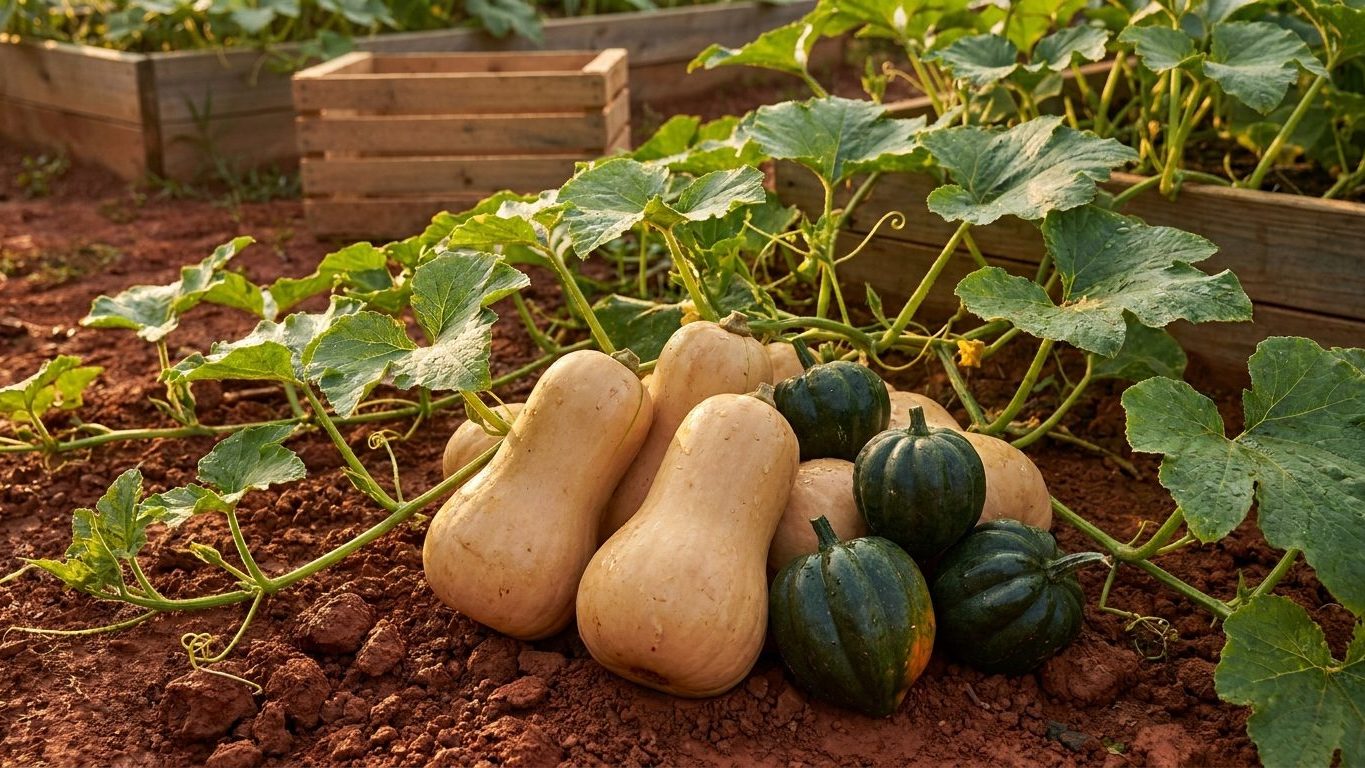

Short-season winter squash, acorn, delicata and buttercup, are the safest bets for most of Vermont because the state’s frost-free window rarely stretches past five months. Butternut can work too, if started early. Giant hubbard types and pumpkin-style winter squash usually run out of season before they finish, except in the mildest valleys near Lake Champlain.
The short answer for Vermont
Start with the arithmetic, because it’s what decides everything else. At the reference station in Burlington, the last spring frost falls somewhere between April 30 and May 10, and the first fall frost arrives between October 3 and October 13. That gives a frost-free window of roughly 146 to 166 days, depending on where in that band a given year lands, and depending on how close a garden sits to the lake’s moderating effect. Every winter squash variety has to fit inside that window, from seed or transplant to a fully cured rind.
The second number that matters is heat, not just frost. Burlington averages only 5.4 days a year at 90F or above. That’s a low heat load compared with most of the country growing winter squash, and it matters because squash don’t just need enough days, they need enough warm days to push sugar into the flesh and harden the rind for storage. A variety can technically reach the calendar finish line in Vermont and still arrive soft, pale and short on flavor if the summer stayed cool.
By type
Put those two numbers together and the decision by type gets fairly clear. Acorn and delicata, which typically need somewhere around 80 to 100 days and don’t demand much heat to ripen, fit the frost-free window with room to spare almost anywhere in the state. Buttercup, running closer to 95 to 105 days, still fits but with less margin, especially where the season sits at the shorter end of that range. Butternut, often needing 90 to 110 days, works if it goes in as a transplant rather than direct-seeded, because losing even ten days at the start can push harvest right up against the first frost.
Large hubbard types and pumpkin-style winter squash, which commonly want 100 to 140 days plus a decent stretch of real heat to size up and cure, are the varieties that struggle most in Vermont. They’re not impossible in the Champlain Valley in a warm year. They’re a poor bet as a default choice anywhere else in the state.
What will not work here

Long-season winter squash is the first thing to cross off the list. A variety that needs 120 days or more, paired with a frost-free window that can run as short as 146 days at the mild end of the state, leaves almost no buffer for a cool spring, a late transplant, or a stretch of cloudy August weather. Add in the fact that first fall frost can land as early as October 3 in a given year, not the October 13 upper bound, and a “120-day” squash sown even slightly late is racing a calendar it’s likely to lose.
Heat-loving varieties fail here for a different reason than they fail in a short-season Rocky Mountain garden. It isn’t just that the season ends too soon, it’s that the season never gets hot enough along the way. With only 5.4 days a year reaching 90F, vines that depend on sustained heat to swell fruit and thicken rind stall out. The fruit can look full-sized and still be watery inside, with a rind too soft to store past a few weeks. That’s a common disappointment with hubbard and giant squash types pushed in a Vermont garden expecting a Midwest or Mid-Atlantic result.
Direct-seeding a long-season type outdoors compounds the problem. Waiting out the last frost, which can run as late as May 10, and then direct-sowing a squash that needs three-plus months, eats into a season that was already tight. Watering on a strict weekly schedule is its own mistake here, though for the opposite reason than in a dry state: Vermont’s summers bring a reasonable 11.9 inches of rain across June, July and August, but August is the driest month at 3.54 inches, and a full-sized vine sizing fruit during that dry stretch on sandy soil can still wilt between waterings if a gardener assumes the season’s earlier rain will carry it through.
Tight spacing on vining types is the last common misstep. Vermont’s rain arrives in the kind of summer thunderstorm pattern that wets foliage fast and dries it slowly under cool nights, conditions that favor powdery mildew on squash leaves. Crowding hubbard or pumpkin-style vines that already need more room than acorn or delicata makes that worse, not better.
What changes across Vermont
Vermont isn’t one growing zone, it’s four. USDA hardiness zone data puts the state at 3b to 5b, and that spread is wide enough that there’s no single planting answer for “Vermont” as a whole. Zone 5b, the mildest end, sits along the Champlain Valley near Burlington, the same reference station behind the frost dates above. Zone 3b, the coldest end, belongs to higher elevations in the Green Mountains and much of the Northeast Kingdom.
That difference isn’t cosmetic. A garden at the 3b end of the range works with a meaningfully shorter frost-free season and a lower overall heat load than the Burlington numbers already show, since those numbers already sit at the mild end of the statewide picture. A gardener in the Green Mountains or the Northeast Kingdom should treat every day count above as optimistic for their own plot, not as a baseline.
In practice, that means shifting the whole variety list toward the shortest-season end. Where a Champlain Valley garden might comfortably grow buttercup or even push a butternut, a higher-elevation or northern garden does better sticking to acorn and delicata, starting them as transplants rather than direct-seeded, and using row cover early to buy back some of the heat and days the elevation or latitude takes away. The USDA Plant Hardiness Zone Map lookup by ZIP code is the tool for that, and it’s worth checking before picking a variety off any general list, including this one.
Where to check this for your own county
Vermont’s state-level picture rests on one reference station’s climate normals. That is useful for comparing types of winter squash against each other, but a county-level recommendation will beat it every time.
The University of Vermont Extension is the source to check next. Two things there matter most: the local planting calendar for the reader’s specific county, which adjusts for elevation and local frost patterns that a single Burlington station can’t capture, and the list of squash varieties actually trialled in Vermont conditions, which reflects real seasons rather than climate normals averaged over three decades.
A trial list matters more for squash than for many other crops, because seed catalogs describe days-to-maturity under ideal conditions, and Vermont’s cool nights and modest heat load don’t always deliver those. A variety that a Vermont extension trial has actually grown to full cure, in Vermont weather, over multiple seasons, is a stronger recommendation than any days-to-maturity number printed on a seed packet.
Checking this against your own garden
None of the numbers above beat what’s happening in a specific garden in a specific spring. Three things are worth watching, and none require anything beyond the reader’s own hands and eyes.
Soil warmth by feel comes first. Squash seed sown into cold, wet soil sits and rots rather than germinating, regardless of what the calendar says about the last frost date. Digging a finger a couple of inches down and feeling for a soil that’s genuinely warmed through, not just thawed, is a better signal than any date.
The first flush of male flowers is the second signal. Squash plants typically produce male flowers before female ones, and a garden that’s slow to show that first flush, compared to what a neighbor a few miles away is seeing, is telling the gardener something about a cooler local microclimate, whether from shade, elevation, or exposure to wind off higher ground.
The first true leaves, the ones that emerge after the rounded seed leaves, mark the point where a plant has really established itself rather than just sprouted. A garden where that stage lags well behind the general timing described above is a garden running its own, slightly different season, and the variety choices in this article should be adjusted toward the shorter, cooler end of the list to match it.