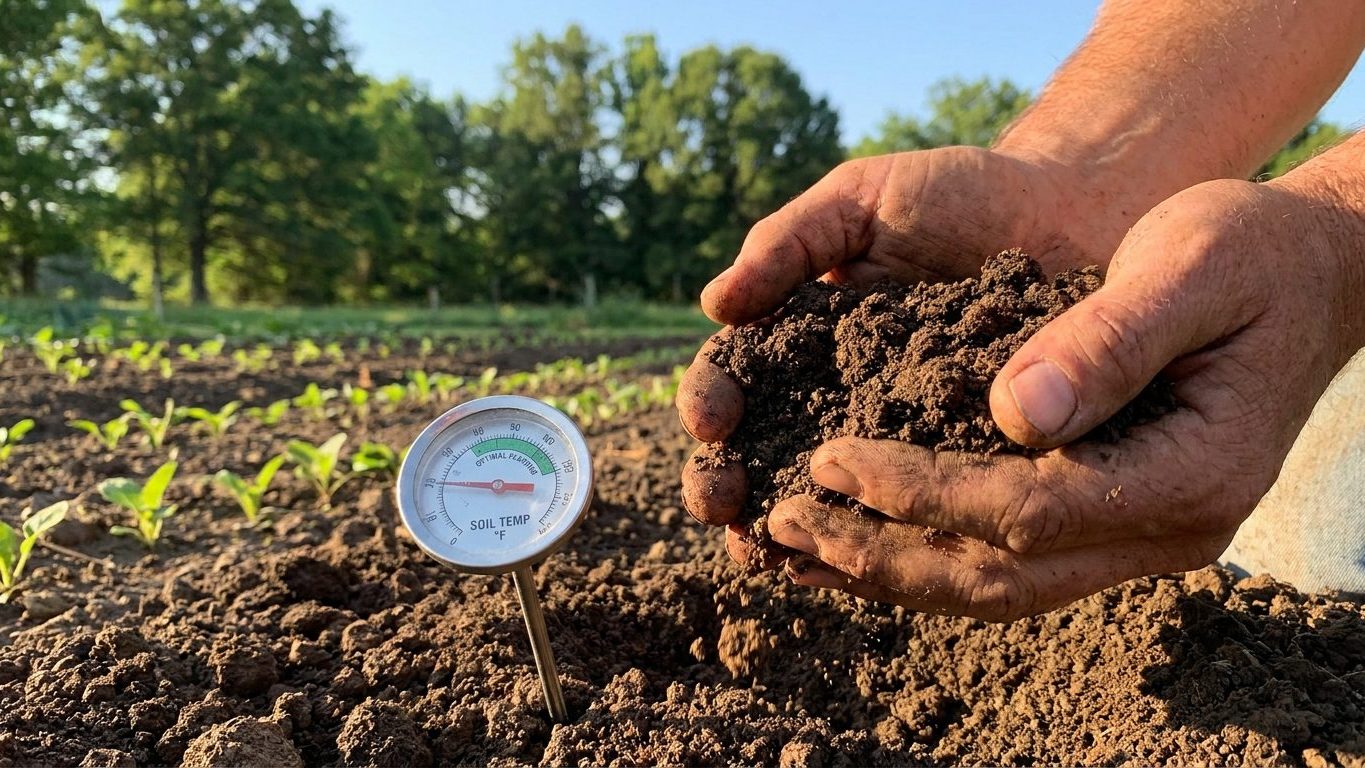

Winter Squash in Vermont waits on the soil, not the calendar. Most gardeners can plant safely from mid-to-late May onward, later in the higher valleys and the Northeast Kingdom, and the type of squash chosen matters as much as the exact date. The season here is short enough that a mismatch between variety and window means fruit that never finishes curing before the first hard frost.
When the soil is warm enough in Vermont

The reference point everyone reaches for is the last spring frost, and for Vermont that date runs from April 30 to May 10, based on NOAA’s 1991-2020 Climate Normals for the 32F freeze probability band at station USW00014742. The first fall frost, at the same station, falls between October 3 and October 13. Those numbers come from Burlington, which sits on the shore of Lake Champlain and is the mildest pocket in the state. The Green Mountains and the Northeast Kingdom run substantially shorter seasons than that window suggests, sometimes by two or three weeks on either end.
A frost date is a probability, not a promise. It marks the point where a 32F freeze becomes unlikely, not the day the ground itself is ready for a squash seed or transplant. That distinction matters more for winter squash than for almost anything else in the garden, because squash germinates and grows poorly in cold soil regardless of what the air temperature does overnight. Soil that has just thawed from a Vermont winter can sit in the 40s and low 50s well after the last frost date has passed, especially in clay ground that holds cold moisture. Gardeners who plant on the frost date alone often watch seeds rot in the ground or sit dormant for two or three weeks doing nothing.
The practical fix is to test the soil directly rather than trust the date. A simple soil thermometer, pushed a few inches down at midmorning, tells the real story: winter squash wants soil that has warmed well past that cold snap, consistently into the 60s, before seed goes in or transplants go out. In most of Vermont that point arrives one to three weeks after the last frost date, depending on soil type, slope, and how much sun the bed gets. South-facing beds and raised rows warm faster; low ground near a stream or a shaded north slope can lag noticeably.
Transplanting is one way growers buy back some of that lost time, since a transplant started indoors gets a jump the soil itself can’t give a direct-sown seed. But squash roots dislike disturbance, and a transplant set out into soil that’s still too cold simply stalls in place, gaining nothing. The safer approach in a state with this much variation, from the Champlain Valley to the higher Green Mountain towns, is to let the soil temperature decide the date, not the printed frost average, and to check with the University of Vermont Extension for how that timing shifts by county.
How long the season lasts here
Put the two frost dates together and the frost-free window in Vermont runs from as short as 146 days to as long as 166 days, depending on how early spring arrives and how late fall frost holds off. That’s the gap between the earliest possible last frost (April 30) paired with the earliest possible first fall frost (October 3), and the latest last frost (May 10) paired with the latest first fall frost (October 13). Neither end of that range is guaranteed in any given year, but it’s the honest span the climate normals allow.
A window closer to 166 days gives a grower some room to maneuver. It’s still not long enough for a true second planting of winter squash, which needs most of a full season to mature and cure properly, but it does leave slack for a slow start, a cool June, or a transplant that sits still for two weeks before taking off. A window closer to 146 days removes that slack almost entirely. In the shorter version of the Vermont season, the first sowing is effectively the only sowing, and there’s little margin for a false start or a replant if seedlings fail.
That difference changes a real decision at planting time: whether to direct-seed or transplant. In the longer window, direct seeding is usually the better bet, since it avoids any root disturbance and the extra weeks of cushion cover the slower start. In the tighter window, especially at higher elevation or in the Northeast Kingdom, the calendar math tips toward starting seedlings indoors and transplanting out once soil is ready, accepting some root stress in exchange for two or three weeks of head start that the season doesn’t otherwise offer. Growers who want to stretch a longer window further, or who grow other crops alongside squash on the same beds, can find more on staggering plantings in the succession sowing guide elsewhere on this site.
Heat and water in Vermont

Vermont’s climate normals show 5.4 days a year reaching 90F or above at the Burlington reference station. That’s a small number, and it should be read as one: this is not a state where heat stress or evaporation drives the growing season for winter squash. Compare that to territories further south or west where 90F days run into the dozens, and the contrast becomes the point. In Vermont, the crop’s biggest risk is not the sun burning through soil moisture too fast, it’s the reverse: cool, damp conditions that slow ripening and give mildew and other fungal disease more time to take hold on the vine.
Rainfall backs that up. Summer rainfall across June, July, and August totals about 11.9 inches, out of 37.5 inches for the year, with August running driest at 3.54 inches.
| Month | Average rainfall |
|---|---|
| June | 4.26 inches |
| July | 4.06 inches |
| August | 3.54 inches |
That’s a wet summer by most standards, and it arrives on top of a climate that rarely dries the soil out through heat. The combination, modest heat and steady rain, means Vermont gardeners are far less likely to be running a hose through July than gardeners in a hotter, drier territory. The risk runs the other way: standing moisture on leaves overnight, humid air that doesn’t clear until midmorning, and the fungal pressure that builds when a squash patch stays damp for days at a stretch. Airflow between plants, morning watering instead of evening, and keeping fruit up off wet soil all matter more here than any irrigation schedule. Where the reader gardens on heavy clay, that same rain can sit even longer at the surface, so raised beds or ridged rows do more work in Vermont than they would in a sandier, hotter state.
Which winter squash suit Vermont
Given a season that runs 146 to 166 days and a climate that’s cool and damp rather than hot and dry, the type of winter squash that fits Vermont best is the earliest-maturing type available, chosen with disease resistance as close to a first priority as fruit quality itself. A short window doesn’t forgive a squash that needs the full length of a longer season to finish curing, and a fruit picked before it’s fully mature won’t cure or store well no matter how it’s handled afterward. Humidity and summer rain push mildew resistance up the list of things worth checking before seed goes in the ground, ahead of concerns that matter more in hotter states, like shading fruit from scorching sun or managing water stress.
None of that points to a single cultivar name, and this page won’t offer one. Variety trials run county by county and even valley by valley in Vermont, and a type that performs well in the Champlain Valley’s slightly longer, milder season can lag badly in the Northeast Kingdom or a high Green Mountain town where frost comes weeks earlier. The hardiness zone range for the state, 3b to 5b under the USDA Plant Hardiness Zone Map (2023 update, based on 1991-2020 normals), spans a real difference in growing conditions, not a rounding error, and it’s built on winter extreme minimum temperatures rather than anything about the summer growing season itself.
The University of Vermont Extension runs the variety trials that actually mean something for a Vermont garden, testing types for days to maturity, disease resistance, and yield under this state’s specific frost dates and rainfall pattern. That’s the resource worth checking before buying seed, not a generic list that assumes a longer or drier season than the one Vermont actually delivers. Refusing to guess at a cultivar here isn’t a gap in this page, it’s the honest answer: the type that wins in a Champlain Valley garden isn’t necessarily the one that wins two counties east.