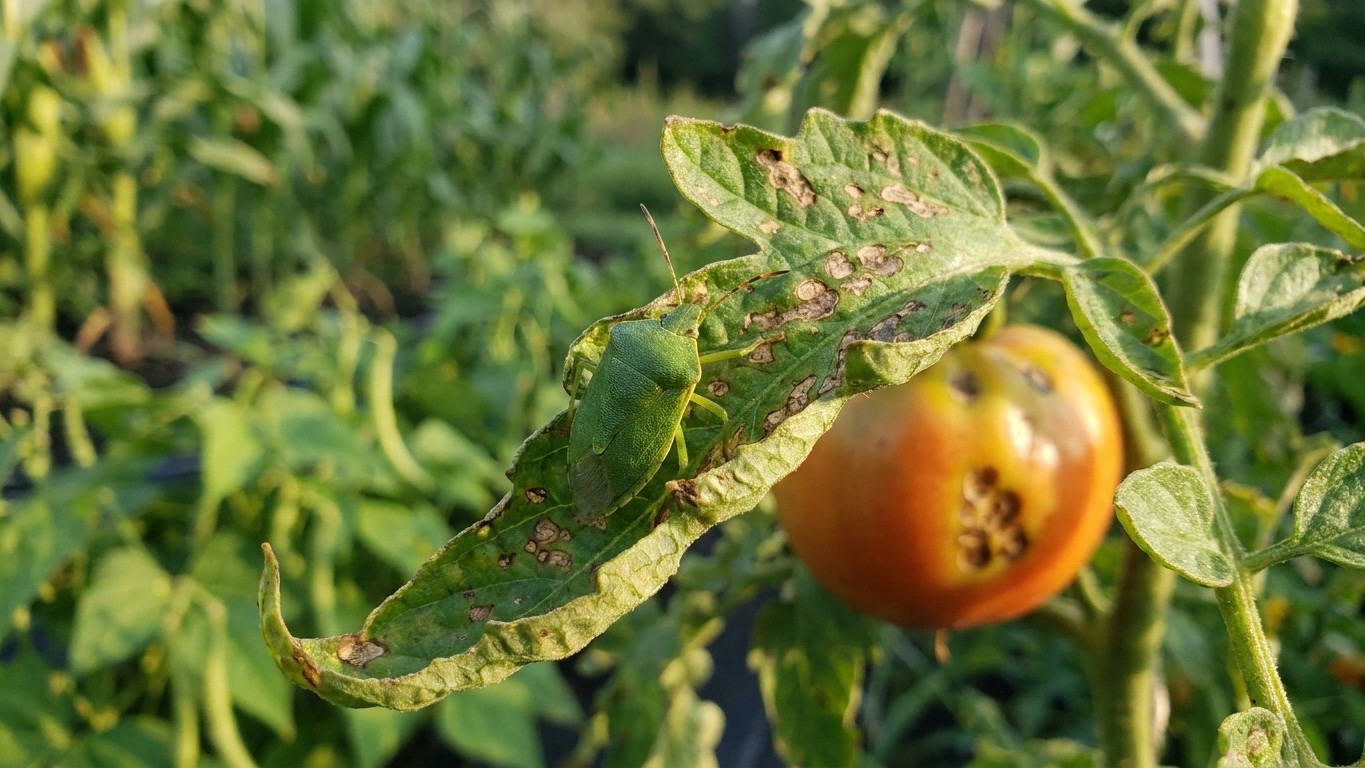

Green stink bugs show up in Vermont gardens every summer, feeding on beans, tomatoes, and sweet corn with a piercing bite that leaves pitted, discolored spots on fruit and foliage. Timing depends on how fast the soil warms after the last frost, and the state’s short season means the window for damage control is narrower than in warmer regions.
Reading the calendar from your last frost

Vermont gardeners plan around one date: the last spring frost. At the Burlington station tracked by NOAA, that date falls between April 30 and May 10, based on the 1991-2020 Climate Normals. That’s the number worth writing on the shed calendar, but it’s a probability band, not a promise. A cold April can push it later; a warm one can pull it forward. Green stink bugs don’t read calendars either. They respond to soil and air temperature, so a mild spring wakes overwintering adults earlier, and a cool, wet one delays them by a week or more.
Once transplants go in the ground, the first feeding marks typically appear within three to four weeks, right as beans set pods or tomatoes start sizing fruit. That’s the practical planning line: if row covers are going on, they need to be in place before that window opens, not after the first pitted spot turns up on a pepper. Covers usually come off once plants flower and need pollinator access, which is exactly when stink bugs start finding the crop anyway.
One caution matters here. Counting backward from a date range only produces another range, never a single reliable day. Burlington sits on the shore of Lake Champlain, the mildest pocket in the state. Gardens in the Green Mountains or the Northeast Kingdom run on a noticeably shorter, colder season, so the same math shifts later there. Treat the frost date as a normal to plan around, not a guarantee to bank on.
What it attacks, and what the damage looks like
The first sign is rarely the bug itself. It’s a cluster of small, sunken, discolored dimples on a tomato shoulder, or a cloudy, corky patch under the skin of a bean pod. On sweet corn, kernels look shrunken or deformed near the tip of the ear. Leaves can show a stippled, faintly yellow speckling where feeding punctures accumulate, though foliage damage is usually secondary to fruit and pod injury, which is what actually costs a gardener the harvest.
Green stink bugs feed on a wide range of garden plants, but in Vermont vegetable beds the most consistent targets are:
- Snap and shell beans, where pods develop pitted, discolored patches around each feeding site
- Tomatoes, with cloudy or corky spots forming just under the skin
- Sweet corn, where kernels near the tip go shrunken or deformed
- Peppers and okra, showing similar surface pitting on developing fruit
The damage comes from piercing-sucking mouthparts, not chewing, so there’s no ragged hole or missing leaf tissue the way caterpillar damage looks. Both nymphs and adults do the feeding, but nymphs cause the most economic harm because they cluster on developing pods and fruit through their several molts, feeding continuously as the fruit sizes up. Adults do damage too, but they’re more mobile and spread the injury across more plants rather than concentrating it. Once nymphs have already pierced into a developing pod or a young ear and fed on the seeds or kernels inside, no surface treatment applied afterward reverses that injury. The window for any intervention to matter is before that internal feeding happens, not after.
How Vermont sits in this pest’s range

Within this site’s coverage, the green stink bug is documented in two territories so far. That’s a narrow count, and it puts Vermont near the edge of what’s currently mapped here rather than in the middle of a broad, well-charted range. A wider count would mean the real story is timing, since the insect would already be confirmed as present nearly everywhere and the only local question would be when it arrives each year. With just two territories on record, the honest read is that coverage is still filling in, not that Vermont is somehow marginal to the species’ actual biology.
What Vermont does have is its own extension guidance, rather than borrowed data from a neighboring state. University of Vermont Extension tracks stink bug activity and damage reports specific to Vermont growing conditions, which matters because pest pressure tied to soil temperature and season length doesn’t transfer cleanly across state lines. A gardener here isn’t reading someone else’s climate translated onto a local calendar; the guidance comes from observations made in Vermont’s own short-season, variable-spring conditions. That’s a meaningful distinction from territories where the closest available research comes from across a border rather than from a source rooted in the same growing season.
What actually works against it
The cheapest defense costs nothing but attention to timing. Planting slightly later, once soil has warmed past the point where overwintering adults are most active, can mean transplants miss the earliest wave of feeding altogether. It’s not a guarantee, since a warm spring shortens that gap, but it shifts the odds.
Row covers work by physically blocking adults from reaching flowers and young fruit, and they’re most effective installed before bloom, while plants still don’t need pollinator access. The mechanism only holds as long as the cover stays sealed at the edges; a single gap becomes an entry point, and once bugs are inside the cover, it traps them with the crop rather than keeping them out. Covers also stop working the moment flowers open and need to be removed for pollination, which is exactly when nymphs are hatching and starting to feed.
Hand-picking works on small plantings, particularly early in the season when adult numbers are still low. Stink bugs drop when disturbed, so a container of soapy water held under the plant while shaking the foliage catches more of them than picking by hand alone. This only stays practical while populations are sparse; once nymphs have colonized a planting in numbers, hand removal can’t keep pace.
Clearing garden debris and mowing nearby weedy borders in fall removes the overwintering sites adults use to survive Vermont’s winter, reducing the following spring’s starting population. Crop rotation matters less for this pest than for soil-borne diseases, since adults fly in from surrounding habitat rather than emerging from the same bed, but reducing nearby weedy refuge areas still lowers local pressure over time. None of these measures matter once nymphs have already fed inside a developing pod or ear; at that point the damage is fixed, and the only remaining task is deciding whether the affected fruit is still worth harvesting.
Common questions
Do green stink bugs bite people or pets?
No. Their piercing mouthparts are built for plant tissue, not skin, and they pose no direct health risk to humans or animals. The concern is entirely about crop damage.
Can one bad stink bug year mean next year will be worse?
Overwintering survival depends on how much debris and weedy cover remains standing through winter, so a fall cleanup after a bad season can meaningfully reduce the following year’s starting population, even though weather still plays a large role.
Is damaged fruit still safe to eat?
Yes, in most cases. The pitted or corky spots are cosmetic and localized to the feeding site; trimming that area away leaves the rest of the fruit or pod perfectly edible.