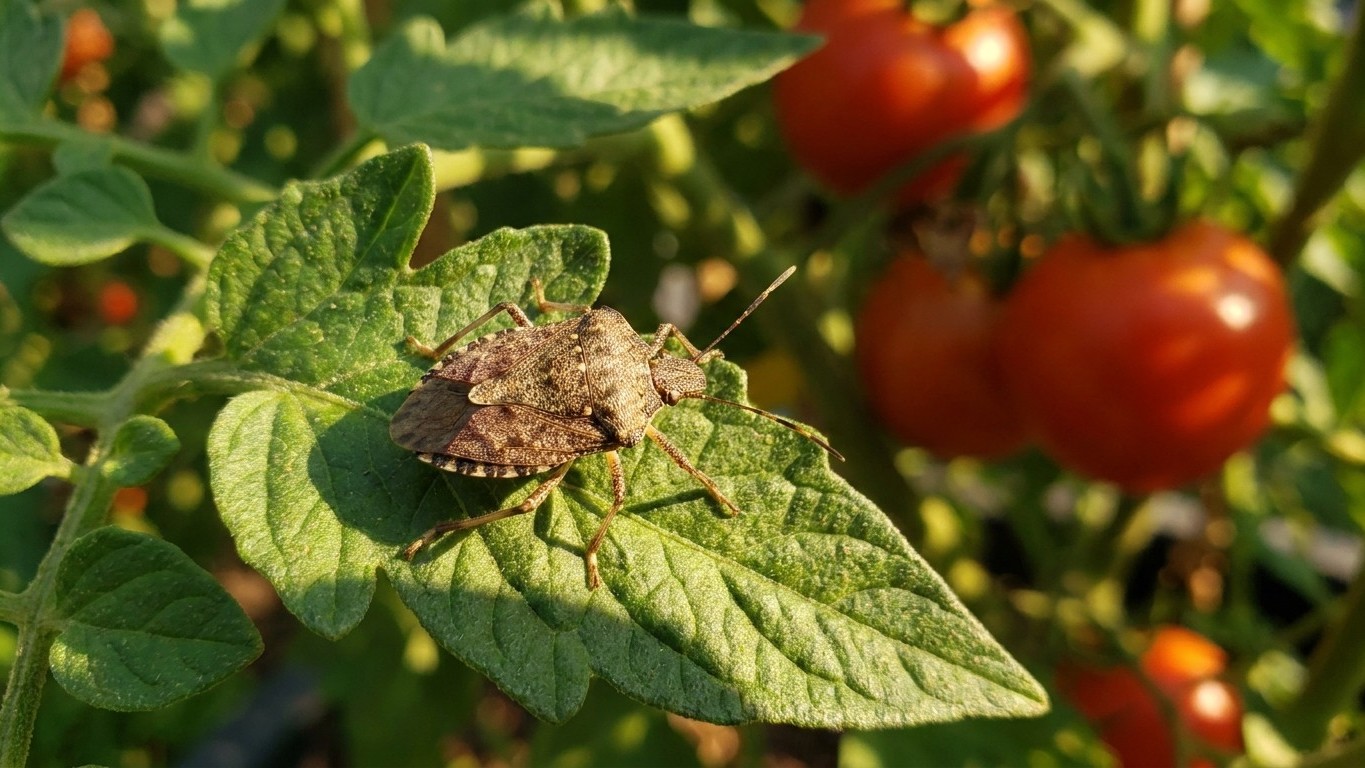

Stink bugs show up in Virginia homes and gardens mainly in two waves: a spring emergence once overwintering adults leave their winter hiding spots, and a fall push indoors as cooler nights send them looking for shelter. Row covers, sealed entry points and prompt cleanup of garden debris are what actually reduce the damage.
The weeks to watch

Virginia’s cooperative extension network does not publish a fixed calendar date for stink bug emergence the way it does for a frost date. What extension entomologists describe instead is a pattern tied to temperature, not the calendar square. That pattern still gives a gardener something to work with, even without a single named day.
Spring emergence
Overwintering adults, the ones that spent the cold months in wall voids, attics, or under bark and leaf litter, become active again once daytime temperatures push consistently into the 60s. In most of Virginia that means a stretch running from mid-April into May, though the Blue Ridge and southwest counties lag behind the coastal plain by a couple of weeks. These emerging adults feed briefly, then mate and lay eggs on the undersides of leaves.
Summer generation and fall retreat
Most of Virginia sees one full generation a year, occasionally a partial second in the warmest coastal counties. Nymphs mature through the summer, feeding on ripening fruit and pods. As days shorten and nights cool, usually starting in September, adults stop reproducing and start searching for a place to overwinter. That’s the wave homeowners notice most, the bugs gathering on sunny south-facing walls before slipping through gaps to get inside.
Reading the calendar from your last frost

The one date most Virginia gardeners actually track is the last spring frost, and for the coastal station at NAS Oceana in Virginia Beach, NOAA’s 30-year climate normals put that window between March 20 and April 3. Stink bugs don’t answer to that date directly. They respond to soil and air warmth, so a frost that lands early in that window or late in it will shift when the bugs start moving and when transplants become vulnerable.
- Start from your local last frost date. In coastal Virginia that’s the March 20 to April 3 range; inland and mountain counties should add one to two weeks to that window based on their own local extension guidance.
- Count forward roughly six to eight weeks from transplant date. That’s when tomatoes, peppers, and similar fruiting crops typically begin setting fruit, which is exactly when stink bug feeding damage tends to first appear.
That arithmetic gives a planning range, not a guaranteed day. A cold snap after transplanting can push everything back, while an unusually mild March can move the whole schedule earlier. Row covers should go on at transplanting and come off once flowers need pollinator access, generally right as that six-to-eight-week window opens.
What it attacks, and what the damage looks like

Most gardeners spot the damage before they spot the insect. On tomatoes and peppers, look for cloudy, sunken, or discolored blotches under the skin, sometimes called cat-facing, where the fruit surface puckers and scars around a feeding site. On beans and soybeans, pods develop shriveled or discolored seeds. On leafy growth, feeding shows up as pale stippled spots rather than actual holes, since stink bugs pierce and suck rather than chew.
Both nymphs and adults feed with the same piercing-sucking mouthparts, but adults do the most damage to fruit close to harvest, since that’s when they’re most mobile and abundant. That matters for treatment timing: once a nymph or adult has already fed on a piece of fruit, no spray reverses the scarring already there. Crops commonly affected in Virginia include:
- Tomatoes and peppers
- Apples and peaches
- Soybeans and green beans
- Sweet corn
- Ornamental shrubs, where damage is cosmetic rather than crop-threatening
How Virginia sits in this pest’s range

Stink bugs, particularly the brown marmorated species that causes most home and garden complaints, are established across a large majority of U.S. states at this point, not a handful of isolated pockets. That widespread presence means the real difference between Virginia and, say, Georgia or Pennsylvania isn’t whether the bug shows up. It’s when. Warmer coastal counties see earlier spring activity and a longer feeding season; the Blue Ridge and far southwest counties compress that same activity into a shorter window with a later start and earlier fall retreat.
The climate data behind this article’s frost window comes from a single coastal station, NAS Oceana in Virginia Beach, which sits at the mild end of the state’s climate spectrum. Inland gardeners should treat that date range as a starting reference, not their own local number, and check with their nearest extension office for a more localized frost estimate before relying on it to time row covers or transplants.
What actually works against it

The measures below are ordered from cheapest and easiest to most involved. Each one has a point where it stops being useful, and knowing that point matters as much as knowing the measure itself.
- Seal entry points before fall. Caulking gaps around windows, siding, and utility penetrations stops the fall indoor migration before it starts. This does nothing once bugs are already inside a wall void.
- Clear garden and yard debris. Leaf litter, mulch piles, and stacked wood give overwintering adults a place to shelter. Cleaning these up in fall reduces local overwintering populations, though it won’t stop bugs migrating in from a neighbor’s yard.
- Use row covers at transplanting. Lightweight fabric covers block adults from reaching young plants during the vulnerable early weeks. Covers have to come off once flowering starts, since pollinators need access, and that’s exactly when protection ends.
- Hand-pick adults and egg masses. Effective on a small home garden scale, especially checking leaf undersides for the barrel-shaped egg clusters. Not practical once populations are heavy or plants are tall and dense.
- Rotate crops and avoid planting susceptible vegetables in the same bed every year. This reduces the buildup of local populations over multiple seasons but won’t affect bugs migrating in from elsewhere.
- Trap crops, like sunflowers or sorghum planted at the garden edge. Some gardeners use these to draw stink bugs away from main crops. The idea is common in home gardening circles, but controlled trials on how well it actually redirects feeding pressure are limited and don’t offer a clear consensus.
Popular home remedies like soapy water sprays or diatomaceous earth dusting show up often in gardening forums. Some gardeners report a reduction in visible bugs after using them; independent trials on how consistently they work against stink bugs specifically are thin, so treat them as a low-cost experiment rather than a guaranteed fix.
Common questions
Do stink bugs bite people or pets?
No. They have piercing-sucking mouthparts built for plant tissue, not skin, and they don’t carry diseases transmissible to humans or pets. Their main household nuisance is the odor released when they’re crushed or disturbed.
Why do stink bugs cluster on the sunny side of the house in fall?
They’re seeking warmth and shelter before winter. South- and west-facing walls absorb more afternoon sun, making them the preferred staging area before the bugs find a gap to slip inside.
Does killing indoor stink bugs attract more of them?
Crushing one releases a scent that can occasionally draw curiosity from others nearby, so vacuuming them up (then emptying the vacuum outside) is generally the cleaner option compared to squashing them.