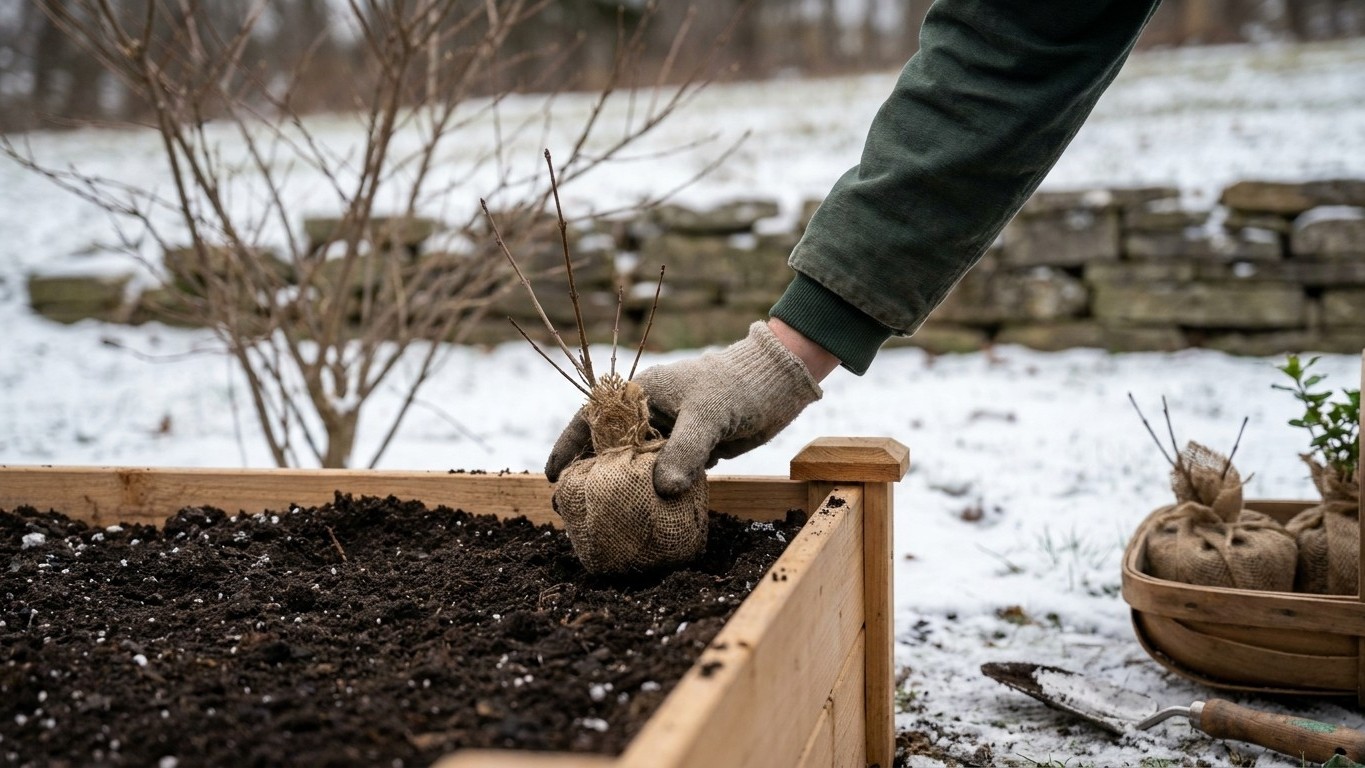

By December, the ground in most of Washington has already crossed into dormancy, first fall frost landed sometime between November 13 and November 30 in the mild, maritime parts of the state, and colder weeks followed. What actually goes in the soil this month is short: garlic, shallots, bare-root fruit stock while it sleeps, and whatever you can tuck under a cold frame. Everything else waits.
What goes in the ground in December
The calendar says December, but the soil does not care what the calendar says. What decides whether anything survives this month is soil temperature, moisture, and how much daylight is left to push growth, not the date on a seed packet. In western Washington, where NOAA’s 1991-2020 climate normals put the first fall freeze between November 13 and November 30, that freeze has almost certainly already come and gone by the time this month starts. East of the Cascades, in the high desert country, the ground is likely frozen or close to it, and nothing goes into open beds there at all.
That said, garlic and shallots are still fair game if the soil is workable and not waterlogged. Both want a period of cold to size up properly, and a late planting in loose, well-drained soil still has time to root before the coldest stretch sets in. If your ground is a soup of standing water, skip it this year and wait for a drier window, planting garlic into saturated clay usually rots the cloves before they ever sprout.
Bare-root and dormant plantings are the other real option. Fruit trees, brambles, and roses sold bare-root are dug and shipped while fully dormant, and planting them now, while there is no leaf growth to support, lets the roots settle in before spring demands kick in. Choose a day when the ground is not frozen and not a mud pit, and get the roots in the same day they arrive.
Cold frames and low tunnels stretch the season for a short list of tough greens, spinach, mâche, and some hardy lettuce varieties can be sown under cover even now, though germination slows to a crawl in low light and cold soil. Some gardeners also force rhubarb crowns or chicory roots indoors in a dark, cool space for a harvest of pale, tender stalks or shoots weeks before anything outdoors would produce. Washington’s hardiness zones run from 4a to 9a on the USDA map, and that spread, from mountain valleys to the Puget Sound shoreline, is exactly why a planting decision that works in one county can fail two counties over.
What to start under cover
Seed starting this month is mostly about counting backward, not forward. Take the last spring frost window for western Washington, February 27 to March 18, and work back from it rather than from any fixed date on the wall. Onions and leeks started from seed typically need eight to ten weeks under lights before they are ready to move outside, which puts a December sowing roughly on schedule for a late-winter transplant once soil conditions allow. Peppers and eggplant, if you are ambitious enough to start them this early, need even more lead time, often ten to twelve weeks, since they grow slowly under artificial light and hate any check in temperature.
The arithmetic matters more than the crop list. Count the weeks a given seed needs to reach transplant size, then count back from the earliest date you would realistically move it outside, factoring in that western Washington’s soil stays cold and wet well past the last frost date on paper. Starting too early is the more common mistake this month: seedlings sown too soon end up rootbound and leggy in small pots long before the ground or the light is ready for them, stretching toward whatever window light they can find and never quite recovering their vigor once transplanted.
Starting too late is the opposite failure, and it shows up as plants that never catch up to a full season, especially in eastern Washington’s shorter, hotter, drier summer. If you are unsure which way to err, err late for anything that transplants easily, like brassicas, and lean early only for the slow growers like peppers, alliums, and celery, since those genuinely need the extra runway. A basic seed-starting setup, a heat mat and a decent grow light, makes far more difference at this time of year than the calendar date you chose to start.
What is ready to pick
Outdoors, the honest harvest list this month is short. Most of what is still standing in a Washington garden by now is what got planted for exactly this purpose back in late summer: overwintering kale, collards, and leeks bred or grown to shrug off cold. Kale actually improves after a hard chill, the cold converts starches to sugars in the leaves, so plants that look ragged after a freeze often taste sweeter than they did in fall. Leeks left in the ground can be pulled as needed through the winter in most of the state, since the soil around the roots insulates them even when the air above freezes.
Cold frames extend this list a little further, spinach, mâche, and hardy lettuce sown earlier in the fall keep producing small, slow harvests under cover even when nothing survives in the open beds beside them. Indoors, sprouts and microgreens are the reliable fallback: a jar of sprouting seeds or a tray of microgreens on a windowsill turns around a harvest in a week to ten days, no garden required.
The bigger job this month is checking what is already in storage. Winter squash, potatoes, and onions all need a look-over now, since one soft or moldy specimen left in a bin will spread rot to its neighbors fast. Squash with a soft spot near the stem, potatoes that have started to sprout or wrinkle, and onions with a wet neck should all come out and get used immediately rather than left to spoil the rest of the batch.
The jobs that matter this month
Pruning and dormant care
Dormant pruning of fruit trees and cane berries is one of the few jobs where timing genuinely matters. Pruning while the plant is fully dormant, with no sap actively moving and no leaves to lose, reduces stress and disease risk compared to cutting into an actively growing plant later in the season. Apple and pear trees, currants, and raspberry canes can all be shaped and thinned now, cutting out dead, crossing, and diseased wood first before worrying about overall form.
Ordering, planning, and soil work
This is also the month to order seed before the popular varieties sell out, seed companies routinely run out of their best-selling tomatoes, peppers, and specialty greens well before spring planting season arrives, and a wish list finalized now beats a scramble in February. Pair that with planning next season’s crop rotation on paper, moving nightshades and brassicas to different beds than they occupied last year to break up pest and disease cycles that build up in the soil over time.
Soil testing pays off now too, since results take time to come back and any amendments recommended, lime to raise pH, sulfur to lower it, need weeks or months to fully react with the soil before spring planting. Turning a compost pile, even a slow, cold one, keeps the decomposition process moving rather than letting it stall out completely in freezing weather. Round out the list with tool maintenance, cleaning and sharpening pruners and shovels, and a walk around the property to repair fencing, raised bed frames, and trellising before spring growth makes those repairs harder to reach.
What not to do in December
The most common mistake this month is trusting a mild, sunny afternoon over what the soil thermometer actually says. A string of warm days can fool a gardener into thinking it is safe to direct-sow something tender, but air temperature and soil temperature are two different measurements, and cold, wet soil will rot seeds or stunt transplants regardless of how pleasant the air feels. Check the soil, not the sky, before putting anything new in the ground.
Uncovering cold frames or removing winter mulch too early after a warm spell is the second classic error. A few mild days do not mean winter is over, and plants exposed too soon are left with no protection when the cold returns, which it reliably does in a Pacific Northwest winter. Leave protective covers in place until the pattern of mild weather is sustained, not just a single warm afternoon.
Feeding nitrogen at the wrong point in the season is a third trap, particularly around fruit trees and perennials. Nitrogen pushes soft, leafy growth, and any new growth encouraged now has no chance to harden off before a hard freeze arrives, leaving it far more vulnerable to cold damage than growth that stopped naturally with the season. Hold off on nitrogen-heavy feeding until active growth resumes in spring, and if you are amending soil now, favor compost and slow-release minerals over quick-release fertilizer.
Checking this against your own county
A statewide answer for December is a starting point, not an instruction, in a state where elevation, coastal fog, and the Cascade rain shadow can shift a planting window by weeks in either direction. The frost dates cited here come from a single western Washington weather station, and eastern Washington’s high desert climate runs on an entirely different schedule with a shorter, more compressed growing season. Before acting on any date in this article, check it against your own conditions through the Washington State University Extension, which maintains county-level guidance built for local soil, elevation, and microclimate rather than a single statewide average.
Common questions
Can I still plant garlic in December in Washington?
Yes, in workable, well-drained soil, though it is later than ideal. Garlic wants time to root before hard cold sets in, so a December planting in soggy clay is riskier than the same planting made in October or November.
Is it too late to start seeds indoors this month?
No, but count backward from the last spring frost window, February 27 to March 18 in western Washington, before choosing what to sow. Slow growers like peppers and onions can go in now; fast growers like brassicas should generally wait.
What USDA hardiness zone is Washington in?
The USDA Plant Hardiness Zone Map places Washington across a wide range, 4a to 9a, reflecting everything from cold mountain valleys to the mild Puget Sound coastline. That spread means a single statewide zone number is not useful for planting decisions.
Why isn’t anything growing in my garden right now?
Cold, wet soil and short daylight hours slow or stop most plant growth this month regardless of what the air temperature does on a given day. This is normal for the season and the reason gardening effort shifts toward pruning, planning, and soil prep rather than active planting.