
Washington gardeners can still tuck garlic and shallots into workable soil, set out bare-root fruit trees and cane berries, and build cold frames over hardy greens this month. In western counties, frost typically arrives sometime between November 13 and November 30, so this is the tail end of the open season, not the middle of winter. East of the Cascades, the ground is usually already locked up.
What goes in the ground in November
Soil temperature decides this month, not the page of a calendar. Around Seattle, NOAA’s 1991-2020 climate normals put the first fall freeze somewhere between November 13 and November 30 (station USW00024233). That means early November can still offer workable, unfrozen ground, while the same county by Thanksgiving may already be locked under frost. East of the Cascades, in the high desert half of the state, that freeze arrived weeks earlier, and the soil is likely already frozen or close to it by the time this page matters.
So the honest starting point: for a large share of Washington, new open-ground planting is closing out or already closed by the time November ends. That is not the same as saying nothing happens outdoors.
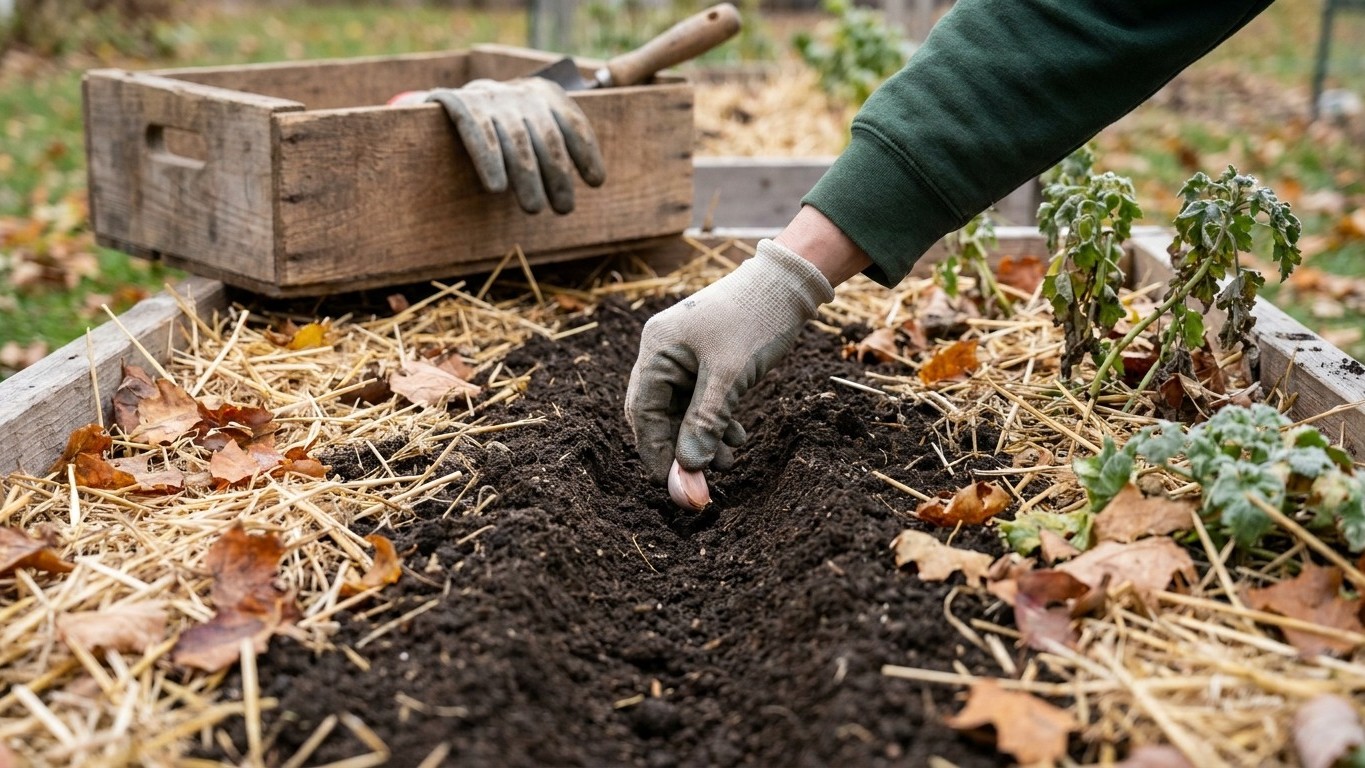
Garlic and shallots are the classic exception. Both want a cold period to form proper bulbs, and planting them in fall (right up until the soil turns to mud) sets up a stronger harvest than any spring planting could. Push cloves root-down, 2 inches deep, and mulch heavily once the ground starts to chill.
Bare-root season is also opening in mild western counties: fruit trees, roses, and cane berries go dormant and ship bare-root through late fall into winter, and planting them now while roots are inactive gives them a head start before spring growth resumes. Cold frames and low tunnels extend the window further, letting hardy greens like spinach, mâche, and claytonia keep growing slowly even after open beds have shut down. Where the ground is still workable, spring bulbs (tulips, daffodils, crocus) go in now too, since they need the chill period ahead. Forcing rhubarb or chicory indoors, in a dark box or bucket over roots dug from the garden, is a low-effort way to get a fresh crop when almost nothing else is coming out of the yard.
The USDA Plant Hardiness Zone Map puts Washington anywhere from zone 4a to zone 9a, built from that single 1991-2020 extreme-minimum-temperature measure. That range is wide enough that a planting decision sound in a mild Puget Sound yard can fail outright at elevation or east of the mountains, so treat any zone number as a local check, not a statewide rule.
What to start under cover
Working backward from the frost window is more reliable than working forward from today’s date. Western Washington’s last spring frost runs February 27 to March 18. Onion and leek seedlings typically need 8 to 10 weeks indoors before they are sturdy enough to transplant, which lands their ideal start date in late December or January, not November. Starting them now is the first classic failure mode: seedlings sit under lights for two extra months, get rootbound in small cells, and go into spring soil stretched, pale, and stressed instead of stocky and ready.
The second failure mode runs the other way. Wait too long past that window and there is no time left to harden off transplants before the ground warms and the short window for cool-season starts closes, especially in the compressed growing season east of the Cascades.
What legitimately belongs under cover this month is narrower. Cold frames sown now with hardy salad greens (corn salad, winter density lettuce, arugula) will germinate slowly in the remaining light and stand ready for a late-winter harvest rather than an immediate one. Indoors, sprouts and microgreens are the one crop that runs on a clock measured in days, not weeks, tied to soil temperature, and they fill the gap while nothing else is producing. Sweet pea seed can also go into deep pots in an unheated garage or cold frame now, giving them a jump on spring without competing with tender crops for windowsill space.
What is ready to pick
Outdoors, the list is short and mostly belongs to crops built for cold. Leeks, kale, and Brussels sprouts often taste better after a frost has hit them, since the cold triggers the plant to convert starches to sugars. Parsnips and carrots left mulched in the ground do the same thing, and can be dug as needed rather than all at once. Overwintered brassicas under row cover or a cold frame keep producing small, slow harvests through the coldest stretch, even under snow in colder counties.
Indoors, sprouts and microgreens started a week or two earlier are ready in as little as 5 to 10 days depending on the seed, and they are the most dependable fresh green available this month regardless of what the weather is doing outside.
This is also the month to walk the root cellar or pantry shelf, not just the garden bed. Stored winter squash should feel firm with no soft spots near the stem; a single mushy squash left among sound ones can spread rot fast. Potatoes that have gone green from light exposure or sprouted eyes should be pulled and used first. Onions with soft necks or a sour smell are past saving. Checking storage crops weekly now, rather than once at the start of winter, catches the one bad squash before it takes down the box.
The jobs that matter this month
Dormant pruning of fruit trees, grapevines, and cane berries can begin once the leaves have dropped and the plant is fully dormant, and doing it now rather than waiting until late winter reduces the risk of cutting into wood that is already breaking bud. Cane berries in particular benefit from removing the spent fruiting canes now, opening up airflow before winter fungal pressure sets in.
Seed catalogs are already circulating, and the popular or limited-run varieties (a specific disease-resistant tomato, a short-season squash bred for the Pacific Northwest) sell out well before spring planting starts. Ordering now, while the full list is still in stock, beats settling for whatever is left in February.
Soil testing and amending pays off precisely because nothing is growing to disturb. Working in compost, lime, or other slow-acting amendments now gives them the entire winter to integrate before spring planting, instead of trying to correct pH in the two weeks before a transplant goes in. Turning the compost pile, even once, keeps decomposition moving through the cold months instead of stalling into a frozen brick.
Tool maintenance belongs here too: cleaning soil off blades, sharpening pruners and hoes, and oiling wooden handles before they sit unused for months prevents rust and cracking that otherwise shows up as a surprise next spring. Raised beds, fencing, and trellis hardware are easiest to repair now, while the garden is empty and the ground is still soft enough to reset a post. And in any county approaching that first freeze window, draining and disconnecting outdoor irrigation lines and hose bibs before a hard freeze prevents cracked pipes that cost far more than the ten minutes it takes to do it now.
What not to do in November
A mild, sunny afternoon in early November can feel like an invitation to plant tomatoes, peppers, or basil starts. It isn’t. Soil temperature lags well behind air temperature, and warm-season crops set into cooling ground simply sit and rot at the roots rather than grow, even if the air feels like a spring day. Wait for the actual spring frost window, not a warm afternoon out of season.
The same false-spring effect causes another common mistake: pulling row covers or cold frame lids off hardy greens during a mild stretch, only to have a hard freeze move in behind it with no protection back in place in time. Keep covers on and simply vent them on the mildest days rather than removing them outright.
Fertilizing with nitrogen this late is the third trap. Nitrogen pushes soft, leafy new growth, and any new growth forced out right before a freeze window is the tissue most likely to be damaged by cold. If a fall-planted crop needs feeding at all, a low-nitrogen or phosphorus-leaning amendment supports root development without triggering the top growth that frost will simply kill back.
Finally, don’t let garlic sit unplanted waiting for “better” conditions once soil turns wet and heavy. Cloves planted into cold, workable soil now outperform cloves crammed in late into mud, which tend to rot before they root.
Checking this against your own county
A statewide answer for November is a starting point, not an instruction for a specific yard. Elevation, distance from Puget Sound, and which side of the Cascades a garden sits on can shift these windows by weeks in either direction. A coastal lowland yard nine miles from Seattle and a foothill garden at 1,500 feet in the same county are not operating on the same clock, and eastern Washington’s high desert climate follows its own schedule entirely, disconnected from the maritime numbers cited here.
The Washington State University Extension service (extension.wsu.edu) publishes county-level guidance and planting calendars built for these local differences, and it’s worth checking before treating any statewide window as a firm deadline.
Common questions
Is it too late to plant garlic in Washington in November?
Not usually, as long as the soil is still workable and not waterlogged. Garlic actually needs a cold period to form properly, so planting through fall into early winter, wherever the ground hasn’t frozen solid, still produces a strong bulb the following summer.
Can I still start vegetable seeds indoors this month?
Only hardy crops for near-term cold frame use make sense right now. Warm-season seedlings started this early, aimed at a spring transplant, tend to become rootbound and leggy long before the last frost window arrives in late February or March.
Why does frost date matter more than the calendar month?
Because soil temperature and freeze risk, not the date on a page, determine whether a seed germinates or a transplant survives. Western Washington’s first fall frost lands anywhere from November 13 to November 30, a two-and-a-half week spread that can put two nearby gardens on very different schedules in the same month.
Does eastern Washington follow the same planting windows as western Washington?
No. Eastern Washington’s high desert climate, beyond the Cascades, runs a shorter, colder season than the maritime western side, and the frost windows referenced for the Seattle area do not apply there. County extension guidance is the more reliable check for that half of the state.