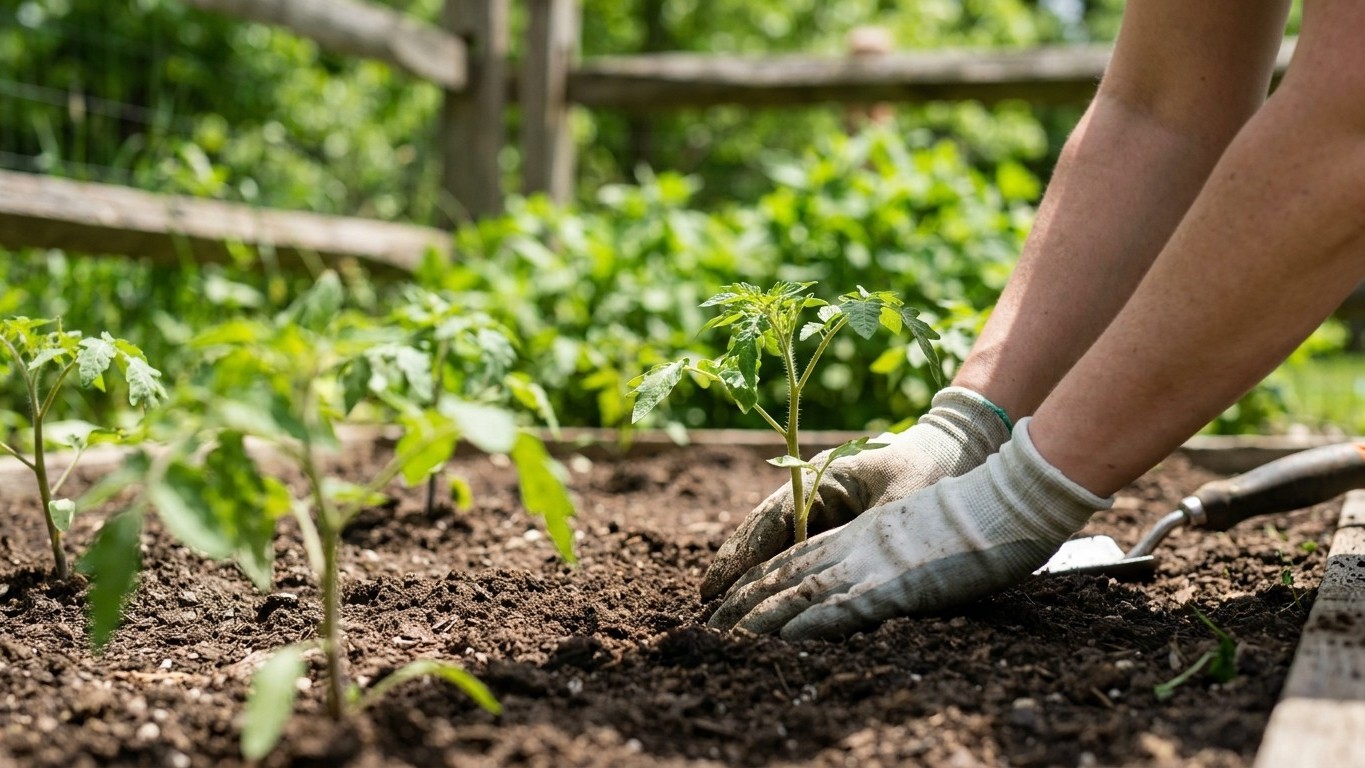

June is the month Washington gardens finally catch up to the calendar. On the west side of the Cascades, the frost window measured at the Seattle-Tacoma station (USW00024233) closed back between February 27 and March 18, so by June the soil has had roughly ten to twelve weeks to warm. East of the mountains, the season runs on a different clock entirely, and warm-season crops that have been waiting in trays can finally go into open ground almost everywhere in the state.
What goes in the ground in June
The frost data for this state comes from one station, the Seattle-Tacoma site, and it describes a mild, maritime climate: last spring freeze between February 27 and March 18, first fall freeze between November 13 and November 30. That’s a long, forgiving growing season by national standards, and June sits well inside it. But that number only holds for western Washington. East of the Cascades, the climate turns to high desert, with colder nights, hotter days, and a shorter frost-free stretch that the Seattle-Tacoma record doesn’t capture at all. Anyone gardening in the Columbia Basin, the Okanogan, or the Spokane area needs to treat the western frost dates as background information, not a local forecast.
With that caveat in place, June is the widest-open planting month of the year in most of the state. Soil temperature, not the calendar, is what should decide the exact week. Warm-season crops want soil that stays reliably above roughly 60°F, and by June that threshold has usually been met on both sides of the mountains. That means tomatoes, peppers, eggplant, and basil transplants can go into the garden with confidence, along with direct-sown beans, squash, cucumbers, melons, and sweet corn.
Root crops and greens still have room too. Carrots, beets, and bush beans can be direct-sown in succession through the month, and a second round of lettuce, especially heat-tolerant or bolt-resistant types, keeps salads coming once spring lettuce finishes. Alliums planted earlier in the season, like onion sets and leeks, are now bulking up and don’t need replanting, but a late round of scallions from seed still has time to mature before fall. In cooler mountain valleys and higher elevations on both sides of the Cascades, hold off another week or two on the most heat-loving crops like melons and okra, since a late cold snap at altitude can still stall or kill young transplants even when the lowland calendar says it’s safe.
What to start under cover
June isn’t just for setting plants outside, it’s also the month to start the seedlings that will carry the garden into fall. The math runs backward from the first fall frost rather than forward from spring. With the fall freeze window landing between November 13 and November 30 in western Washington, a crop that needs roughly 60 to 70 days to mature, like broccoli, cabbage, or cauliflower, needs to go into the ground by late July or early August to finish before cold weather. Counting back from that transplant date, seeds started indoors or under cover in June give those seedlings the four to six weeks they need to size up before they head outside.
The same backward math applies to a second round of summer crops. Gardeners who lost an early tomato or pepper transplant to a cool snap can still start replacements under cover this month and have them ready for the garden within a few weeks, since the season is long enough on the west side to absorb the delay. East of the Cascades, where the growing window is tighter, that margin shrinks, and starting fall brassicas even a week or two late can mean an unfinished head come the first hard freeze.
The two ways this goes wrong are mirror images of each other. Start fall seedlings too early under cover and they sit too long indoors, turning rootbound and leggy before there’s space for them outside. Start them too late and they never catch up, especially once shortening daylight slows growth in early fall regardless of how warm the soil still is. Checking the tray dates against the local frost window, rather than against a fixed date on paper, is the only way to hit that middle ground reliably.
What is ready to pick
June harvests lean toward the crops that have been building all spring. Asparagus beds that have been cut for six to eight weeks are winding down and should be left to fern out for the rest of the season, which rebuilds the roots for next year. Rhubarb is still productive and can keep being harvested through the month. Strawberries hit their peak in June across most of the state, and a warm stretch can bring the whole patch ripe within days, so checking beds every couple of days prevents a glut from going soft on the vine.
Spring-planted greens and roots are also coming out now. Lettuce sown in April is ready and should be cut before hot afternoons push it toward bolting, a process that turns the leaves bitter fast once it starts. Radishes from an early sowing are done in as little as three to four weeks and are best pulled promptly, since they turn woody and hollow if left in the ground once mature. Peas planted in spring are usually filling pods by June; picking them regularly, every day or two once they start, keeps the vines producing instead of shutting down.
Garlic and shallots planted the previous fall are still weeks from harvest in most of the state, but their leaves give an early clue: once the lower leaves start yellowing later in summer, that signals curing time is close. For now, June is mostly a picking month for what spring planted, not for what fall planted.
The jobs that matter this month
Staking and caging come first, because tomatoes, peas, and pole beans put on serious height in June and a plant that sprawls before it’s supported is far harder to correct later than one staked from the start. Tying tomato leaders loosely as they grow, rather than waiting until the plant flops, saves broken stems and fruit lost to soil contact.
Mulching follows close behind. As temperatures climb, bare soil loses moisture fast, and a two to three inch layer of straw, bark, or compost around vegetables cuts watering needs while also suppressing the weeds that germinate just as readily in warm June soil as the vegetables do. This is also the point in the season where watering rhythm starts to matter more than watering volume: deep, infrequent soaking encourages roots to grow downward in search of moisture, while frequent shallow sprinkling keeps roots near the surface and makes plants more vulnerable when a hot, dry stretch hits.
Succession sowing keeps the harvest calendar full. A new short row of beans, beets, or carrots every couple of weeks through June means the garden doesn’t produce everything at once and then go quiet in August. Pest scouting matters just as much here as anywhere, and Washington’s damp spring conditions favor slugs, which chew seedlings overnight and are easiest to control early, before populations build. Aphids also show up on new growth this month, particularly on brassicas and roses, and a quick check of leaf undersides every few days catches an infestation while it’s still small enough to knock back by hand or with a strong spray of water.
Thinning direct-sown crops like carrots and beets, once they’ve put up their first true leaves, is easy to put off and costly to skip: crowded roots stay small and misshapen no matter how good the soil is underneath them.
What not to do in June
The most common June mistake is trusting the air temperature over the soil. A run of warm, sunny days can feel like proof that it’s safe to plant the last of the heat-loving crops, but soil several inches down warms much more slowly than the air above it, especially in beds that were shaded or waterlogged earlier in spring. Squash and melon seed sown into soil that’s still cool below the surface will sit and rot rather than germinate, even while the thermometer reads warm at noon.
Overhead watering is another habit worth breaking this month. Washington’s naturally humid, mild climate already gives fungal diseases like powdery mildew and early blight a foothold, and watering the foliage rather than the soil, particularly in the evening when leaves stay wet overnight, makes that problem worse. Watering at the base of the plant, ideally in the morning, gives foliage time to dry before nightfall.
Feeding nitrogen at the wrong point costs fruit, not just foliage. Tomatoes, squash, and beans that get a heavy nitrogen boost once they’re flowering tend to put that energy into lush green leaves instead of fruit set. A balanced or lower-nitrogen feed, or simply skipping extra fertilizer once flowering starts on crops growing in already-decent soil, gets better results than pushing more growth.
Finally, uncovering cold frames, cloches, or row covers too eagerly after a warm stretch removes protection right when a cool night or late-season pest pressure can still do damage, particularly at higher elevations where nights stay cooler even once the lowlands feel like full summer.
Checking this against your own county
A statewide frost window is a starting point, not an instruction, and Washington is a poor state to treat as one climate. The Seattle-Tacoma station numbers describe a mild, marine-influenced corner of the state; move east over the Cascades, up in elevation, or into a valley that pools cold air, and both the last spring freeze and the first fall freeze shift by weeks in either direction. The USDA Plant Hardiness Zone Map puts the state anywhere from zone 4a to zone 9a, a spread wide enough that a planting date safe in Vancouver can be a gamble in Spokane or in the Cascade foothills.
The reliable next step is checking those specifics against the Washington State University Extension service, which tracks local conditions county by county rather than from a single statewide station.
Common questions
Is it too late to plant tomatoes in Washington in June?
No. Given the mild frost window measured at the Seattle-Tacoma station, western Washington’s growing season runs well into fall, and tomato transplants set out in June still have plenty of time to fruit before the first freeze between November 13 and November 30.
Can I still direct-sow beans and squash this month?
Yes, and June is often the ideal month for it, since soil has had time to warm past the point where warm-season seed reliably germinates rather than rotting in cold ground.
What should I do differently in eastern Washington?
Treat the frost data here as a western Washington reference only. East of the Cascades, the high-desert climate runs colder at night and has a tighter frost-free window, so checking with the WSU Extension service for local dates matters more than following a statewide calendar.
Why are my June seedlings leggy?
Seedlings started too early under cover, before there’s room or need for them outside, often stretch and weaken while waiting. Counting backward from the local frost window when planning a start date, rather than using a fixed calendar date, usually solves it.