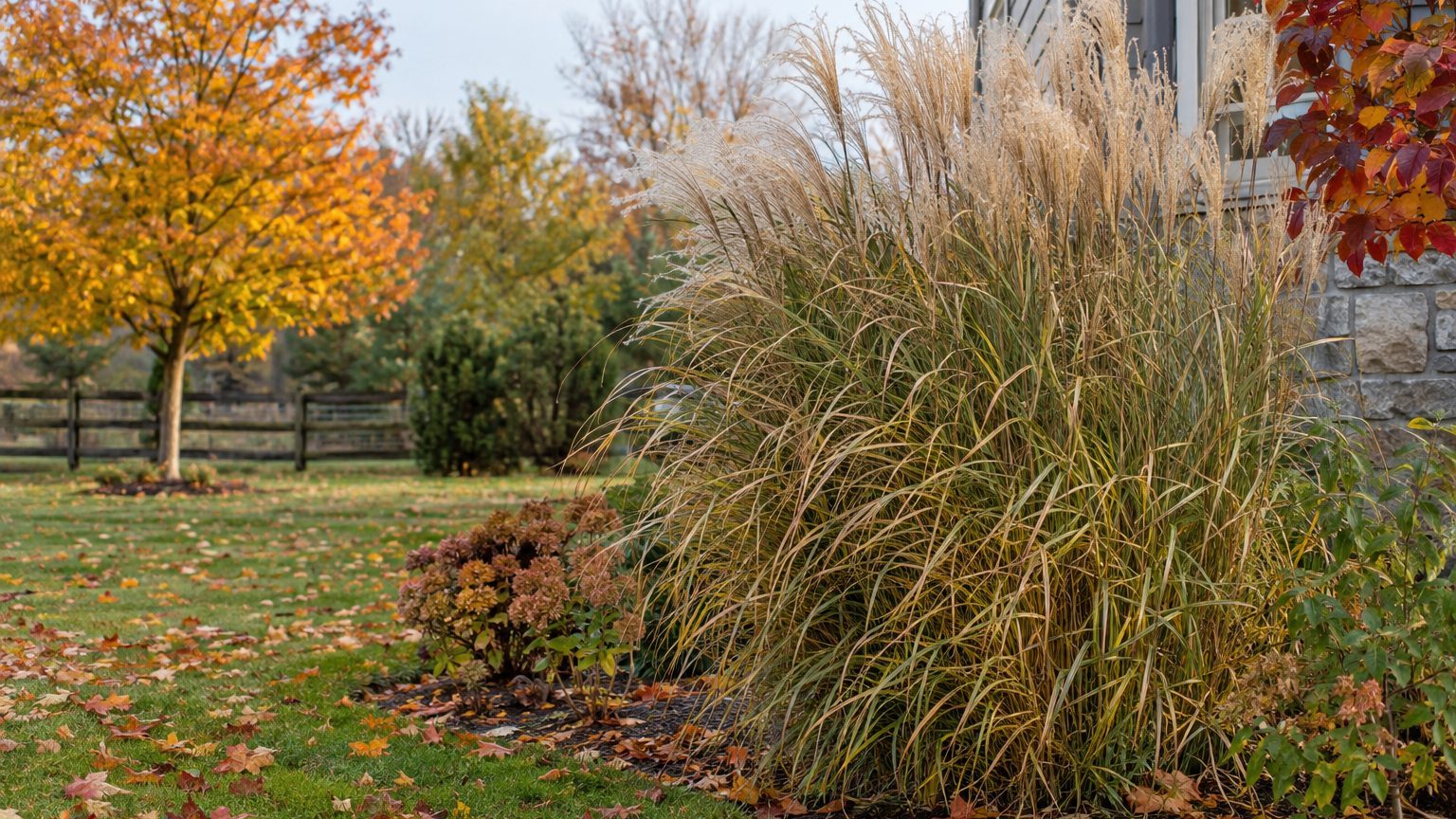

Late winter to early spring is the time to cut back ornamental grasses, just before the new season’s growth starts. Until then, leave them standing. On a mild day, part the old blades at the base of a clump, and if you see no fresh shoots yet, that clump is ready for the cut.
Late winter, not fall, for most

NC State Extension (Lee County Center) tells gardeners to cut grasses back in late winter or early spring, before the new season’s growth starts. Iowa State University Extension and Outreach is just as plain about the other half of the job: let grasses and their ornamental flower heads stand all winter. Put the two together and the rule is simple. Fall is for leaving them alone, and the cut comes at the far end of the cold season.
What the sources agree on
Both extension services are describing the same sequence. The grass goes dormant, the foliage browns, and the plant stays upright through the cold months. You do nothing to it. Then, once the worst of winter is behind you and before green growth shows at the base, you cut the old growth off in a single pass.
The timing follows a sequence, not a calendar date. A late-winter day in a warm southern yard arrives long before the same stage in a cold northern one. Even within a single state the timing shifts from one valley or coastline to the next. You are cutting against the plant’s own schedule, not the one printed on a wall calendar.
Setting your own timing
Your last spring frost date gives you a rough anchor, and the weather in your own yard fine-tunes it. Watch the clumps from the time the cold begins to ease. When the days soften and you start to see the first signs of life at the crown, you are close to the edge of the window. Check the base of the clump before you commit to a cutting date, because the plant tells you more than any rule of thumb can.
If you garden in Canada, the same logic applies, but use guidance from a Canadian extension or horticultural source where it differs from the U.S. advice above.
Why waiting works
Standing through winter
Iowa State University Extension and Outreach recommends letting grasses and their ornamental flower heads stand all winter. That alone is a reason to hold off in fall. A cut-down clump leaves a bare patch where the plumes and seed heads would have caught the light. Left alone, the grass keeps its shape and gives the garden something to look at while almost everything else has been cut down or has died back.
Clemson Cooperative Extension HGIC adds a caution that points in the same direction. Its factsheet on ornamental grasses and grass-like plants says that certain grasses do not recover quickly from being cut back. The line does not list which grasses, so read the factsheet for your own species and treat any grass you cannot identify with the same patience. A plant that is slow to refill after a cut is a plant you do not want to cut at the wrong moment.
The delay from old foliage
Waiting too long carries its own cost, and that cost has a figure on it. NC State Extension (Wayne County Center) reports that the old foliage left on the plant can delay new spring growth by as much as 2 weeks. That is the reason the advice is not simply “leave it until you feel like it”. The standing growth that looked good in winter becomes a drag once the plant is trying to push out new leaves.
So there are two pulls. Cutting early gives up the winter display and, for the slower grasses Clemson mentions, risks a plant that struggles to bounce back. Cutting late smothers the new shoots under last year’s dead blades and holds the season back. The target is the middle: cut after the cold has passed its worst and before the new growth has had time to rise through the old.
NC State Extension Gardening’s spring tips for the Piedmont region of central North Carolina put the same urgency into the wording. They say to cut ornamental grasses back close to the ground, being careful not to prune any new shoots that are emerging. In other words, if you are reading the plant correctly, you are already close to the end of the window.
How low to cut, and big clumps
The goal is to take off the old growth close to the ground without nicking the new shoots that have started to come up. A few minutes of preparation makes the cut cleaner and the cleanup far easier, especially on large clumps with a lot of tough, dry foliage.
Step by step
- Part the old blades at the base of the clump and look for new shoots. Note where they are coming up.
- For a big clump, tie it tightly with rope around the middle, as Clemson Cooperative Extension HGIC advises, so the foliage stays in one bundle.
- Cut with pruners or hedge trimmers, working close to the ground. Clemson names both tools for the job once the clump is tied.
- Take care at the base. NC State Extension Gardening cautions against pruning any new shoots that are emerging.
- Lift the tied bundle away in one piece and clear any loose stems left on the crown.
Why tying comes first
Tying the clump before you cut changes the whole job. Loose grass blades scatter in every direction when you cut them, and a big clump can leave a surprising amount of litter across the bed and the lawn beside it. A bundle held with rope comes away in one armful, and the rope also holds the stems steady while the blades work.
Pruners suit small and medium clumps and give you good control near the base. Hedge trimmers save your hands on large, dense ones. Whichever you use, keep the cut low and level, and stop if you spot new shoots you had not seen from above. Work around them by hand if you have to.
Where to go from here
Grasses sit in the same border as your other perennials, and the same late-winter walk through the beds can cover them all. Find your own last spring freeze on our page of first and last frost dates by state to judge how close you are to the window. If the center of a clump has gone thin or bare, dividing perennials is the repair, and the cutback stage makes the crown easy to see. Once the old growth is gone and the beds are tidy, mulching is the next job, and it goes on more easily with no stubble to work around.
Common questions
Can I cut ornamental grasses back in fall?
Iowa State University Extension and Outreach advises letting grasses and their flower heads stand all winter, and NC State Extension points to late winter or early spring. Clemson Cooperative Extension HGIC also notes that some grasses recover slowly from being cut back, so an early cut carries risk with no clear gain.
What if new growth is already coming up and I haven’t cut yet?
Cut anyway, but slowly. NC State Extension Gardening says to cut close to the ground without pruning any emerging shoots, so part the clump first and see where the new growth sits. Shearing straight across a clump full of fresh green will take the tips off, so lift and remove the old blades around the shoots by hand where you need to.
Do I have to cut back ornamental grasses every year?
The extension sources used here cover timing and method, not how often every species needs it. Check the plant tag or your county extension office for the grass you actually have. If you are not sure what it is, it is safer to identify it before you pick a pair of shears.
Can I use a hedge trimmer on a loose clump?
Clemson Cooperative Extension HGIC advises tying the clumps tightly with rope first, then using pruners or hedge trimmers. A loose clump gives the blades nothing to hold and sends cut stems everywhere. Tie it, then cut.
Timing advice can shift with new research and local conditions, so confirm current guidance with your state or county extension office before you cut.