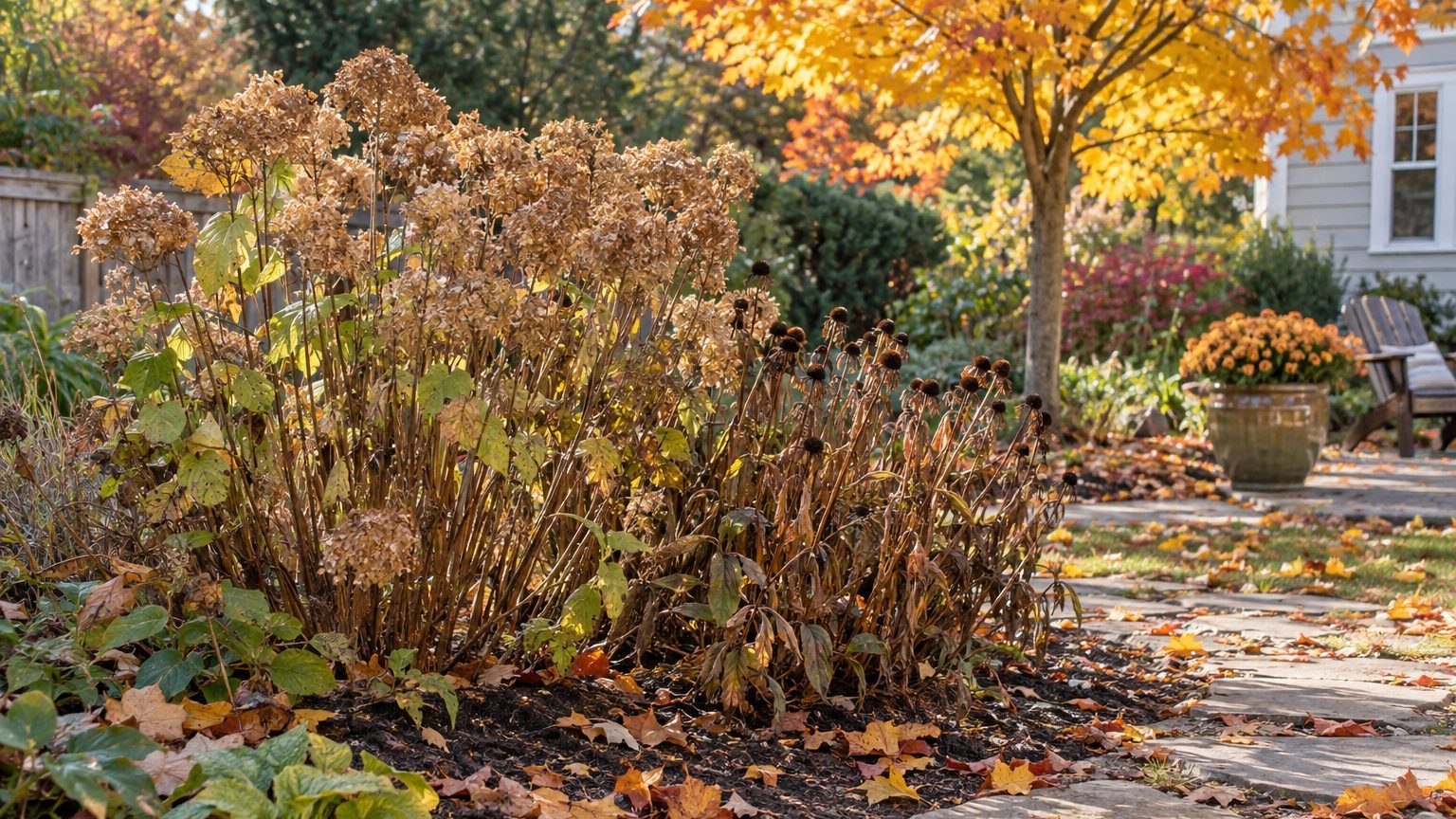

Hard frost, not the calendar, decides the day you cut back perennials, and for a good share of your garden that day is not in fall at all. Plants with healthy seed heads and hollow stems are better left standing until spring, while anything diseased or infested comes down once the tops have died. Walk the bed and sort each plant into one of two piles: cut now, or leave for later. Tag the diseased ones first.
Cut back after frost, and not every perennial at all

Unless the plant is diseased or infected, Penn State Extension says to wait until several hard frosts have killed back the tops. Many perennials are better left standing until spring, because the dead growth does a job for birds and insects through winter.
The rule, case by case
| Case | What to do | Source |
|---|---|---|
| Diseased or insect-infested top growth | Remove it and discard it | University of Missouri IPM and University of New Hampshire Extension |
| Healthy seed heads and hollow stems | Leave them standing for birds and overwintering bees | Penn State Extension and University of New Hampshire Extension |
| Everything else | Cut once the tops have died back | Penn State Extension |
The table gives you three answers, and only one of them involves pruners right away. Diseased growth does not wait for frost to be useful to remove, since the point is to get the infected tissue out of the bed. Penn State’s exception for diseased or infected plants says as much. The healthy plants wait for the tops to die, and some of those wait all winter.
How frost sets your timing
A frost-killed top looks collapsed, blackened or brown, and it no longer holds green tissue. That is your signal, and it arrives on a different day in every yard. Your own first frost date is the starting point, so look up the first and last frost dates by state and then watch your own beds, since a sheltered corner can stay green well after an open slope has gone limp. Penn State’s wording is several hard frosts, so one light frost that blackens the basil does not yet mean the perennials are done.
Cutting green growth early is the mistake to avoid. A plant that still has living leaves is not finished for the year, and nothing is gained by hurrying it.
If you garden in Canada, check Canadian guidance for your province, because the rule can differ where winters arrive sooner or stay longer. The sources on this page are US university extension services.
What to leave standing, and why
Penn State Extension, in its guidance on native perennials for fall, advises leaving the seed heads for birds to feed on and the stems for overwintering bees to use. Its separate advice on cutting down perennials puts the timing plainly: leave them standing until spring, then cut them back before the new shoots appear.
Which plants earn a spot
UNH Extension makes the point about healthy seed heads: they stay, even while diseased top growth goes.
Stems matter for a different reason. Penn State names them as a resource for overwintering bees, which is a good argument for resisting the urge to shear the bed down to the ground. Stems left whole give those insects somewhere to be.
The spring window
Leaving plants standing only works if you cut at the right moment. The University of Maryland Extension says to prune in early spring before bees start flying and seeking nesting sites. That is a deadline set by insects, not by your schedule. Penn State’s version is to finish before new shoots appear. Between them, the target is clear: do the cleanup once the worst of winter has passed, and be done before growth and bee activity begin.
Do not wait until the new shoots are well up. Penn State’s line is to cut before they appear.
Standing stalks can look untidy, and some gardeners find that hard to live with. A practical compromise is to cut the plants closest to a path or a front walk and leave the ones at the back of the border. That keeps the garden presentable and still gives birds and bees most of what they need.
What to cut now, and what to do with the cuttings
Some of the work cannot wait for spring. The University of Missouri IPM says debris from diseased or insect-infested plants should be discarded. University of New Hampshire Extension sets the order of work: prioritize removing and discarding diseased top growth, but leave healthy seed heads standing.
Spotting what has to go
Look for the plants that carried trouble all season. Think of any clump that was visibly diseased, chewed or infested by insects. If a plant looked sick in summer, assume the stems and leaves still carry whatever it had.
These are the plants to cut first, and you do not need to wait for several hard frosts to do it. Penn State’s rule on waiting applies unless the plant is diseased or infected.
Handling the debris
Bag the cuttings and discard them. Do not scatter them over the bed or leave them lying beside the plant, since that puts the problem right back where it started. Check your town’s yard waste rules for what happens to bagged plant material, because disposal rules vary by municipality.
Clean your pruners between plants when you work on sick growth. Wiping the blades with rubbing alcohol is a common habit, and it keeps you from carrying trouble from a diseased clump to a healthy one.
If you are unsure whether a plant was diseased or infested, treat it as if it was.
After cutting: mulch once the ground freezes
Cutting and mulching are two separate jobs with a gap between them. The University of Missouri IPM advises mulching flower and bulb beds after the ground freezes, to prevent injury to plants from frost heaving. Heaving happens when soil freezes and thaws repeatedly and pushes crowns upward. The mulch keeps the ground cold and steady instead of swinging back and forth.
Iowa State University Extension and Outreach is specific about the amount. It advises applying about four inches of mulch over the crown of the plant after the ground freezes. That figure is Iowa State’s, and your local extension office can tell you whether your climate calls for something different.
Timing and placement
Wait for the ground itself to freeze, not just for the air to turn cold. Both sources tie mulching to a frozen soil, so a cold snap that thaws again by afternoon is not the signal. Dig a trowel into the bed if you are unsure.
Keep mulch from piling against any stems you left standing, so they stay dry and open. For the materials, depth and technique, see the guide to mulching.
Young plants have less root and less reserve, so they need more thought than established clumps. The page on winter protection for new plantings covers what first-year perennials need beyond a layer of mulch.
If a clump has outgrown its space, fall cleanup is a natural time to notice it, but dividing is its own job with its own timing. Read up on dividing perennials before you pick up the spade.
Common questions
Can I just leave everything standing and cut it all in spring?
For healthy plants, yes. Penn State Extension supports leaving them standing until spring and cutting before new shoots appear. The exception is anything diseased or infested, which University of New Hampshire Extension and the University of Missouri IPM say to remove and discard.
How late is too late for spring cleanup?
Once new shoots are up, you are late. Penn State says to cut before they appear. The University of Maryland Extension adds a second marker, which is to prune before bees start flying and seeking nesting sites. Your own weather sets the actual day.
Should I mulch as soon as I finish cutting?
No. The University of Missouri IPM and Iowa State University Extension and Outreach both place mulching after the ground freezes. Cutting can come earlier, and the mulch goes on after the soil has frozen.
Does this advice work in Canada?
The principles carry over, but the sources here are US university extension services. Where Canadian guidance for your province gives a different rule, follow that. A local gardening group or provincial resource can tell you what applies where you live.
Confirm current guidance with your county extension office (or a Canadian provincial equivalent) before acting, since recommendations can change.