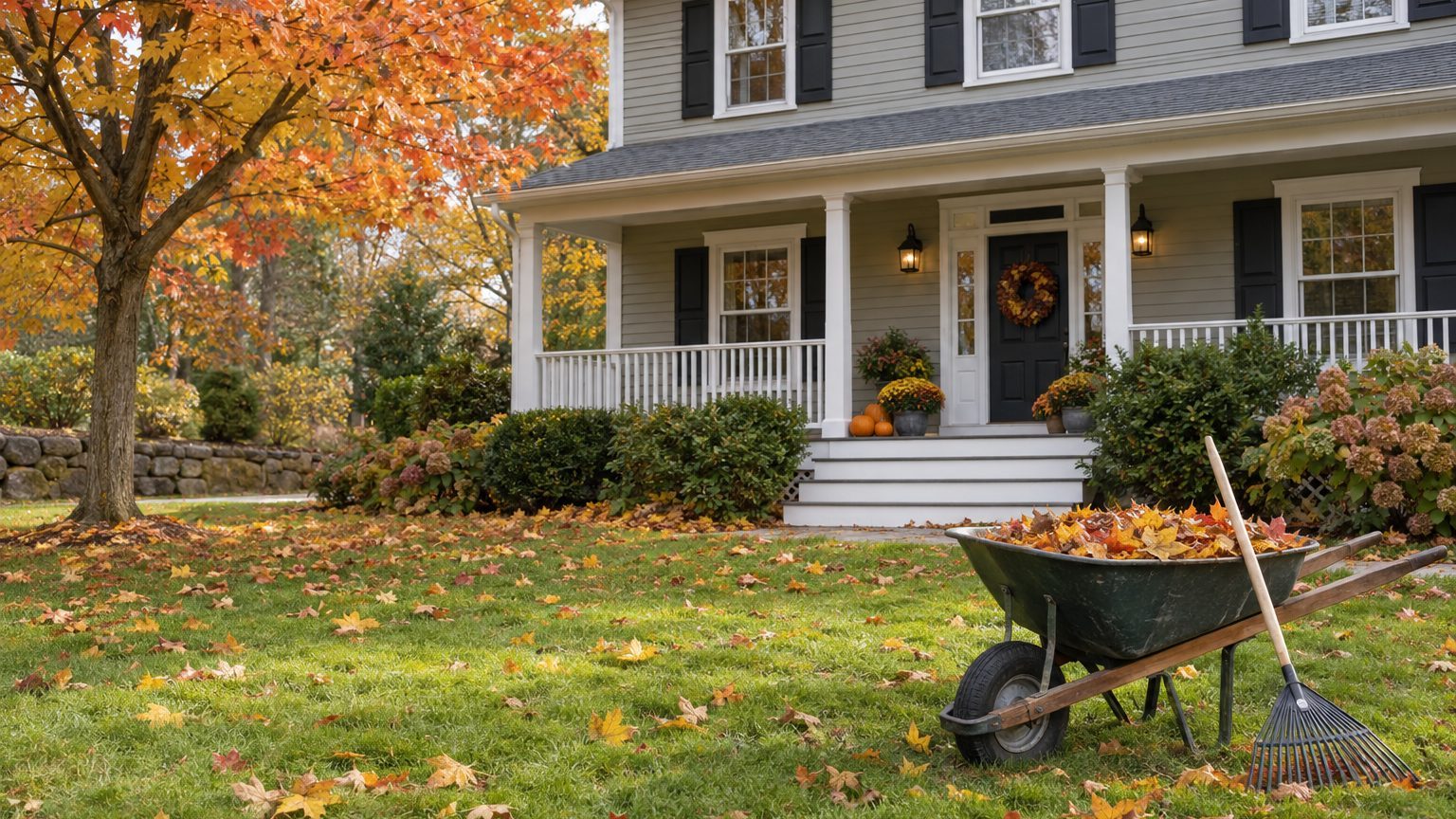

A garden hose left screwed onto an outdoor faucet is the costliest mistake on a fall list, because it holds water in a pipe that can freeze and split. Do the freeze and fire jobs first (faucets, chimney, heating equipment), then seal air leaks and test your alarms. Gutters and filters matter, but they cost less when forgotten. Before the weekend is out, walk the outside of the house, pull every hose off, and note which fuel-burning appliances need a professional booked.
The fall checklist, in order of what costs most to forget

Start with the jobs that stop pipes bursting and chimneys catching fire. Air sealing and alarm testing come next, and housekeeping jobs such as gutters come last. Your own first hard frost or cold snap sets the deadline, so watch the forecast rather than the calendar.
- Winterize outdoor faucets. UGA Cooperative Extension says to disconnect garden hoses from exterior faucets, shut off water to the faucet and drain the pipe, and our guide to winterizing outdoor faucets walks through it.
- Book the chimney or wood stove inspection. The Vermont Division of Fire Safety says to have it inspected and cleaned annually by a certified chimney specialist, and our page on chimney safety covers what that visit involves.
- Have any fuel-burning heating equipment inspected by a professional, because Portland Fire & Rescue says to do this every year before cold weather sets in.
- Schedule the furnace service and put in a fresh filter, covered below.
- Seal air leaks with caulk or weather-stripping, then look at the attic and basement, where insulation and air sealing work together.
- Test your carbon monoxide alarms, and add one if any sleeping area has none close by, since the EPA says to install a CO alarm in the hallway near every separate sleeping area.
- Clear the gutters and downspouts, using the ladder habits in cleaning gutters safely.
That order reflects what a missed job costs. A burst pipe floods a wall cavity. A neglected chimney or heating appliance puts your household at risk. A leaky window only raises your bills.
Water, heat and chimney first
These three jobs sit at the top because the failures are expensive and sometimes dangerous. Each one is also quick if you do it before the weather forces you to.
Outdoor faucets

UGA Cooperative Extension in Forsyth County gives the sequence in one sentence: disconnect garden hoses from exterior faucets, then shut off water to the faucet and drain the pipe. The order matters. A hose left on keeps water inside the spigot, and a pipe that is shut off but not drained still holds water that can freeze.
Coil the hoses and put them away. If a pipe does freeze anyway, our page on frozen pipes explains what to do next.
Chimney or wood stove

The Vermont Department of Public Safety, Division of Fire Safety, says to have your chimney or wood stove inspected and cleaned annually by a certified chimney specialist. Portland Fire & Rescue gives the same advice for a wider set of equipment. It says to have fuel-burning heating equipment and chimneys inspected by a professional every year before cold weather sets in.
Read the two together. Inspection and cleaning are separate tasks, and both belong to the specialist. A fireplace you light only now and then still has a flue, and neither source carves out an exception for light use.
Furnace

A gas, oil or propane furnace is fuel-burning equipment too, so it belongs in the professional inspection category above. Our page on annual furnace service explains what a technician checks. For your own part of the job, changing the furnace filter is the one task you can do in minutes.
Your owner’s manual, not a general rule, sets how often the filter needs changing and what size it takes. Write the size on the furnace cabinet with a marker so you never guess at the store. If the manual is gone, the manufacturer’s website usually has a copy, and your utility or county extension office can point you to local guidance.
Seal air leaks and test the alarms
Once the big risks are handled, turn to the quieter jobs. Air sealing lowers your bills, and alarms are what warn you when something else goes wrong.
Air leaks
Virginia Cooperative Extension at Virginia Tech is blunt about scope: all air leaks should be sealed with appropriate caulk or weather-stripping. For gaps, it says you can generally use caulk to seal openings up to ¼ inch wide. Caulk suits fixed joints, such as where window trim meets siding or where a pipe enters a wall. Weather-stripping suits parts that move, such as door edges and operable sashes.
A gap wider than ¼ inch is outside what that line covers, so read the product label or ask your county extension office before filling it. The label will give the temperature range the product tolerates.
Walk the house on a windy day and hold your hand near door frames, window edges, electrical outlets on exterior walls and the point where a dryer vent leaves the house. Moving air tells you where to start.
The payoff is real. ENERGY STAR, the U.S. EPA and DOE program, says that sealing and insulating can provide up to a 10% savings on your annual energy bills. That is a ceiling, not a promise, and your savings depend on how leaky the house was to begin with.
Alarms
For carbon monoxide, the EPA says to install a CO alarm in the hallway near every separate sleeping area. Count the sleeping areas in your home. If one has no alarm nearby, fix that now. A bedroom wing at one end of the house and a basement bedroom at the other each count as their own area.
Test each alarm using the button and instructions in the manufacturer’s manual. The manual also tells you how to handle batteries and when the unit itself reaches the end of its life, so check it for those details. If a CO alarm sounds, get everyone outside and call the fire department.
If you live in Canada, check your provincial or municipal fire and building rules for alarm placement and installation. They can differ from U.S. guidance, and Canadian guidance wins there.
What to do next
Work top to bottom. Hoses off and faucets drained this week, then the chimney, stove and heating equipment inspections booked. Seal leaks and test alarms after that, and clear the gutters last.
When all of that is done, read our guide to the heating season to see how to run the house once the furnace is working every day. Keep a note of each inspection and the name of the specialist who did it, so next fall you can book the same visit again without hunting for the number.
Rules and incentives change, so confirm current requirements with your local fire department, utility or county extension office before you act.
Common questions
Can I leave the hose on until it actually freezes?
You can, but you are betting on the forecast. UGA Cooperative Extension says to disconnect garden hoses from exterior faucets, then shut off and drain the pipe, and that is easiest to do on a mild afternoon rather than during a cold snap. A hose that freezes to the spigot also gets harder to remove.
Can I fill any gap with caulk?
No. Virginia Cooperative Extension says caulk generally seals openings up to ¼ inch wide. Wider gaps need a different approach, so check the product label or ask your county extension office.
Do I need the chimney cleaned if I rarely light the fire?
The Vermont Division of Fire Safety says to have your chimney or wood stove inspected and cleaned annually by a certified chimney specialist, and the sentence makes no exception for light use. Portland Fire & Rescue likewise says to have chimneys inspected by a professional every year before cold weather sets in. If you want an exception, ask your local fire department.
Where exactly does a carbon monoxide alarm go?
The EPA says to install a CO alarm in the hallway near every separate sleeping area. For anything beyond that, such as height on the wall or distance from appliances, follow the manufacturer’s instructions for your model.