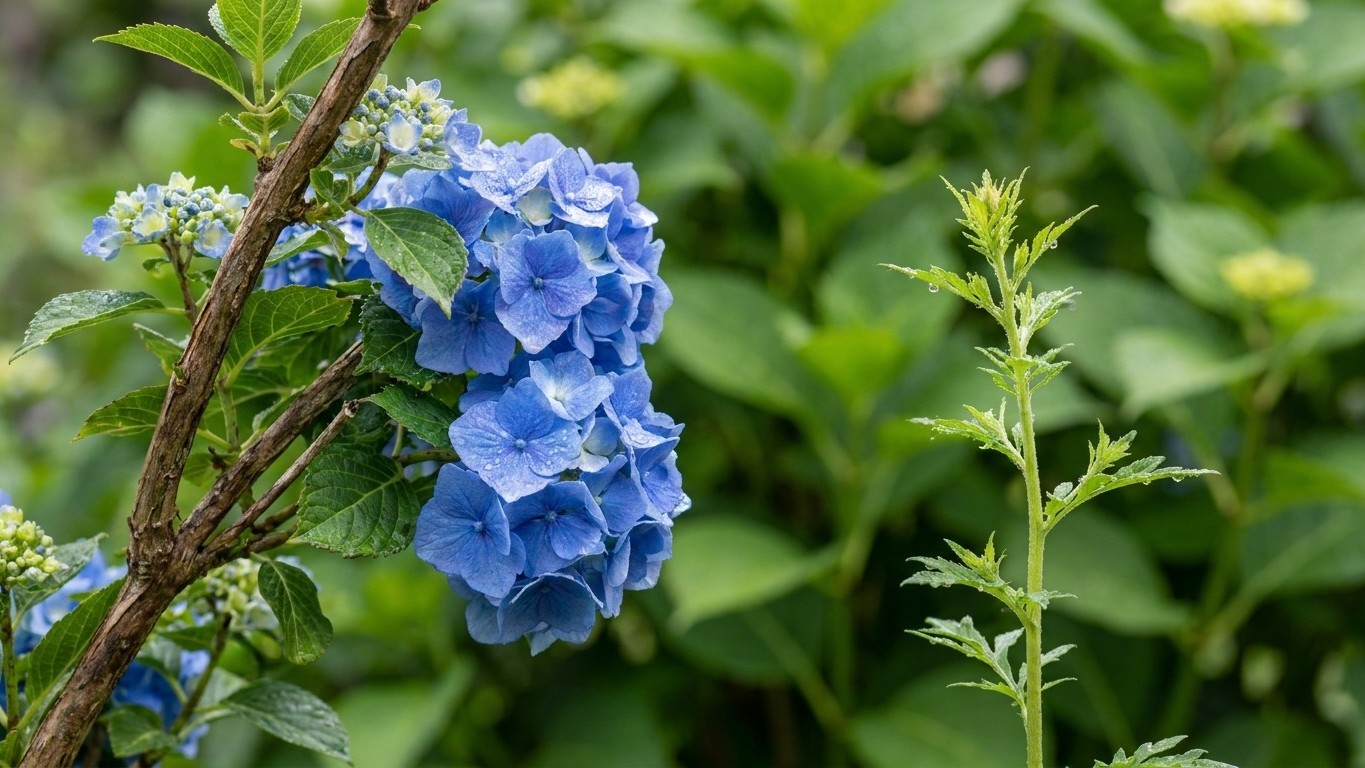

Hydrangeas turn pink in Wyoming because the soil is alkaline. Bigleaf hydrangeas (Hydrangea macrophylla) make blue flowers only when they can absorb aluminum, and aluminum dissolves in acidic soil. Once the pH climbs past about 6.5, the plant can’t take it up and the blooms come out pink. Blue is possible with a lower root-zone pH, usually in a container or raised bed. It usually takes two growing seasons, and it works only on bigleaf types.
What this comes down to in Wyoming

At Cheyenne, the state capital, the last spring frost falls between May 7 and May 18 and the first fall frost between September 24 and October 5, according to NOAA NCEI 1991-2020 Climate Normals. That is a short stretch to get a soil change working, and the soil starts far above the pH that blue needs. Pink is the default here, and blue is a project that runs across seasons.
The color comes from a pigment in the sepals, the showy petal-like parts of the flower. When aluminum is available, it binds to the pigment and shifts it toward blue. Aluminum is plentiful in almost every soil, but it dissolves readily only when the pH is low. Wyoming gets little rain across most of its plains and basins, so free lime stays in the ground. Soil pH there often sits above 7.5, and the aluminum stays locked in mineral form.
| Soil pH | Aluminum available to roots | Typical bigleaf flower color |
|---|---|---|
| 5.5 or lower | High | Blue |
| About 5.5 to 6.5 | Partial | Purple, or blue and pink on the same plant |
| Above 6.5 | Very low | Pink to rose |
Alkaline irrigation water pushes the same way. Every watering adds a little more bicarbonate to the root zone, which undoes acid you added the month before.
Cold limits the whole project, too. The USDA Plant Hardiness Zone Map spans roughly zones 3b to 6a across the state, and bigleaf hydrangeas set their flower buds on old wood, the stems grown the previous summer. A hard winter can kill those buds even when the plant survives, so some gardeners get green leaves and no flowers at all, pink or blue. Reblooming bigleaf types, which also flower on new growth, give better odds of seeing any color. The state guide to growing hydrangeas in Wyoming covers hardiness and siting, and When to Prune Hydrangeas in Wyoming explains how pruning affects old-wood buds.
Cheyenne has about 140 frost-free days between the mean last spring frost and the mean first fall frost, at roughly 6,000 feet of elevation.
Working it out for your own garden
Start with the plant. Only bigleaf hydrangeas (mophead and lacecap types) shift color with soil chemistry. Panicle hydrangeas and smooth hydrangeas such as ‘Annabelle’ ignore aluminum, so no amendment will turn them blue.
Next, test the soil. Dig 4 to 6 inches down near the drip line, where the feeder roots are, and send a sample to a lab or use a probe meter. A reading of 7.8, for example, is typical of calcareous ground, and it needs to fall to 5.5 or below for reliable blue. Free lime in the soil neutralizes acid as fast as you add it, so in-ground plantings at that reading usually slide back to pink within a season or two.
The practical route in that situation is a container or a raised bed filled with an acidic, peat-based mix, kept away from concrete and from alkaline irrigation water. Rainwater or collected snowmelt helps. Check the mix pH once in spring and again two months later.
If you amend in the ground, you have two tools:
- Aluminum sulfate works quickly because it supplies aluminum directly and acidifies the soil. Apply it as a drench around the root zone, repeated a few times through the growing season. Follow the product label, and start at half strength on young plants because it can burn roots.
- Elemental sulfur works through soil bacteria that convert it to acid, so it moves faster in warm, moist soil and slowly in cold ground. Expect months, not weeks, and apply it at the rate your soil test recommends.
Time the work to the season. Wait until the May 7 to May 18 frost window has passed before applying anything, because soil is still cold and roots are barely active before then. Finish drenches by midsummer so new growth isn’t pushed late into the first fall frost range of September 24 to October 5. Flower buds that formed last summer carry last summer’s color, so the first year usually brings a shift toward purple and the second year clearer blue.
Pots need one more step. Once they have gone dormant in fall, move them into an unheated garage or other sheltered spot before hard freezes set in, since roots in a container have far less protection than roots in the ground.
What changes across the state
Wyoming is a high, dry state with several different climates, and the pH story shifts with them. The plains and basins in the east and in the central and southwest parts of the state get little rainfall, and their soils are limey. These are the places where pink is close to guaranteed and where acidifying the ground is a losing battle.
Mountain valleys and the forested slopes of the Bighorn, Snowy Range and Black Hills country get more precipitation, and many of their soils are formed from granite or from decaying conifer litter. Those soils are naturally more acidic, so a hydrangea planted there may come out purple or blue without any help. Elevation also changes how short the season is. Higher sites have a shorter frost-free stretch than the Cheyenne reference point, and frost can hit in any month at the highest elevations, so a bigleaf hydrangea there may never open a flower. Lower, warmer basins have a longer season but often have very alkaline soil and water.
Even within one town, the answer can differ from yard to yard. A bed next to a concrete foundation or sidewalk picks up lime that leaches out of the concrete. A bed filled years ago with imported topsoil, or amended with compost made from wood ash, may be more alkaline than the native ground. A soil test from the exact spot you plan to plant beats any regional guess.
The mistakes this state punishes

A common error is skipping the soil test and going straight to aluminum sulfate. In limey soil, the acid gets neutralized quickly, and heavy repeated doses can burn roots without ever getting the pH down. Test first, and if the reading is above 7.5, move to a container or raised bed.
Another is acting during a warm April. A few days in the 60s can tempt you into drenching or planting, but the last frost range runs as late as May 18, and soil that cold doesn’t break down sulfur or support root growth. Wait for the window to close, and cover the plant if a late frost shows up in the forecast.
Gardeners also choose a bigleaf for color before checking if it will bloom at all. Old-wood buds die in a hard winter, and a plant that survives with no flowers can’t turn blue. Pick a reblooming bigleaf, protect it from wind, and cover the stems with mulch or burlap in late fall.
Fertilizer matters too. High-phosphorus formulas push flowers toward pink. For blue, use a fertilizer low in phosphorus and higher in potassium. Using lime, wood ash or concrete mix near the plants has the same effect.
Finally, many gardeners stop watering with rain or snowmelt once summer arrives. Hard tap water gradually raises the pH of a container or raised bed, so a plant that was blue in June can be purple by August.
Checking this against your county
A frost range from one station and a pH reading from one yard are starting points. Your county office of University of Wyoming Extension can tell you which soil test lab to use, what pH to expect in your area, and how local irrigation water behaves. For the rest of the growing picture, including siting, winter protection and pruning, work through the state guide on growing hydrangeas in Wyoming.
Common questions
How long does it take to turn a pink hydrangea blue?
Plan on two growing seasons. Buds formed the previous summer already carry their color, so the first year usually brings purple tones and the second year clearer blue. Plants in alkaline in-ground soil may need repeated treatment to hold the color.
Will white hydrangeas change color with soil pH?
No. Panicle and smooth hydrangeas don’t respond to aluminum. White panicle types often fade to pink late in the season as the flowers age and nights cool, and that has nothing to do with the soil.
Do coffee grounds or vinegar lower soil pH enough?
Used coffee grounds are close to neutral and won’t shift limey soil in any meaningful way. Vinegar acidifies only briefly and can injure roots, and alkaline soil neutralizes it within days. Sulfur and aluminum sulfate, or an acidic container mix, do the actual work.
How do I keep hydrangeas pink in Wyoming soil?
Most of the time you do nothing, since the soil does it for you. Use a fertilizer higher in phosphorus, and avoid acidifying products such as ammonium sulfate or peat-heavy mulch. In the more acidic mountain soils, a light dose of garden lime in spring can keep flowers from drifting toward purple.