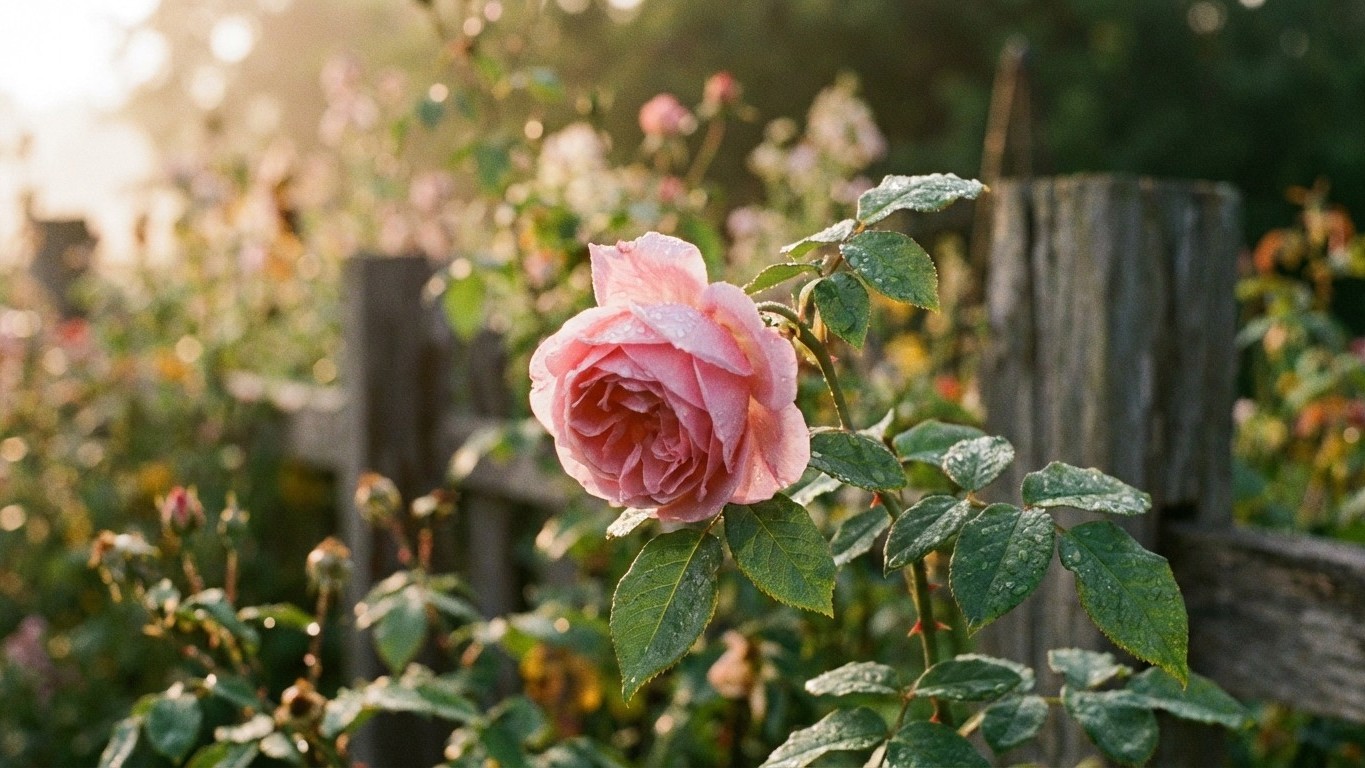

Rugosa roses and the Canadian Explorer series are the safest choices across most of Wyoming, with a few tough shrub roses filling in at the warmer, lower-elevation edge. Hybrid teas, floribundas and most of what fills the rose aisle in spring were bred for milder winters. A rose’s hardiness rating decides whether it blooms in June or comes back as a bundle of dead canes, so the cultivar name matters more than the flower color on the tag.
Which roses survive a Wyoming winter
On the 2023 USDA map, Wyoming runs from zone 3b to 6a. The USDA Plant Hardiness Zone Map builds each zone on one variable, the average annual extreme minimum temperature, so a zone says how cold the worst night of a typical year gets and nothing about wind, dryness or midwinter thaws. At Cheyenne, at roughly 6,000 feet, the mean last spring frost falls between May 7 and May 18 and the mean first fall frost between September 24 and October 5, based on NOAA NCEI climate normals and their 30 to 70 percent freeze-probability band. That leaves roughly 130 to 150 frost-free days. Higher towns such as Laramie and Jackson run colder than Cheyenne, low basin towns such as Worland run warmer, and frost can arrive in any month at elevation.
Rugosas (Rosa rugosa and its hybrids) are among the hardiest garden roses, and the named cultivars below are generally rated to zone 3 or colder. The Explorer series, bred in Canada for prairie winters, is built for the same cold, and the Parkland roses from Canada’s Morden breeding program are similar. Woods’ rose (Rosa woodsii) grows wild in Wyoming draws and along creek bottoms, which tells you a lot about what a rose needs to survive here. These roses flower on new growth as well as old, so a winter that kills the cane tips costs you height and some early bloom rather than the whole season.
Hybrid teas need soil or mulch mounded over the base each fall to carry the graft through winter. In zone 6 pockets, which are rare in Wyoming and limited to low, sheltered ground, they do better but still lose canes in a hard winter. In zones 3 and 4 they behave as annuals. Winter drying matters as much as raw cold: dry wind pulls moisture from exposed canes while the ground is frozen and the roots cannot replace it. For care once a hardy rose is in the ground, see growing roses in Wyoming.
Named roses that hold up here
The roses below are sold as named cultivars that nurseries carry, and most have a long record in cold-winter gardens (Knock Out and New Dawn, near the end of this section, are borderline here). Zone ratings come from the breeders and nurseries that introduced them, so treat them as the lowest zone where the rose does well, and plan on one winter of mulch when a plant is new.
Hansa is a double, magenta-purple rugosa with a strong clove scent. It makes a dense shrub and produces large orange-red hips in fall. Therese Bugnet is a hybrid rugosa with pale pink, loosely double flowers, reddish canes and a main flush in June followed by lighter repeat bloom. Blanc Double de Coubert gives white, fragrant flowers, and F. J. Grootendorst bears small, fringed red flowers in clusters that look like carnations.
Rugosa foliage is thick, wrinkled and glossy, and it resists most leaf diseases. The few problems that do show up in this dry climate are covered in Rose Diseases in Wyoming: What the Climate Here Actually Brings. Own-root rugosas spread by suckers, so give them room or plan on pulling shoots that wander.
William Baffin and John Cabot are Explorer climbers, with flowers that open in June and, in John Cabot’s case, repeat lightly. Both form long, arching canes that need a fence or trellis. Morden Blush, a Parkland rose with soft pink flowers, and Winnipeg Parks, a compact magenta-red, both stay compact.
Knock Out usually dies back hard in winter in cold parts of the state. It blooms on new wood, so an own-root Knock Out that regrows from the base still flowers the same summer, only on a smaller plant. In spring, cut back dead canes to live green wood once the buds swell. New Dawn is a pale pink climber. In colder zones its canes tip-kill, and you get fewer flowers on the new growth that survives.
Sold here, but not for this zone
Garden centers and big-box stores buy from national suppliers, so the shelf in Casper or Sheridan looks like the shelf in Georgia. Hybrid teas such as Peace, Mister Lincoln and Double Delight are common examples, along with grandifloras like Queen Elizabeth. These need winter work even in the mildest Wyoming valleys. Many English roses from David Austin and floribundas such as Iceberg need winter protection here.
Tree roses, which are any variety grafted high on a straight stem, are poorly suited to the state. The exposed stem freezes, and the graft sits at the top of it. Everything above the graft is lost in a hard winter, and the plant comes back as the rootstock, if it comes back at all. In cold parts of the state they are best treated as patio plants brought into an unheated garage.
A tag that says “hardy” without a zone number tells you little, and one that lists “zones 5 to 9” usually means the plant is not rated for zone 4 or colder. If you buy one of these anyway, plan on mounding soil over the crown every fall after the ground has frozen, not before, since early mounding holds warmth and invites rodents. Some gardeners also wrap canes loosely with burlap to cut wind damage on exposed sites. Without that work, expect to replace the plant after a hard winter.
What to check on the label before buying
Bare-root roses are sold by grade, with the top grade having the most and the thickest canes and lower grades having fewer, thinner canes. Buy No. 1. A lower grade takes longer to establish, and a short season with a late-May frost risk leaves little time for a weak plant to catch up. Potted roses rarely carry a grade, so judge them by firm green canes and a root ball that holds together when slid from the pot.
The more important line is whether the rose is own-root or grafted. A grafted rose is a cultivar budded onto a vigorous rootstock, and you can see the knob at the base where the canes join the roots. An own-root rose is grown from a cutting, so every part of the plant is the same variety.
That difference grows with the cold. When winter kills canes to the ground, an own-root rose regrows as the same rose. A grafted rose regrows from the rootstock, which means a rose you did not buy. In zone 3 or 4, dieback is a regular event rather than a rare one, so a grafted plant there is a bet that winter will be mild. If the base shows a graft knob and the plant is not a variety rated for your zone, leave it on the shelf. Tags that say “own root” or “grown on its own roots” are the ones to look for.
Checking this against your own county
Zone, elevation and wind exposure differ from one county to the next and often from one side of town to the other. University of Wyoming Extension has county offices staffed by educators who know which roses came through the last hard winters in your area. The USDA Plant Hardiness Zone Map gives your zone by ZIP code, and that number belongs next to the lowest zone on the plant tag. Call your county extension office before buying more than a couple of roses, particularly if your property sits in a draw or on an open ridge.
Common questions
Is Knock Out hardy in Wyoming? It is rated zone 5, so it is dependable only in the warmest valleys. In zones 3 and 4 it dies back heavily but usually regrows from the base if it is own-root, and it blooms on the new growth.
Can I grow a hybrid tea in Laramie or Jackson? Both towns run colder than Cheyenne. A hybrid tea there will not live through winter without constant protection, so it is best grown in a pot you move into an unheated garage, or treated as an annual.
Do rugosa roses need winter protection? Own-root rugosas rated to zone 3 usually need none once they are established. A new plant benefits from mulch over its first winter.
How do I tell if a rose is dead after winter? Scratch a small patch of bark with a thumbnail. Green underneath means live wood, while brown and dry means the cane is dead. Wait until the buds swell in spring, since canes that look dead in March sometimes leaf out later, then prune to the first live wood.