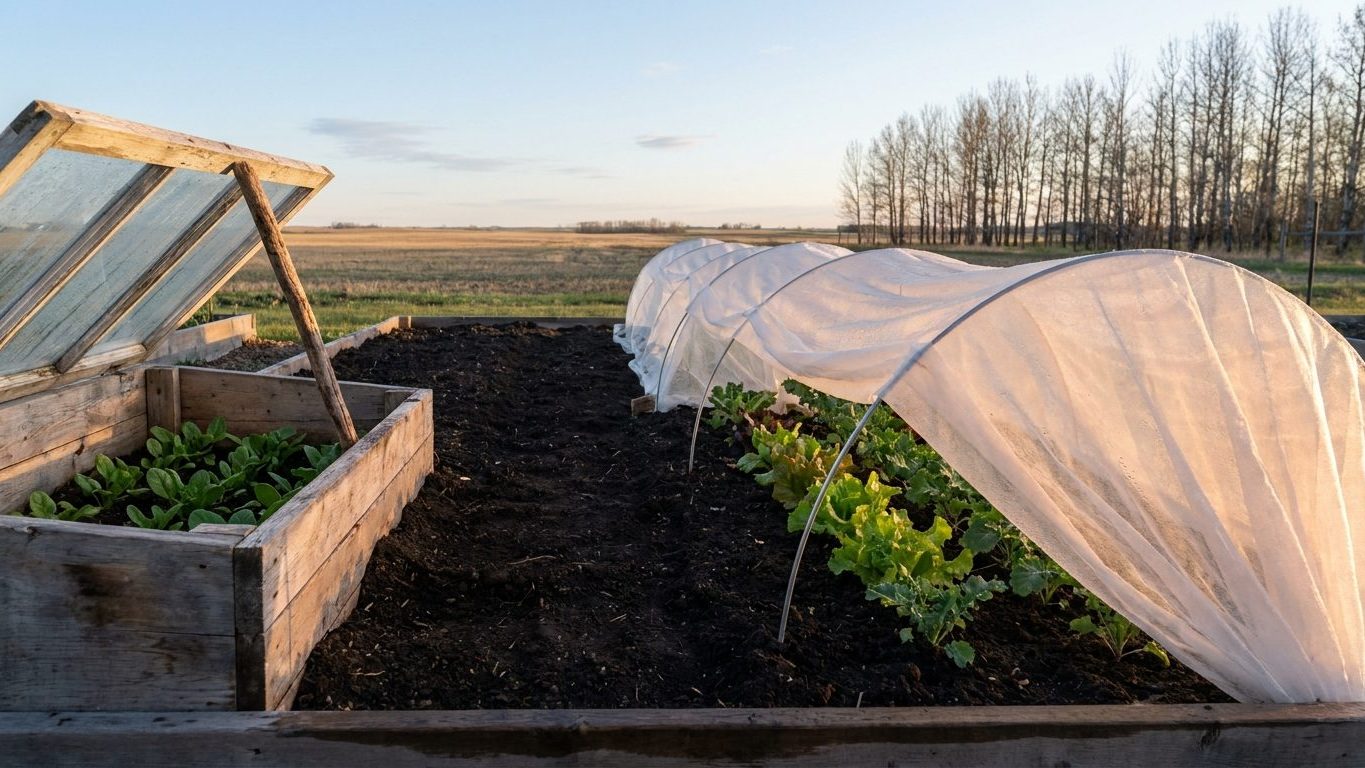

Lightweight row cover on hoops, cold frames, and anchored low tunnels are the season extenders that work. The reference station in Cheyenne has roughly 130 frost-free days at 6,000 feet, and frost can arrive in any month at higher elevations. Season extension here is a requirement, not a bonus. The right pick depends on wind, dry sun, and whether the crop is a hardy green or a heat lover.
The short answer for Wyoming
Build the system around a low hoop tunnel with lightweight row cover, and swap in clear plastic for the coldest stretches of early spring and late fall. Add a cold frame for starting, hardening off, and finishing greens. A walk-in high tunnel is the biggest upgrade, but it costs more and has to be built for wind and snow. Water-filled plant protectors suit single transplants such as early tomatoes and peppers.
The frost dates show why. At the reference station, the last spring frost falls between May 7 and May 18, and the first fall frost between September 24 and October 5. Those dates come from the NOAA NCEI 1991-2020 Climate Normals and mark the band where the chance of a 32°F freeze runs between 30 and 70 percent. A freeze can still come before or after that band. The reference station has about 130 frost-free days, and frost is possible in any month at higher elevations.
Which season extender fits which job?
| Extender | Best job | Main limit |
|---|---|---|
| Lightweight row cover on hoops | Frost nights, hardy greens, early and late plantings | Modest protection, so a hard freeze may need a second layer |
| Low tunnel with clear plastic | Warming soil before planting, early spinach, lettuce, peas | Overheats in bright sun unless vented |
| Cold frame | Hardening off, fall and winter greens | Small footprint, and the lid needs propping on sunny days |
| Water-filled plant protectors | Early tomato and pepper transplants | One plant each, and they need wind-proof setup |
| Walk-in high tunnel | Largest gain for heat-loving crops | Cost, plus wind and snow engineering |
How much can covers add to the calendar?
Covers let hardy crops go in ahead of the spring frost band and keep producing after the fall band opens. Peas, spinach, lettuce, radishes, and kale respond best. Covers cannot turn a 130-day climate into a long-season one. For tomatoes, peppers, and squash, the goal is protecting young plants on freeze nights and choosing varieties that finish well inside the season. The full planning picture sits in Extending the Growing Season in Wyoming.
What will not work here
Thin plastic and loose fabric lose to wind. The High Plains blow hard in spring and fall, and a cover that flaps will tear, slide off the hoops, or take the hoops with it. Anchor fabric edges with soil, sandbags, or ground staples, and use hoops pushed deep or fixed to a frame. Flimsy wire hoops from a discount rack tend to fold.
A tunnel closed all day on a sunny afternoon also fails. Dry air and strong sun heat clear plastic fast, even when the night before dropped below freezing. Lettuce and spinach bolt or scorch under a sealed tunnel. Open the ends or lift a side by mid-morning, and close up again before the sun drops.
Weekly watering does not work under covers either. Plastic and fabric keep out rain and most sprinkler water, while the dry climate pulls moisture out of the soil underneath. A bed that looks fine from outside can be bone dry a few inches down. Drip lines laid before the cover goes on, or a regular check with a finger in the soil, solve this.
Long-season crops are the next casualty. Sweet potatoes, long-season melons, and tomato varieties that need a long season wait for warmth the calendar does not have. A cover buys protection on cold nights, but it cannot supply the heat that fruit needs to ripen once the fall band arrives. Short-season varieties are the better bet, and the packet’s days to maturity should leave room to spare.
Light hoops also fold under heavy wet snow. Shake it off before it settles, or use sturdier hoops and closer spacing. Winter is another limit. The mean daily minimum of the coldest month at Cheyenne is 18.1°F, so an unheated cover keeps hardy spinach alive more than it keeps anything growing. Tender crops will not make it through.
Finally, waiting for the calendar date to cover is a mistake. At higher elevations frost is possible in any month, so fabric should be within reach all summer. When to Cover Your Garden in Wyoming goes through the nights that call for it.
What changes across Wyoming
No single answer covers the whole state. The USDA Plant Hardiness Zone Map (2023, built on 1991-2020 normals) places Wyoming in zones 3a through 6a. That zone is based on one number, the average annual extreme minimum temperature, so it describes winter survival of perennials, not the length of the frost-free season. A gardener in a 3a pocket and one in a 6a pocket are working with very different winters.
The figures above belong to Cheyenne, at 41.15 degrees north latitude, in the southeast. The state stretches several degrees farther north, and the far north behaves differently. Latitude matters for day length, which is what tells an onion to stop making leaves and start forming a bulb. A reader near the northern edge should look up their own latitude before borrowing a Cheyenne-based plan.
What should a northern or high-elevation gardener shift?
Move everything toward caution. Start later in spring, plan to finish earlier in fall, and choose varieties with shorter days to maturity than the reference station would require. Use a heavier cover and expect to leave it on longer. At altitude, where frost can arrive in any month, a tunnel that doubles as summer frost insurance makes sense, and anchoring matters even more in exposed spots.
A gardener in a lower, more sheltered spot has more room for heat lovers, but the same rules on wind, venting, and watering apply. For the zone itself, use the USDA Plant Hardiness Zone Map and look up your ZIP code rather than guessing from a neighbor’s garden.
Where to check this for your own county
The best local source is University of Wyoming Extension. Look for the planting calendar for your county or the nearest one, and for lists of varieties trialled where you garden. Trial results matter because a tomato that ripens at one elevation can sit green at another. Ask the county office about local frost patterns too, since cold air drains into valleys and creek bottoms.
A county recommendation beats a state one. Numbers like the 130 frost-free days and the May and September frost bands describe a single reference station, and they are a starting point. Elevation, slope, wind exposure, and nearby buildings can shift a garden’s real dates by weeks.
When you contact the extension office, a few questions get useful answers fast:
- Which hoop and cover setups have held up to local wind and snow?
- Which short-season varieties have been trialled in the county?
- When does frost typically arrive in your part of the county?
Master Gardener programs attached to extension offices often run workshops on tunnels and cold frames, and a visit to a working garden nearby teaches more than any chart.
Checking this against your own garden
Your own observations outrank every date here. Three signs tell you the most about your microclimate, and none needs an instrument.
The first is soil warmth by feel. Push a hand a few inches into the bed in the morning. If the soil feels cold enough to numb your fingers, seeds of warm-season crops will sit and rot. Compare a covered bed with an open one. A clear difference tells you how much a tunnel really warms your site.
The second is the first flush of male flowers on squash and cucumbers. Male blooms open first, and watching when they appear tells you your garden is warming. If a covered plant flowers well ahead of an uncovered one, the cover is earning its keep. If both open together, the cover is mostly doing frost insurance.
The third is the first true leaves on seedlings. The first pair are seed leaves, and the second set, shaped like the adult plant, shows real growth. Seedlings that stall before true leaves appear are usually too cold or too dry. Note where in the yard they are slowest. A low corner that lags behind a south-facing wall is telling you where cold air pools, and that spot needs the heaviest cover.
Common questions
What is the cheapest season extender that works?
Lightweight row cover draped over hoops is the least expensive option with real payoff. It protects against light frost and works for most greens. Anchor it well, because wind is the main way it fails.
Can I grow vegetables through winter with a cold frame?
Hardy greens like spinach can survive in a cold frame, but growth largely stops in the coldest months. The mean daily minimum of the coldest month at Cheyenne is 18.1°F. Count on harvesting what grew in fall rather than expecting new growth in midwinter.
Do I need to vent a tunnel on cold days?
Yes, on any sunny day. Dry air and strong sun can heat a closed tunnel quickly even when nights are freezing. Open the ends or lift a side by mid-morning and close up before sunset.
Should I use the same setup at every elevation?
No. The USDA zones range from 3a to 6a across the state, and frost is possible in any month at higher elevations. Higher or more northern gardens need sturdier hoops, heavier cover, shorter-season varieties, and a cover kept ready all summer.