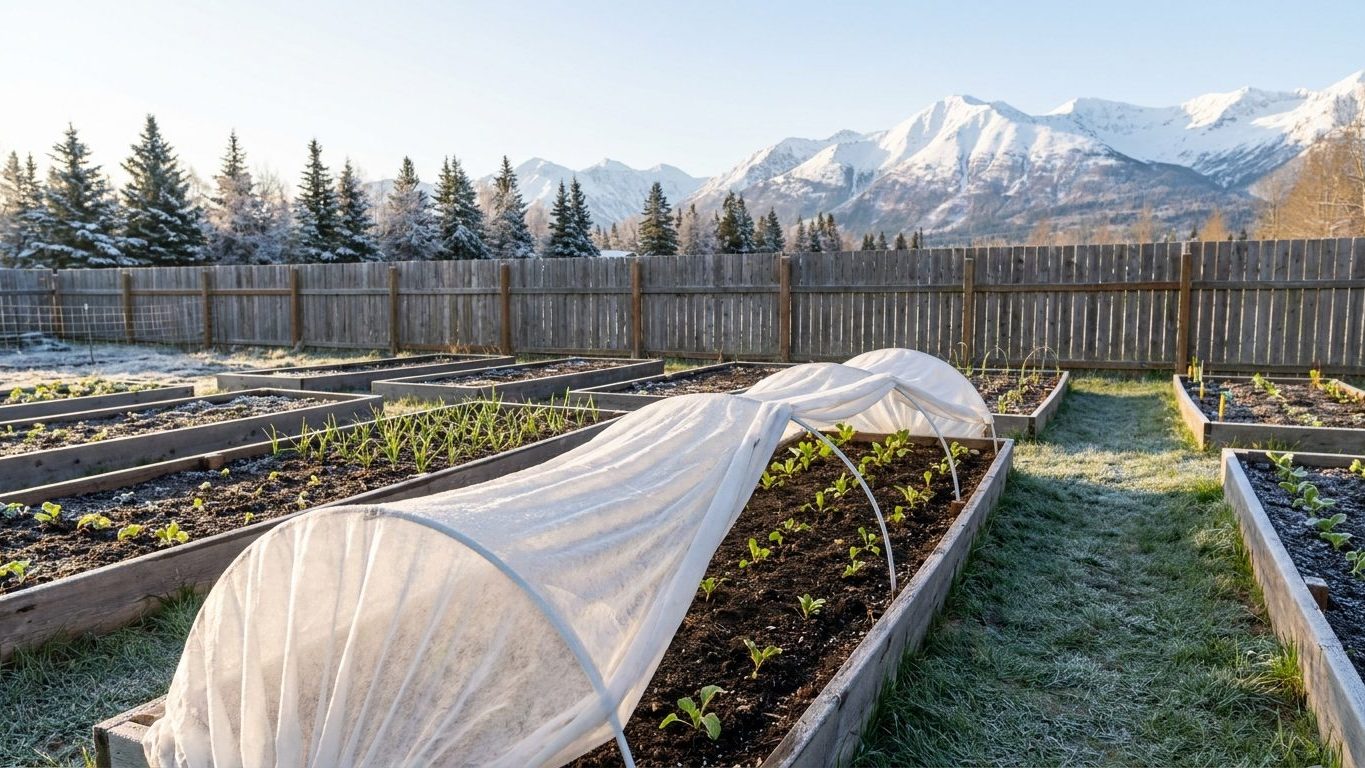

Cover tender plants in West Virginia on any night the forecast low reaches 32°F or below. Around Charleston, that risk runs through the second half of April in spring and starts again in the second half of October. Hardy greens can wait for colder nights. Ridgetops and the northern part of the state run colder at both ends of the season.
The short answer for West Virginia
Cover tender crops such as tomatoes, peppers, beans, and squash on any night when the forecast low is 32°F or below. NOAA’s 1991-2020 climate normals for Charleston put the last spring freeze between April 9 and April 23, and the first fall freeze between October 18 and November 1. Those dates sit in the band where the chance of a 32°F freeze is between 30 and 70 percent, so on any day inside the window a freeze is a live possibility.
When do you cover plants in spring?
Start when you plant out. Peas, spinach, lettuce, and onion sets go in weeks ahead of the frost window and usually need cover only on the coldest nights. Tomatoes, peppers, and squash go in later, and even after April 23 an odd cold night can still arrive. Drape the cover at dusk, hold it off the leaves with stakes or hoops, and weight the edges. Take it off the next morning once the frost has melted and the air is warming.
When do you cover plants in fall?
Begin watching the forecast in early October. A clear, still evening can still frost the low spots in a garden. Covering tomatoes, peppers, and beans on the first freeze nights often buys extra weeks of harvest, because a first freeze is frequently followed by milder days. Hardy crops like kale, spinach, and carrots keep going much longer under a cover.
Winter is a different job. The mean daily minimum in the coldest month at Charleston is 26.1°F, so nights in the mid-20s are routine, not rare. A single layer of lightweight fabric adds only a little warmth. It will not carry tender plants through those nights, but it works for hardy greens. For help choosing, see Which Season Extenders Work in West Virginia.
What will not work here
Why does planting on the average last frost date fail?
Setting out tomatoes on April 9 with nothing to cover them is a bet at odds of roughly three in ten to seven in ten that a freeze still comes. Even the late end of the window, April 23, leaves real risk. The dates describe where freeze odds sit, and they do not mark the end of frost. Planting tender crops on the average last-frost date with no cover on hand is the most common way West Virginia gardeners lose a first planting.
What goes wrong with plastic in a humid valley?
Clear plastic closed tight on a sunny April afternoon can overheat seedlings fast. Humid air adds a second problem: condensation collects inside, and wet foliage invites fungal disease. Open the ends once the day warms, and close them again before sundown. A cover that stays shut for days does more harm than a frost would.
What about winter nights and hollows?
With nights in the mid-20s common in the coldest month, one thin layer over a tomato plant is not protection. It saves hardy greens and almost nothing else. If you want winter growing, pick crops that tolerate the cold and give them a low tunnel with a cover inside it.
Terrain makes a difference too. Cold air drains downhill and pools in hollows and creek bottoms. A garden at the foot of a slope can freeze on a night when the nearest town stays above freezing. On clear, calm nights, cover when the forecast is within a few degrees of freezing, not only when it hits 32°F.
Finally, fabric that touches the leaves transmits cold to them, and loose edges let wind pull the cover off by midnight. Squash and cucumbers need the cover off once they bloom, or the bees cannot reach the flowers.
What changes across West Virginia
The USDA Plant Hardiness Zone Map (2023, built on 1991-2020 normals) places West Virginia in zones 5a through 7a. That is a spread of about five half-zone steps, which means there is no single answer for the whole state. The map zone is based on the average annual extreme minimum temperature, so it describes winter survival of perennials. Frost dates for tender crops follow a different pattern, but they move in the same direction.
The frost dates above belong to Charleston, which sits in a river valley at 38.38 degrees north. Higher elevations across the state freeze noticeably earlier in fall. If you garden on a ridge, in the Eastern Panhandle highlands, or in the northern end of the state, expect the first cover night to arrive earlier than October 18. The last spring cover night may run later than April 23.
The practical shift is simple. Start watching the forecast earlier in the fall and hold your tender transplants longer in spring. Keep covers and stakes handy for a longer stretch on both ends.
Latitude plays a separate role. Day length, not warmth, tells onions when to stop making leaves and start making bulbs. A tunnel warms the air but does not change day length, so it will not make onions bulb sooner. The 38.38 figure belongs to Charleston. A reader near the northern or southern edge of the state should check their own latitude.
To find your own zone, look up your location on the USDA Plant Hardiness Zone Map. Do not borrow a neighbor’s number from another valley.
Where to check this for your own county
The best local source is West Virginia University Extension. Look for two things: a planting calendar for your county, and the varieties that have been trialled there. The county office can tell you which last-frost and first-frost dates they use, and at what probability level.
A county recommendation beats a state one, because a statewide window averages mountains and valleys together. If the county office gives you a different date from the ones in this article, go with the county office. Ask also about frost pockets in your area and which crops do well under cover locally.
For the bigger picture on stretching the season at both ends, see Extending the Growing Season in West Virginia.
Checking this against your own garden
Your own observations outrank every date in this article. Three are worth watching.
Soil warmth by feel. Push your hand into the bed in mid-morning. If the soil feels cold and damp, warm-season seedlings will sit and stall. If it feels cool but not chilly, they can go in under cover. A bed that warms sooner than a neighbor’s has a sunnier or better-drained spot.
The first flush of male flowers on squash and cucumbers tells you that bloom has begun. Vent or remove covers by day from then on so pollinators can work. If male flowers open earlier than expected, your garden is running warm.
The first true leaves on seedlings, the ones that look like the mature plant, show that a transplant is ready to face a cover and the weather. If seedlings in one corner reach that stage later than the rest, that corner is colder, shadier, or in a frost pocket.
Common questions
Should I cover plants if the forecast is 36°F?
On a clear, calm night, yes for tender crops, especially in a low spot. Cold air pools at ground level, and the temperature at the plants can be several degrees below the forecast. Cloudy, windy nights are safer.
Do I take the cover off every day?
Fabric can stay on in cool weather, but plastic cannot. Take off or vent plastic on sunny days, and close it again at dusk. Remove all covers from squash and cucumbers once they bloom.
Can covers carry tomatoes through a West Virginia winter?
No. The mean daily minimum in the coldest month at Charleston is 26.1°F, which is too cold for tomatoes under a single cover. Plan winter protection around hardy greens and roots.
How late can I keep fall tomatoes going?
Around Charleston, the first freeze falls between October 18 and November 1. Covering on freeze nights can stretch the harvest a few weeks. At higher elevations the window closes sooner, so check with your county extension office.