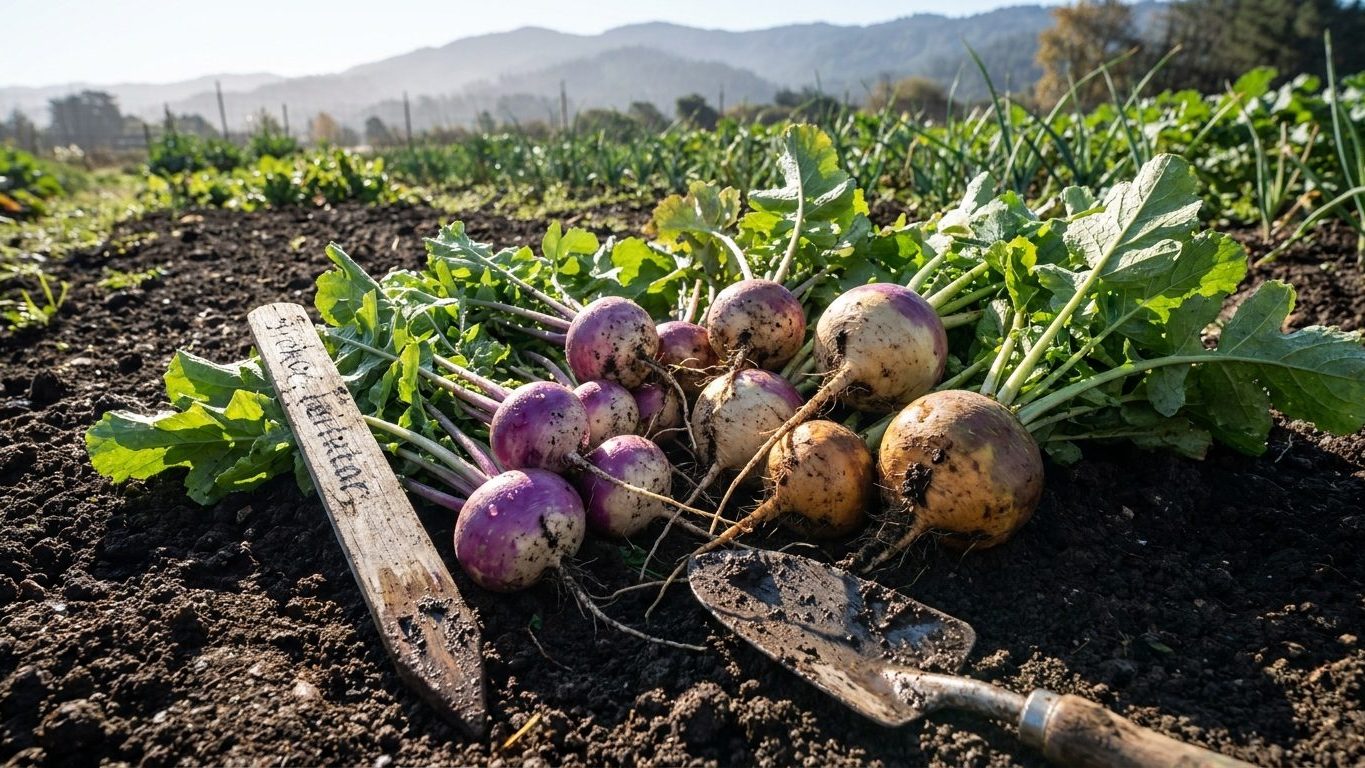

For most Wyoming gardens, the best bet is a quick-maturing turnip sown twice, once in spring and once for fall. Rutabaga is the gamble, worth it only where the season allows. Choose by days to maturity on the packet, not by name or root size. The full growing guide is in Growing Turnips and Rutabaga in Wyoming. This page sorts the types.
The short answer for Wyoming
Pick fast turnips first and treat rutabaga as optional. The frost-free window here is short, so speed counts for more than size or reputation.
The numbers come from NOAA’s 1991-2020 Climate Normals for the Cheyenne reference station. The last spring freeze (32°F) falls between May 7 and May 18, and the first fall freeze between September 24 and October 5. Those are not deadlines. They mark the band where the probability of a 32°F freeze sits between 30 and 70 percent, which is close to a coin flip. A freeze before or after that band is entirely possible. The window works out to roughly 130 frost-free days at 6,000 feet, and at higher elevations frost can arrive in any month. Season extension is not optional here.
Turnips: the dependable choice
Turnips tolerate light frost, so they can go in before the spring band closes and keep growing after the fall band opens. That flexibility is why they suit this state. Small, fast types (the kind sold for salads and tender roots) fit between frosts with room to spare. Medium round turnips with white and purple skins work too, if you sow them early enough to size up before summer heat arrives. Dual-purpose and greens-focused types are the most forgiving, since you can eat the tops even if the roots stay modest.
Rutabaga: possible, with conditions
Rutabaga asks for a longer, cooler season than turnips and swells slowly. It can work in the lower, warmer parts of Wyoming if it goes in early. Pick the earliest-maturing rutabaga on the seed rack and keep your expectations at softball size rather than the bruisers in catalog photos.
| Type | Fit for Wyoming | Main risk |
|---|---|---|
| Small, fast salad turnips | Best all-around; suits spring and fall sowings | Turning pithy if left too long in warm weather |
| Standard round turnips | Good, sown early in spring or in late summer | Sizing up too slowly in cool, short seasons |
| Greens-type turnips | Very forgiving; two crops in one | Little, if cut young |
| Rutabaga | Conditional; earliest types only | Running out of growing days |
Dates for each sowing are laid out in When to Sow Turnips in Wyoming.
What will not work here
Start with the slowest rutabaga you can find. A variety bred for a long, mild season, sown in late May or early June after the frost band has passed, uses up much of the roughly 130 frost-free days before it has made a decent root. Rutabaga shrugs off frost, so September 24 to October 5 does not kill it. What ends the season is the slowdown: shorter days, cold soil, and growth that quietly stalls. Gardeners who plant a long-season type and wait for it to catch up usually end up with roots the size of a golf ball.
Planting nothing until the soil feels warm and settled also backfires. Turnips are cool-season roots. In a place where nights stay cold into May, waiting for tomato weather throws away the best growing weeks, which come in the cool of spring and again in early fall. Sowing in the hottest part of summer is the mirror mistake, because roots swell in heat and turn woody, sharp, or pithy.
Weekly watering fails too. Wyoming is high, dry, and windy, and soil in a raised bed or sandy plot can go from damp to dust between waterings. Turnips and rutabaga want steady moisture. Long swings between dry and soaked give you cracked skins, hot-tasting roots, and fibrous centers. A thick mulch and shorter intervals between waterings, especially in the first weeks of germination, matter more than any variety choice. Seed that dries out after sprouting does not recover.
Leaving roots in the ground over winter is a plan to abandon as well. The mean daily minimum of the coldest month is 18.1°F at the Cheyenne reference station. That is an average, so individual nights run well below it. Turnips and rutabaga are grown here as one-season crops. Harvest in the fall, then store the roots cold and humid.
Finally, trusting an unprotected early sowing at elevation is a risk. Frost is possible in any month at higher elevations, so a stand of seedlings in a mountain valley can take a hit in June. A strip of floating row cover is cheap insurance, and for this crop it should be a standard part of the setup.
What changes across Wyoming
Wyoming is not one garden. Under the USDA system, which is built on a single variable (the average annual extreme minimum temperature), the state spans zones 3a to 6a. That is a wide spread, and there is no single answer for the whole state. The dates and figures above come from the Cheyenne reference station. Treat them as one point on the map, not as a statewide rule.
A reader in the north or in a mountain valley should shift in three ways. First, lean harder on the quickest types and skip rutabaga unless you can protect it. Second, make season extension part of the routine, with row cover over spring seedlings and again as fall nights cool. Third, give more weight to the fall crop, which matures in cool weather and often tastes sweeter than a spring root. In a high valley a turnip planted in mid-summer for a fall harvest can be the more reliable of the two sowings.
Gardeners in lower, warmer basins have more room. They can try an early rutabaga, plant spring turnips a bit sooner, and stretch the fall harvest later. Even so, they should not assume the dates above fit their yard, because elevation and cold-air pockets can shift a garden by a week or more in either direction.
I will not tell you which zone you are in. Look up your location on the USDA Plant Hardiness Zone Map and read the zone for your own ZIP code. Then use that zone, not the state’s range, as the starting point for your timing.
Where to check this for your own county
The right next stop is University of Wyoming Extension. Look for two things on its pages. The first is a local planting calendar for cool-season root crops, ideally one built around your county’s frost dates rather than the state’s. The second is the list of varieties trialled in your county, which tells you what has actually produced roots there, in your wind and your soil, not what sells well nationally.
Extension offices are staffed by people who see the same weather you do. A county agent can tell you if last spring’s late freeze was an outlier or a regular visitor, whether local soil tends to crust before seeds emerge, and which varieties growers nearby have dropped. That kind of information does not live in a state-level summary.
A county recommendation beats a state one. This page is the state one: a framework built on one reference station and one broad zone range, useful for choosing a type and sketching a season. It does not have a University of Wyoming Extension turnip calendar to quote, so confirm any date here against what your county office publishes before you buy seed in bulk.
Checking this against your own garden
Your own observations outrank every date on this page. Three are worth watching, and none needs equipment.
- Soil warmth by feel. Push a hand into the bed, a few inches down, in the morning. If the soil feels cold and clammy enough that you want to pull your hand out quickly, wait on tender seedlings. A bed that feels cool but not numbing is ready for turnip seed. A spot that warms sooner than the rest of the yard is your early bed.
- The first true leaves. The first pair that unfolds after sprouting are seed leaves. The true leaves come next and look different, usually rougher and more lobed. How long they take to appear, compared with the packet, tells you how slow or fast your site runs. If they lag, choose faster types next season.
- Where frost shows first. On a cold morning, walk the yard and see where the white shows up. Low corners, spots shielded from wind, and the base of a slope usually frost first. The patch that stays green is your best place for early sowings and rutabaga.
Write down what you see for two or three seasons and your own notes will become a more accurate calendar than any table.
Common questions
Can you grow rutabaga in Wyoming?
Yes, in lower and warmer areas, with the earliest-maturing type, sown early, and with some cold protection. In high valleys and the north it is a gamble, and turnips are the safer root.
Should I plant turnips in spring or fall in Wyoming?
Both work, and many gardeners do both. Spring sowings race the heat, while fall sowings mature in cooling weather and often taste milder. In the coldest, highest gardens, the fall crop is often the more dependable.
Do turnips survive winter in Wyoming?
Not reliably. The mean daily minimum of the coldest month is 18.1°F at the Cheyenne reference station, so plan to harvest in the fall and store the roots cold and humid.
Are greens-type turnips worth growing?
Yes, especially where the season is short. They produce edible tops within weeks, so you get a harvest even if the roots stay small.