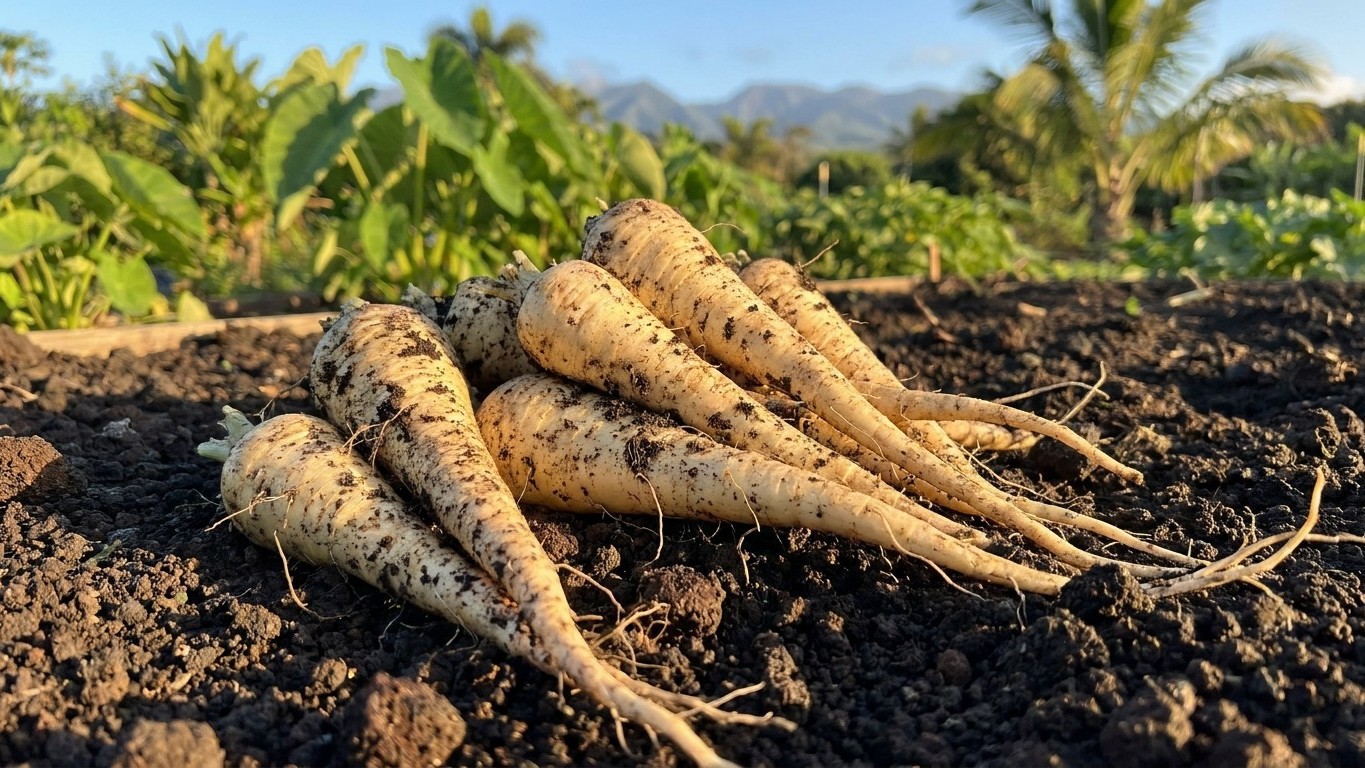

Lift parsnips in South Dakota after they have sat through several weeks of fall frost, which means late October at the earliest and often well into November. Spring-sown roots are full size by late summer but taste starchy until the cold converts their starch to sugar. Once dug, they keep four to six months, but only if you store them away from apples and other ripening fruit. Ethylene turns them bitter.
The short answer
Does South Dakota deliver several frosty weeks? Yes, easily. The mean daily minimum of the coldest month is 8.5°F at the Sioux Falls reference station (NOAA NCEI Climate Normals). That is a frost measurement, not a hardiness zone, and the two are not interchangeable. A zone describes whether a plant survives winter. Sweetening depends on how many days the roots sit in freezing air and cold soil, and a mild zone can fail that test while still looking comfortable on a map. Here the test is passed with room to spare, so a parsnip grown in this state will sweeten, not merely grow. The Will Parsnips Sweeten in South Dakota? page goes deeper into the chemistry. The short version, per Utah State University Extension, is that cool, frosty weather converts stored starch to sugar.
When to dig
The reference-city first fall frost falls between September 24 and October 4. Digging that week wastes the whole point of the crop. Count several weeks from the first real frost and you land in late October at the earliest. Suburban and rural gardens usually see that first frost one to two weeks sooner than the airport, so check your own county’s dates rather than trusting the city figure. Roots can wait in the ground, and many gardeners dig as needed until the soil gets too hard to work. Lift the whole row before it locks up solid.
How long they keep, and the one thing that ruins them
The USDA’s Agricultural Handbook 66 puts storage life at 4 to 6 months, held at 32 to 34°F with 98 percent relative humidity. Four to six months is a long keep by vegetable standards. The condition is the catch. Almost no house holds those numbers steady, so treat the figure as the ceiling and expect less from a garage or a kitchen refrigerator.
Cold is not the danger. The handbook states that parsnips are not chilling sensitive. Ethylene is the danger. The roots make very little of it themselves, but exposure to low levels in cold storage causes bitterness, likely from a compound called xanthotoxin building up. A crisper drawer shared with apples, pears or any ripening fruit can quietly ruin a harvest even at the right temperature. Keep parsnips in a separate drawer or container. And when you top them after digging, cut the leaves off but do not trim into the crown.
Does the season fit?
Parsnips are sown in place, not transplanted, and the clock of 100 to 120 days runs from seeding. The recommended sowing is two to three weeks before the last spring frost. Here is how that works out against the reference-city frost window.
- The last spring frost at the reference station falls between April 29 and May 9.
- Two to three weeks earlier puts the sowing window at roughly April 8 through April 25.
- Germination takes 14 to 21 days, so the row looks empty for two to three weeks. Do not dig it up and re-sow. Mark the row so you remember where it is.
- Add 100 days to an April 8 sowing and you reach about July 17. Add 120 days to an April 25 sowing and you reach about August 23. Mature roots are therefore possible between mid-July and late August.
- The first fall frost at the same station arrives September 24 to October 4. The roots finish a month or more before it, and the gap is what gives them time to sit in the cold.
That is a comfortable fit. There is slack at both ends, which is more than you can say for most long-season root crops in a northern state.
Where it tightens
The airport dates are the reference, not a guarantee. A rural garden whose last frost lands one to two weeks later pushes the sowing window into early or mid May. A May 10 sowing plus 120 days reaches about September 7, still ahead of even an early first frost. Waiting longer than that starts to eat the margin. Roots that are still small when frost arrives will not be much to eat, and no amount of sweetness fixes a skinny parsnip. If your garden sits at higher elevation, subtract a few more days from the margin. Sowing a little earlier is safer than sowing late.
What goes wrong here
- Forked roots from heavy or stony ground. A root that meets a stone or a layer of compacted clay splits around it. Utah State University Extension recommends deep sandy soil, and where the ground is heavy, double digging. Loosen the bed to the full depth of the root, pull out the stones, and do not rely on a surface raking. The state’s soils vary a great deal from one county to the next, so look at your own bed, not a general map.
- Forked roots from overwatering. This is a separate cause with a separate fix. Too much water, applied too often, can also produce branching and hairy side roots even in good loose soil. Water deeply but less often, and let the top inch dry between sessions. Do not assume a forked root means your soil is the problem when it may be your hose.
- A season that runs out. Sowing in late May or June leaves the roots undersized when frost arrives. Stick to the window of two to three weeks before the last frost, using your own county’s date, and keep the seedbed evenly moist during the 14 to 21 days germination takes.
- Digging too early. Lift in September or early October and you get a perfectly good root that tastes starchy. The winter here is cold enough, with that 8.5°F mean minimum, but only if you wait for it. Patience is the whole remedy.
- Bitterness in storage. A parsnip kept beside apples picks up ethylene and turns bitter, no matter how well it grew. Give it its own container, and remember that holding 32 to 34°F at 98 percent humidity is hard to do at home. Check the roots every few weeks and eat the soft ones first.
Pests are a separate matter and arrive on their own schedule. What Eats Parsnip in South Dakota, and When covers them, and the full growing calendar sits on the Growing Parsnips in South Dakota page.
Common questions
Can I leave parsnips in the ground all winter in South Dakota?
The sources behind this page cover frost sweetening and refrigerated storage, not overwintering in the ground, so they give no verdict on it. What they do establish is that the cold converts starch to sugar. Many gardeners dig as needed while the soil is workable, and lifting the whole crop before the ground locks solid is the safer plan.
How soon after the first frost should I dig?
Wait several weeks. Utah State University Extension describes the best flavor as coming after several weeks of cool, frosty weather. With a reference-city first frost between September 24 and October 4, that points to late October or later. Your county’s own first frost may come sooner.
Why did my stored parsnips turn bitter?
Ethylene is the most likely cause. Parsnips are not chilling sensitive, but low levels of the gas in cold storage cause bitterness. Apples and other ripening fruit are the usual sources. Move the roots to their own drawer or container, away from any fruit.
Should I cut the tops off before storing?
Yes, top them, but do not cut into the crown. The USDA handbook says parsnips are topped after harvest and should not be trimmed into the crown. Leave a small stub of stem, not a flat slice into the root’s shoulder.
One last detail on timing: the 98 percent humidity figure matters nearly as much as the temperature, because a parsnip left in a dry refrigerator loses water and goes limp long before it spoils.